

Virginia Driving Hawk Sneve
Author of Dancing Teepees: Poems of American Indian Youth
About the Author
Image credit: neh.gov
Series
Works by Virginia Driving Hawk Sneve
The time of the horse and The tribe of the burnt thigh (Houghton Mifflin reading program) (1981) 9 copies
Two Lumps of Sugar 3 copies
The Chichi Hoohoo Bogeyman 2 copies
Bad River Boys 2 copies
The Cherokees 1 copy
When Thunder Spoke 1 copy
My Horse, Fly Like a Bird 1 copy
Associated Works
On the Wings of Peace: Writers and Illustrators Speak Out for Peace, in Memory of Hiroshima and Nagasaki (1995) — Contributor — 105 copies, 1 review
Returning the Gift: Poetry and Prose from the First North American Native Writers' Festival (Sun Tracks) (1994) — Contributor — 25 copies
Tagged
Common Knowledge
- Canonical name
- Sneve, Virginia Driving Hawk
- Birthdate
- 1933-01-21
- Gender
- female
- Education
- South Dakota State University (BS|1954)
South Dakota State University (MEd|1959) - Occupations
- teacher
counselor
editor
children's book author
historiographer - Organizations
- Native American Consortium
Rosebud Sioux Tribe
United Sioux Tribes Cultural Arts
Episcopal Church of South Dakota
Flandreau Indian School - Awards and honors
- National Humanities Medal (2000)
Human Rights Award, South Dakota Counselors' Association
Author-Illustrator Human and Civil Rights Award
Spirit of Crazy Horse Award
South Dakota Education Association Human Services Award
Native American Prose Award, University of Nebraska Press - Nationality
- Sicangu Lakota Nation
- Birthplace
- Rosebud Indian Reservation, South Dakota, USA
- Places of residence
- Rosebud Indian Reservation, South Dakota, USA
South Dakota, USA - Map Location
- South Dakota, USA
Members
Reviews
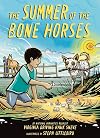
young Native boy stays with his grandparents on the Rosebud Reservation when his father falls ill.
This summer marks the first time Eddie will be away from Mom and Dad, and he feels “that hurting ache” as soon as he settles down on the sofa for the night instead of in his warm bed. But his grandparents show him the beauty of a life without modern conveniences as Grandma washes clothes by hand and Grandpa boils water for a nightly soak in the tub. Eddie participates, too: He gardens and show more helps out with the horses and chickens. Along the way, he learns about local dangers such as rattlesnakes. Slowly, his loneliness fades as he learns to make his own playthings (he fashions accessories from string for a group of cow bones Grandpa gives him, turning them into toy horses). When tragedy strikes, Eddie springs into action, using wisdom gleaned from his grandparents to save the day. Inspired by family experiences, Driving Hawk Sneve (Sicangu Lakota) weaves a captivating tale about the healing power of community and familial bonds. Her narrative unfolds at a perfect pace, wringing joy from simple moments, offering a well-realized window (and mirror) into reservation life, and deftly charting her protagonist’s journey from homesick youngster to resourceful hero. Littlebird’s (Oregon’s Confederated Tribes of Grand Ronde) bold, colorful, and textured images reflect Eddie’s determined spirit.
Infused with tenderness, this family story is simply lovely. (author’s and illustrator’s notes) (Chapter book. 5-8)
-Kirkus Review show less
This summer marks the first time Eddie will be away from Mom and Dad, and he feels “that hurting ache” as soon as he settles down on the sofa for the night instead of in his warm bed. But his grandparents show him the beauty of a life without modern conveniences as Grandma washes clothes by hand and Grandpa boils water for a nightly soak in the tub. Eddie participates, too: He gardens and show more helps out with the horses and chickens. Along the way, he learns about local dangers such as rattlesnakes. Slowly, his loneliness fades as he learns to make his own playthings (he fashions accessories from string for a group of cow bones Grandpa gives him, turning them into toy horses). When tragedy strikes, Eddie springs into action, using wisdom gleaned from his grandparents to save the day. Inspired by family experiences, Driving Hawk Sneve (Sicangu Lakota) weaves a captivating tale about the healing power of community and familial bonds. Her narrative unfolds at a perfect pace, wringing joy from simple moments, offering a well-realized window (and mirror) into reservation life, and deftly charting her protagonist’s journey from homesick youngster to resourceful hero. Littlebird’s (Oregon’s Confederated Tribes of Grand Ronde) bold, colorful, and textured images reflect Eddie’s determined spirit.
Infused with tenderness, this family story is simply lovely. (author’s and illustrator’s notes) (Chapter book. 5-8)
-Kirkus Review show less

Lakota Sioux children's author Virginia Driving Hawk Sneve, whose work ranges from informational picture-books like The Nez Perce and The Seminoles, to works of fiction like High Elk's Treasure and The Trickster and the Troll, turns to her own childhood in this new picture-book, producing a poignant holiday story that emphasizes the truly important aspects of Christmas. As the daughter of the Episcopal minister on the Rosebud Sioux Reservation, Virginia frequently goes without, because show more others in the community have greater need, and her parents expect her to sacrifice. When the winter "Theast" boxes - boxes from New England churches in "the east" - arrive, Virginia hopes that there will be a coat inside for her, as her current one is too small, and doesn't cover her wrists. Instead she finds that she must, once again, let others go first. Will she ever have the coat of her dreams...?
It's not much of a surprise, given the title, when the answer to this question turns out to be a resounding "yes," but watching Virginia get to that happy ending is still a pleasure. As a PK myself (that's Preacher's Kid to you!), I really identified with Virginia, and her sense of disappointment, as she is asked to let the nicer things go to others. Of course, I did not grow up on a reservation, nor did I belong, as a young girl, to a church community that needed donated clothing. But my own family were often the beneficiaries of wealthier relatives and friends, who sent hand-me-down clothing for us children, and I do remember that feeling of being set apart from others, because I was a minister's daughter. The scene in the story, when Virginia's mother and the other women sort through Theast boxes, just brought back such strong memories for me, of my own mother sorting through similar boxes!
In any case, Virginia's need is much greater than mine ever was, and so her disappointment is keener, something the author captures very well in the story. The eventual granting of her wish, through a special gift, is therefore all the more satisfying, particularly as she had behaved so well (much better than I would have done, I think). The idea that our blessings are more welcome, and mean the most to us, when we have been generous ourselves, is implicit in the story, without ever being the object of any moralizing passage, and was something I really appreciated. I also liked many of the little details in the story - the funny moment when Virginia and her father, holding a corset that had been sent in Theast boxes, dance around the room; the crowd's reaction to the Three Wise Men in the children's Christmas pageant appearing in Plains-style headdresses - and thought they made the narrative all the richer. A lovely picture-book memoir, one with a strong narrative voice, a good message, and beautifully expressive artwork, The Christmas Coat is a holiday book I recommend to anyone looking for Christmas tales with a little more substance. show less
It's not much of a surprise, given the title, when the answer to this question turns out to be a resounding "yes," but watching Virginia get to that happy ending is still a pleasure. As a PK myself (that's Preacher's Kid to you!), I really identified with Virginia, and her sense of disappointment, as she is asked to let the nicer things go to others. Of course, I did not grow up on a reservation, nor did I belong, as a young girl, to a church community that needed donated clothing. But my own family were often the beneficiaries of wealthier relatives and friends, who sent hand-me-down clothing for us children, and I do remember that feeling of being set apart from others, because I was a minister's daughter. The scene in the story, when Virginia's mother and the other women sort through Theast boxes, just brought back such strong memories for me, of my own mother sorting through similar boxes!
In any case, Virginia's need is much greater than mine ever was, and so her disappointment is keener, something the author captures very well in the story. The eventual granting of her wish, through a special gift, is therefore all the more satisfying, particularly as she had behaved so well (much better than I would have done, I think). The idea that our blessings are more welcome, and mean the most to us, when we have been generous ourselves, is implicit in the story, without ever being the object of any moralizing passage, and was something I really appreciated. I also liked many of the little details in the story - the funny moment when Virginia and her father, holding a corset that had been sent in Theast boxes, dance around the room; the crowd's reaction to the Three Wise Men in the children's Christmas pageant appearing in Plains-style headdresses - and thought they made the narrative all the richer. A lovely picture-book memoir, one with a strong narrative voice, a good message, and beautifully expressive artwork, The Christmas Coat is a holiday book I recommend to anyone looking for Christmas tales with a little more substance. show less
This hits all my nostalgia buttons for being a bored kid in a hot place with mostly imagination as entertainment. It's not a fast paced read. It feel skill appropriate for beginning chapter book readers, and it's excellent to be immersed in Eddie and Grandparent High Elk's life on the reservation. No running water, no electricity, an unreliable car that makes travel by horse a much better choice. Quite a bit of repetition, as the summer days are similar but not exactly the same, and a deeply show more loving family supporting each other. show less
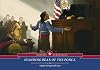
This clearly written kids book tells the story of the Ponca leader who challenged the status of Indians under America's Habeus Corpus law, forcing the government to acknowledge their citizenship. Of course, true to the history of American vs. Indian relations, this didn't mean fairness or justice. The author spells out the horrors and deaths associated with the constant relocating of the Ponca tribe, but without becoming too graphic for the elementary audience.
I think I'll donate this book show more to my local school library. show less
I think I'll donate this book show more to my local school library. show less
 This review was written for LibraryThing Early Reviewers.
Lists
Awards


You May Also Like


Associated Authors
Statistics
- Works
- 44
- Also by
- 4
- Members
- 1,683
- Popularity
- #15,271
- Rating
- 3.7
- Reviews
- 60
- ISBNs
- 83
