
Anthony de Mello (1931–1987)
Author of Awareness
About the Author
Anthony De Mello was a Jesuit priest known throughout the world for his writings and spiritual conferences. He died suddenly in 1987
Image credit: Confessions of a Liturgy Queen
Series
Works by Anthony de Mello
UNA LLAMADA AL AMOR. Consciencia - libertad - felicidad (El Pozo de Siquem nº 49) (Spanish Edition) (2015) 3 copies
La iluminación 3 copies
El amor 3 copies
Call to Love, The 2 copies
La búsqueda 2 copies
Testigo de la luz 2 copies
Abandonar-se a Deus para ser Igreja 2 copies
verdades de um minuto 2 copies
Praying naked 1 copy
Despertando para o eu 1 copy
Song of the Bird 1 copy
Encuentra a Dios en todas partes: Reflexiones sobre los ejercicios espirituales de san Ignacio de Loyola (2020) 1 copy
Spojení s Bohem 1 copy
Modlitba žáby I. 1 copy
Durga: Notebook 1 copy
Quebre o ídolo 1 copy
Ciało i dusza w modlitwie 1 copy
Test és lélek imája 1 copy
Fearlessness: You Don't Know What It Is, so You Don't Think It's Available to You - It's Available 1 copy
Awareness Deck: 108 Cards for Reflection and Inspiration (3) (The Anthony De Mello Legacy Library) 1 copy
Fearlessness: You Don't Know What It Is, so You Don't Think It's Available to You - It's Available 1 copy
Buscar a Dios en todas partes : reflexiones sobre los ejercicios espirituales de San Ignacio (2013) 1 copy
Wellspring 1 copy
[(Wellsprings : A Book of Spiritual Exercises)] [By (author) Anthony de Mello] published on (January, 1998) (1998) 1 copy
Ti voglio libero come il vento. Volare non significa solo muovere le ali, ma restare in aria senza sostegno (1998) 1 copy
La revelación 1 copy
Wake Up to Life 1 copy
La verdad 1 copy
K pramenům 1 copy
Nepotřebuješ se změnit 1 copy
Ponovno otkrivanje života 1 copy
LA FELICIDAD ES HOY 1 copy
Busca a Dios en todas partes. Reflexiones sobre los Ejercicios Espirituales de San Ignacio de Loyola (Spanish Edition) (1743) 1 copy
Por sus frutos los conoceran 1 copy
El auto conocoimiento 1 copy
Moments de saviesa 1986 1 copy
Kontakt s Bohom 1 copy
Sabedoria de um minuto 1 copy
Tagged
Common Knowledge
- Canonical name
- de Mello, Anthony
- Legal name
- de Mello, Anthony
- Birthdate
- 1931-09-04
- Date of death
- 1987-06-02
- Gender
- male
- Occupations
- Jesuit Priest
Spiritual Teacher
author - Organizations
- Society of Jesus
Sadhana Institute of Pastoral Counseling
Roman Catholic Church - Nationality
- India
- Birthplace
- Santa Cruz, Mumbai, India
- Places of residence
- Santa Cruz, Mumbai, India
USA
Spain - Place of death
- New York, New York, USA
- Burial location
- St. Peter's Church Cemetery, Bandra, India
- Map Location
- India
Members
Reviews
The Way to Love: The Last Meditations of Anthony de Mello (Image Pocket Classics) by Anthony De Mello
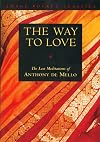
The Way to Love is not a sentimental book about romance or warmth or becoming a better, softer, more pleasant human being. We don’t need any more of those. This is sharper than that. Meaner, almost. In the best way. De Mello’s central argument is brutally simple: most of what we call love is not love at all. It is dependency. Possession. Fear dressed up in tenderness. A contract we pretend is a feeling.
The book is made up of short meditations, but they do not behave like show more “inspirational” reading. They behave more like small spiritual ambushes. You read a page thinking you are safe, then suddenly he has you by the throat: the thing you are clinging to is the thing making you miserable. The person you think you cannot live without has become an idol. The approval you chase is a cage. The self you defend so aggressively may not even be real.
There is a deep Christian mysticism in the work, but it is not churchy in the dead, upholstered, raise your hand for Jesus sense. De Mello does not flatter the reader. He does not hand out comfort cheaply. His message is freedom, but freedom in the terrifying sense: the kind where nobody is coming to save you from your own illusions.
What I appreciated most is how unsentimental he is about love. Real love, in his view, requires detachment. Not coldness. Not indifference. Detachment. The ability to see another person clearly without needing them to complete you, validate you, obey you, rescue you, or become the answer to some wound you refuse to name. That is a hard teaching in a culture that sells emotional dependence as romance and calls obsession devotion.
The Way to Love is a short book, but not a light one. You can finish it in an afternoon and then spend years trying to survive. It does not give you a system. It gives you a mirror. And like most honest mirrors, it is not especially interested in making you look good.
I read it at least once a year. show less
The book is made up of short meditations, but they do not behave like show more “inspirational” reading. They behave more like small spiritual ambushes. You read a page thinking you are safe, then suddenly he has you by the throat: the thing you are clinging to is the thing making you miserable. The person you think you cannot live without has become an idol. The approval you chase is a cage. The self you defend so aggressively may not even be real.
There is a deep Christian mysticism in the work, but it is not churchy in the dead, upholstered, raise your hand for Jesus sense. De Mello does not flatter the reader. He does not hand out comfort cheaply. His message is freedom, but freedom in the terrifying sense: the kind where nobody is coming to save you from your own illusions.
What I appreciated most is how unsentimental he is about love. Real love, in his view, requires detachment. Not coldness. Not indifference. Detachment. The ability to see another person clearly without needing them to complete you, validate you, obey you, rescue you, or become the answer to some wound you refuse to name. That is a hard teaching in a culture that sells emotional dependence as romance and calls obsession devotion.
The Way to Love is a short book, but not a light one. You can finish it in an afternoon and then spend years trying to survive. It does not give you a system. It gives you a mirror. And like most honest mirrors, it is not especially interested in making you look good.
I read it at least once a year. show less
The Way to Love: The Last Meditations of Anthony de Mello (Image Pocket Classics) by Anthony De Mello
Found this on the take shelf at work and felt compelled to read it because of its size. I love these little pocket books. Over the next week and a half, I read it on the subway, and underlined parts that resonated.
There's nothing here that will be new to you if you're at all familiar with Buddhist views on attachment, but hearing it from a Jesuit was interesting, especially because there's really very little talk of God or Jesus. I enjoyed de Mello's thoughts on love as a synonym for show more freedom, and his emphasis that holding someone as special means being in a sort of bondage to them, and vice versa. I also liked his emphasis on ruthless, constant observation--of oneself, of others, of institutions, of biases--to get as close as possible to what he deems Reality.
It's strange, because in Buddhism (and Hinduism) this discussion of attachments builds towards the concept of reincarnation. And quite naturally so: Becoming attached to material things, even individuals, is foolhardy because it only serves to draw you back into the cycle of life. With Christianity, the belief is that we only have one life and eternity awaits at the end--either in the good place or the bad one--so who really cares about attachments? I suppose de Mello's argument is that, through the systematic grinding away of the things to which we are attached (money, pride, knowledge, romance, other people) we may become closer to God while we're still alive, instead of having to wait until we're dead.
But the thing that trips me up with this little book, and with others like it, is the emphasis on solitude as the path to enlightenment. I just can't get my head around the idea that other people are ultimately distractions in this quest for mystic truth--in fact, I loathe it. de Mello doesn't encourage moving to a remote mountaintop, but he does flirt with a sort of conceptual walling-off of oneself, breaking bonds so that you will love "everyone and no one" and that just stinks of horseshit to me, it's like deliberately turning away from the human experience, from what unifies us all across history. And I can't abide it.
I am, at heart, a lover of people. Maybe that's my ultimate attachment. show less
There's nothing here that will be new to you if you're at all familiar with Buddhist views on attachment, but hearing it from a Jesuit was interesting, especially because there's really very little talk of God or Jesus. I enjoyed de Mello's thoughts on love as a synonym for show more freedom, and his emphasis that holding someone as special means being in a sort of bondage to them, and vice versa. I also liked his emphasis on ruthless, constant observation--of oneself, of others, of institutions, of biases--to get as close as possible to what he deems Reality.
It's strange, because in Buddhism (and Hinduism) this discussion of attachments builds towards the concept of reincarnation. And quite naturally so: Becoming attached to material things, even individuals, is foolhardy because it only serves to draw you back into the cycle of life. With Christianity, the belief is that we only have one life and eternity awaits at the end--either in the good place or the bad one--so who really cares about attachments? I suppose de Mello's argument is that, through the systematic grinding away of the things to which we are attached (money, pride, knowledge, romance, other people) we may become closer to God while we're still alive, instead of having to wait until we're dead.
But the thing that trips me up with this little book, and with others like it, is the emphasis on solitude as the path to enlightenment. I just can't get my head around the idea that other people are ultimately distractions in this quest for mystic truth--in fact, I loathe it. de Mello doesn't encourage moving to a remote mountaintop, but he does flirt with a sort of conceptual walling-off of oneself, breaking bonds so that you will love "everyone and no one" and that just stinks of horseshit to me, it's like deliberately turning away from the human experience, from what unifies us all across history. And I can't abide it.
I am, at heart, a lover of people. Maybe that's my ultimate attachment. show less
Maybe he deserves another star but it wasn't what I was looking for and I found his assuredness annoying. When I was younger, this book had things to teach me but I already had heard many of his anecdotes.
I liked his comparing the need for approval with an addictive drug, but I'm not so anti-drugs. Also, as he said, one needs to see the world different, but I've already seen the world his way and so it's not different to me. This book is for those who still need to do that. If you're one of show more those people, don't let my measly 2 stars stand in your way.
So what did I want instead? I wanted him to have a deeper understanding of why people just don't listen to his words and change. It's not enough to just say it's scary or hard or that people don't want to do it. This is one of the things Jed McKenna explains better, and even he doesn't fully make it clear. The real understanding requires giving up your belief that you are a rational agent who understands what they're doing and can make choices. G. I. Gurdjieff explains that free will isn't available and (yes, it's a paradox) must be worked toward. The paradox must be experienced, or as Anthony de Mello would put it, it's not what you do, but who you are that must change. show less
I liked his comparing the need for approval with an addictive drug, but I'm not so anti-drugs. Also, as he said, one needs to see the world different, but I've already seen the world his way and so it's not different to me. This book is for those who still need to do that. If you're one of show more those people, don't let my measly 2 stars stand in your way.
So what did I want instead? I wanted him to have a deeper understanding of why people just don't listen to his words and change. It's not enough to just say it's scary or hard or that people don't want to do it. This is one of the things Jed McKenna explains better, and even he doesn't fully make it clear. The real understanding requires giving up your belief that you are a rational agent who understands what they're doing and can make choices. G. I. Gurdjieff explains that free will isn't available and (yes, it's a paradox) must be worked toward. The paradox must be experienced, or as Anthony de Mello would put it, it's not what you do, but who you are that must change. show less
My review from Dec 2007:
Really helped bring peace of mind to my life and clarify my thoughts about religion, what's good and what's not so good about it. I found it especially helpful at presenting a response against the definition of "being a success" or "being a good person" that is too often put forth in the media and in too many mainstream religions today.
When reading it, it's important to understand that De Mello sometimes communicates through exaggerations or contradictions. (For show more instance, he tells us on pg. 35 - "The only way someone can be of help to you is in challenging your ideas." No doubt, all of us can think of countless other ways and specific situations in which someone could be of help to us in a way other than by "challenging our ideas".) De Mello has intentionally chosen this style in order to battle the sea of misconceptions that he sees over flooding our society. Rather than go through the semantic hoops that are technically necessary in order to make the subtle distinctions that he is after, De Mello chooses to "shock the truth out of us". He says things that are not intended to be completely accurate, and are sometimes even logically inconsistent, but rather contradict our culture's common assumptions, forcing us to either totally dismiss what he says or, if we read with an open mind, to consciously think about the point that De Mello is trying to communicate.
This is a stylistic choice that fits with his view that logic is unable to fully capture reality. He explains, "the guru cannot give you the truth. Truth cannot be put into words, into a formula. That isn't the truth. That isn't reality. Reality cannot be put into a formula. The guru can only point out your errors. When you drop your errors, you will know the truth. And even then you cannot say." show less
Really helped bring peace of mind to my life and clarify my thoughts about religion, what's good and what's not so good about it. I found it especially helpful at presenting a response against the definition of "being a success" or "being a good person" that is too often put forth in the media and in too many mainstream religions today.
When reading it, it's important to understand that De Mello sometimes communicates through exaggerations or contradictions. (For show more instance, he tells us on pg. 35 - "The only way someone can be of help to you is in challenging your ideas." No doubt, all of us can think of countless other ways and specific situations in which someone could be of help to us in a way other than by "challenging our ideas".) De Mello has intentionally chosen this style in order to battle the sea of misconceptions that he sees over flooding our society. Rather than go through the semantic hoops that are technically necessary in order to make the subtle distinctions that he is after, De Mello chooses to "shock the truth out of us". He says things that are not intended to be completely accurate, and are sometimes even logically inconsistent, but rather contradict our culture's common assumptions, forcing us to either totally dismiss what he says or, if we read with an open mind, to consciously think about the point that De Mello is trying to communicate.
This is a stylistic choice that fits with his view that logic is unable to fully capture reality. He explains, "the guru cannot give you the truth. Truth cannot be put into words, into a formula. That isn't the truth. That isn't reality. Reality cannot be put into a formula. The guru can only point out your errors. When you drop your errors, you will know the truth. And even then you cannot say." show less
Lists
You May Also Like


Associated Authors
Statistics
- Works
- 209
- Members
- 6,193
- Popularity
- #3,966
- Rating
- 4.0
- Reviews
- 82
- ISBNs
- 382
- Languages
- 20
- Favorited
- 13