
Sonia Shah
Author of Pandemic: Tracking Contagions, from Cholera to Ebola and Beyond
About the Author
Image credit: Courtesy of Allen and Unwin
Works by Sonia Shah
30 Seconds of Desire 1 copy
Associated Works
Tagged
Common Knowledge
- Birthdate
- 1969
- Gender
- female
- Education
- Oberlin College
- Occupations
- journalist
author - Nationality
- USA
- Birthplace
- New York, New York, USA
- Places of residence
- New York, New York, USA
Mumbai, India
Bangalore, India - Associated Place (for map)
- New York, New York, USA
Members
Reviews
Our teenage son volunteered at a local nature center every summer. One of the activities the counselors in training participated in was pulling up Purple Loosestrife. It is an considered invasive species that thrives along Michigan's lakesides.
So, I was shocked to read that Canadian researchers concluded "there is certainly no evidence that purple loosestrife 'kills wetlands' or 'creates biological deserts'!"
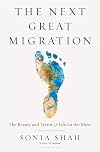
Investigative journalist Sonia Shah's book The Next Great Migration is filled with show more such iconoclastic insights, smashing prevalent notions contending that ecosystems were meant to be unchanging, pristine, and unadulterated.
Instead, she systematically argues that no place on Earth has remained untouched by the migration of species. Including human migration.
Shah takes readers through the entire history of the migration of species and the ideas humans have held about migration. Bad science and ingrained beliefs have lead to false assumptions that impact the political landscape to this very day. Most disturbing is the rise of Eugenics and categorization of human groups to justify our fearful reaction to newcomers.
Building walls, Shah contends, cannot stop or solve the reality of migrating human populations. She writes, "Over the long history of life on earth, its (migrations) benefits have outweighed its costs." Embracing migrants can be a solution to the problems we face.
Shah's book was an engrossing read that shed light on how we 'got to here'.
I received a free ebook from the publisher through NetGalley in exchange for a fair and unbiased review. show less
So, I was shocked to read that Canadian researchers concluded "there is certainly no evidence that purple loosestrife 'kills wetlands' or 'creates biological deserts'!"
Investigative journalist Sonia Shah's book The Next Great Migration is filled with show more such iconoclastic insights, smashing prevalent notions contending that ecosystems were meant to be unchanging, pristine, and unadulterated.
Instead, she systematically argues that no place on Earth has remained untouched by the migration of species. Including human migration.
Shah takes readers through the entire history of the migration of species and the ideas humans have held about migration. Bad science and ingrained beliefs have lead to false assumptions that impact the political landscape to this very day. Most disturbing is the rise of Eugenics and categorization of human groups to justify our fearful reaction to newcomers.
Building walls, Shah contends, cannot stop or solve the reality of migrating human populations. She writes, "Over the long history of life on earth, its (migrations) benefits have outweighed its costs." Embracing migrants can be a solution to the problems we face.
Shah's book was an engrossing read that shed light on how we 'got to here'.
I received a free ebook from the publisher through NetGalley in exchange for a fair and unbiased review. show less
The World Bank and International Monetary Fund (IMF), with their billions of dollars in strings-attached loans, lay heavy hands on the health care of the global poor. According to the bank, "improved water and sanitation," the very public works that lifted the West out of its infectious soup, were "not particularly cost effective as a health measure."
And so in Zaire, for example, World Bank and IMF "economic recovery" measures require the government to slash its spending on social services. show more In a single year the government fired more than eighty thousand teachers and clinicians. In Zambia, within just two years of such programs, the nutritional and health status of children had plummeted, canaries in a coal mine. Infant mortality rose by 25 percent while life expectancy dropped from fifty-four to forty years. In Argentina, polio and DPT immunizations fell by nearly 25 percent between 1992 and 1998, and throughout Latin America previously controlled diseases such as cholera and dengue fever re-emerged at epidemic levels.
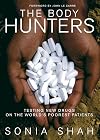
If you find the above excerpt shocking, read on. Sonia Shah's well-researched and well-argued investigation into the global health economy generally, and the global conduct of clinical trials more specifically, is absolutely terrifying. I've never been able to say this about a non-fiction book before: it was gripping. The only reason I could ever force myself to put it down was because I would become too infuriated by what I was reading to think straight anymore.
Shah is a phenomenal investigator, and she doesn't hesitate to name names (and corporations) in this no-holds-barred exposé of the pharmaceutical industry and the way in which clinical trials are conducted at the expense of subjects in the global south, to the advantage of patients in the first world. Shah demonstrates a firm understanding of the clinical trials paradigm and the motivations behind the primary bias-reducing strategies she chooses to pick on. She goes deep into the controversies surrounding HIV vaccine trials, the use of placebos in third-world countries, the lack of access to proven therapies for subjects when the trials end, and the intentional overlooking of consent requirements in third-world trials. She paints a vivid (and accurate) picture of the incentive structure driving the world pharmaceutical industry, and the resulting mis-appropriation of research efforts into "me-too" drugs and the creation of markets and diseases which didn't exist before, rather than into the development and dissemination of important drugs which could treat the real problems and diseases plaguing the global south.
An excellent read, recommended for anyone who has interest in clinical trials broadly, medical research ethics, global justice, or the impact of robust conceptions of intellectual property rights. show less
And so in Zaire, for example, World Bank and IMF "economic recovery" measures require the government to slash its spending on social services. show more In a single year the government fired more than eighty thousand teachers and clinicians. In Zambia, within just two years of such programs, the nutritional and health status of children had plummeted, canaries in a coal mine. Infant mortality rose by 25 percent while life expectancy dropped from fifty-four to forty years. In Argentina, polio and DPT immunizations fell by nearly 25 percent between 1992 and 1998, and throughout Latin America previously controlled diseases such as cholera and dengue fever re-emerged at epidemic levels.
If you find the above excerpt shocking, read on. Sonia Shah's well-researched and well-argued investigation into the global health economy generally, and the global conduct of clinical trials more specifically, is absolutely terrifying. I've never been able to say this about a non-fiction book before: it was gripping. The only reason I could ever force myself to put it down was because I would become too infuriated by what I was reading to think straight anymore.
Shah is a phenomenal investigator, and she doesn't hesitate to name names (and corporations) in this no-holds-barred exposé of the pharmaceutical industry and the way in which clinical trials are conducted at the expense of subjects in the global south, to the advantage of patients in the first world. Shah demonstrates a firm understanding of the clinical trials paradigm and the motivations behind the primary bias-reducing strategies she chooses to pick on. She goes deep into the controversies surrounding HIV vaccine trials, the use of placebos in third-world countries, the lack of access to proven therapies for subjects when the trials end, and the intentional overlooking of consent requirements in third-world trials. She paints a vivid (and accurate) picture of the incentive structure driving the world pharmaceutical industry, and the resulting mis-appropriation of research efforts into "me-too" drugs and the creation of markets and diseases which didn't exist before, rather than into the development and dissemination of important drugs which could treat the real problems and diseases plaguing the global south.
An excellent read, recommended for anyone who has interest in clinical trials broadly, medical research ethics, global justice, or the impact of robust conceptions of intellectual property rights. show less
Interesting and Applicable. This is a truly remarkable work that traces the sociological and biological impetuses for and restrictions on migration at levels from the individual through the species. Shah does a superb job of combining history and science to make her case, and even impeaches at least a few organizations currently in the headlines along the way - even while clearly having no way of knowing that she was doing so, as the book was written before they became so prominent more show more recently. Spanning from the guy that developed the modern taxonomic system through late breaking issues with the Trump Presidency, Shah shows a true depth to her research and builds a largely compelling case. Very much recommended. show less
Especially during the later Bush years, I heard a lot about mosquito nets to prevent malaria. It was a simple intervention that provided real action. Now, I'm told many (actually, most) of those mosquito nets aren't used to protect those that are sleeping. They are used as fish nets or on only adults, not on more vulnerable children.
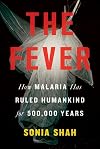
This little-known fact and more comprises the main storyline in Fever. Written by an Indian-American with personal ties to the disease, this book chronicles the show more history of an infection which still makes up one of the greatest public/global health challenges humankind has ever faced.
Topics range from pharmacology to scientific rivalries and from DDT to World War II. Extremely deep research and balance are the main means.
Convinced by the end of the book, I share Shah's concern that little prohibits an antibiotic-resistant version of malaria from rekindling among mosquitoes in Europe or America. If we cannot solve problems on other continents, how will we be able to solve this disease if it comes to our own shores, much like other mosquito-enabled diseases like West Nile Virus? If we cannot limit its scope in Asia and Africa, can we say that we've defeated this disease? Or has it defeated us? show less
This little-known fact and more comprises the main storyline in Fever. Written by an Indian-American with personal ties to the disease, this book chronicles the show more history of an infection which still makes up one of the greatest public/global health challenges humankind has ever faced.
Topics range from pharmacology to scientific rivalries and from DDT to World War II. Extremely deep research and balance are the main means.
Convinced by the end of the book, I share Shah's concern that little prohibits an antibiotic-resistant version of malaria from rekindling among mosquitoes in Europe or America. If we cannot solve problems on other continents, how will we be able to solve this disease if it comes to our own shores, much like other mosquito-enabled diseases like West Nile Virus? If we cannot limit its scope in Asia and Africa, can we say that we've defeated this disease? Or has it defeated us? show less
Lists
Awards


You May Also Like


Associated Authors
Statistics
- Works
- 8
- Also by
- 2
- Members
- 1,316
- Popularity
- #19,523
- Rating
- 3.9
- Reviews
- 27
- ISBNs
- 46
- Languages
- 7
- Favorited
- 1