
John Darnton
Author of Neanderthal
About the Author
John Darnton is culture editor for The New York Times. He lives in New York.
Works by John Darnton
エクスペリメント〈下〉 (ヴィレッジブックス) 1 copy
エクスペリメント〈上〉 (ヴィレッジブックス) 1 copy
Neandertaler 1 copy
O Experimento 1 copy
Associated Works
Writers on Writing: Collected Essays from the New York Times (2001) — Introduction — 478 copies, 5 reviews
Tagged
Common Knowledge
- Canonical name
- Darnton, John
- Birthdate
- 1941-11-20
- Gender
- male
- Education
- University of Wisconsin-Madison
- Occupations
- journalist
author - Organizations
- The New York Times
- Awards and honors
- Pulitzer Prize (International Reporting, 1982)
- Relationships
- Darnton, Robert (brother)
Darnton, Byron (father) - Nationality
- USA
- Birthplace
- New York, New York, USA
- Places of residence
- New York, New York, USA
Madrid, Spain
London, England, UK
Nairobi, Kenya
Lagos, Nigeria
Members
Reviews
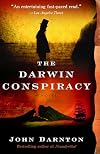
Summary: While Darwin's theory of evolution of natural selection revolutionized the way we think about science, much of its origin remains shrouded in mystery. Darwin journeyed to South America and the Galápagos aboard the Beagle in his early 20s, but didn't publish On the Origin of Species until almost 20 years afterwards. The question of when - and how - he came up with his famous idea has always been a matter of speculation. Until Hugh Kellem, a graduate student, unearths the hidden show more diary of Lizzie, one of Darwin's daughters. It points to a horrible, dark secret in Darwin's past, and a conspiracy to keep that secret from coming to light. The story alternates between Hugh's story, Lizzie's diaries, and sections of prose describing Darwin's experiences on the Beagle.
Review: I normally read fiction for escapism - hence the prevalence of fantasy and historical fiction in my reading diet. So, imagine my surprise when the first eight pages turn out to be about mist-netting for birds - exactly what I've been spending my time doing recently. And, I'm pleased to say, Darnton got it pretty much right, except I don't think most researchers use calipers to measure wing length, and holding a bird in bander's grip, the heartbeat is much stronger against your fingers than your palm. This same level of detail and accuracy characterizes the rest of the novel as well. Darnton draws heavily on his source material, including (naturally) Darwin's own Beagle Diaries as well as Peter Nichols's Evolution's Captain. The places where he invents details and conspiracies are legit, filling in the gaps without deviating from known historical fact. (Although, for the record, no graduate advisor in the world is going to take a graduate student who is tired of studying evolutionary biology and wants instead to go to England and "study something about Darwin" and tell them to go ahead and have a good time.)
As historical mysteries go, it's a pretty good mystery. While I'd pieced together most of the major clues before the characters got there, there were bits and pieces that got added in during the revelation to the characters that helped to create a fairly tight and well-thought-out conspiracy mystery. However, there were two main problems I had with this book. The first, and more minor, was that the historical sections from Darwin's POV seemed kind of remote, as though Darnton was afraid that he'd used up all his "fictionalization cred" on the fiction parts of the book, and didn't want to add too much dialogue or details to the parts that are a matter of historical record. The second is that Hugh's contemporary story, of trying to deal with/find out about his older brother's death, seemed extraneous. If I stretched, I could probably draw some parallels between the contemporary and historical storylines, but it mostly seemed like Darnton needed something for his characters to do other than research - it either needed to be further fleshed out, or cut. Overall, though, it was a fast-paced and ingenious mystery, sufficiently entertaining without going too far out on a historical limb. Also, it didn't even get in to the science/religious debate, instead going for the view that even if Darwin was flawed as a man, the theory stands on its own - which was much appreciated. 4 out of 5 stars.
Recommendation: Fun reading for biology geeks like me, and I bet it would be interesting for anyone who likes "true-fact" historical mystery, like Josephine Tey's The Daughter of Time or The DaVinci Code (although with better writing!). show less
Review: I normally read fiction for escapism - hence the prevalence of fantasy and historical fiction in my reading diet. So, imagine my surprise when the first eight pages turn out to be about mist-netting for birds - exactly what I've been spending my time doing recently. And, I'm pleased to say, Darnton got it pretty much right, except I don't think most researchers use calipers to measure wing length, and holding a bird in bander's grip, the heartbeat is much stronger against your fingers than your palm. This same level of detail and accuracy characterizes the rest of the novel as well. Darnton draws heavily on his source material, including (naturally) Darwin's own Beagle Diaries as well as Peter Nichols's Evolution's Captain. The places where he invents details and conspiracies are legit, filling in the gaps without deviating from known historical fact. (Although, for the record, no graduate advisor in the world is going to take a graduate student who is tired of studying evolutionary biology and wants instead to go to England and "study something about Darwin" and tell them to go ahead and have a good time.)
As historical mysteries go, it's a pretty good mystery. While I'd pieced together most of the major clues before the characters got there, there were bits and pieces that got added in during the revelation to the characters that helped to create a fairly tight and well-thought-out conspiracy mystery. However, there were two main problems I had with this book. The first, and more minor, was that the historical sections from Darwin's POV seemed kind of remote, as though Darnton was afraid that he'd used up all his "fictionalization cred" on the fiction parts of the book, and didn't want to add too much dialogue or details to the parts that are a matter of historical record. The second is that Hugh's contemporary story, of trying to deal with/find out about his older brother's death, seemed extraneous. If I stretched, I could probably draw some parallels between the contemporary and historical storylines, but it mostly seemed like Darnton needed something for his characters to do other than research - it either needed to be further fleshed out, or cut. Overall, though, it was a fast-paced and ingenious mystery, sufficiently entertaining without going too far out on a historical limb. Also, it didn't even get in to the science/religious debate, instead going for the view that even if Darwin was flawed as a man, the theory stands on its own - which was much appreciated. 4 out of 5 stars.
Recommendation: Fun reading for biology geeks like me, and I bet it would be interesting for anyone who likes "true-fact" historical mystery, like Josephine Tey's The Daughter of Time or The DaVinci Code (although with better writing!). show less
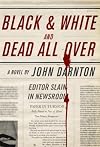
I loved this author's earlier The Darwin Conspiracy (though not so much his first novel, Neanderthal), so pounced on this when I came across it. A series of murders in the building of the New York Globe (i.e., the New York Times, where Darnton has for a long time been an illustrious fixture) shocks all the journos and indeed the nation. The tale is full of roman a clef elements -- no prizes for guessing who's the prototype for Antipodean media mogul Lester Moloch, for example -- but that's show more just icing on what proves, after a sticky first 50 or so pages, to be a very delectable cake. Those early pages are annoying because Darnton opts for a cheap way of trying to keep our attention -- repeating wacky urban-legend-style journo tales. Because the tales actually are funny/bizarre/whatever, this first part of the book isn't boring: it's just that I got fed up by the fact that as good a writer as Darnton can be was so lacking in confidence as to be resorting to this tactic. The early part of the book is, too, marred by P.D. James-esque orotundity.
That hurdle over, the book got better and better. I laughed out loud quite a few times (as when the Globe boss, a man with a rare talent for mauling quotes, came out with "The only thing we have to worry about is worry itself", p198); meanwhile, I was turning the pages avidly to find out what was going to happen next. Great stuff. show less
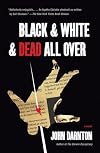
An elaborate satirical mystery about a New York Times-style broadsheet that has a spate of inside murders, starting with a much-loathed editor. Includes fond insider newsroom shtick, some vivid descriptions of retired technology and the new printing press (which is automated with 'drones'), and a cast of thousands. Though it's not an old book, it seems strangely dated - the web edition of the 'Globe' is a fringe element of the real paper (and in a pinch can be run by a dozen nerds out of an show more apartment), there some moaning about the state of the news industry but it's nothing compared to the the current all-too-real imminent disaster. To add to the slightly anachronistic story elements and the Golden Age plotting (I was reminded of Sayers' Murder Must Advertise) the style is both arch and baroque, likened by a Times reviewer not inaccurately to a mix of Christie and Hiassen but to me reminiscent of Trollope in his most sarcastic and panoramic mode. The pacing seemed a tad tortoise-like and the number of characters was hard to sort out, many of them more character actors than fleshed out people. But perhaps that's the way it should be in a book that is both an hommage to the glory that was the newsroom and a light-hearted bagatelle. show less
John Darnton has done a near-impossible thing: craft a thriller, using Darwin as a foil, yet sidestep the current religious brouhaha about evolution. Well, not entirely. By the end of the book it's clear that science and common sense are still safe, even as Darwin himself is peeled open as a near-plagiarist, possible murderer, and all-around nervous wreck.
It's hard to tell, though, if the scholarship and historical theorizing that saturate this story constitute some meaningful ideas on the show more author's part, or if it's just there to serve the story. The book is flat-out engrossing, and deftly weaves present-day amateur detectives, young Darwin's voyage of discovery, and his last, troubled days. I was lured in by the prospect of exposing Darwin the brilliant thinker, the heroic disruptor of sacred cows (turns out they're just cows!), as -- a VILLAIN. I admit I was worried (is this thickly-disguised anti-scientism?), but ultimately it's just a tease. The mystery's the thing, and it's jim-dandy.
Of course, few fundamentalists will be taken in. Anything short of out-right refutation and denunciation of evolution is seen as coddling poor Charlie, but a few might be fooled by the title, and will squirm with delight as the clues pile up and Darwin's own daughter begins to revile him. Have at thee, rationality! Even so, materialistic science is not undone.
The description of the original voyage of the Beagle, with shipboard details, revelatory jungle excursions, bug discoveries, and professional jealousies, is memorable, even thrilling. The sleuthing sub-plot has his "lesser" daughter emerging from dim history and struggle to reconcile the father she idolizes with his accomplishments, and possible crimes. It's highly effective, but relies on a literary device that's problematic.
Evoking this young girl (and then woman), tracing the arc of her tragic life, her filial devotion and unappreciated brilliance, is an original and plausible way to enter Darwin's life and times. All the right things are said, even when she is merely advancing the plot. Darnton wisely shows feminist subtext sparingly, and without demagoguery. But the author (male, middle-aged) attempts a Herculean task: writing as a 19th century girl, one from a literary, well-heeled family. It was a time when well-formed sentences were expected, even from females. Juggling all this requires exquisite balance and excruciating word choices. While she is credible overall, and effective as an ensemble character, she doesn't quite come through as an adolescent girl. I wanted to see a few just-so stumbles in that formidable syntax, some juvenile choices in her diary prose, something to reveal the stifled inner life and emotional depth of such a unique character. There is none of the occasional panic that accompanies the transit to womanhood in any age. At no time is Darnton wrong with her voice, but she carries too much of the story to remain at arm's length.
We need this book. Darwin changed everything, deflating our conceit about human importance and elevating our knowledge. His careful observations turned pieties about "God's creation" into a rich, ever-evolving, as it were, engagement with the natural world. He was not, even so, a "god", or even dem-iurge, and "The Darwin Conspiracy" elevates his accomplishment while examining, with Darwinian attention to detail, his feet of clay.
show less
It's hard to tell, though, if the scholarship and historical theorizing that saturate this story constitute some meaningful ideas on the show more author's part, or if it's just there to serve the story. The book is flat-out engrossing, and deftly weaves present-day amateur detectives, young Darwin's voyage of discovery, and his last, troubled days. I was lured in by the prospect of exposing Darwin the brilliant thinker, the heroic disruptor of sacred cows (turns out they're just cows!), as -- a VILLAIN. I admit I was worried (is this thickly-disguised anti-scientism?), but ultimately it's just a tease. The mystery's the thing, and it's jim-dandy.
Of course, few fundamentalists will be taken in. Anything short of out-right refutation and denunciation of evolution is seen as coddling poor Charlie, but a few might be fooled by the title, and will squirm with delight as the clues pile up and Darwin's own daughter begins to revile him. Have at thee, rationality! Even so, materialistic science is not undone.
The description of the original voyage of the Beagle, with shipboard details, revelatory jungle excursions, bug discoveries, and professional jealousies, is memorable, even thrilling. The sleuthing sub-plot has his "lesser" daughter emerging from dim history and struggle to reconcile the father she idolizes with his accomplishments, and possible crimes. It's highly effective, but relies on a literary device that's problematic.
Evoking this young girl (and then woman), tracing the arc of her tragic life, her filial devotion and unappreciated brilliance, is an original and plausible way to enter Darwin's life and times. All the right things are said, even when she is merely advancing the plot. Darnton wisely shows feminist subtext sparingly, and without demagoguery. But the author (male, middle-aged) attempts a Herculean task: writing as a 19th century girl, one from a literary, well-heeled family. It was a time when well-formed sentences were expected, even from females. Juggling all this requires exquisite balance and excruciating word choices. While she is credible overall, and effective as an ensemble character, she doesn't quite come through as an adolescent girl. I wanted to see a few just-so stumbles in that formidable syntax, some juvenile choices in her diary prose, something to reveal the stifled inner life and emotional depth of such a unique character. There is none of the occasional panic that accompanies the transit to womanhood in any age. At no time is Darnton wrong with her voice, but she carries too much of the story to remain at arm's length.
We need this book. Darwin changed everything, deflating our conceit about human importance and elevating our knowledge. His careful observations turned pieties about "God's creation" into a rich, ever-evolving, as it were, engagement with the natural world. He was not, even so, a "god", or even dem-iurge, and "The Darwin Conspiracy" elevates his accomplishment while examining, with Darwinian attention to detail, his feet of clay.
show less
Lists
Awards


You May Also Like


Associated Authors
Statistics
- Works
- 11
- Also by
- 1
- Members
- 2,714
- Popularity
- #9,464
- Rating
- 3.2
- Reviews
- 72
- ISBNs
- 125
- Languages
- 12
- Favorited
- 5
