
S.J.A. Turney
Author of A Year of Ravens
About the Author
Disambiguation Notice:
Tales of Ancient Rome was the original title for Tales of Ancient Rome Volume 1, which is the second edition with some different content. Volume 2 is planned.
Image credit: Official author photo
Series
Works by S.J.A. Turney
Agricola: Invader: a must-read new series full of action and adventure set in the thrilling world of the Roman Empire (2024) 17 copies, 1 review
Bellatrix: the thrilling tale of a Roman legion at war in Ancient Egypt (Legion XXII Book 2) (2023) 11 copies
Wolves around the Throne: A pulse-pounding Viking epic packed with battle and intrigue (Wolves of Odin Book 4) (2023) 5 copies
Terra Incognita: a thrilling Roman era historical adventure. Can Nero's legions discover the source of the mighty River Nile? (2024) 4 copies
Songs of Blood and Gold 4 copies
Marius' Mules -VI: Sertorius' Ghost 3 copies
Kings of Stone and Ice: An action-packed, unputdownable Viking adventure (Wolves of Odin, 6) (2025) 3 copies
Praetorian: The Nemesis Blade 3 copies
Loki Unbound: A thrilling Viking adventure of berserkers and raiding (Wolves of Odin Book 5) (2024) 3 copies
Historical Tales 1 copy
Praetorian: The Bandit King 1 copy
Prince: The explosive tale of the rise of the Roman Empire's last emperor (Last Emperor of Rome, 1) (2026) 1 copy
Invader Agricola #1 1 copy
Tagged
Common Knowledge
- Other names
- Turney, Simon
- Gender
- male
- Education
- The Open University
- Occupations
- writer
civil servant
computer network manager - Organizations
- Society of Authors
IBPA - Agent
- Mulcahy Associates
- Nationality
- UK
- Birthplace
- Ripon, North Yorkshire, England, UK
- Places of residence
- North Yorkshire, England, UK
- Map Location
- UK
- Disambiguation notice
- Tales of Ancient Rome was the original title for Tales of Ancient Rome Volume 1, which is the second edition with some different content. Volume 2 is planned.
Members
Reviews

Funny, I wonder if there is a bit of truth in the way the "barbarians" underestimated the Romans by their effete appearance. Sadly, the tribe leaders met with maybe the least impressive, Claudius. Tragically so.
I've always found it odd that the Romans wiped out the Druid practice/religion when they pretty much left all others alone, even encouraging people to build temples in Rome to foreign gods.
Interesting the self-interest on display when the outraged Britons quake under the prospect of show more becoming Roman slaves when they enslave each other with abandon.
Not sure I'll finish this. It's a foregone conclusion and there is a ton of grisly action and cruelty, to be expected with war, but I'll never listen to it again even if I do get through it. Back to Audible it will go.
Ok, I made it through, but skipped over some more gratuitous passages - droning on about curses and battle blows. It strikes me, in the fierce pride of the women in the book, that the only way they can have any agency is to adopt the bloodthirsty violence made the cultural norm by men. Behaving with gentleness, kindness, compassion and compromise are all weak and despised. Why? Because they are the default position of many women? Because they don't result in absolute domination and oppression? Why do we value those qualities in humans over the others? Why are we, and by we I mean the culture as a whole and men in particular, so afraid of that other side to us? Sometimes called the feminine side, but I don't think it's that specific. It's just been nearly completely wiped out of so much of how we think of ourselves and what we consider normal and natural. Sad really. We never learn and it will be the end of us one day. And, sadly, probably all life on earth as we know it. show less
I've always found it odd that the Romans wiped out the Druid practice/religion when they pretty much left all others alone, even encouraging people to build temples in Rome to foreign gods.
Interesting the self-interest on display when the outraged Britons quake under the prospect of show more becoming Roman slaves when they enslave each other with abandon.
Not sure I'll finish this. It's a foregone conclusion and there is a ton of grisly action and cruelty, to be expected with war, but I'll never listen to it again even if I do get through it. Back to Audible it will go.
Ok, I made it through, but skipped over some more gratuitous passages - droning on about curses and battle blows. It strikes me, in the fierce pride of the women in the book, that the only way they can have any agency is to adopt the bloodthirsty violence made the cultural norm by men. Behaving with gentleness, kindness, compassion and compromise are all weak and despised. Why? Because they are the default position of many women? Because they don't result in absolute domination and oppression? Why do we value those qualities in humans over the others? Why are we, and by we I mean the culture as a whole and men in particular, so afraid of that other side to us? Sometimes called the feminine side, but I don't think it's that specific. It's just been nearly completely wiped out of so much of how we think of ourselves and what we consider normal and natural. Sad really. We never learn and it will be the end of us one day. And, sadly, probably all life on earth as we know it. show less
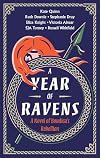
What an unusual twist on co-authoring! The story of Boudica's rebellion is told in (mostly) linear time, but from the points of view of several different characters with each installment carrying on the story from a different p.o.v. as told by a different author. Surprisingly, there's not a blatantly lesser section in the lot.
Given how little we know about Boudica, the culture of Celtic Britain, and Druidism, the authors had very little to work with, yet they've created a very plausible show more sociopolitical setting for their novel. The characters are round and believable and often sympathetic. There's not a single uninflected "good guy," which seems appropriate, given the historical roots of the tale and the fact that this is primarily a story of war.
As expected, the subject means that the book gets pretty much all the content warnings. Violence, SA, child abuse, gore, cruelty to humans and animals, homophobia, racism, etc. There are many disturbing scenes and elements, but none are exploitative or unnecessarily detailed or prolonged. If you've somehow gotten this far in life without realizing that humans, even those who are generally decent in other contexts, often do abjectly horrific things to each other in war, this novel will thoroughly correct that oversight. Also, if you don't know the source story, be aware that Boudica revolted against the Roman occupation of Britain after the Roman provincial procurator had her publicly stripped and flogged and allowed Roman soldiers to rape her daughters, so things get ugly pretty quickly in this book and then just stay ugly.
Human nature is actually the most disturbing thing about the book. As in life, there are a few characters who are so thoroughly degenerate and brutal that we feel pretty comfortable hating them and it's a relief when they're taken out of circulation, but the vast majority of the characters are not so easily managed. Nearly every main character, whether Roman or Britton, does things that, to a comfortable 21st-century eye, are terrible. Sometimes they have no choice, but often they make what seems like the best decision in the moment, even if it leads them into committing injustices. And yet every single one has moments in which the reader sees their humanity and feels for them. For a book with seven authors, that's pretty impressive. show less
Given how little we know about Boudica, the culture of Celtic Britain, and Druidism, the authors had very little to work with, yet they've created a very plausible show more sociopolitical setting for their novel. The characters are round and believable and often sympathetic. There's not a single uninflected "good guy," which seems appropriate, given the historical roots of the tale and the fact that this is primarily a story of war.
As expected, the subject means that the book gets pretty much all the content warnings. Violence, SA, child abuse, gore, cruelty to humans and animals, homophobia, racism, etc. There are many disturbing scenes and elements, but none are exploitative or unnecessarily detailed or prolonged. If you've somehow gotten this far in life without realizing that humans, even those who are generally decent in other contexts, often do abjectly horrific things to each other in war, this novel will thoroughly correct that oversight. Also, if you don't know the source story, be aware that Boudica revolted against the Roman occupation of Britain after the Roman provincial procurator had her publicly stripped and flogged and allowed Roman soldiers to rape her daughters, so things get ugly pretty quickly in this book and then just stay ugly.
Human nature is actually the most disturbing thing about the book. As in life, there are a few characters who are so thoroughly degenerate and brutal that we feel pretty comfortable hating them and it's a relief when they're taken out of circulation, but the vast majority of the characters are not so easily managed. Nearly every main character, whether Roman or Britton, does things that, to a comfortable 21st-century eye, are terrible. Sometimes they have no choice, but often they make what seems like the best decision in the moment, even if it leads them into committing injustices. And yet every single one has moments in which the reader sees their humanity and feels for them. For a book with seven authors, that's pretty impressive. show less
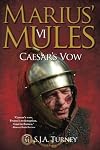
Although I enjoyed this book, it was terribly unsettling; I finished it yesterday but am still trembling and angry at Caesar for how he sought to fulfill his so-called vow. Perhaps it should be termed "Caesar's Mad Obsession" instead. Very seldom has a book affected me so strongly; once or twice before I've identified with certain sympathetic characters. This Caesar and several other characters both old and new are absolutely odious, even the protagonist's patronizing wife. For his genocidal show more policy and unmitigated razing of settlements and firing of crops and animals, I could have very easily taken a pilum to Caesar and others who buy into his brutality with no opposition. Several times I felt like throwing the book across the room. I'm glad the protagonist is decent; he and his commando-like group are willing to put themselves into danger and to seek the villain alone; he hopes to end the unnecessary violence against whole peoples. They face treachery among one of their own. I feel the author has thrown us some red herrings as to the traitor's identity; they serve to keep us guessing.
The author must be doing something right to get such an extreme reaction from me. His books are improving with each one. His filling in the gaps in the history seemed absolutely plausible to me. I will be eager to see how he treats the final confrontation in Book 7. show less
The author must be doing something right to get such an extreme reaction from me. His books are improving with each one. His filling in the gaps in the history seemed absolutely plausible to me. I will be eager to see how he treats the final confrontation in Book 7. show less
5+ stars! Seven authors each write in sequence from the viewpoints of different people about Rome’s occupation of Britain, and the attempt of a queen of one of the tribes to force them out. Queen Boudica did exist; her story was told by the Roman historians. But this book follows other characters (one per author): another queen, a slave (Boudica’s husband’s illegitimate daughter), a Roman tribune, a Druid, a son of an important character, a warrior (Boudica’s chief military show more official), and Boudica’s daughters. The story is seamless despite being written by 7 people, and the threads of the story carry through ingeniously. There are unlikeable characters, but most (more than those listed above) end up being sympathetic. This is true even for some characters one might initially dislike. This is a marvelous book. I borrowed it but will try to find a copy to buy. Highly recommended. show less
Lists
The Trojan War (1)
Awards


You May Also Like


Associated Authors
Statistics
- Works
- 82
- Members
- 1,085
- Popularity
- #23,679
- Rating
- 4.1
- Reviews
- 43
- ISBNs
- 174
- Languages
- 2
- Favorited
- 2

