
Gordon Doherty
Author of Assassin's Creed: Odyssey
About the Author
Series
Works by Gordon Doherty
Tagged
Common Knowledge
Members
Reviews
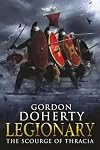
What a page-turner and excitement crackled from every page! From the sands of Persia we see Pavo and his buddies from the XI Claudia in Thracia, with the task of stemming a Goth and Hun invasion. If successful, it would mean the Eastern Roman Empire would be overrun by these barbarians. A strategic pass falls to them, and Pavo and confreres are sent to help defend another pass, Trajan's Gate, so that the Western Emperor and troops can bring their aid. The defenders of the fort face a show more horrendous winter and must deal with an ailing commander. Meanwhile, Tribune Gallus and Pavo's long-lost brother attempt to reach the Western Emperor, Gratian, to beg his help. The novel describes preparations for the siege and the final standoff during a blinding snowstorm. Some of the defense measures were certainly original! Also, we follow the two officers on their journey. Will they reach the emperor in time?
The author has crammed so much action and excitement on every page, but we still have the same engaging characters from earlier volumes in the series, plus new ones. Treachery is revealed of a certain character, in a device similar to one the author has used before. Some resolution of incidents did seem almost miraculous. The "baddies" had NO redeeming qualities, whereas the "goodies" may have been flawed but were heroic.
I do see improvement in proofing and writing style, but I do ask one thing, Mr. Doherty. When one character is addressing another with the honorific of "Dominus": PLEASE use the correct form: "Domine". That may be pedantic of me but it is a peeve of mine in Roman-themed novels. Highly recommended for lovers of military fiction set in the later Roman Empire! show less
The author has crammed so much action and excitement on every page, but we still have the same engaging characters from earlier volumes in the series, plus new ones. Treachery is revealed of a certain character, in a device similar to one the author has used before. Some resolution of incidents did seem almost miraculous. The "baddies" had NO redeeming qualities, whereas the "goodies" may have been flawed but were heroic.
I do see improvement in proofing and writing style, but I do ask one thing, Mr. Doherty. When one character is addressing another with the honorific of "Dominus": PLEASE use the correct form: "Domine". That may be pedantic of me but it is a peeve of mine in Roman-themed novels. Highly recommended for lovers of military fiction set in the later Roman Empire! show less
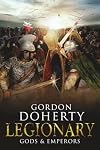
4.5/5. I'm quite enthusiastic about this latest adventure of Pavo and his comrades of the XI Claudia. 378 AD: contention between Goths under Fritigern and the Roman Empire. The whole story engendered much excitement ranging from the escape of Tribunus Gallus from the dungeons of the Western Emperor, Gratian and his making his way through horrendous obstacles back to the forces of Valens, the Eastern Emperor to delaying tactics of Gratian and the final conflict at Adrianople between Goths and show more Romans, where Romans are betrayed by a subterfuge. Pavo personally discovers the evil of a person he has held dear but rises above it, though I'm sure it will always hurt him.
I enjoyed the battle sequences--Gratian against a Goth invasion that takes him off the road to the East, and the debacle that was Adrianople; the banter and interplay between Pavo and his friends; Pavo's recurring nightmare sequences, which might portend the future. They remind me of a similar prophetic dream shared by several people in [book:The End of Sparta|11215777] but I liked Gordon's better, because of his including symbolism. I enjoyed reading Tribunus Gallus's Near Death Experiences, in which he sees his dead wife and son. Gordon's style has improved since his last novel; it was action-packed and tightly paced. He can convey the crudity of soldiers without being offensive. I wonder why a regular publisher has not snapped him up--unless there might be a greater amount of independence in self-publishing.
Very highly recommended. show less
I enjoyed the battle sequences--Gratian against a Goth invasion that takes him off the road to the East, and the debacle that was Adrianople; the banter and interplay between Pavo and his friends; Pavo's recurring nightmare sequences, which might portend the future. They remind me of a similar prophetic dream shared by several people in [book:The End of Sparta|11215777] but I liked Gordon's better, because of his including symbolism. I enjoyed reading Tribunus Gallus's Near Death Experiences, in which he sees his dead wife and son. Gordon's style has improved since his last novel; it was action-packed and tightly paced. He can convey the crudity of soldiers without being offensive. I wonder why a regular publisher has not snapped him up--unless there might be a greater amount of independence in self-publishing.
Very highly recommended. show less
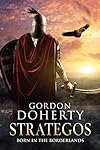
As historical war books go, this one was fabulous. Mr. Doherty does an amazing job making you feel like you were right there in the battle with the blood, sweat, chaos, and violence. The book follows a young boy named Apion who ends up on the road to becoming a Strategos in the Roman army in the East. When he is a young boy, his family is killed by assassins. He is taken in by a former Turkish soldier and trained to protect himself. After his protector is killed by the same assassins, he show more joins up with the Legion in Constantinople and rises rapidly through the ranks through many feats of bravery of selflessness. There are family tensions and trauma based on the Turkish/Roman adversarial issues which rise throughout the book.
The characters are well drawn, and you find not only tenderness, humor and sadness, as well as the standard military aspects that you expect in books like these. The characters while not all likeable, were amazingly three dimensional and imperfect, with layers of personality, which I find helps a book tremendously.
The plot is definitely character driven. Apion and a prophesy are at the core of the book, and both work themselves out to a major. There are many skirmishes, some battles, and a major battle against the Turks at the end, which becomes a war of strategy and is very interesting to say the least.
If you like ancient war novels, I would recommend this one. When I read this, there was a follow up book planned. The story surely has legs enough for another book. show less
The characters are well drawn, and you find not only tenderness, humor and sadness, as well as the standard military aspects that you expect in books like these. The characters while not all likeable, were amazingly three dimensional and imperfect, with layers of personality, which I find helps a book tremendously.
The plot is definitely character driven. Apion and a prophesy are at the core of the book, and both work themselves out to a major. There are many skirmishes, some battles, and a major battle against the Turks at the end, which becomes a war of strategy and is very interesting to say the least.
If you like ancient war novels, I would recommend this one. When I read this, there was a follow up book planned. The story surely has legs enough for another book. show less
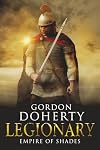
Another exciting adventure of now-Tribunus Pavo and the XI Claudia, this time fighting Goths. In the aftermath of Adrianople, the huge defeat of the Eastern Roman Army and the deaths of Pavo's comrades and superior officer, Pavo is promoted to that position and now must learn leadership. The lads do defeat a warlord, an easy task as this Ortwin is no comparison to Fritigern, the Gothic leader. More excitement comes in the form of a botched assassination attempt on Gratian, Western Emperor, show more and the efforts of a Speculator [high-level Agens in Rebus??] to discover the culprit. Pavo and his men are tasked with bringing a rag-tag group of Goths from beyond the Danubius to the Western Empire, not out of compassion, but because the men can swell Gratian's army. Gratian is painted in this novel as a complete villain. We follow them and witness a group of Gothic malcontents and extremists among them roiling the waters, both figuratively and literally. Finally, Pavo and his men are a reserve force, swooping in when the battle is nearly lost against the so-called "Black Horde", a breakaway group of Goths led by two men who had been cheated by Gratian after Adrianople. Gratian had reneged on a solemn promise.
I can see the author's improvement in writing style and I feel if he keeps on this trajectory, he's on to triumph after triumph. This novel was filled with his same trademark gory battles and skirmishes, without neglecting character development, even that of minor figures. The novel brimmed with betrayal, double crosses, treachery, comradeship, even plausible love interest made poignant. I personally see the author's need for injecting some bawdiness to bring out certain individuals' personality traits and as being part of soldiers' lives, but that doesn't mean it didn't make me uneasy. At least it was rather mild. The bragging of Sura got old fast. "Off" as a verb was used several times; to me that is too modern a term for this setting and jarred my ear; why didn't the author use the synonyms "finish off", "murder", or even "kill"? I did like the author's use of the Aesop-like fable of the goose and wolf and how it fit into the novel.
Highly recommended. show less
I can see the author's improvement in writing style and I feel if he keeps on this trajectory, he's on to triumph after triumph. This novel was filled with his same trademark gory battles and skirmishes, without neglecting character development, even that of minor figures. The novel brimmed with betrayal, double crosses, treachery, comradeship, even plausible love interest made poignant. I personally see the author's need for injecting some bawdiness to bring out certain individuals' personality traits and as being part of soldiers' lives, but that doesn't mean it didn't make me uneasy. At least it was rather mild. The bragging of Sura got old fast. "Off" as a verb was used several times; to me that is too modern a term for this setting and jarred my ear; why didn't the author use the synonyms "finish off", "murder", or even "kill"? I did like the author's use of the Aesop-like fable of the goose and wolf and how it fit into the novel.
Highly recommended. show less
Lists
Awards
You May Also Like


Statistics
- Works
- 33
- Members
- 491
- Popularity
- #50,319
- Rating
- 3.7
- Reviews
- 25
- ISBNs
- 72
- Languages
- 8
