
Élmer Mendoza
Author of Silver Bullets
About the Author
Series
Works by Élmer Mendoza
Associated Works
Tagged
Common Knowledge
- Canonical name
- Mendoza, Élmer
- Birthdate
- 1949
- Gender
- male
- Nationality
- Mexico
- Birthplace
- Culiacán, Sinaloa, Mexico
- Associated Place (for map)
- Sinaloa, Mexico
Members
Reviews
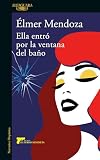
No tengo por costumbre leer mucha novela negra o thriller de autores mexicanos, cosas raras mías nada que ver con la calidad, sin embargo, este libro me lo enviaron para su lectura y no pude evitar agarrarlo de inmediato, no se si fue la portada o la sinopsis, pero hubo algo ahí y como casi siempre mi intuición no me falló.
Hay muchas cosas a destacar, lo primero es el estilo narrativo del autor, imposible, totalmente imposible no notar de donde es originario, más allá de que está show more ubicado en Sinaloa, juro que en mi cabeza cada palabra estaba dicha con ese sonsonete tan característico de los Culichis, ¡lo amé!, si no me hubiera gustado la historia, solo este hecho me habría hecho amar al libro, me sentí tan identificada y que conste que no soy de ahí, pero amo a la gente de Sinaloa y adoro su manera de hablar, no solo su acento si no su franqueza.
Otro aspecto del estilo narrativo fue definitivamente que es reconocible, no había leído al autor, pero creo que jamás había leído a ningún otro escritor que tenga un estilo ni remotamente parecido a este, me pareció muy original, muy ágil, muy local y al mismo tiempo totalmente actual y es que, no se como explicarlo, a pesar de las malas palabras, es que me ha parecido tan natural, como he dicho, tan Sinaloense, sin duda.
El Zurdo es un gran personaje, he dicho antes que no acostumbro a leer autores mexicanos de este género y es básicamente porque en su mayoría, por obvias razones, tocan temas que personalmente evado, demasiada realidad como para encontrarla también en la ficción, pero sin duda, Élmer Mendoza ha logrado a pesar de esto mismo de, si, poner demasiada realidad, pero con un toque verdaderamente digerible, cercano, creo que se debe mucho a su protagonista, un hombre tan él, que me ha llegado, que he adorado y que me ha sido muy fácil ponerle cara, con un gran personalidad, pero que sé que es tan relista, aunque la historia es bastante buena, el peso se lo ha llevado el Zurdo, sin él este libro no sería lo que es.
Un lenguaje muy pero que muy local, no veo a muchos extranjeros leyendo este libro y comprendiendo lo que se dice completamente.
Demasiadas cosas pasando, una excelente historia de intriga contada en realmente muy pocas páginas, me ha parecido increíble que el autor lograra contar tanto en tan poco espacio, considerando que el libro no llega a las 300 páginas y que la letra del libro es grande y sin embargo no se ha dejado nada en el tintero, ha hecho una historia inteligente, divertida, intrigante que logra un circulo perfecto con un gran final.
Es un thriller, una novela negra que divaga entre la investigación de una ejecución y persecución de un narcotraficante peligroso y la búsqueda de una sensual pelirroja, los capítulos van entre las investigaciones y la historia de este hombre y una pelirroja de la que no conoce ni su nombre, de algún modo eso ha hecho que la dureza de la historia se aligere, eso y la forma de ser del Zurdo que sin duda me ha sacado unas buenas risas.
Pero aunque tiene ese tono jocoso, también cuenta una muy triste realidad en este país y mucho más de lugares como donde se ubica la historia, a ver que este libro describe a la perfección como es que se borra la línea entre la policía y los malitos, una línea que muchas ocasiones ni siquiera existe, la escena de la emboscada en el restaurante al zurdo… el bazucazo, la reacción de la gente y los locales alrededor, pues nada, que de ficción no tiene nada y es por eso que no me gusta mucho leer libros de este género y temática de autores mexicanos, demasiada realidad para mí, con los noticieros tengo de más.
Sin embargo, no pude evitar pensar en los corridos norteños y no lo digo en absoluto de manera despectiva, sin duda todo esto se ha convertido en parte de nuestra cultura así que sin poder evitarlo me puse a cantar el corrido de los tigres del Norte “Camelia la Texana” jajajajajajaj
La playlist del Zurdo además es genial, la he puesto buen gusto musical del hombre, sin duda.
No puedo dejar fuera la portada, es fabulosa y muy pero que muy de acuerdo con la historia del libro y ¡por favor! Quiero mas del Zurdo, necesito recibir en mi librería a este personaje nuevamente, lo voy a extrañar. 10-4 show less
Hay muchas cosas a destacar, lo primero es el estilo narrativo del autor, imposible, totalmente imposible no notar de donde es originario, más allá de que está show more ubicado en Sinaloa, juro que en mi cabeza cada palabra estaba dicha con ese sonsonete tan característico de los Culichis, ¡lo amé!, si no me hubiera gustado la historia, solo este hecho me habría hecho amar al libro, me sentí tan identificada y que conste que no soy de ahí, pero amo a la gente de Sinaloa y adoro su manera de hablar, no solo su acento si no su franqueza.
Otro aspecto del estilo narrativo fue definitivamente que es reconocible, no había leído al autor, pero creo que jamás había leído a ningún otro escritor que tenga un estilo ni remotamente parecido a este, me pareció muy original, muy ágil, muy local y al mismo tiempo totalmente actual y es que, no se como explicarlo, a pesar de las malas palabras, es que me ha parecido tan natural, como he dicho, tan Sinaloense, sin duda.
El Zurdo es un gran personaje, he dicho antes que no acostumbro a leer autores mexicanos de este género y es básicamente porque en su mayoría, por obvias razones, tocan temas que personalmente evado, demasiada realidad como para encontrarla también en la ficción, pero sin duda, Élmer Mendoza ha logrado a pesar de esto mismo de, si, poner demasiada realidad, pero con un toque verdaderamente digerible, cercano, creo que se debe mucho a su protagonista, un hombre tan él, que me ha llegado, que he adorado y que me ha sido muy fácil ponerle cara, con un gran personalidad, pero que sé que es tan relista, aunque la historia es bastante buena, el peso se lo ha llevado el Zurdo, sin él este libro no sería lo que es.
Un lenguaje muy pero que muy local, no veo a muchos extranjeros leyendo este libro y comprendiendo lo que se dice completamente.
Demasiadas cosas pasando, una excelente historia de intriga contada en realmente muy pocas páginas, me ha parecido increíble que el autor lograra contar tanto en tan poco espacio, considerando que el libro no llega a las 300 páginas y que la letra del libro es grande y sin embargo no se ha dejado nada en el tintero, ha hecho una historia inteligente, divertida, intrigante que logra un circulo perfecto con un gran final.
Es un thriller, una novela negra que divaga entre la investigación de una ejecución y persecución de un narcotraficante peligroso y la búsqueda de una sensual pelirroja, los capítulos van entre las investigaciones y la historia de este hombre y una pelirroja de la que no conoce ni su nombre, de algún modo eso ha hecho que la dureza de la historia se aligere, eso y la forma de ser del Zurdo que sin duda me ha sacado unas buenas risas.
Pero aunque tiene ese tono jocoso, también cuenta una muy triste realidad en este país y mucho más de lugares como donde se ubica la historia, a ver que este libro describe a la perfección como es que se borra la línea entre la policía y los malitos, una línea que muchas ocasiones ni siquiera existe, la escena de la emboscada en el restaurante al zurdo… el bazucazo, la reacción de la gente y los locales alrededor, pues nada, que de ficción no tiene nada y es por eso que no me gusta mucho leer libros de este género y temática de autores mexicanos, demasiada realidad para mí, con los noticieros tengo de más.
Sin embargo, no pude evitar pensar en los corridos norteños y no lo digo en absoluto de manera despectiva, sin duda todo esto se ha convertido en parte de nuestra cultura así que sin poder evitarlo me puse a cantar el corrido de los tigres del Norte “Camelia la Texana” jajajajajajaj
La playlist del Zurdo además es genial, la he puesto buen gusto musical del hombre, sin duda.
No puedo dejar fuera la portada, es fabulosa y muy pero que muy de acuerdo con la historia del libro y ¡por favor! Quiero mas del Zurdo, necesito recibir en mi librería a este personaje nuevamente, lo voy a extrañar. 10-4 show less
Elmer Mendoza
Mendoza (1949-) is a Mexican novelist and short story writer. He is a professor of literature at the Autonomous University of Sinaloa. He is a key figure in, some even consider him the originator of, the genre known as 'narcoliterature' that explores the effects of drug trafficking and corruption in society. Silver Bullets is the first of Mendoza's novels to be translated into English.
Silver Bullets
In the Mexican town of Culiacan, Detective Edgar "Lefty" Mendieta investigates show more the murder of a high-powered lawyer named Bruno Canizales. A singular feature of the murder is that Canizales was shot with a silver bullet; a former girlfriend who wants to kill Canizales (with an ordinary bullet), arrives too late to do so, so she goes home and shoots herself. The plot thickens as Canizales, a bi-sexual, cross-dresser is the son of a former government minister bent on re-establishing a political career, and another, erstwhile girlfriend is the daughter of a drug-lord who does not approve of his daughter's connection.
So we have the makings of a tortuous murder-mystery with a number of suspects and currents. There is, however, another, major structural element in the story: the lawless, corrupt way-of-life engrained in all aspects of society in Culiacan based on, and supported by, the ludicrously lucrative drug trade. It is a fairy tale of immense and flaunted wealth, above a world of sordid, blasted, wasted, short, violent lives.
[Culiacan is a real place, on the Pacific coast, about 1,450kms south of the US border. The population is about 600,00 people. The photographs of old churches and buildings on the tourism webpages are attractive, but the tourism touts neglect to mention that it is a war zone fought over by the drug cartels on one side, and the national police and army on the other. It is an area known not just for its death toll, but also for the violence of murders and dismemberments. Mendoza describes this a number of times with reference to the "gangsta-wraps": bodies, often mutilated, wrapped in ordinary blankets and left on roadsides, in abandoned lots, in ditches.]
The key to life in Mendieta's world is that no one is immune to the forces and pressures of corruption and violence; these are endemic; they are woven into the fabric of society at all levels. The guardians of order in society such as the police and the courts, are every bit as corrupt as the politicians and the businesspeople, all of them driven by conviction, fear, greed and ambition. At the same time, ironically, it is the drug cartels are often provide what we would consider government services: water, lighting, electricity, protection, even roads.
Mendieta and his partner, Zelda, are ordered to cease their investigation because people with influence do not wish to see it pursued. Mendieta summarizes the situation: "It's an impossible case, which soon no one will remember, in our report which no one will read, we'll say that once again the powers that be weighed in." A suspect who escaped by running when first confronted by Mendieta and Zelda, says that he did so, "because I was afraid, in this country falling into the hands of the police is the worst that could happen to anyone." Mendieta cannot give up the case, although continuing to probe and ask awkward questions runs him afoul of some unpleasant people.
Mendieta reads and thinks about books. He knows there is a better world out there somewhere, but he is trapped in his own. He drinks too much, he is an occasional user of drugs, he was sexually abused as a child, his personal life is a mess, he bends the rules of arrest and custody out of shape, he is not above accepting a bribe, and yet he strives to a higher commitment to justice. This is not the justice of the courts; it is personal, the justice of the frontier, because Mendieta lives on a frontier. He survives within its rules while at least trying to avoid or mitigate its worst aspects, or he perishes. And he might perish anyway because it is not difficult to offend someone somehow, and assassins with AK47s and armoured Hummers are a dime-a-dozen on the street.
Mendoza's writing style is dense. There are no quotation marks nor even paragraphs to mark a change of person in conversations; sometimes there is even a change from first to third person, all in a string in one paragraph. This can be a confusing at first, but it works if you go with it and catch the rhythm. The style feels like the natural flow of conversation punctuated by internal thoughts and extraneous interruptions by phones and other people.
The plot is well-constructed and moves at a good pace. The story ends with Mendieta taking a few days in Mazatlan, "where he met a brown-skinned woman who had one green eye and the other the color of honey; she was also a lefty; but that is another tale." This hints at further novels from Mendoza featuring Detective Mendieta, to add those already available. Those of us who do not read Spanish must hope that these are translated soon, because Mendieta is a personality worth spending time with. show less
Mendoza (1949-) is a Mexican novelist and short story writer. He is a professor of literature at the Autonomous University of Sinaloa. He is a key figure in, some even consider him the originator of, the genre known as 'narcoliterature' that explores the effects of drug trafficking and corruption in society. Silver Bullets is the first of Mendoza's novels to be translated into English.
Silver Bullets
In the Mexican town of Culiacan, Detective Edgar "Lefty" Mendieta investigates show more the murder of a high-powered lawyer named Bruno Canizales. A singular feature of the murder is that Canizales was shot with a silver bullet; a former girlfriend who wants to kill Canizales (with an ordinary bullet), arrives too late to do so, so she goes home and shoots herself. The plot thickens as Canizales, a bi-sexual, cross-dresser is the son of a former government minister bent on re-establishing a political career, and another, erstwhile girlfriend is the daughter of a drug-lord who does not approve of his daughter's connection.
So we have the makings of a tortuous murder-mystery with a number of suspects and currents. There is, however, another, major structural element in the story: the lawless, corrupt way-of-life engrained in all aspects of society in Culiacan based on, and supported by, the ludicrously lucrative drug trade. It is a fairy tale of immense and flaunted wealth, above a world of sordid, blasted, wasted, short, violent lives.
[Culiacan is a real place, on the Pacific coast, about 1,450kms south of the US border. The population is about 600,00 people. The photographs of old churches and buildings on the tourism webpages are attractive, but the tourism touts neglect to mention that it is a war zone fought over by the drug cartels on one side, and the national police and army on the other. It is an area known not just for its death toll, but also for the violence of murders and dismemberments. Mendoza describes this a number of times with reference to the "gangsta-wraps": bodies, often mutilated, wrapped in ordinary blankets and left on roadsides, in abandoned lots, in ditches.]
The key to life in Mendieta's world is that no one is immune to the forces and pressures of corruption and violence; these are endemic; they are woven into the fabric of society at all levels. The guardians of order in society such as the police and the courts, are every bit as corrupt as the politicians and the businesspeople, all of them driven by conviction, fear, greed and ambition. At the same time, ironically, it is the drug cartels are often provide what we would consider government services: water, lighting, electricity, protection, even roads.
Mendieta and his partner, Zelda, are ordered to cease their investigation because people with influence do not wish to see it pursued. Mendieta summarizes the situation: "It's an impossible case, which soon no one will remember, in our report which no one will read, we'll say that once again the powers that be weighed in." A suspect who escaped by running when first confronted by Mendieta and Zelda, says that he did so, "because I was afraid, in this country falling into the hands of the police is the worst that could happen to anyone." Mendieta cannot give up the case, although continuing to probe and ask awkward questions runs him afoul of some unpleasant people.
Mendieta reads and thinks about books. He knows there is a better world out there somewhere, but he is trapped in his own. He drinks too much, he is an occasional user of drugs, he was sexually abused as a child, his personal life is a mess, he bends the rules of arrest and custody out of shape, he is not above accepting a bribe, and yet he strives to a higher commitment to justice. This is not the justice of the courts; it is personal, the justice of the frontier, because Mendieta lives on a frontier. He survives within its rules while at least trying to avoid or mitigate its worst aspects, or he perishes. And he might perish anyway because it is not difficult to offend someone somehow, and assassins with AK47s and armoured Hummers are a dime-a-dozen on the street.
Mendoza's writing style is dense. There are no quotation marks nor even paragraphs to mark a change of person in conversations; sometimes there is even a change from first to third person, all in a string in one paragraph. This can be a confusing at first, but it works if you go with it and catch the rhythm. The style feels like the natural flow of conversation punctuated by internal thoughts and extraneous interruptions by phones and other people.
The plot is well-constructed and moves at a good pace. The story ends with Mendieta taking a few days in Mazatlan, "where he met a brown-skinned woman who had one green eye and the other the color of honey; she was also a lefty; but that is another tale." This hints at further novels from Mendoza featuring Detective Mendieta, to add those already available. Those of us who do not read Spanish must hope that these are translated soon, because Mendieta is a personality worth spending time with. show less
Two mysteries lurk in the book. One has to do with dead people. The other with the dialog: "who said what" is the question. All conversation is knotted into long, quote-free paragraph with no he-said/ she-said guidance. Some third person comments are thrown in the mix to keep you on your toes. The hundred characters require a Russian-novel-style list of players. But you get good at this puzzle after fifty pages.
Then the murders, more like stage set-pieces: silver bullets, no-gore scenes, show more love-revenge-bullet pops, and the narco-wraps dumped everywhere just for atmosphere. But the book has most to do with the wanderings of Edgar the detective from his therapist dealing with boyhood memories of onenasty priest, to a macho narco-boss fortress, to transie/bi hangouts, to breakfast joints, to bars, to an old flame's beds, to old friends turned killers, to a new age meditation center. You get a full plate of stereotyped Mexico. Along with a plot that has twenty possible turns.
I low-fived it, starwise. show less
Then the murders, more like stage set-pieces: silver bullets, no-gore scenes, show more love-revenge-bullet pops, and the narco-wraps dumped everywhere just for atmosphere. But the book has most to do with the wanderings of Edgar the detective from his therapist dealing with boyhood memories of onenasty priest, to a macho narco-boss fortress, to transie/bi hangouts, to breakfast joints, to bars, to an old flame's beds, to old friends turned killers, to a new age meditation center. You get a full plate of stereotyped Mexico. Along with a plot that has twenty possible turns.
I low-fived it, starwise. show less
This would have been a page burner, but you needed a guide (there is one but you have to keep jumping back to the beginning to see it) to keep the characters in line and a slow read to untangle the dialog (no quotation marks, everything jumbled together in one sentence).
A bad-ass display of continuous machismo in the cartels, the police, the politicians, in short, in all the men. The women die and get mangled or whore. The cartel makes body-wrap breakfasts for the cops. The chief tries to show more leash Lefty who lost his one-weekend woman and goes mad.
What a book/ show less
A bad-ass display of continuous machismo in the cartels, the police, the politicians, in short, in all the men. The women die and get mangled or whore. The cartel makes body-wrap breakfasts for the cops. The chief tries to show more leash Lefty who lost his one-weekend woman and goes mad.
What a book/ show less
Lists
Awards


You May Also Like


Associated Authors
Statistics
- Works
- 20
- Also by
- 1
- Members
- 267
- Popularity
- #86,453
- Rating
- 3.9
- Reviews
- 10
- ISBNs
- 76
- Languages
- 6