

Margot Zemach (1931–1989)
Author of It Could Always Be Worse: A Yiddish Folk Tale
About the Author
Works by Margot Zemach
Associated Works
The Foundling and Other Tales of Prydain (1973) — Illustrator, some editions — 1,600 copies, 24 reviews
When Shlemiel Went to Warsaw and Other Stories (1968) — Illustrator, some editions — 338 copies, 8 reviews
Mazel and Shlimazel; or, The Milk of a Lioness (1979) — Illustrator, some editions — 164 copies, 3 reviews
Tagged
Common Knowledge
- Birthdate
- 1931-11-30
- Date of death
- 1989-05-21
- Gender
- female
- Education
- Los Angeles County Art Institute
Academy of Fine Arts, Vienna, Austria - Occupations
- illustrator
children's book illustrator
artist
autobiographer - Awards and honors
- Fulbright Scholarship
- Relationships
- Zemach, Harve (husband)
Zemach, Kaethe (daughter) - Short biography
- Margot Zemach was born in Los Angeles, California and studied at the Los Angeles County Art Institute. She won a Fulbright Scholarship to study drawing in Vienna. In 1957, she married Harvey Fischtrom, a fellow Fulbright student with whom she had four children, and began a collaboration that produced 13 children's books before his death in 1974. She created the drawings and he wrote the text under the byline of Margot and Harve Zemach. They also worked with their daughter Kaethe Zemach on a collection of stories called The Princess and the Froggie (1974). Ms. Zemach's own first book was an adaptation of the folktale The Three Sillies (1963). She became the illustrator or author of more than 40 children's books in total, and worked with other leading authors such as Isaac Bashevis Singer, Alvin Schwartz, and Randall Jarrell. She won the Caldecott Medal in 1974 for Duffy and the Devil. She also wrote an autobiography, Self Portrait (1978). She died at age 57 of amyotrophic lateral sclerosis or Lou Gehrig's disease.
- Nationality
- USA
- Birthplace
- Los Angeles, California, USA
- Place of death
- Berkeley, California, USA
- Associated Place (for map)
- California, USA
Members
Reviews
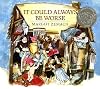
It Could Always Be Worse is Margot Zemach’s uproarious retelling of a Yiddish noodlehead folktale. The father of a family of nine goes to his Rabbi complaining of the overcrowded conditions in his small hut home. Over a series of weeks, the rabbi advice tricks him into bringing increasingly larger animals into his home. The bewildered father follows all of the rabbi’s advice until all his animals are living with his family in the hut. Finally, the father returns to the rabbi shrieking show more that the end of the world has come and that his home is worse than a nightmare; the rabbi tells him to remove all the animals. At long last, the father returns to the beleaguered rabbi to exclaim, “you have made life sweet for me. With just my family in the hut, it’s so quiet, so roomy, so peaceful . . . What a pleasure!” Zemach’s illustrations amusingly convey the muddled and boisterous deterioration of the household, retelling the parable of thankfulness with jocularity and acumen. show less

When this picture-book, based on the African-American folk tradition, and featuring a hero (and his mule) who wreak havoc in heaven, was first published back in 1982, it caused quite a stir. Critics of the book decried its racism, objecting particularly to its illustrations, which depict a heaven full of African-American angels enjoying a southern-style barbecue. There were letters written to the publisher, notice was taken in The New York Times, editorials printed in periodicals such as The show more Crisis (a publication of the NAACP), and a library boycott was advocated and, in some cases, implemented. Apparently, three major metropolitan library systems - Chicago, Milwaukee, and San Francisco - decided not to stock it at all. The controversy was significant enough that the 1984 University of Kentucky School of Library and Information Science final examination included a question about the issue of "humane censorship," specifically mentioning Jake and Honeybunch Go to Heaven. Ah, the world of children's literature - I have to laugh when friends and acquaintances assume that it is such a "sweet" place! If only they knew...
I'd actually never heard of this book, although Margot Zemach - winner of the Caldecott Medal in 1974 for Duffy and the Devil - is a name with which I am familiar, until Betsy Hearne mentioned it in her article Nobody Knows..., printed in the September/October 2009 issue of the Horn Book Magazine, devoted to the theme of "Trouble." In it, she compares the book to another depiction of an African-American heaven, Julius Lester's What A Truly Cool World, implying (the mention is very brief) that the chief trouble with Zemach's book, and the real source of the controversy, is that she is not African-American herself. Michelle H. Martin, in Build Me a Cabin in the Corner of Glory Land: Depictions of Heaven in African-American Children's Picture Books (a chapter in her book-length study, Brown Gold: Milestones of African American Children's Picture Books, 1845-2002, published in 2004) argues that Zemach also suffered from poor timing: that her book, while flawed, just came out at the wrong time, and, had its publication followed other titles, like Bubber Goes to Heaven, it would not have stirred up such controversy.
Naturally, with all this analysis and background information, I was quite keen to obtain a copy of Jake and Honeybunch Go to Heaven, and see what I thought of it myself. Thankfully, my own library system didn't join the boycott, so I was able to borrow a copy! I have to confess: I have trouble seeing the overt racism here (unconscious racism, such as the uniform skin-tone of the characters, as mentioned in Martin, perhaps), and kept thinking, as I read through: this is what all the fuss was about?!? Is it racist to depict African-Americans enjoying music, or having a barbecue? Don't tell any of my childhood friends, whose families hailed from places like North Carolina, and southward - they'd probably laugh in your face. Is it derogatory and demeaning, as Nancy L. Arnez, the author of the editorial in The Crisis claimed, that the urban landscape from which Jake and Honeybunch ascend to heaven is so "negatively" portrayed? I don't know... did Arnez happen to notice that the town was named "Hard Times?"
As always, when unsure of my own response, and worried that I might be missing something, I showed this book to someone whose opinion I trust, giving no background information, and solicited her view of it. She read it, thought about it, and responded that she liked how God had been depicted. But did you notice anything else about the book?, I wanted to know. What would you say if I told you that some people had described it as racist? I asked. She hesitated... and then replied that she supposed she could see something in that. Oho! I thought... and so? "Well, heaven is all black. That can't be right, can it? Haha! Somehow, I don't think that's what the critics has in mind...
In the end, I found Jake and Honeybunch Go to Heaven fairly benign: a book that, while it might have been flawed, was hardly the harmful or hurtful threat that it was made out to be, some twenty-eight years ago. I didn't love it (somehow, Zemach's style didn't appeal to me, not for ethical reasons, but for aesthetic ones), but I didn't loathe it either. Of course, I'm not African-American myself, and I do understand that emotional responses can vary, depending upon personal experience. I am also fully aware that no work of literature exists in a vacuum, but is read in the larger context of what is going on in the society at large. That is a reality that is highlighted by the very different responses of critics at the time, and scholars like Martin, looking back from a distance. It is also a reality that confirms my growing belief that "humane censorship" - however legitimate its aims - is probably not a good idea... show less
I'd actually never heard of this book, although Margot Zemach - winner of the Caldecott Medal in 1974 for Duffy and the Devil - is a name with which I am familiar, until Betsy Hearne mentioned it in her article Nobody Knows..., printed in the September/October 2009 issue of the Horn Book Magazine, devoted to the theme of "Trouble." In it, she compares the book to another depiction of an African-American heaven, Julius Lester's What A Truly Cool World, implying (the mention is very brief) that the chief trouble with Zemach's book, and the real source of the controversy, is that she is not African-American herself. Michelle H. Martin, in Build Me a Cabin in the Corner of Glory Land: Depictions of Heaven in African-American Children's Picture Books (a chapter in her book-length study, Brown Gold: Milestones of African American Children's Picture Books, 1845-2002, published in 2004) argues that Zemach also suffered from poor timing: that her book, while flawed, just came out at the wrong time, and, had its publication followed other titles, like Bubber Goes to Heaven, it would not have stirred up such controversy.
Naturally, with all this analysis and background information, I was quite keen to obtain a copy of Jake and Honeybunch Go to Heaven, and see what I thought of it myself. Thankfully, my own library system didn't join the boycott, so I was able to borrow a copy! I have to confess: I have trouble seeing the overt racism here (unconscious racism, such as the uniform skin-tone of the characters, as mentioned in Martin, perhaps), and kept thinking, as I read through: this is what all the fuss was about?!? Is it racist to depict African-Americans enjoying music, or having a barbecue? Don't tell any of my childhood friends, whose families hailed from places like North Carolina, and southward - they'd probably laugh in your face. Is it derogatory and demeaning, as Nancy L. Arnez, the author of the editorial in The Crisis claimed, that the urban landscape from which Jake and Honeybunch ascend to heaven is so "negatively" portrayed? I don't know... did Arnez happen to notice that the town was named "Hard Times?"
As always, when unsure of my own response, and worried that I might be missing something, I showed this book to someone whose opinion I trust, giving no background information, and solicited her view of it. She read it, thought about it, and responded that she liked how God had been depicted. But did you notice anything else about the book?, I wanted to know. What would you say if I told you that some people had described it as racist? I asked. She hesitated... and then replied that she supposed she could see something in that. Oho! I thought... and so? "Well, heaven is all black. That can't be right, can it? Haha! Somehow, I don't think that's what the critics has in mind...
In the end, I found Jake and Honeybunch Go to Heaven fairly benign: a book that, while it might have been flawed, was hardly the harmful or hurtful threat that it was made out to be, some twenty-eight years ago. I didn't love it (somehow, Zemach's style didn't appeal to me, not for ethical reasons, but for aesthetic ones), but I didn't loathe it either. Of course, I'm not African-American myself, and I do understand that emotional responses can vary, depending upon personal experience. I am also fully aware that no work of literature exists in a vacuum, but is read in the larger context of what is going on in the society at large. That is a reality that is highlighted by the very different responses of critics at the time, and scholars like Martin, looking back from a distance. It is also a reality that confirms my growing belief that "humane censorship" - however legitimate its aims - is probably not a good idea... show less
A delightful retelling of a Yiddish folktale. A man, unhappy with his poverty and his crowded home, asks his Rabbi for advice. The Rabbi calmly tells him to begin bringing animals from the stable into the house. The man obeys, and after suffering through this worsened situation again appraoches the Rabbi for advice. The Rabbi advises him the same. The patterns repeats a few times, until finally the Rabbi tells the man to return all as it was to start with. The man goes away content and happy show more with his life, having experienced what would be worse.
Retold in a simple, rhythmic style with understated humor. The illustrations are dynamic and similarly humorous. show less
Retold in a simple, rhythmic style with understated humor. The illustrations are dynamic and similarly humorous. show less
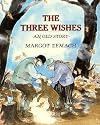
Zemach, Margot. (1986) The Three Wishes: An Old Story. New York: Farrar, Straus, & Giroux.
This story is about a husband and wife who help free an imp that is stuck under a fallen tree and he grants them 3 wishes. They are woodcutters and are very poor and talk about their wishes before they make them in order to make sure that they are going to benefit greatly from them. As they are preparing for dinner, the husband foolishly comments that he wishes that they had a plate full of sausages to show more eat. They quickly appear and the wife is angry at him for wasting this wish so she wishes that the sausages were on his nose! In the end, they agree to use the last wish wisely before it is gone.
What makes this story unique is its humor and unexpected turn of events. It doesn't seem like a traditional story when the couple end up using up two of their wishes foolishly and end up with sausages, but it makes the story all the more entertaining. show less
This story is about a husband and wife who help free an imp that is stuck under a fallen tree and he grants them 3 wishes. They are woodcutters and are very poor and talk about their wishes before they make them in order to make sure that they are going to benefit greatly from them. As they are preparing for dinner, the husband foolishly comments that he wishes that they had a plate full of sausages to show more eat. They quickly appear and the wife is angry at him for wasting this wish so she wishes that the sausages were on his nose! In the end, they agree to use the last wish wisely before it is gone.
What makes this story unique is its humor and unexpected turn of events. It doesn't seem like a traditional story when the couple end up using up two of their wishes foolishly and end up with sausages, but it makes the story all the more entertaining. show less
Lists
Awards


You May Also Like


Associated Authors
Statistics
- Works
- 20
- Also by
- 13
- Members
- 2,041
- Popularity
- #12,597
- Rating
- 4.0
- Reviews
- 65
- ISBNs
- 78
- Languages
- 5
- Favorited
- 1