Picture of author.

Uri Shulevitz (1935–2025)

Author of Snow

29+ Works 6,430 Members 250 Reviews 3 Favorited

About the Author

Works by Uri Shulevitz

Snow (1998) 1,942 copies, 60 reviews
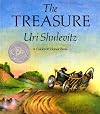
The Treasure (1978) 1,268 copies, 25 reviews
One Monday Morning (1967) 792 copies, 5 reviews
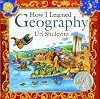
How I Learned Geography (2008) 781 copies, 78 reviews
Rain Rain Rivers (1969) 214 copies, 6 reviews
Dawn (1974) 148 copies, 4 reviews
So Sleepy Story (2006) 112 copies, 9 reviews
The Secret Room (1993) 110 copies, 6 reviews
The Magician (1973) 107 copies, 2 reviews
The Golden Goose (1995) 83 copies, 11 reviews
Dusk (2013) 78 copies, 6 reviews
When I Wore My Sailor Suit (2009) 60 copies, 7 reviews
Toddlecreek Post Office (1990) 59 copies, 3 reviews
Troto and the Trucks (2015) 28 copies, 3 reviews
The Moon in my Room (1963) 27 copies, 2 reviews
Oh What a Noise! (1971) 12 copies
האוצר 1 copy
Sn ̜ (2007) 1 copy
SOIR (2014) 1 copy

Associated Works

The Fool of the World and the Flying Ship (1968) — Illustrator — 873 copies, 36 reviews
Zlateh the Goat and Other Stories (1966) — Illustrator — 749 copies, 17 reviews
The Golem [short fiction] (1969) — Illustrator — 284 copies, 5 reviews
Lilith's Cave: Jewish Tales of the Supernatural (1987) — Illustrator — 281 copies, 2 reviews
Hanukah Money (1978) — Illustrator — 248 copies, 2 reviews
The Diamond Tree: Jewish Tales from Around the World (1991) — Illustrator — 204 copies, 8 reviews
A Rose, a Bridge, and a Wild Black Horse (Hooked on Phonics, Book 29) (1987) — Illustrator, some editions — 181 copies
The Fools of Chelm and Their History (1973) — Illustrator — 125 copies, 2 reviews
Tikvah: Children's Book Creators Reflect on Human Rights (2001) — Contributor — 66 copies, 1 review
Hosni the Dreamer: An Arabian Tale (1997) — Illustrator — 61 copies, 5 reviews
The Lost Kingdom of Karnica (1979) — Illustrator — 28 copies
Soldier and Tsar in the Forest: A Russian Tale (1972) — Illustrator — 28 copies, 2 reviews
The Treasure of the Turkish Pasha (1965) — Illustrator — 21 copies, 3 reviews
The Month Brothers (1967) — Illustrator — 7 copies

Tagged

Caldecott (155) Caldecott Honor (138) children (75) children's (102) children's book (36) children's books (36) children's literature (52) days of the week (46) dreams (43) fantasy (36) fiction (167) folktale (43) folktales (46) geography (106) imagination (68) Jewish (39) maps (66) non-fiction (32) picture (39) picture book (500) poverty (43) refugees (46) seasons (84) snow (220) to-read (47) travel (34) treasure (31) weather (109) winter (269) WWII (51)

Common Knowledge

Members

Reviews

261 reviews
A poor couple have nothing with which to celebrate the holiday of Passover in this atmospheric picture-book adaptation of a story from the late 19th/early 20th-century Yiddish-language author, I.L. Peretz. Then a mysterious magician comes to their village, and after performing some extraordinary tricks in the public square, seeks them out, asking to be their guest. Confiding that they have nothing, the couple is assured that their guest has everything necessary to celebrate the holiday, and show more they watch as he conjures all of the comfort and food they could dream of. This however, leaves them with a dilemma: should they trust this stranger's magic...?

We owned a copy of The Magician when I was a child, and I used to pore over it, endlessly fascinated by its simply told but intensely engrossing tale of magic and miracles, and its finely detailed etching-style artwork. There was always something just a little bit creepy about the eponymous magician, even if he turned out to be the Prophet Elijah - a force of good, rather than evil. Passover begins tonight at sundown, so I picked up this book today for a reread - the first in years - and found it every bit as enchanting and spooky as I remember. Recommended to picture-book readers looking for magical Passover stories, or for tales set in the Eastern European Jewish shtetls of the past.
show less
This extraordinary memoir for readers in middle grade and up recounts events from the childhood of author and artist Uri Shulevitz, who survived the Holocaust with his father and mother. Documenting his Jewish family’s eight-year journey, he said in an interview about this book, “'It would be hard to invent this story,” says Shulevitz, who is now 85 and lives in New York City. 'If I wrote this as fiction people would think it was too fantastic.’”

The story begins in Warsaw, Poland show more on September 1, 1939 when “Nazi planes burst into the Warsaw skies….” Uri was four years old. The bombings continued for days. Shulevitz writes:

“When the smoke settled . . . some people who a second ago had been standing on the breadline lay dead; others lay wounded. It all seemed unreal. Dazed, I watched, frozen in place. The distance between life and death had vanished. One second life, the next death.”

He observed that survival became a game of chance. Interestingly, even Uri’s name figured into the odds of whether his family lived or died. As a newborn, Uri stared at the flowers on their wallpaper all the time, so he was named after the biblical Uri, the first artist of the Bible. In 1940, after the family fled to Bialystok in the Soviet Union, Uri’s father tried to register them as Soviet citizens. The clerk refused, accusing his father of naming Uri after the “Zionist poet” Uri Zvi Greenberg, concluding they must also be “anti-Soviet reactionaries.” Not being able to get official papers changed the course of their lives, and ultimately and improbably contributed to their survival.

Sometimes Shulevitz reflects on the role chance played in his life as opposed to, as some claimed, divine intervention. He asks:

“Why would divine intervention have saved my parents’ lives when they were not religious? Why, then, did my devout grandfather die a miserable death at the hands of the Nazis, when he was a deeply religious man who observed every single commandment of his faith with love and devotion? Why was he not saved by divine intervention? I have no answers.”

This is the same question the famous Holocaust survivor, writer, and humanist Elie Wiesel grappled with, as well as many other survivors of the Holocaust. Shulevitz’s story is replete with events, however, in which it seemed to be only chance that stood between life and death. God was not in the picture. He could relate to the sentiment of the basic Soviet "theology" he absorbed: “Don’t waste your time asking God for beans; you’ll get nothing. Better ask the Soviets - they deliver.” When, after the war ended, Uri was near death in a hospital with diphtheria and scarlet fever, and the principal of his school said they had asked their rabbi in New York to pray for him, Uri writes:

“Dear reader, what saved my life? The prayers of the great rabbi of Brooklyn, or potato puree and a new wonder drug called penicillin? You decide.”

Throughout his childhood, Uri found ways to cope with experiences of intense and unrelenting hunger, combined with constant fear and antisemitic attacks. He wrote “days followed days when we had not a bite of food.” Many, many nights were spent sleeping in trains, sleeping outside, or not sleeping at all. At first, drawing became his primary means to distract himself. He would use a stick to draw in the dirt or burn a twig to use as charcoal. He made colors from flower petals or leaves. Later, when he had access to books, he found refuge in escapism through the adventures of heroes in literature. [After the war, he combined the two interests to make award-winning books.]

The conclusion of the war did not end their troubles, as other Jews in Europe found as well. The family tried to reestablish their lives in Poland, but many Poles had taken over residences and properties owned previously by Jews and they would not give them back. There were even murders of Jews who tried to return. In Kielce, Poland, for example, 42 Jews were killed in 1946 in a stunning episode of violence. Eventually Uri’s family tried living in Paris and then emigrated to Israel in 1949. In 1959, Uri moved to New York.

The book has many of Shulevitz’s illustrations, some saved from his childhood, but most created for this story. Perhaps a third of the book is in a graphic, comic-book style format. It is a saga readers will find hard to forget.
show less
One of the subject headings for this absorbing memoir is “Holocaust, Jewish (1939-1945)”. That descriptor doesn’t quite fit with the text’s telling subtitle “Escape from the Holocaust". Also problematic is the decision to shelve the book in the juvenile section of the library. To my mind, this is not a children’s book, and anyone who categorizes it as one hasn’t read it. Calling it young adult is less of an issue: there are mature young adult readers, after all, and the book show more has illustrations, photos, and maps, all of which increase accessibility. Having said this, I still think the content is more suited to adults. For example, Shulevitz includes a brief account of disturbing events associated with Stalin’s genocidal starvation of the Ukrainians in the early 1930s.

Chance is an atypical memoir in a few respects. First of all, the author's experience of World War II is different from that of many, perhaps even most, Eastern-European Jews. The only autobiographical works I’ve read that compare are Ilona Flutsztejn-Gruda’s When Grownups Play at War and Esther Hautzig’s The Endless Steppe. While some of the women’s childhood recollections are similar to Shulevitz’s, his memoir is more informative about key events in World War II Eastern-European and Soviet history. Visuals, including comic-book/graphic-novel elements, also bring something different to the reading experience, often adding emotional resonance. Finally: this is not just a story of survival; it’s also about the growth and development of an artist.

In his beautiful 2008 picture book, How I Learned Geography, Shulevitz writes about a map his father brought him one evening when he and his mother were expecting—indeed, desperate for—food. This was when the author and his parents were living a hardscrabble existence as refugees in Soviet Kazakhstan, an experience which is covered in far more detail in the memoir. Chance, which is divided into eight chronological sections, explains how the Shulevitzes ended up in that part of Asia in the first place. It tells about their long journey across Eastern Europe, to northern Russia, then Soviet Kazakhstan, and it also describes the post-war trek aboard mining trains back to Poland, the time spent in a German displaced persons camp, a further trip west to Paris, France, and the family’s eventual emigration to Israel. The multiple chapters are seldom more than a page long, making this a propulsive read.

Shulevitz, who was born in Warsaw, Poland, was only four years old when the German blitz on that city began in September 1939. At the time, he was alone in the family apartment with his mother. His father, having heard rumours that men were to be conscripted for slave labour by the Germans, had presciently gone east. He would eventually send for his wife and son to come to Bialystok, which had become part of Soviet Belarus when Hitler and Stalin signed a non-aggression pact and carved up Poland between them.

Early in life–in fact, as a baby just home from the hospital—Uri had stared intently at the flowers on the wallpaper. His parents saw this as a sign of their child’s inborn talent and vocation; they named him Uri, after the father of Bezalel, the first artist of the Bible. During the German bombing of Warsaw, the boy sought refuge from the bombs by drawing. He produced only stick figures then, but his parents made the effort to guide and encourage him, even during difficult times, and his skills progressed. Uri’s name seems to have determined his fate and, strangely, that of his family as well. By the time the Shulevitzes were living together in Bialystok, refugees were told they needed to register as Soviet citizens or they’d be returned to Nazi-occupied Poland. However, when Mr. Shulevitz went to apply for citizenship, the clerk refused to issue the documents, claiming, in spite of Mr. Shulevitz’s protestations to the contrary, that the family were evidently anti-Soviet reactionaries, enemies of the state. His evidence? Their son had been named after Uri Zvi Greenberg, a prominent Zionist poet! Without Soviet citizenship, Mr. Shulevitz feared arrest; he also could not keep his job as a set designer for one theatre company and then another. Ultimately, the matter was taken out of their hands by a Soviet "surprise". The NKVD rounded up Polish refugees, deporting them by train to Yura Settlement, a logging camp, near Arkhangelsk in the far north of the Russian Republic. It was a harsh, frigid place, and Shulevitz’s parents became ill there, but it was far away from Belarus, the epicentre of Nazi mass killing, where 90 percent of the Jewish population would ultimately be eliminated. The work camp at least offered some slim chance of survival.

Another thing that allowed the Shulevitzes to survive was a chance encounter Uri’s father’s had not long after he’d left Warsaw. In Bialystok, he briefly had a job painting Soviet slogans on trucks and banners, but work for refugees soon dried up, and he decided to return to Poland. Since crossing the border had become so difficult, he took a route through an abandoned warehouse, where he fortuitously met a Jewish man crawling into Belarus from the Polish side. Mr. Shulevitz should not go back to Poland, said the man; it had become a hell. He advised Uri’s father to return to Bialystok and send for his wife and child. Shulevitz ponders the meaning of this event: Was this Jewish man from God? The Shulevitzes were not at all religious, but they were the only members of their family in Poland to survive. Uri's grandfather, on the other hand, was devout, yet he “died a miserable death at the hands of the Nazis.” Tell me, he asks the reader, “Why was he not saved by divine intervention? I have no answers.” This is a theme he revisits a few times in the memoir.

The most memorable parts of the book are those which detail the author's life in Turkestan, a Muslim city in Kazakhstan where life had apparently not changed since medieval times and where hunger and deprivation were Uri's constant companions. Right after the family’s arrival there, Mr. Shulevitz mysteriously disappeared for a time. Uri never learned why, but speculates that his father, always an impulsive man, may well have travelled to Iran hoping to join a Polish army regiment that was forming there. There are many stories of hardship in Turkestan, but also some amusing recollections about friendships, Kazakh culture, and Mr. Shulevitz's farfetched, unsuccessful schemes to make money. Not surprisingly, Uri was frequently ill—in Soviet Asia and, later, in France, where he and his parents would live for a short period with an uncle and his family. Living in France was a very unhappy time for the boy. As in Poland, anti-semitism was rampant there, and Uri was bullied. Were it not for his art and the companionship of books, he would have been very lonely indeed. The family decided to emigrate to Israel when Uri was fourteen.

Chance is a compelling memoir of survival—simply, clearly, and beautifully written and effectively illustrated. It is by turns harrowing, sardonic, warm, and wise. I am so glad Uri Shulevitz survived, and I am grateful for his book.
show less
No one thinks one or two snowflakes will amount to anything. Not the man with the hat or the lady with the umbrella. Not even the television or the radio forecasters. But one boy and his dog have faith that the snow will amount to something spectacular, and when flakes start to swirl down on the city, they are also the only ones who know how to truly enjoy it.

Lists

Awards

You May Also Like

Associated Authors

Statistics

Works
29
Also by
14
Members
6,430
Popularity
#3,829
Rating
3.9
Reviews
250
ISBNs
164
Languages
7
Favorited
3

Charts & Graphs