
Hugh Howey
Author of Wool
About the Author
Hugh Howey is an American author who was born in 1975 and raised in North Carolina. Howey is known for his popular series Wool, which he independently published through Amazon.com's Kindle Direct Publishing system. The Wool series first began in 2011 with Wool as a stand-alone story. In 2012, Howey show more signed a deal with Simon and Schuster to distribute Wool to retailers in the USA and Canada. The book became a trilogy with Shift (Book 2) and Dust (Book 3) following it. The author has renamed this to the Silo Series. (Bowker Author Biography) show less
Series
Works by Hugh Howey
Resist: Tales from a Future Worth Fighting Against (2018) — Editor; Contributor — 71 copies, 2 reviews
Wool - Holston (Wool, #1) 26 copies
The Dystopia Triptych: Ignorance is Strength, Burn the Ashes, & Or Else the Light - Digital Box Set (2020) — Editor — 4 copies
Dust - The Silo Saga, Book 3 1 copy
Wool - The Silo Saga, Book 1 1 copy
A műszak első: örökség 1 copy
塵土記:羊毛記完結篇 1 copy
Silo - L'intégrale 1 copy
Přes písek 1 copy
Visions of the Future 1 copy
Executable 1 copy
In the Air 1 copy
星移記:羊毛記起源真相 1 copy
A műszak harmadik: szerződés 1 copy
How I Started The Apocalypse 1 copy
2014 1 copy
Exit : Roman 1 copy
Silos 3: Pył 1 copy
Wool Trilogy 3: Dust 1 copy
Силоз (Силоз, 1) 1 copy
Wool Trilogy 2: Shift 1 copy
TRẠM TÍN HIỆU SỐ 23 1 copy
Associated Works
A People's Future of the United States: Speculative Fiction from 25 Extraordinary Writers (2019) — Contributor — 544 copies, 20 reviews
Interviews with Indie Authors: Top Tips from Successful Self-Published Authors (2012) — Contributor — 4 copies
Tagged
Common Knowledge
- Canonical name
- 休豪伊
- Legal name
- Howey, Hugh C.
- Birthdate
- 1975-06-23
- Gender
- male
- Occupations
- yacht skipper
roofer
audio technician - Nationality
- USA
- Birthplace
- Charlotte, North Carolina, USA
- Places of residence
- Monroe, North Carolina, USA
Jupiter, Florida, USA
St. Francis Bay, Eastern Cape, South Africa - Map Location
- North Carolina, USA
Members
Discussions
Found: YA Scifi book with Male Protagonist in Name that Book (April 2023)
Reviews

I was drawn to this book by the cover and my love for Howey’s Wool series, and after only six months I finally picked it up! Hey, if you know me at all, six months is really nothing in comparison to how long some books have sat, unread (but not unloved!), upon my crowded shelves. I’m glad I picked this up because while fairly short, Beacon 23 provides an interesting look at the isolation or space and the mental and physical aftereffects of serving in a war, be it against aliens or show more humans.
Our hero (he is actually considered a war hero) remains nameless throughout the story and I almost didn’t notice until the very end when I was starting to think about what I would write in my view and realized I didn’t know the protagonist’s name. I think this was the right choice (mostly, because I didn’t pick up on it, so obviously our character’s name is not critical to his story) because it highlights the fact that, regardless of who one is, they can experience the same or similar emotions after having survived a war. This man in a beacon on the edge of a far-off sector of space, fighting against depression and insanity, striving to be alone with his guilt, regrets and fears, yet still craving what little human contact he can get, could be anyone. It’s not his name that matters, but what he experiences throughout the book.
Boy, does he go through a lot! Despite the vastness of space, beacon 23 sees quite a bit of action and our hero narrates his experiences with a healthy dose of sarcasm and cynicism, but also remains honest about what he feels in regards to his actions in the war and how they have affected him. There are times when his view is unreliable, but not because he wants to deceive the reader, but because the lines between reality and fiction have begun to blur for him. One particular scene had me questioning everything he experienced thereafter and I enjoyed the effect of always being on alert and trying to figure out what was actually happening to him.
I especially enjoyed how open our hero is with his emotions. There is a lot of crying in this book and that’s not something I come across often with male protagonists (and it’s not really something I’m desperate for, but considering the subject matter of this book, I felt it was appropriate). Our hero’s views on emotion (in males or females) in times of war and crisis were raw and honest.
The ending was a little too neat and also left me with a few questions, but didn’t lead me to believe there will be any follow-up to this novel, so I’ll be left wondering. However, this was a solid read that I found hard to put down. Great for sci-fi fans, without it being too heavy on the science (ie: just enough jargon for me to feel like Howey knows what he’s talking about, though I can’t prove it).
2023 reread:
This was a reread for me, except I first read this back in 2016, so the only thing I remembered is that I enjoyed the book. And my reread was prompted by watching only one episode of the new show "based" on the book - even though I'd forgotten literally the entire plot (except that there was a guy on a beacon in space), the one episode was bad and I knew I needed to just read the book again.
Anyway - I still like the book a lot! I enjoyed the POV of the nameless protagonist. I think it really captures the loneliness of this type of job in space. His experience at the front of a galactic war also plays into his perspective and experience.
I don't want to say much about the plot or the main character, because I think it's best discovered by the reader. But it's a quick read, and compelling, and does a good job of exploring being alone with your feelings, vulnerability, and the futility of war. The ending is still too neat hahaha. show less
Our hero (he is actually considered a war hero) remains nameless throughout the story and I almost didn’t notice until the very end when I was starting to think about what I would write in my view and realized I didn’t know the protagonist’s name. I think this was the right choice (mostly, because I didn’t pick up on it, so obviously our character’s name is not critical to his story) because it highlights the fact that, regardless of who one is, they can experience the same or similar emotions after having survived a war. This man in a beacon on the edge of a far-off sector of space, fighting against depression and insanity, striving to be alone with his guilt, regrets and fears, yet still craving what little human contact he can get, could be anyone. It’s not his name that matters, but what he experiences throughout the book.
Boy, does he go through a lot! Despite the vastness of space, beacon 23 sees quite a bit of action and our hero narrates his experiences with a healthy dose of sarcasm and cynicism, but also remains honest about what he feels in regards to his actions in the war and how they have affected him. There are times when his view is unreliable, but not because he wants to deceive the reader, but because the lines between reality and fiction have begun to blur for him. One particular scene had me questioning everything he experienced thereafter and I enjoyed the effect of always being on alert and trying to figure out what was actually happening to him.
I especially enjoyed how open our hero is with his emotions. There is a lot of crying in this book and that’s not something I come across often with male protagonists (and it’s not really something I’m desperate for, but considering the subject matter of this book, I felt it was appropriate). Our hero’s views on emotion (in males or females) in times of war and crisis were raw and honest.
The ending was a little too neat and also left me with a few questions, but didn’t lead me to believe there will be any follow-up to this novel, so I’ll be left wondering. However, this was a solid read that I found hard to put down. Great for sci-fi fans, without it being too heavy on the science (ie: just enough jargon for me to feel like Howey knows what he’s talking about, though I can’t prove it).
2023 reread:
This was a reread for me, except I first read this back in 2016, so the only thing I remembered is that I enjoyed the book. And my reread was prompted by watching only one episode of the new show "based" on the book - even though I'd forgotten literally the entire plot (except that there was a guy on a beacon in space), the one episode was bad and I knew I needed to just read the book again.
Anyway - I still like the book a lot! I enjoyed the POV of the nameless protagonist. I think it really captures the loneliness of this type of job in space. His experience at the front of a galactic war also plays into his perspective and experience.
I don't want to say much about the plot or the main character, because I think it's best discovered by the reader. But it's a quick read, and compelling, and does a good job of exploring being alone with your feelings, vulnerability, and the futility of war. The ending is still too neat hahaha. show less
Wool by Hugh Howey
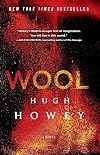
I read a blurb on the back cover of Wool by Hugh Howey that calls this book frightening, fascinating, addictive and, in one word, terrific. I fully agree with this statement as I was totally lost in this original story from the minute I picked up the book.
Wool is a dystopian story where the remnants of mankind live in an immense silo. The various professions are grouped together on different levels. The top level contains the mayor’s office, the sheriff’s office and a cafeteria with an show more outside view. The view, however is rather depressing, showing a brown world with the ruins of a large city in the distance and, numerous dead bodies scattered about. These bodies belong to people who have expressed a desire to leave the silo. These banishments are called “Cleaning” as each person who goes outside, takes some time to clean the cafeteria windows from the dust and debris that has accumulated there before succumbing to the poison in the air.
I didn’t know very much about this book when I picked it up and I think that may be why I enjoyed it so much. The writing is top notch, and the characters were well developed and realistic. Juliette who becomes the central kick-ass character is practical, strong willed and intelligent. I am amazed that this cohesive, detailed science fiction story started out as a novella that the author expanded into a full novel. If you are at all interested in dystopian and post-apocalyptic scenarios, Wool is well worth picking up. For me this was an exceptional read. show less
Wool is a dystopian story where the remnants of mankind live in an immense silo. The various professions are grouped together on different levels. The top level contains the mayor’s office, the sheriff’s office and a cafeteria with an show more outside view. The view, however is rather depressing, showing a brown world with the ruins of a large city in the distance and, numerous dead bodies scattered about. These bodies belong to people who have expressed a desire to leave the silo. These banishments are called “Cleaning” as each person who goes outside, takes some time to clean the cafeteria windows from the dust and debris that has accumulated there before succumbing to the poison in the air.
I didn’t know very much about this book when I picked it up and I think that may be why I enjoyed it so much. The writing is top notch, and the characters were well developed and realistic. Juliette who becomes the central kick-ass character is practical, strong willed and intelligent. I am amazed that this cohesive, detailed science fiction story started out as a novella that the author expanded into a full novel. If you are at all interested in dystopian and post-apocalyptic scenarios, Wool is well worth picking up. For me this was an exceptional read. show less
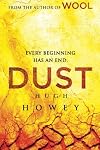
Note: There will be some spoilers for Wool, Book One of this saga; some spoilers which are marked and have warnings for Shift, Book Two; but none for Dust, the conclusion of The Silo Series. Avoid all spoilers by skipping down to Discussion and Evaluation.
Shift and Dust continue the excellent story that begins with Wool. Wool is a [non-YA] post-apocalyptic dystopia about a world in the future in which the population lives in underground silos following nuclear detonations that destroyed the show more outside world. Originally there were fifty silos, including one “administrative” silo, Number One. Only the residents of Number One and two designated IT Department workers in each other silo know that there are silos in existence beyond their own.
Most of Wool takes place in Silo 18. At the end of Wool, Juliette (“Jules”) Nichols, age 34, had been "banished" from the silo, and managed, improbably, not only to survive the outside, but to make her way to a neighboring silo, #17. There, she gets to know the very small group of inhabitants, and is eager to help them share the resources of Silo 18, to whence she returns. Her boyfriend, Lukas, is now the head of IT at 18, and convinces Jules to become the new mayor. She begins her tenure determined to pull the “wool” from over everyone’s eyes and tell them about the other silos. She also wants to bring her new friends over to Silo 18, if she can figure out a safe way to do so.
In Shift, we go back in time to 2049 to learn what happened before the silos were built, and how and why they were constructed. We also learn the way in which the silos were run following the devastation of the planet. Much of the story is told from the point of view of Donald Keene, a young Congressman from Georgia who, under the thumb of the elder Senator from Georgia, Paul Thurman, gets pulled into the silo project without fully understanding what it is. But Keene has known Thurman all his life and trusts him; he even used to date Thurman’s daughter Anna. Maybe soon, Donald and his wife Helen keep saying, things will improve. But as Anna, now working with Donald, presciently observes:
"Everyone thinks they’ve got all the time left in the world. … But they never stop to ask just how much time that is.”
Centuries later, in the control silo - Silo 1, Donald is among those who work in six-month “shifts” helping to run the other silos, alternating these periods with long intervals of cryogenic preservation.
Specific Spoilers for Shift:
None of the females who are frozen are supposed to serve on shifts, but Thurman secretly brings his daughter Anna out to use her computer skills to help with a problem. She serves on two consecutive shifts, joined on the second one by Donald. When it is time for them to be put under once again, Donald tries to kill himself by going to the outside, but Thurman brings him back.
In the last part of Shift, it is now 2345, and Donald gets awakened for another shift. But this time, his identity has apparently been switched, and he is taken for Mr. Thurman, the ultimate authority. Donald has no idea how or why this happened, but he takes the opportunity to find out the rest of the secrets about the Silo project. His discoveries all go back to one underlying premise:
"…evil men arose from evil systems, and… any man had the potential to be perverted. Which was why some systems needed to come to an end.”
As Shift concludes, Donald confronts Anna over what he has found out; wakens his sister Charlotte and hides her where Anna had been hiding on the previous shift; and makes contact with Juliette and Lukas in Silo 18.
End of Specific Spoilers for Shift
In Dust, we return to the world of Silo 18. Jules is still serving as mayor, but spends most of her time trying to reach her friends in Silo 17. There is a lot of grumbling about her iconoclastic activities, and a conservative and cult-like religious movement is gaining adherents.
The action alternates with what is taking place in Silo 1, from whence control of the other silos emanates. Donald is still masquerading as Thurman, and is also now in regular surreptitious contact with Juliette and Lukas over at Silo 18.
The situation at both silos is deteriorating. Donald is apparently dying, but he doesn’t understand why. Thurman is awakened and is very, very angry. There have been three mysterious murders in Silo 1. The denizens of Silo 18 finally dig through to Silo 17 just before Silo 18 gets terminated by Thurman. Chaos, anarchy, and violence ensue. Donald surmises that
"Heroes didn’t win. The heroes were whoever happened to win. History told their story - the dead didn’t say a word.”
Discussion: The story told in these books is all the more frightening and depressing for seeming so realistic. The ending is not as bleak as my review might imply, but rather, it is probably better than one might have hoped. But it’s not irrationally better; it respects the history of human nature, with both its good and bad points.
Evaluation: In many ways this is very intelligent writing. The stories have a solid premise, stick to realism, and focus on character building and both the limitations and promise of humanity rather than on any “futuristic” gadgetry. I loved it (even while walking hunched over at times from despair). I know it is not a story I will soon forget. show less
Shift and Dust continue the excellent story that begins with Wool. Wool is a [non-YA] post-apocalyptic dystopia about a world in the future in which the population lives in underground silos following nuclear detonations that destroyed the show more outside world. Originally there were fifty silos, including one “administrative” silo, Number One. Only the residents of Number One and two designated IT Department workers in each other silo know that there are silos in existence beyond their own.
Most of Wool takes place in Silo 18. At the end of Wool, Juliette (“Jules”) Nichols, age 34, had been "banished" from the silo, and managed, improbably, not only to survive the outside, but to make her way to a neighboring silo, #17. There, she gets to know the very small group of inhabitants, and is eager to help them share the resources of Silo 18, to whence she returns. Her boyfriend, Lukas, is now the head of IT at 18, and convinces Jules to become the new mayor. She begins her tenure determined to pull the “wool” from over everyone’s eyes and tell them about the other silos. She also wants to bring her new friends over to Silo 18, if she can figure out a safe way to do so.
In Shift, we go back in time to 2049 to learn what happened before the silos were built, and how and why they were constructed. We also learn the way in which the silos were run following the devastation of the planet. Much of the story is told from the point of view of Donald Keene, a young Congressman from Georgia who, under the thumb of the elder Senator from Georgia, Paul Thurman, gets pulled into the silo project without fully understanding what it is. But Keene has known Thurman all his life and trusts him; he even used to date Thurman’s daughter Anna. Maybe soon, Donald and his wife Helen keep saying, things will improve. But as Anna, now working with Donald, presciently observes:
"Everyone thinks they’ve got all the time left in the world. … But they never stop to ask just how much time that is.”
Centuries later, in the control silo - Silo 1, Donald is among those who work in six-month “shifts” helping to run the other silos, alternating these periods with long intervals of cryogenic preservation.
Specific Spoilers for Shift:
None of the females who are frozen are supposed to serve on shifts, but Thurman secretly brings his daughter Anna out to use her computer skills to help with a problem. She serves on two consecutive shifts, joined on the second one by Donald. When it is time for them to be put under once again, Donald tries to kill himself by going to the outside, but Thurman brings him back.
In the last part of Shift, it is now 2345, and Donald gets awakened for another shift. But this time, his identity has apparently been switched, and he is taken for Mr. Thurman, the ultimate authority. Donald has no idea how or why this happened, but he takes the opportunity to find out the rest of the secrets about the Silo project. His discoveries all go back to one underlying premise:
"…evil men arose from evil systems, and… any man had the potential to be perverted. Which was why some systems needed to come to an end.”
As Shift concludes, Donald confronts Anna over what he has found out; wakens his sister Charlotte and hides her where Anna had been hiding on the previous shift; and makes contact with Juliette and Lukas in Silo 18.
End of Specific Spoilers for Shift
In Dust, we return to the world of Silo 18. Jules is still serving as mayor, but spends most of her time trying to reach her friends in Silo 17. There is a lot of grumbling about her iconoclastic activities, and a conservative and cult-like religious movement is gaining adherents.
The action alternates with what is taking place in Silo 1, from whence control of the other silos emanates. Donald is still masquerading as Thurman, and is also now in regular surreptitious contact with Juliette and Lukas over at Silo 18.
The situation at both silos is deteriorating. Donald is apparently dying, but he doesn’t understand why. Thurman is awakened and is very, very angry. There have been three mysterious murders in Silo 1. The denizens of Silo 18 finally dig through to Silo 17 just before Silo 18 gets terminated by Thurman. Chaos, anarchy, and violence ensue. Donald surmises that
"Heroes didn’t win. The heroes were whoever happened to win. History told their story - the dead didn’t say a word.”
Discussion: The story told in these books is all the more frightening and depressing for seeming so realistic. The ending is not as bleak as my review might imply, but rather, it is probably better than one might have hoped. But it’s not irrationally better; it respects the history of human nature, with both its good and bad points.
Evaluation: In many ways this is very intelligent writing. The stories have a solid premise, stick to realism, and focus on character building and both the limitations and promise of humanity rather than on any “futuristic” gadgetry. I loved it (even while walking hunched over at times from despair). I know it is not a story I will soon forget. show less
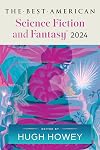
Look at me, being almost caught up on this series, finally! Only one year behind, now.
Anyway, this is a good, solid installment of a generally good yearly collection. I feel that in some sense this is maybe a more "traditional" batch of stories than we get most years, being mostly devoid of unusual formats or strongly experimental storytelling, although they're certainly diverse and creative in other ways. This volume is also rather less heavy on the social commentary than many of its show more predecessors, and completely lacking in any of those kinds of pieces that are basically all commentary with very little story. I imagine that may be a selling point for some and a disappointment for others. For myself, I just rather like the variety that having a different guest editor with different sensibilities every year brings. show less
Anyway, this is a good, solid installment of a generally good yearly collection. I feel that in some sense this is maybe a more "traditional" batch of stories than we get most years, being mostly devoid of unusual formats or strongly experimental storytelling, although they're certainly diverse and creative in other ways. This volume is also rather less heavy on the social commentary than many of its show more predecessors, and completely lacking in any of those kinds of pieces that are basically all commentary with very little story. I imagine that may be a selling point for some and a disappointment for others. For myself, I just rather like the variety that having a different guest editor with different sensibilities every year brings. show less
Lists
Awards


You May Also Like


Associated Authors
Statistics
- Works
- 116
- Also by
- 21
- Members
- 25,294
- Popularity
- #827
- Rating
- 4.0
- Reviews
- 1,150
- ISBNs
- 364
- Languages
- 18
- Favorited
- 37