
Amy Rose Capetta
Author of Once & Future
About the Author
Series
Works by Amy Rose Capetta
Tasting Light: Ten Science Fiction Stories to Rewire Your Perceptions (2022) — Editor — 42 copies, 1 review
Associated Works
That Way Madness Lies: 15 of Shakespeare's Most Notable Works Reimagined (2021) — Contributor — 154 copies, 5 reviews
Starstuff: Ten Science Fiction Stories to Celebrate New Possibilities (2025) — Contributor — 11 copies, 1 review
Tagged
Common Knowledge
- Legal name
- Capetta, Amy Rose
- Birthdate
- 20th Century
- Gender
- non-binary
- Education
- Vermont College of Fine Arts
- Relationships
- McCarthy, Cori (partner)
- Short biography
- Amy Rose Capetta [she/her] is an author of YA fantasy, sci-fi, and mystery. Her first novel, Entangled, was a BEA Buzz Book. Her latest, Echo After Echo, is a queer love story wrapped in a murder mystery and set on Broadway. It received two starred reviews and is a Junior Library Guild selection. Upcoming: The Brilliant Death (Viking 2018), The Lost Coast (Candlewick 2019), Once & Future (co-written with Cori McCarthy, from Little, Brown’s Jimmy Imprint in 2019). She holds a BA in Theater Arts from the University of California at Santa Cruz and an MFA in Writing for Children and Young Adults from VCFA. Amy Rose is the co-founder of the Rainbow Writers Workshop, the first-ever LGBTQIAP workshop for YA and middle grade. She lives in Vermont with her partner and their young son.
- Nationality
- USA
- Associated Place (for map)
- USA
Members
Reviews
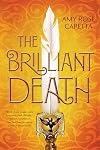
‘The Brilliant Death’ just quite simply is a beautiful book. It defied and exceeded my expectations for it, and I could barely put it down once I started. I didn’t actually even mean to read it right now, and what I mean by that is, my plan was just to ‘read a little bit’, ie. The Prologue, and well…suddenly, I’d read the whole book.
The premise of the book rolls some themes together but once you start reading ‘The Brilliant Death’ you find it’s more than a sum of show more shape-shifting magic plus warring Mafia-style crime families.
The story revolves around this wonderful character Teodora, and the book opens with her remembering the first time she saw her father kill someone, in order to protect ‘his family and his mountains’. She learns early on that her father is a powerful man.
Teodora di Sangrò is the daughter of the ‘great Niccolo di Sangrò’, who has control of the Uccelli region and heads a loyal family. One day Niccolò is suddenly poisoned by a letter he receives from the Capo, who has taken over the governance of all of Vinalia.
The Capo has summoned ‘the heirs of the five families’ as these poisonous letters have left the fathers for dead (except Niccolò, who is barely grasping onto life), to his home in Amalia, but Niccolò had wanted his second son, Luca, to become the heir.
Before Luca sets off on his trip to Amalia, Teodora/Teo catches the ruthless eldest son Benaimo, brother to them both, skinning Luca alive, so she dares reveal her greatest secret to them both, which is how she’s managed to carry out her ‘work' (ridding the kingdom of ‘bad people’) for her family for so long without a drop of blood being shed: Teo is a strega, and she has been turning nasty human beings into (mostly) inanimate objects for years. This time though, she manages to turn her brother into a vicious owl.
Luca and Teo set off on their journey to Amalia, set on finding an antidote to their father’s poisoning and to fulfill the Capo’s Summons, with a plan in mind, and luckily they meet another dashing and knowledgeable strega, Cielo, which means they have hope.
I don’t want to reveal much more of the plot beyond that because once Teo, Cielo, and Luca start their journey to Amalia, the story really gets going and it’s hard not to become fully invested after that point.
The storyline builds from the journey that the trio take, and this involves Teo learning more of her magic (and her self-discovery), to a novel that involves the deception and intrigue we often see in a royal court. Yet this time, these ‘families’ who are convening are basically feared mobsters in an Italian-style court of old, and the lush world-building that the author Amy Rose Capetta has conjured up for them is vivid and so different from every other court or castle I’ve read of lately.
The magic that is central to this book is a very special kind of magic, it’s shape-shifting, and that’s important to the most wonderful, surprising, and probably groundbreaking part of this novel: Teo (and Cielo) learns to change from a girl to a boy, and back (as a strega), and the conversation about how she/he feels in that body at different times. The power to change the body, and how Teo learns to harness magic is a fascinating part of this book, and Capetta approaches it with a delicateness, and at the same time, boldness, which makes the ‘gender-bending’ so unique and so wonderful to read.
The love story that is wrapped up in the magic, as well as the danger and adventure, is so original, that it’s hard to describe. I found myself loving these ‘odd’ characters, and even though I found a few holes to pick at and a few slight issues with pacing (slight rushed parts), the writing is beautiful; my eyes didn’t want to leave the page, plus I enjoyed the different sections Capetta used to divide the book up with.
This is an absolute stunner of a fantasy for this coming Fall (the cover even stands out in its lush Autumn tones), and this is sure to capture lots of peoples’ attention with its enthralling magic, and uniquely wonderful gender-bending love-story. A ‘Brilliant Book’. show less
The premise of the book rolls some themes together but once you start reading ‘The Brilliant Death’ you find it’s more than a sum of show more shape-shifting magic plus warring Mafia-style crime families.
The story revolves around this wonderful character Teodora, and the book opens with her remembering the first time she saw her father kill someone, in order to protect ‘his family and his mountains’. She learns early on that her father is a powerful man.
Teodora di Sangrò is the daughter of the ‘great Niccolo di Sangrò’, who has control of the Uccelli region and heads a loyal family. One day Niccolò is suddenly poisoned by a letter he receives from the Capo, who has taken over the governance of all of Vinalia.
The Capo has summoned ‘the heirs of the five families’ as these poisonous letters have left the fathers for dead (except Niccolò, who is barely grasping onto life), to his home in Amalia, but Niccolò had wanted his second son, Luca, to become the heir.
Before Luca sets off on his trip to Amalia, Teodora/Teo catches the ruthless eldest son Benaimo, brother to them both, skinning Luca alive, so she dares reveal her greatest secret to them both, which is how she’s managed to carry out her ‘work' (ridding the kingdom of ‘bad people’) for her family for so long without a drop of blood being shed: Teo is a strega, and she has been turning nasty human beings into (mostly) inanimate objects for years. This time though, she manages to turn her brother into a vicious owl.
Luca and Teo set off on their journey to Amalia, set on finding an antidote to their father’s poisoning and to fulfill the Capo’s Summons, with a plan in mind, and luckily they meet another dashing and knowledgeable strega, Cielo, which means they have hope.
I don’t want to reveal much more of the plot beyond that because once Teo, Cielo, and Luca start their journey to Amalia, the story really gets going and it’s hard not to become fully invested after that point.
The storyline builds from the journey that the trio take, and this involves Teo learning more of her magic (and her self-discovery), to a novel that involves the deception and intrigue we often see in a royal court. Yet this time, these ‘families’ who are convening are basically feared mobsters in an Italian-style court of old, and the lush world-building that the author Amy Rose Capetta has conjured up for them is vivid and so different from every other court or castle I’ve read of lately.
The magic that is central to this book is a very special kind of magic, it’s shape-shifting, and that’s important to the most wonderful, surprising, and probably groundbreaking part of this novel: Teo (and Cielo) learns to change from a girl to a boy, and back (as a strega), and the conversation about how she/he feels in that body at different times. The power to change the body, and how Teo learns to harness magic is a fascinating part of this book, and Capetta approaches it with a delicateness, and at the same time, boldness, which makes the ‘gender-bending’ so unique and so wonderful to read.
The love story that is wrapped up in the magic, as well as the danger and adventure, is so original, that it’s hard to describe. I found myself loving these ‘odd’ characters, and even though I found a few holes to pick at and a few slight issues with pacing (slight rushed parts), the writing is beautiful; my eyes didn’t want to leave the page, plus I enjoyed the different sections Capetta used to divide the book up with.
This is an absolute stunner of a fantasy for this coming Fall (the cover even stands out in its lush Autumn tones), and this is sure to capture lots of peoples’ attention with its enthralling magic, and uniquely wonderful gender-bending love-story. A ‘Brilliant Book’. show less
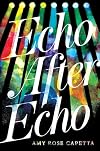
Originally posted at Musings of An Incurable Bookworm: http://incurablebookworm.blogspot.com/2017/11/echo-after-echo-amy-rose-capetta.h...
Every aspect of the description pulled me in more: a mystery, in a theatre, with a lesbian romance. So I was pretty stoked to win an ARC of this book from Librarything Early Reviewers. (The book has since been released, and you can buy it here!)
Zara Evans is just a normal teenage girl until she lands a much-coveted role in the production of Echo and show more Ariston at the Aurelia Theatre in New York, directed by esteemed director Leopold Henneman, opposite movie star Adrian Ward. However, before rehearsals even start, things go awry when the body of lighting designer Roscoe is discovered in the theatre. His assistant, Eli Vasquez, must take over for him—and all the pressure that she feels with that, being a young lighting designer working for a difficult director—while also falling in love with Zara. But does Zara have feelings for her too? Meanwhile, all of the Aurelia veterans seem to be warning Zara about director Leopold. And one death might be an accident, but when another death occurs, it becomes clear that there's something bigger at play. Who will fall next?
I loved this one. I loved all of the aspects that I expected. The fact that the author has spent a large amount of time IN theatre made it incredibly authentic, and gave me all the feels I hoped for and have experienced/do experience being involved with theatre. I thought the mystery was tied in quite nicely with the other plotlines, and no individual thread seemed weaker or more dominant. In the midst of a love story, this is also a pretty intense murder mystery. I'm usually pretty good at noodling out twists, but I didn't call the complete extent of the culprit. AND THAT'S ALL I'LL SAY ABOUT THAT BECAUSE SPOILERS.
Most importantly, while there is that murder mystery aspect, the book addresses so much of what it means to "find yourself" as a young person. Zara has to deal with her emerging feelings for Eli, and vice versa. Eli has to deal with the pressure of suddenly being responsible for something on your own, and of potentially letting people down, as well as starting to fall for a person before she even knows if there's a chance that person is interested in her. Adrian, Zara's costar, has to deal with the expectations of being a young movie star who people mostly pay attention to because he's good looking and to follow his romantic drama. He also is trying to figure out a relationship he left behind, while getting conflicting information about whether Zara's feelings for him extend beyond their romantic relationship in the story they are telling on stage. And without being too spoilery, several of the older characters look back at their formative years, at the times when they were "finding" themselves, and reflect on how they might have done things differently.
The relationship between Zara and Eli is sweet and tender and messy and complicated. Zara is struggling with being attracted to Eli when she's previously only dated boys (though her first kiss was a girl), and Eli is struggling with her intense attraction to Zara and whether or not she's coming on too strong. Meanwhile, they're both dealing with their roles in the production, in addition to Eli dealing with the trauma of tragically losing her mentor, and Zara dealing with the sly warnings and potentially life-threatening situations. The support that they are able to provide each other during what is a trying time for them both is heartwarming. There is, for me, the perfect amount of insta-love and slow burn in this relationship. And though things don't get too explicit, we do see Eli and Zara's relationship progress in a very satisfying and emotional way, right down to the ending.
It was also very apropos to be reading this story at this particular juncture in time, since Leopold *BIT SPOILERY* turns out to be a predatory director who has at the very least been manipulative and controlling of his young actresses, and at worst has been a rapist. I think the feelings that we see Zara experiencing—being a young, professionally inexperienced actress, and trying to figure out what is normal in the theatre world and what is Leopold overstepping—are incredibly relatable and relevant to the conversations that we're seeing happen today. There's something raw and vulnerable about being an actor that necessitates some intimacy. But there are also boundaries that should be drawn, and trying to figure out where those boundaries are and how where those boundaries are can affect your future opportunities as an actor is a fraught situation.
I gave this book a 4.5 stars on Goodreads (or I would have if there were half stars on Goodreads...but I wanted to leave some room for growth on not a debut), and look forward to reading more from this author in the future. Hopefully that future means some more stories set in the theatre world because I am here for that. show less
Every aspect of the description pulled me in more: a mystery, in a theatre, with a lesbian romance. So I was pretty stoked to win an ARC of this book from Librarything Early Reviewers. (The book has since been released, and you can buy it here!)
Zara Evans is just a normal teenage girl until she lands a much-coveted role in the production of Echo and show more Ariston at the Aurelia Theatre in New York, directed by esteemed director Leopold Henneman, opposite movie star Adrian Ward. However, before rehearsals even start, things go awry when the body of lighting designer Roscoe is discovered in the theatre. His assistant, Eli Vasquez, must take over for him—and all the pressure that she feels with that, being a young lighting designer working for a difficult director—while also falling in love with Zara. But does Zara have feelings for her too? Meanwhile, all of the Aurelia veterans seem to be warning Zara about director Leopold. And one death might be an accident, but when another death occurs, it becomes clear that there's something bigger at play. Who will fall next?
I loved this one. I loved all of the aspects that I expected. The fact that the author has spent a large amount of time IN theatre made it incredibly authentic, and gave me all the feels I hoped for and have experienced/do experience being involved with theatre. I thought the mystery was tied in quite nicely with the other plotlines, and no individual thread seemed weaker or more dominant. In the midst of a love story, this is also a pretty intense murder mystery. I'm usually pretty good at noodling out twists, but I didn't call the complete extent of the culprit. AND THAT'S ALL I'LL SAY ABOUT THAT BECAUSE SPOILERS.
Most importantly, while there is that murder mystery aspect, the book addresses so much of what it means to "find yourself" as a young person. Zara has to deal with her emerging feelings for Eli, and vice versa. Eli has to deal with the pressure of suddenly being responsible for something on your own, and of potentially letting people down, as well as starting to fall for a person before she even knows if there's a chance that person is interested in her. Adrian, Zara's costar, has to deal with the expectations of being a young movie star who people mostly pay attention to because he's good looking and to follow his romantic drama. He also is trying to figure out a relationship he left behind, while getting conflicting information about whether Zara's feelings for him extend beyond their romantic relationship in the story they are telling on stage. And without being too spoilery, several of the older characters look back at their formative years, at the times when they were "finding" themselves, and reflect on how they might have done things differently.
The relationship between Zara and Eli is sweet and tender and messy and complicated. Zara is struggling with being attracted to Eli when she's previously only dated boys (though her first kiss was a girl), and Eli is struggling with her intense attraction to Zara and whether or not she's coming on too strong. Meanwhile, they're both dealing with their roles in the production, in addition to Eli dealing with the trauma of tragically losing her mentor, and Zara dealing with the sly warnings and potentially life-threatening situations. The support that they are able to provide each other during what is a trying time for them both is heartwarming. There is, for me, the perfect amount of insta-love and slow burn in this relationship. And though things don't get too explicit, we do see Eli and Zara's relationship progress in a very satisfying and emotional way, right down to the ending.
It was also very apropos to be reading this story at this particular juncture in time, since Leopold *BIT SPOILERY* turns out to be a predatory director who has at the very least been manipulative and controlling of his young actresses, and at worst has been a rapist. I think the feelings that we see Zara experiencing—being a young, professionally inexperienced actress, and trying to figure out what is normal in the theatre world and what is Leopold overstepping—are incredibly relatable and relevant to the conversations that we're seeing happen today. There's something raw and vulnerable about being an actor that necessitates some intimacy. But there are also boundaries that should be drawn, and trying to figure out where those boundaries are and how where those boundaries are can affect your future opportunities as an actor is a fraught situation.
I gave this book a 4.5 stars on Goodreads (or I would have if there were half stars on Goodreads...but I wanted to leave some room for growth on not a debut), and look forward to reading more from this author in the future. Hopefully that future means some more stories set in the theatre world because I am here for that. show less
 This review was written for LibraryThing Early Reviewers.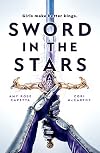
Spoiler warning. Sword in the Stars by Amy Rose Capetta and Cori McCarthy concludes the duology, following Merlin and Ari, the reincarnation of King Arthur, as they travel back to Camelot in search of a weapon powerful enough to defeat the Mercer Corporation in their own future.
This is a book that wants to say a great deal. It holds mirrors up to both past and present, and if you read, as I do, with an eye toward fiction as a learning device, there is much here to engage with. The authors show more are clearly interested in the ways societies construct exclusion at a systemic level, and in how capitalism can entrench harmful behaviour. Some of my reservations about tokenism in the first book are directly addressed here through increased page time and interiority for side characters, particularly Jordan and Lam. Their presence feels more grounded and less symbolic in this volume.
Where I felt a slight wobble was in a handful of moments of overt commentary. Merlin’s reflections on his amassed library near the end gesture quite pointedly toward the queerbaiting discourse around the Merlin television series. I understand the impulse, and I share the frustration that sits behind it, but for me it thinned the fictional veil slightly. What might have read as an Easter egg instead felt like a reminder of the authors speaking through the character. Other readers may experience that intertextual nod as energising. For me, alongside a few similarly direct passages, it occasionally tipped the balance from character expression into commentary vehicle, even while I agreed wholeheartedly with the sentiment.
What works especially well is the queernormative framework established in book one and expanded here. The central cast arrives from a far future in which gender and sexual diversity are normalised. Jordan as an asexual Black knight, Lam as non binary, Val as a demiboy, Ari and Gwen as two bi women deeply committed to one another, Merlin as gay, all create a thriving, textured community. Their plunge into the medieval period places them in tension with more restrictive norms, but prejudice is often conveyed through cultural assumptions rather than relentless violence or overt hostility.
For example, Arthur’s response to Ari’s sex and to the bond between Gwen and Ari comes from a place of acceptance. Lam’s relationship with Morgause becomes a tender aside, and Lam’s choice to remain in the past allows the book to explore the constraints of gender roles without reducing the storyline to suffering. There is damage acknowledged, but there is also hope. Jordan's revelation as a female knight, and Sir Kay’s response, is one of the clearer instances of overt prejudice. In contrast to the nuance elsewhere, Sir Kay leans heavily on stereotype and feels comparatively thinly drawn.
One thread that resonated strongly was the explicit acknowledgement of ethnic diversity in early Britain and the way later histories would erase it. The point is underlined more than once, perhaps longer than strictly necessary, yet its insistence carries its own quiet urgency. A similar effect appears in two brief but striking moments: the reference to Anglo Saxon women’s historical ability to divorce, later stripped away, and the framing of Gwen’s baby’s sex as assigned, with gender identity something to be discovered in time. Both moments are thought provoking, drawing a line between past and present. With the example of Nimue's mother, the context of the comment also felt like something of a nudge around ability to use rights when they are gained, or else run the risk of losing that freedom - a notion that feels particularly compelling in our current political context where many countries have right wing groups fighting to repeal freedoms afforded by liberal predecessors.
Given the medieval setting, the relative restraint around violence stands out. Conflict exists, and there are battles, but the narrative leans toward alliance building, such as Arthur with Avalon's enchantresses, and Gwen’s strategic guidance. The focus rests less on conquest and more on reshaping systems from within. Ari and Gwen modelling self determination in the face of constricting roles offers readers something constructive rather than purely reactive. The humour, often but not exclusively channelled through Merlin, helps balance the thematic weight.
From a craft perspective, the structural ambition is notable. Multiple timelines are woven together with clear magical rules, and the resolution honours those boundaries. Merlin’s experience of time toward the end is paced with care, and the reunion scenes acknowledge how disorienting such revelations would be. The ending feels seeded from early on, with twists that land cleanly rather than abruptly.
If I were to name an area where I felt occasional looseness, it would be in the dialogue. The banter is part of the group dynamic, and often charming, yet at times certain exchanges felt as though the lines could have been reassigned without changing the emotional texture. That may be less about humour itself and more about moments where individual voice blurs slightly within the character cast.
Overall, this remains a relatively light read that engages with significant ideas. For readers drawn to queernorm Arthurian retellings, playful banter, and time travel braided with paradox, it will deliver on all counts. show less
This is a book that wants to say a great deal. It holds mirrors up to both past and present, and if you read, as I do, with an eye toward fiction as a learning device, there is much here to engage with. The authors show more are clearly interested in the ways societies construct exclusion at a systemic level, and in how capitalism can entrench harmful behaviour. Some of my reservations about tokenism in the first book are directly addressed here through increased page time and interiority for side characters, particularly Jordan and Lam. Their presence feels more grounded and less symbolic in this volume.
Where I felt a slight wobble was in a handful of moments of overt commentary. Merlin’s reflections on his amassed library near the end gesture quite pointedly toward the queerbaiting discourse around the Merlin television series. I understand the impulse, and I share the frustration that sits behind it, but for me it thinned the fictional veil slightly. What might have read as an Easter egg instead felt like a reminder of the authors speaking through the character. Other readers may experience that intertextual nod as energising. For me, alongside a few similarly direct passages, it occasionally tipped the balance from character expression into commentary vehicle, even while I agreed wholeheartedly with the sentiment.
What works especially well is the queernormative framework established in book one and expanded here. The central cast arrives from a far future in which gender and sexual diversity are normalised. Jordan as an asexual Black knight, Lam as non binary, Val as a demiboy, Ari and Gwen as two bi women deeply committed to one another, Merlin as gay, all create a thriving, textured community. Their plunge into the medieval period places them in tension with more restrictive norms, but prejudice is often conveyed through cultural assumptions rather than relentless violence or overt hostility.
For example, Arthur’s response to Ari’s sex and to the bond between Gwen and Ari comes from a place of acceptance. Lam’s relationship with Morgause becomes a tender aside, and Lam’s choice to remain in the past allows the book to explore the constraints of gender roles without reducing the storyline to suffering. There is damage acknowledged, but there is also hope. Jordan's revelation as a female knight, and Sir Kay’s response, is one of the clearer instances of overt prejudice. In contrast to the nuance elsewhere, Sir Kay leans heavily on stereotype and feels comparatively thinly drawn.
One thread that resonated strongly was the explicit acknowledgement of ethnic diversity in early Britain and the way later histories would erase it. The point is underlined more than once, perhaps longer than strictly necessary, yet its insistence carries its own quiet urgency. A similar effect appears in two brief but striking moments: the reference to Anglo Saxon women’s historical ability to divorce, later stripped away, and the framing of Gwen’s baby’s sex as assigned, with gender identity something to be discovered in time. Both moments are thought provoking, drawing a line between past and present. With the example of Nimue's mother, the context of the comment also felt like something of a nudge around ability to use rights when they are gained, or else run the risk of losing that freedom - a notion that feels particularly compelling in our current political context where many countries have right wing groups fighting to repeal freedoms afforded by liberal predecessors.
Given the medieval setting, the relative restraint around violence stands out. Conflict exists, and there are battles, but the narrative leans toward alliance building, such as Arthur with Avalon's enchantresses, and Gwen’s strategic guidance. The focus rests less on conquest and more on reshaping systems from within. Ari and Gwen modelling self determination in the face of constricting roles offers readers something constructive rather than purely reactive. The humour, often but not exclusively channelled through Merlin, helps balance the thematic weight.
From a craft perspective, the structural ambition is notable. Multiple timelines are woven together with clear magical rules, and the resolution honours those boundaries. Merlin’s experience of time toward the end is paced with care, and the reunion scenes acknowledge how disorienting such revelations would be. The ending feels seeded from early on, with twists that land cleanly rather than abruptly.
If I were to name an area where I felt occasional looseness, it would be in the dialogue. The banter is part of the group dynamic, and often charming, yet at times certain exchanges felt as though the lines could have been reassigned without changing the emotional texture. That may be less about humour itself and more about moments where individual voice blurs slightly within the character cast.
Overall, this remains a relatively light read that engages with significant ideas. For readers drawn to queernorm Arthurian retellings, playful banter, and time travel braided with paradox, it will deliver on all counts. show less
After reading The Lost Coast and falling completely in love last summer I knew that my life needed more of Capetta's magical storytelling so I immediately got my library to order this one in. Echo after Echo may not have the witchy magic and west coast vibes of the Lost Coast, but I was still totally wrappe dup in the characters and story very quickly. Capetta sets her stage at the Aurelia, a famed New York theatre that will prove to be the setting for the unfolding of a triple narrative - show more the dramatization and development of "Echo and Ariston" that anchors the book, the real life love story unfolding between the protagonists Zara and Eli, and the revenge plot being carried out backstage. The theatre setting itself is what brings about the sense of magic and mystery throughout what could have otherwise been a rather straightforward story of jealousies gone awry, and Capetta further heightens the drama by carefully employing the idea of a cursed theatre. Even those of us who are not theatre buffs are sure to quickly become engaged as we see the drama backstage unfold - ourselves outsiders to the "theatre family" as much as newcomer Zara, the story's titular Echo. As we watch the play unfold and our cast reveal more of themselves wea re left guessing up until the finale who the real murderer us, which makes for an excellent narrative, and whether all three fated deaths will manifest. And even with all the expected drama which unfolds, we don't lose sight of our characters. Zara goes through so much emotion as she finds herself developing her Echo alongside her real self, made all the more complicated by her youth and her unwitting connection to Eli. All in all, the play may be the thing, but it's Capetta's true characters and careful mastery of real world magic that keeps us turning page after page. show less
Lists
Pride Wishlist (1)
Awards


You May Also Like


Associated Authors
Statistics
- Works
- 16
- Also by
- 6
- Members
- 2,897
- Popularity
- #8,842
- Rating
- 3.7
- Reviews
- 101
- ISBNs
- 116
- Languages
- 5
- Favorited
- 1
