
Amy Rose Capetta
Author of Once & Future
About the Author
Series
Works by Amy Rose Capetta
Tasting Light: Ten Science Fiction Stories to Rewire Your Perceptions (2022) — Editor — 43 copies, 1 review
Associated Works
That Way Madness Lies: 15 of Shakespeare's Most Notable Works Reimagined (2021) — Contributor — 157 copies, 5 reviews
Starstuff: Ten Science Fiction Stories to Celebrate New Possibilities (2025) — Contributor — 11 copies, 1 review
Tagged
Common Knowledge
- Legal name
- Capetta, Amy Rose
- Birthdate
- 20th Century
- Gender
- non-binary
- Education
- Vermont College of Fine Arts
- Relationships
- McCarthy, Cori (partner)
- Short biography
- Amy Rose Capetta [she/her] is an author of YA fantasy, sci-fi, and mystery. Her first novel, Entangled, was a BEA Buzz Book. Her latest, Echo After Echo, is a queer love story wrapped in a murder mystery and set on Broadway. It received two starred reviews and is a Junior Library Guild selection. Upcoming: The Brilliant Death (Viking 2018), The Lost Coast (Candlewick 2019), Once & Future (co-written with Cori McCarthy, from Little, Brown’s Jimmy Imprint in 2019). She holds a BA in Theater Arts from the University of California at Santa Cruz and an MFA in Writing for Children and Young Adults from VCFA. Amy Rose is the co-founder of the Rainbow Writers Workshop, the first-ever LGBTQIAP workshop for YA and middle grade. She lives in Vermont with her partner and their young son.
- Nationality
- USA
- Associated Place (for map)
- USA
Members
Reviews
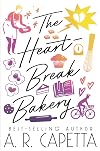
A.R. Capetta has done it again and I expected nothing less from them. I adored Echo After Echo and really liked The Lost Coast and rich on cue, in comes The Heartbreak Bakery in screaming excellence.
I’m going to make list of the wonderful things in this book that should make you want to pick it up:
An LGBTQIAP+ owned and operated bakery called the Proud Muffin.
A magical baker.
Real, delicious-sounding recipes (add your own magic).
Such a wonderful variety of LGBTQIP+ rep. Like, so much it show more needs a sublist.
Polysexual and polyamorous rep.
Demisexual rep.
Agender rep.
Gay rep.
Lesbian rep.
Asexual and aromantic rep.
Nonbinary rep.
I’m 100% sure I missed at least three other kinds of rep.
Two minor characters are from the deaf community.
There’s a bake-off!
Adorable younger siblings.
Wise older siblings.
Supportive families.
A new relationship that has ups and downs and sidewayses. Sidewayses is now a word.
Conversations about gender identity and clothing.
Oh, an LGBTQIAP+ author (non-binary and demigirlflux).
There’s more. There’s so much more. There’s so much to The Heartbreak Bakery that makes my heart scream. This book needs to be on EVERY list recommending LGBTQIAP+ books. But lets step out of the rep for a second and talk about the actual story.
The story is great.
This is the one time a romance clouding the story makes sense, for reasons I cannot tell you because it would be very rude of me to spoil a big twist. There is a lot at stake here, and Syd is all over the place and sometimes blinded to true needs by her own insistence and desperation to do good. It’s an easy story to get lost in. Moreover, the writing is such that I felt the story was center. Right now, I couldn’t tell you what color Syd’s eyes are or the color of Syd’s hair. Because those things are not important, and they can create divisions by putting too much emphasis on physicality. Which is exactly what Capetta is avoiding, I think. How a person identifies is irrelevant to what they look like. Capetta wants you to know who their characters are, not how they appear. It’s perfect writing for this kind of book.
There are always stakes in The Heartbreak Bakery, and there are a lot of characters. Capetta doesn’t expect you to remember everyone’s names – every time a minor character is reintroduced, they are reintroduced with that aspect that makes them unique, and it triggers a memory.
I liked it. I really liked tucking in every night and visiting Syd at the Proud Muffin and following the chaos wreaked in these pages. The book also made me hungry and even now several days later, I am dying for scones. Maybe I should make some….
In short, I recommend The Heartbreak Bakery to absolutely everyone. It’s a great book overflowing with rep and it will bring you joy. show less
I’m going to make list of the wonderful things in this book that should make you want to pick it up:
An LGBTQIAP+ owned and operated bakery called the Proud Muffin.
A magical baker.
Real, delicious-sounding recipes (add your own magic).
Such a wonderful variety of LGBTQIP+ rep. Like, so much it show more needs a sublist.
Polysexual and polyamorous rep.
Demisexual rep.
Agender rep.
Gay rep.
Lesbian rep.
Asexual and aromantic rep.
Nonbinary rep.
I’m 100% sure I missed at least three other kinds of rep.
Two minor characters are from the deaf community.
There’s a bake-off!
Adorable younger siblings.
Wise older siblings.
Supportive families.
A new relationship that has ups and downs and sidewayses. Sidewayses is now a word.
Conversations about gender identity and clothing.
Oh, an LGBTQIAP+ author (non-binary and demigirlflux).
There’s more. There’s so much more. There’s so much to The Heartbreak Bakery that makes my heart scream. This book needs to be on EVERY list recommending LGBTQIAP+ books. But lets step out of the rep for a second and talk about the actual story.
The story is great.
This is the one time a romance clouding the story makes sense, for reasons I cannot tell you because it would be very rude of me to spoil a big twist. There is a lot at stake here, and Syd is all over the place and sometimes blinded to true needs by her own insistence and desperation to do good. It’s an easy story to get lost in. Moreover, the writing is such that I felt the story was center. Right now, I couldn’t tell you what color Syd’s eyes are or the color of Syd’s hair. Because those things are not important, and they can create divisions by putting too much emphasis on physicality. Which is exactly what Capetta is avoiding, I think. How a person identifies is irrelevant to what they look like. Capetta wants you to know who their characters are, not how they appear. It’s perfect writing for this kind of book.
There are always stakes in The Heartbreak Bakery, and there are a lot of characters. Capetta doesn’t expect you to remember everyone’s names – every time a minor character is reintroduced, they are reintroduced with that aspect that makes them unique, and it triggers a memory.
I liked it. I really liked tucking in every night and visiting Syd at the Proud Muffin and following the chaos wreaked in these pages. The book also made me hungry and even now several days later, I am dying for scones. Maybe I should make some….
In short, I recommend The Heartbreak Bakery to absolutely everyone. It’s a great book overflowing with rep and it will bring you joy. show less
 This review was written for LibraryThing Early Reviewers.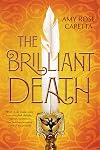
Anytime I see the word "strega" in a book's summary, I immediately give it a closer look and usually end up reading it. "The Brilliant Death" was no different. Teo is an amazing, strong strega, using her powerful gift to protect her family. She's also the first genderqueer protagonist that I've read. Her love interest is the genderfluid Cielo, who is brilliant and charming and transformative (literally!). These two working together to save Teo's family, not to mention help each other show more discover the full extent of Teo's gifts, proves to be a wonderous adventure. This universe's concept of magic is intriguing, though could have been more developed.
Though the book can stand alone, I do hope there is a sequel!
****MAJOR SPOILER BELOW****
*
*
*
*
*
*
*
*
*
My one quibble is that it is too fast-paced in certain parts. Luca's death, in particular, didn't pack as much of an emotional punch as it should have. Whether it's because he died 100 pages or because a strong relationship between him and Teo was underdeveloped, I'm not sure. show less
Though the book can stand alone, I do hope there is a sequel!
****MAJOR SPOILER BELOW****
*
*
*
*
*
*
*
*
*
My one quibble is that it is too fast-paced in certain parts. Luca's death, in particular, didn't pack as much of an emotional punch as it should have. Whether it's because he died 100 pages or because a strong relationship between him and Teo was underdeveloped, I'm not sure. show less
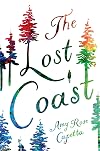
My review will be published on my blog at http://www.kinziethings.com on April 14, 2019. I will post to Goodreads immediately. The review is as follows!
-=-=-=-
The short blurb bit: Danny seems to have been looking for something without really knowing it. She has moved with her mother to a small town called Tempest. She falls in with a group of friends called The Grays without knowing that they may have actually brought her there.
The Grays are a coven of young witches who have lost their show more friend, Imogen. Danny – it seems may have exactly the magical skill that they need to get Imogen back. There are forces working against them though, and all of them may be in danger.
The descriptive bit: Danny and the Grays inhabit a world where magic lives and breathes and gets tangled up in people’s’ bodies. Capetta waves a beautiful tale of magic, love, exploration, and coming of age. When Danny arrives in Tempest, she doesn’t know that there is magic inside her. The Grays take her under their wings and teach her to listen to her instincts.
"Magic is like love. You see how other people do it, you have the stories and instructions they leave behind, but then you have to figure out how you do it."
The Grays have lost their friend and coven-member, Imogen. Danny brings with her, the exact magic that is needed to help find Imogen and restore things to the way they were. The Grays are diverse and wonderful: Lelia is a non-binary asexual nature lover who collects buttons, June is a Filipino lesbian with a physical disability, Hawthorn is black and bisexual and finally, Rush lives with Synesthesia, plays the Cello and hums her magical spells.
As the search for Imogen begins, the mystery deepens. Soon, there are two dead boys, a frightened little sister and Danny is finding herself drawn to one particular Gray.
This is a little bit mystery, a little bit love story and a lot magical.
My thoughts bit: The writing in this novel is exquisite. It reads much more like poetry than prose. In particular, I enjoyed the descriptions of nature: the giant Redwoods, the wind, and rain, the ocean… Capetta writes with such detail that the reader can paint a vivid mental picture of the landscape.
I struggled a little with the time jumps and the switching points of view. The cast of characters was a bit complex.
I did feel that all of the characters were fully fleshed out and given the respect of having their own personalities and quirks. I enjoyed getting to know them.
The warnings bit: Mentions death, injuries, physical disability. show less
-=-=-=-
The short blurb bit: Danny seems to have been looking for something without really knowing it. She has moved with her mother to a small town called Tempest. She falls in with a group of friends called The Grays without knowing that they may have actually brought her there.
The Grays are a coven of young witches who have lost their show more friend, Imogen. Danny – it seems may have exactly the magical skill that they need to get Imogen back. There are forces working against them though, and all of them may be in danger.
The descriptive bit: Danny and the Grays inhabit a world where magic lives and breathes and gets tangled up in people’s’ bodies. Capetta waves a beautiful tale of magic, love, exploration, and coming of age. When Danny arrives in Tempest, she doesn’t know that there is magic inside her. The Grays take her under their wings and teach her to listen to her instincts.
"Magic is like love. You see how other people do it, you have the stories and instructions they leave behind, but then you have to figure out how you do it."
The Grays have lost their friend and coven-member, Imogen. Danny brings with her, the exact magic that is needed to help find Imogen and restore things to the way they were. The Grays are diverse and wonderful: Lelia is a non-binary asexual nature lover who collects buttons, June is a Filipino lesbian with a physical disability, Hawthorn is black and bisexual and finally, Rush lives with Synesthesia, plays the Cello and hums her magical spells.
As the search for Imogen begins, the mystery deepens. Soon, there are two dead boys, a frightened little sister and Danny is finding herself drawn to one particular Gray.
This is a little bit mystery, a little bit love story and a lot magical.
My thoughts bit: The writing in this novel is exquisite. It reads much more like poetry than prose. In particular, I enjoyed the descriptions of nature: the giant Redwoods, the wind, and rain, the ocean… Capetta writes with such detail that the reader can paint a vivid mental picture of the landscape.
I struggled a little with the time jumps and the switching points of view. The cast of characters was a bit complex.
I did feel that all of the characters were fully fleshed out and given the respect of having their own personalities and quirks. I enjoyed getting to know them.
The warnings bit: Mentions death, injuries, physical disability. show less
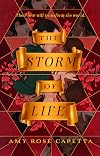
The Storm of Life concludes Amy Rose Capetta’s duology with a return to a world of magical politics, shifting identities, and a rebellion against oppressive rule. Picking up where The Brilliant Death left off, the story wraps up the power struggles between feuding families and a tyrannical emperor, while exploring the deeper mechanics of magic and personal transformation.
One of the most compelling expansions in this sequel is the evolution of magic itself. Capetta introduces the idea that show more magic is not simply inherited or static—it has a will of its own, choosing its host and adapting based on the individual. People can even gather magic from multiple sources, gaining unique powers that reflect who they are. These revelations offer thought-provoking commentary on identity and potential, and they serve as one of the more memorable elements in the book.
Unfortunately, while the lore continues to develop, much of the novel’s emotional and narrative impact feels underwhelming. The plot centers around Teodora’s effort to stop the emperor and restore peace to the region, but the once-rich worldbuilding takes a backseat to action and internal character drama that often feels unbalanced or underdeveloped.
A returning figure from the first novel—Teodora’s brother-turned-owl-turned-villain—adds some intensity, now fueled by a thirst for revenge and the promise of magical power from the emperor. While the betrayal adds tension, it’s also somewhat predictable and lacks emotional payoff beyond its symbolic twist.
The biggest shift, however, lies in the characters themselves. Cielo, who was a strong and intriguing presence in book one, feels frustratingly immature this time around. His behavior often borders on evasive and petulant, especially in moments that should carry emotional weight—like his marriage to Teodora. The romance, which felt organic and heartfelt in the first book, now comes across as hollow and inconsistent, failing to deliver the satisfying payoff readers might hope for.
The novel also leans heavily into themes of gender and fluid identity—important themes, to be sure—but they begin to overshadow other elements of the story. At times, the narrative focus on gender feels more like a repetitive reminder than a layered exploration, which could feel excessive for some readers and detract from the plot’s larger stakes.
In the end, The Storm of Life offers flashes of potential and a few thoughtful moments, particularly in its magical concepts and political parallels. But inconsistent pacing, underwhelming character arcs, and a romance that fizzles rather than flourishes leave the conclusion feeling more like a missed opportunity than a triumphant finale. show less
One of the most compelling expansions in this sequel is the evolution of magic itself. Capetta introduces the idea that show more magic is not simply inherited or static—it has a will of its own, choosing its host and adapting based on the individual. People can even gather magic from multiple sources, gaining unique powers that reflect who they are. These revelations offer thought-provoking commentary on identity and potential, and they serve as one of the more memorable elements in the book.
Unfortunately, while the lore continues to develop, much of the novel’s emotional and narrative impact feels underwhelming. The plot centers around Teodora’s effort to stop the emperor and restore peace to the region, but the once-rich worldbuilding takes a backseat to action and internal character drama that often feels unbalanced or underdeveloped.
A returning figure from the first novel—Teodora’s brother-turned-owl-turned-villain—adds some intensity, now fueled by a thirst for revenge and the promise of magical power from the emperor. While the betrayal adds tension, it’s also somewhat predictable and lacks emotional payoff beyond its symbolic twist.
The biggest shift, however, lies in the characters themselves. Cielo, who was a strong and intriguing presence in book one, feels frustratingly immature this time around. His behavior often borders on evasive and petulant, especially in moments that should carry emotional weight—like his marriage to Teodora. The romance, which felt organic and heartfelt in the first book, now comes across as hollow and inconsistent, failing to deliver the satisfying payoff readers might hope for.
The novel also leans heavily into themes of gender and fluid identity—important themes, to be sure—but they begin to overshadow other elements of the story. At times, the narrative focus on gender feels more like a repetitive reminder than a layered exploration, which could feel excessive for some readers and detract from the plot’s larger stakes.
In the end, The Storm of Life offers flashes of potential and a few thoughtful moments, particularly in its magical concepts and political parallels. But inconsistent pacing, underwhelming character arcs, and a romance that fizzles rather than flourishes leave the conclusion feeling more like a missed opportunity than a triumphant finale. show less
Lists
Pride Wishlist (1)
Awards


You May Also Like


Associated Authors
Statistics
- Works
- 16
- Also by
- 6
- Members
- 2,942
- Popularity
- #8,696
- Rating
- 3.6
- Reviews
- 102
- ISBNs
- 116
- Languages
- 5
- Favorited
- 1
