
Amelia B. Edwards (1831–1892)
Author of A Thousand Miles up the Nile
About the Author
Image credit: Courtesy of the NYPL Digital Gallery (image use requires permission from the New York Public Library)
Works by Amelia B. Edwards
Untrodden Peaks and Unfrequented Valleys: A Midsummer Ramble in the Dolomites (1873) 80 copies, 2 reviews
Winter Ghosts: Classic Ghost Stories for Christmas (Black Heath Gothic, Sensation and Supernatural) (2014) 10 copies, 1 review
Lord Brackenbury 3 copies
Debenham's vow 2 copies
Librivox Ghost Story Collection 005 2 copies
An Engineer's Story 2 copies
My brother's wife 1 copy
Miss Carew 1 copy
A Story of Salome 1 copy
Ballads 1 copy
Works of Amelia Edwards 1 copy
My Brother's Ghost Story 1 copy
The Engineer 1 copy
Associated Works
Ghostly Tales: Spine-Chilling Stories of the Victorian Age (2017) — Contributor — 265 copies, 15 reviews
The Penguin Book of Ghost Stories: From Elizabeth Gaskell to Ambrose Bierce (2010) — Contributor — 189 copies, 4 reviews
The Mammoth Book of Victorian and Edwardian Ghost Stories (1995) — Contributor — 174 copies, 4 reviews
Delphi Complete Works of Charles Dickens (Illustrated) (2012) — Contributor, some editions — 96 copies
The Phantom Coach: A Connoisseur's Collection of Victorian Ghost Stories (2014) — Contributor — 64 copies, 1 review
The Lifted Veil: The Book of Fantastic Literature by Women 1800-World War II (1806) — Contributor — 45 copies
Roads of Destiny: And Other Tales of Alternative Histories and Parallel Realms: 43 (British Library Tales of the Weird) (2023) — Contributor — 33 copies
Dead Drunk: Tales of Intoxication and Demon Drinks (Tales of the Weird) (2023) — Contributor — 32 copies
The Gentlewomen of Evil: An Anthology of Rare Supernatural Stories from the Pens of Victorian Ladies (1967) — Contributor — 29 copies
Masters of the Macabre: An Anthology of Mystery, Horror, and Detection (1975) — Contributor — 13 copies
The Lady Chillers: Classic Ghost and Horror Stories by Women Authors (2014) — Contributor — 4 copies
Murder by Gaslight: Victorian Tales — Contributor — 4 copies
The Wimbourne Book of Victorian Ghost Stories (Annotated): Volume 10 (2018) — Contributor — 3 copies
The Midnight Inkwell: Sinister Short Stories by Classic Women Writers (2023) — Contributor — 3 copies
Short Ghost and Horror Collection 026 — Contributor — 1 copy
Duchy Letniej Nocy 1 copy
Tagged
Common Knowledge
- Legal name
- Edwards, Amelia Ann Blanford
- Other names
- アメリア・B.エドワーズ
- Birthdate
- 1831-06-07
- Date of death
- 1892-04-15
- Gender
- female
- Education
- at home
- Occupations
- journalist
novelist
Egyptologist
Travel Writer
short story writer
ghost story writer - Organizations
- Egypt Exploration Society (co-founder, 1882)
Edwards Chair of Egyptology, University College London (bequest) - Relationships
- Betham-Edwards, Matilda (cousin)
- Short biography
- Amelia B. Edwards was born in London and educated at home by her mother. She began to write at a young age, publishing her first poem at age 7 and her first story at 12. She went on to publish a variety of poetry, stories, and articles in a large number of British magazines and newspapers. She published her first novel, My Brother's Wife, in 1855, but it was Barbara's History (1864), a novel about bigamy, that made her famous. She also wrote ghost stories, including the often-anthologized "The Phantom Coach" (1864). In the winter of 1873–74, accompanied by several friends, Edwards visited Egypt, where she developed a fascination with the country and its cultures, both ancient and modern. After returning home, she wrote a travelogue with hand-drawn illustrations called A Thousand Miles up the Nile (1877), which became an immediate bestseller. Edwards now became a devoted advocate for research and preservation of the ancient Egyptian monuments and, in 1882, co-founded the Egypt Exploration Fund (now the Egypt Exploration Society) with Reginald Stuart Poole of the British Museum. Following the publication of her hit novel, Lord Brackenbury (1880), she abandoned her other literary work to concentrate solely on Egyptology. Edwards contributed entries to the 9th edition of the Encyclopædia Britannica, to the American supplement of that work, and to the Standard Dictionary. She went on a lecture tour of the USA in 1889–90, and these lectures were later published under the title Pharaohs, Fellahs, and Explorers (1891). On her death, Edwards bequeathed her valuable collection of Egyptian antiquities and her library to University College London, together with a sum of £2,500 to found an Edwards Chair of Egyptology.
- Nationality
- UK
- Birthplace
- London, England, UK
- Places of residence
- Westbury-on-Trym, Bristol, England, UK
- Place of death
- Weston-super-Mare, Somerset, England, UK
- Burial location
- St Mary's Church, Henbury, Bristol, England, UK
- Associated Place (for map)
- England, UK
Members
Reviews
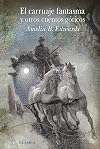
Hay autores que no necesitan recurrir al sobresalto para inquietar. Amelia B. Edwards es una de ellos. En "El carruaje fantasma y otros cuentos góticos", su colección completa de relatos fantásticos, la autora inglesa demuestra que el misterio puede ser elegante, humano y hasta compasivo.
Edwards, admirada por Dickens y colaboradora habitual de All the Year Round, escribe con una precisión victoriana que no excluye la emoción. Sus historias se mueven entre lo sobrenatural y lo cotidiano, show more entre el gesto científico y el temblor íntimo. En sus páginas hay trenes que llegan desde el más allá, ingenieros perseguidos por su conciencia, confesores que se debaten entre el deber y el deseo, y mujeres que, incluso muertas, conservan la última palabra.
Uno de los aciertos más notables del libro es su variedad de escenarios. Junto a los clásicos templos, cementerios o caminos solitarios, aparecen fábricas, ferrocarriles y oficinas: el gótico adaptado al siglo industrial. Edwards entendió antes que nadie que el miedo no se extinguía con el progreso; solo cambiaba de forma.
Sus fantasmas rara vez buscan venganza. Suelen venir a recordar, a advertir o a reparar una pérdida. Y en eso radica su modernidad: la autora se interesa menos por el espanto que por la impresión, por ese instante en que la razón se suspende y el alma percibe algo que no puede explicar.
La traducción de Daniel de la Rubia conserva esa claridad británica, esa contención que multiplica el efecto del misterio. Es un volumen que se lee con placer lento, con esa mezcla de curiosidad y respeto que provocan los secretos bien contados.
En conjunto, esta antología devuelve a Edwards el lugar que merece: una voz delicada, lúcida y precisa dentro del gótico inglés, capaz de mirar a los muertos sin teatralidad y a los vivos sin condescendencia.
La historia de fantasmas de mi hermano (My Brother’s Ghost Story, 1860): Un viajero alpino se ve envuelto en un encuentro imposible que une amistad, presagio y muerte, en uno de los relatos más melancólicos y logrados del libro.
Cuatro historias (Four Stories, 1861): Cuatro breves piezas que giran en torno a apariciones y promesas más allá del tiempo; la autora juega con lo testimonial y lo legendario con sobria eficacia.
11 de marzo (The Eleventh of March, 1863): Un recuerdo anotado en un cuaderno antiguo se convierte en una reflexión sobre la fiabilidad de los sentidos y el peso de lo vivido.
Número tres (Number Three / How the Third Floor Knew the Potteries, 1863): Un relato urbano con tintes casi detectivescos, donde la intuición femenina y lo sobrenatural se cruzan en un edificio cargado de ecos.
El descubrimiento de las islas del Tesoro (The Discovery of the Treasure Isles, 1864): Aventura y misterio se combinan en esta historia de exploración juvenil y hallazgos que exceden lo material.
El carruaje fantasma (The Phantom Coach, 1864): Un hombre extraviado en la nieve encuentra refugio en un lugar que no pertenece del todo al mundo de los vivos. Clásico absoluto del relato victoriano de fantasmas.
Historia de un ingeniero (An Engineer’s Story, 1866): Un narrador técnico relata una cadena de hechos inexplicables que ponen a prueba la lógica y la fe en la maquinaria moderna.
El expreso de las cuatro y cuarto (The Four-Fifteen Express, 1866): En una estación solitaria, un tren nocturno se convierte en el escenario de un crimen y una aparición que se resiste a desaparecer.
La historia de Salomé (The Story of Salome, 1867): Ambientada en una Venecia sensual y decadente, un hombre recuerda a una joven judía cuyo destino queda marcado por la fatalidad y la memoria.
Una misión peligrosa (A Service of Danger, 1869): Un relato de espionaje y valentía donde el suspense racional se mezcla con un presentimiento que lo trastoca todo.
El paso nuevo (The New Pass, 1870): Un abogado relata una excursión a través de los Alpes para abrir un paso nuevo. El relato combina la tensión de la montaña, un accidente inesperado y la inmediatez de la camaradería; lo sobrenatural se insinúa como explicación posible de una supervivencia sorprendente.
En el confesionario (In the Confessional, 1871): Un viajero inglés, recorriendo el Alto Rin en busca de soledad, llega a la pequeña ciudad suiza de Rheinfelden durante los preparativos de una feria. En una iglesia tranquila, entra al confesionario y se topa con un sacerdote demacrado cuya mirada intensa lo perturba, impulsándolo a indagar sobre su historia.
La historia de la hermana Johanna (Sister Johanna’s Story, 1872): En el valle tirolés de Grödner Thal, la narradora Johanna Röederer vive con su familia de tallistas y su hermana Katrine, prometida del escultor Ulrich Finazzer. La llegada del pintor Alois altera la armonía del taller y anticipa tensiones entre amor, arte y tradición.
Monsieur Maurice (Monsieur Maurice, 1873): Durante la agitación política del siglo XIX, un inglés expatriado recuerda a un hombre extraordinario cuya generosidad y silencio encierran una tragedia. Ambientado entre la guerra y la amistad, este relato largo —el más complejo de la colección— aborda con hondura el tema del honor, la memoria y el sacrificio personal. Edwards alcanza aquí su punto más humano y narrativamente maduro.
¿Fue una alucinación? (Was It an Illusion? / Thirteen to Dinner, 1881): Un inspector de educación rememora un extraño episodio —una visión compartida, una conducta inexplicable— que desemboca en un suceso trágico y en una pregunta que no encuentra respuesta. El relato gira en torno a la certeza y la duda: ¿cómo distinguir lo real de lo que la mente inventa? show less
Edwards, admirada por Dickens y colaboradora habitual de All the Year Round, escribe con una precisión victoriana que no excluye la emoción. Sus historias se mueven entre lo sobrenatural y lo cotidiano, show more entre el gesto científico y el temblor íntimo. En sus páginas hay trenes que llegan desde el más allá, ingenieros perseguidos por su conciencia, confesores que se debaten entre el deber y el deseo, y mujeres que, incluso muertas, conservan la última palabra.
Uno de los aciertos más notables del libro es su variedad de escenarios. Junto a los clásicos templos, cementerios o caminos solitarios, aparecen fábricas, ferrocarriles y oficinas: el gótico adaptado al siglo industrial. Edwards entendió antes que nadie que el miedo no se extinguía con el progreso; solo cambiaba de forma.
Sus fantasmas rara vez buscan venganza. Suelen venir a recordar, a advertir o a reparar una pérdida. Y en eso radica su modernidad: la autora se interesa menos por el espanto que por la impresión, por ese instante en que la razón se suspende y el alma percibe algo que no puede explicar.
La traducción de Daniel de la Rubia conserva esa claridad británica, esa contención que multiplica el efecto del misterio. Es un volumen que se lee con placer lento, con esa mezcla de curiosidad y respeto que provocan los secretos bien contados.
En conjunto, esta antología devuelve a Edwards el lugar que merece: una voz delicada, lúcida y precisa dentro del gótico inglés, capaz de mirar a los muertos sin teatralidad y a los vivos sin condescendencia.
La historia de fantasmas de mi hermano (My Brother’s Ghost Story, 1860): Un viajero alpino se ve envuelto en un encuentro imposible que une amistad, presagio y muerte, en uno de los relatos más melancólicos y logrados del libro.
Cuatro historias (Four Stories, 1861): Cuatro breves piezas que giran en torno a apariciones y promesas más allá del tiempo; la autora juega con lo testimonial y lo legendario con sobria eficacia.
11 de marzo (The Eleventh of March, 1863): Un recuerdo anotado en un cuaderno antiguo se convierte en una reflexión sobre la fiabilidad de los sentidos y el peso de lo vivido.
Número tres (Number Three / How the Third Floor Knew the Potteries, 1863): Un relato urbano con tintes casi detectivescos, donde la intuición femenina y lo sobrenatural se cruzan en un edificio cargado de ecos.
El descubrimiento de las islas del Tesoro (The Discovery of the Treasure Isles, 1864): Aventura y misterio se combinan en esta historia de exploración juvenil y hallazgos que exceden lo material.
El carruaje fantasma (The Phantom Coach, 1864): Un hombre extraviado en la nieve encuentra refugio en un lugar que no pertenece del todo al mundo de los vivos. Clásico absoluto del relato victoriano de fantasmas.
Historia de un ingeniero (An Engineer’s Story, 1866): Un narrador técnico relata una cadena de hechos inexplicables que ponen a prueba la lógica y la fe en la maquinaria moderna.
El expreso de las cuatro y cuarto (The Four-Fifteen Express, 1866): En una estación solitaria, un tren nocturno se convierte en el escenario de un crimen y una aparición que se resiste a desaparecer.
La historia de Salomé (The Story of Salome, 1867): Ambientada en una Venecia sensual y decadente, un hombre recuerda a una joven judía cuyo destino queda marcado por la fatalidad y la memoria.
Una misión peligrosa (A Service of Danger, 1869): Un relato de espionaje y valentía donde el suspense racional se mezcla con un presentimiento que lo trastoca todo.
El paso nuevo (The New Pass, 1870): Un abogado relata una excursión a través de los Alpes para abrir un paso nuevo. El relato combina la tensión de la montaña, un accidente inesperado y la inmediatez de la camaradería; lo sobrenatural se insinúa como explicación posible de una supervivencia sorprendente.
En el confesionario (In the Confessional, 1871): Un viajero inglés, recorriendo el Alto Rin en busca de soledad, llega a la pequeña ciudad suiza de Rheinfelden durante los preparativos de una feria. En una iglesia tranquila, entra al confesionario y se topa con un sacerdote demacrado cuya mirada intensa lo perturba, impulsándolo a indagar sobre su historia.
La historia de la hermana Johanna (Sister Johanna’s Story, 1872): En el valle tirolés de Grödner Thal, la narradora Johanna Röederer vive con su familia de tallistas y su hermana Katrine, prometida del escultor Ulrich Finazzer. La llegada del pintor Alois altera la armonía del taller y anticipa tensiones entre amor, arte y tradición.
Monsieur Maurice (Monsieur Maurice, 1873): Durante la agitación política del siglo XIX, un inglés expatriado recuerda a un hombre extraordinario cuya generosidad y silencio encierran una tragedia. Ambientado entre la guerra y la amistad, este relato largo —el más complejo de la colección— aborda con hondura el tema del honor, la memoria y el sacrificio personal. Edwards alcanza aquí su punto más humano y narrativamente maduro.
¿Fue una alucinación? (Was It an Illusion? / Thirteen to Dinner, 1881): Un inspector de educación rememora un extraño episodio —una visión compartida, una conducta inexplicable— que desemboca en un suceso trágico y en una pregunta que no encuentra respuesta. El relato gira en torno a la certeza y la duda: ¿cómo distinguir lo real de lo que la mente inventa? show less

This is a book that I have encountered in quotations and excerpts over the years and always intended to read; now I have. Edwards was an influential figure in nineteenth-century British Egyptology and A Thousand Miles Up the Nile is probably the best known British travel book on Egypt. She wrote less than fifty years after Champollion, a decade before Gordon died at Khartoum; she was acquainted with most of the Egyptologists of her time and was a friend of Flinders Petrie.
Some GR reviewers show more have been offended by things in the book. Edwards was a woman of her time, a Victorian and a daughter of empire. A Thousand Miles Up the Nile reflects that; if you can't deal with it, this book is not for you.
The book has two great strengths. The first is that it describes, often in detail, the archaeological remains as they were in 1873-74; many have been subsequently damaged, destroyed, or relocated (e.g. Philae and Abu Simbel in 1968 because of the Aswan Dam). While written descriptions can become tedious, most of Edwards' are quite vivid. Even when she fails (on the hall of Seti I at Karnak), she is eloquent:
"To describe it, in the sense of building up a recognizable image by means of words, is impossible. The scale is too vast; the effect too tremendous; the sense of one's own dumbness, and littleness, and incapacity, too complete and crushing. It is a place that strikes you into silence; that empties you, as it were, not only of words but ideas."
The book's second strength is Edwards' lively narrative of life on the Nile. There is much everyday life as well as Egyptian history.
On riding a camel:
"His paces, however, are more complicated than his joints and more trying than his temper. He has four: a short walk, like the rolling of a small boat in a chopping sea; a long walk, which dislocates every bone in your body; a trot that reduces you to imbecility; and a gallop that is sudden death. One tries in vain to imagine a crime for which the peine forte et dure of sixteen hours on camelback would not be a full and sufficient expiation. It is a punishment to which one would not willingly be the means of condemning any human being--not even a reviewer."
On a water-wheel in action:
"A creaking sakkieh is at work yonder, turned by a couple of red cows with mild Hathor-like faces. The old man who drives them sits in the middle cog of the wheel, and slowly goes around as if he was being roasted."
On tourists' acquisitiveness:
"There is, in fact, a growing passion for mummies among Nile travelers. Unfortunately, the price rises with demand; and although the mine is nearly inexhaustible, a mummy nowadays becomes not only a prohibited but a costly luxury."
These are only a few small examples. Edwards shows us a world long gone (and parts of it not missed) with inimitable style. show less
Some GR reviewers show more have been offended by things in the book. Edwards was a woman of her time, a Victorian and a daughter of empire. A Thousand Miles Up the Nile reflects that; if you can't deal with it, this book is not for you.
The book has two great strengths. The first is that it describes, often in detail, the archaeological remains as they were in 1873-74; many have been subsequently damaged, destroyed, or relocated (e.g. Philae and Abu Simbel in 1968 because of the Aswan Dam). While written descriptions can become tedious, most of Edwards' are quite vivid. Even when she fails (on the hall of Seti I at Karnak), she is eloquent:
"To describe it, in the sense of building up a recognizable image by means of words, is impossible. The scale is too vast; the effect too tremendous; the sense of one's own dumbness, and littleness, and incapacity, too complete and crushing. It is a place that strikes you into silence; that empties you, as it were, not only of words but ideas."
The book's second strength is Edwards' lively narrative of life on the Nile. There is much everyday life as well as Egyptian history.
On riding a camel:
"His paces, however, are more complicated than his joints and more trying than his temper. He has four: a short walk, like the rolling of a small boat in a chopping sea; a long walk, which dislocates every bone in your body; a trot that reduces you to imbecility; and a gallop that is sudden death. One tries in vain to imagine a crime for which the peine forte et dure of sixteen hours on camelback would not be a full and sufficient expiation. It is a punishment to which one would not willingly be the means of condemning any human being--not even a reviewer."
On a water-wheel in action:
"A creaking sakkieh is at work yonder, turned by a couple of red cows with mild Hathor-like faces. The old man who drives them sits in the middle cog of the wheel, and slowly goes around as if he was being roasted."
On tourists' acquisitiveness:
"There is, in fact, a growing passion for mummies among Nile travelers. Unfortunately, the price rises with demand; and although the mine is nearly inexhaustible, a mummy nowadays becomes not only a prohibited but a costly luxury."
These are only a few small examples. Edwards shows us a world long gone (and parts of it not missed) with inimitable style. show less
I greatly enjoyed this haunting tale about a mysterious schoolmaster and a boy with a fishing rod. Dark, atmospheric, memorable. I liked that there are elements to the mystery that are decidedly human in origin, and the ghostly aspects are built on this solid foundation. A sad story, but quite satisfying.
Untrodden Peaks and Unfrequented Valleys: A Midsummer Ramble in the Dolomites (Virago/Beacon Travelers) by Amelia B. Edwards

This is a book for people who love the Dolomites already, who love Amelia Edwards for her work in Egypt and want to know more, or for compulsive completers like me. On page 22 I read, "Where the houses end, the precipices so close in that there is but just space for the road and the torrent. Then the gorge gradually widens through wooded slopes and hanging chestnut groves; farmhouses and châlets perched high on grassy plateaus begin to look more Swiss than Italian;...." Quite descriptive show more and well-written but with little personality or human interest. Surely she can't go on like this for 356 pages, can she? She can. I read on and on hoping for some travel anecdotes and hoping especially to meet some of the natives of the place in 1872. There were a few, but mostly the book is straightforward, accurate description.
If this were not enough, I have to say that I bring a 21st century perception to the matter of other human beings. I was, therefore, somewhat put off by Edwards's dismissal of peasants as not worthy of her regard. "It is curious how soon one learns to be content with these humble Tyrolean albergos, and to regard as friends and almost as equals, the kindly folks that keep them." She does warn other travelers that, "To treat them with hauteur, or with suspicion, or to give unnecessary trouble, is both unjust and impolite," so I forgive her for being a woman of her time, but I don't forget.
There is one passage where their guide yells at the mules that satisfies my appetite for local color for a moment. ("Holy Mother! what do they mean by drinking cold water when they are as hot as two hot cakes in the oven?...") That's about all, and that is my reason for giving this good enough piece of 19th century travel writing only 2½ stars. show less
If this were not enough, I have to say that I bring a 21st century perception to the matter of other human beings. I was, therefore, somewhat put off by Edwards's dismissal of peasants as not worthy of her regard. "It is curious how soon one learns to be content with these humble Tyrolean albergos, and to regard as friends and almost as equals, the kindly folks that keep them." She does warn other travelers that, "To treat them with hauteur, or with suspicion, or to give unnecessary trouble, is both unjust and impolite," so I forgive her for being a woman of her time, but I don't forget.
There is one passage where their guide yells at the mules that satisfies my appetite for local color for a moment. ("Holy Mother! what do they mean by drinking cold water when they are as hot as two hot cakes in the oven?...") That's about all, and that is my reason for giving this good enough piece of 19th century travel writing only 2½ stars. show less
Lists
Awards


You May Also Like


Associated Authors
Statistics
- Works
- 52
- Also by
- 80
- Members
- 613
- Popularity
- #41,001
- Rating
- 3.8
- Reviews
- 18
- ISBNs
- 109
- Languages
- 5
- Favorited
- 1

