
Charlotte Riddell (1832–1906)
Author of Night Shivers (Tales of Mystery & the Supernatural)
About the Author
Works by Charlotte Riddell
The Open Door (Collected Ghost Stories of Charlotte Riddell): 14 spooky Victorian tales from a mistress of the genre (1882) 18 copies, 1 review
A Little Purple Book of Sharp Wit 6 copies
Above suspicion 2 copies
Berna Boyle 2 copies
LinkAustin Friars. A novel. 2 copies
The Last of Squire Ennismore 2 copies
A silent tragedy 1 copy
Daisies and buttercups 1 copy
City and suburb, 1 copy
Mitre court 1 copy
Idle tales 1 copy
The race for wealth 1 copy
The footfall of fate 1 copy
Ghost Tales from Victorian and Edwardian Bedfordshire (Pwca Ghost, Witch and Fairy Pamphlets) (2020) 1 copy
Works of Charlotte Riddell 1 copy
The Walnut-Tree House 1 copy
Susan Drummond 1 copy
Far above rubies 1 copy
The head of the firm 1 copy
Miss Gascoigne 1 copy
Did he deserve it? 1 copy
The earl's promise 1 copy
Her mother's darling 1 copy
A Terrible Vengeance 1 copy
Poor fellow! 1 copy
Home, sweet home 1 copy
Associated Works
The Book of Irish Weirdness: A Treasury of Classic Tales of the Supernatural, Spooky and Strange (1997) — Contributor — 107 copies, 1 review
Weird Women: Classic Supernatural Fiction by Groundbreaking Female Writers: 1852-1923 (2020) — Contributor — 107 copies, 2 reviews
Our Haunted Shores: Tales from the Coasts of the British Isles (2022) — Contributor — 65 copies, 2 reviews
The Darker Sex: Tales of the Supernatural and Macabre by Victorian Women Writers (2009) — Contributor — 55 copies, 2 reviews
Christmas Ghosts: Seventeen Great Ghost Stories in the Christmas Tradition (1987) — Contributor — 46 copies
The Lifted Veil: The Book of Fantastic Literature by Women 1800-World War II (1806) — Contributor — 45 copies
Irish Ghost Stories (Tales of Mystery & The Supernatural) (2011) — Contributor — 42 copies, 1 review
The Gentlewomen of Evil: An Anthology of Rare Supernatural Stories from the Pens of Victorian Ladies (1967) — Contributor — 28 copies
The Lady Chillers: Classic Ghost and Horror Stories by Women Authors (2014) — Contributor — 4 copies
The Midnight Inkwell: Sinister Short Stories by Classic Women Writers (2023) — Contributor — 3 copies
Duchy Letniej Nocy 1 copy
Duch Na Rozstaju Dróg — Contributor — 1 copy
Gwiazdka Z Duchami 1 copy
Tagged
Common Knowledge
- Legal name
- Cowan, Charlotte Eliza Lawson
Riddell, Eliza - Other names
- Trafford, F. G.
Riddell, Charlotte - Birthdate
- 1832-09-30
- Date of death
- 1906-09-24
- Gender
- female
- Occupations
- novelist
short story writer - Nationality
- Ireland
- Birthplace
- Carrickfergus, Ireland
- Places of residence
- London, England, UK
- Place of death
- Ashford, Kent, England, UK
- Associated Place (for map)
- England, UK
Members
Reviews

Christmas Ghost Stories: Classic Victorian Tales for Cold Winter Nights
Rating: 4.5 / 5
This is an exceptionally well-curated and well-framed collection. I enjoyed it far more than I expected, and I read it quickly—one of those books where the momentum sneaks up on you.
Wells’s introduction does real work, not just scene-setting. It clearly explains why Christmas became a season for ghost stories: long nights, enforced domestic closeness, cold, ritual, memory, and the tension between show more comfort and unease. That framing carries through the whole book. Each story is preceded by its own introduction, and those are just as valuable—brief but intelligent discussions of the author, the historical moment, and what kind of horror you’re about to encounter.
What I appreciated most is the range Wells highlights without flattening it. There’s domestic horror, where the threat is inside the home and the family structure itself. There’s horror of the unseen, horror of the half-seen, and horror that relies on implication rather than spectacle. There’s even room for a lighter, almost comic piece—something to relieve the pressure so the evening doesn’t become relentlessly grim. That balance feels very true to how these stories were originally told and consumed.
The standout for me was The Nurse’s Story, which remains one of the most chilling Christmas ghost stories ever written, precisely because the person in danger is a lonely child rather than a reckless adult. The collection as a whole reinforces how often Victorian ghost stories are about neglect, moral coldness, and quiet failures of care, rather than monsters.
The only story that did not work for me was The Brown Hand. The problem isn’t the premise—it’s the ending. After setting up a haunting rooted in colonial exploitation and bodily violation, the resolution feels evasive. The ghost is effectively tricked, which undermines the story’s own moral argument. Instead of reckoning, the narrative opts for reassurance, and that sits badly alongside the book’s broader themes about consequence and responsibility.
That single misfire aside, this is an excellent anthology. Wells respects the reader, trusts the material, and gives just enough context to deepen the experience without explaining the fear away. It’s thoughtful, unsettling, and very satisfying to read in winter, when darkness comes early and the house feels a little too quiet.
Highly recommended for readers who like their ghost stories intelligent, historically grounded, and morally sharp. show less
Rating: 4.5 / 5
This is an exceptionally well-curated and well-framed collection. I enjoyed it far more than I expected, and I read it quickly—one of those books where the momentum sneaks up on you.
Wells’s introduction does real work, not just scene-setting. It clearly explains why Christmas became a season for ghost stories: long nights, enforced domestic closeness, cold, ritual, memory, and the tension between show more comfort and unease. That framing carries through the whole book. Each story is preceded by its own introduction, and those are just as valuable—brief but intelligent discussions of the author, the historical moment, and what kind of horror you’re about to encounter.
What I appreciated most is the range Wells highlights without flattening it. There’s domestic horror, where the threat is inside the home and the family structure itself. There’s horror of the unseen, horror of the half-seen, and horror that relies on implication rather than spectacle. There’s even room for a lighter, almost comic piece—something to relieve the pressure so the evening doesn’t become relentlessly grim. That balance feels very true to how these stories were originally told and consumed.
The standout for me was The Nurse’s Story, which remains one of the most chilling Christmas ghost stories ever written, precisely because the person in danger is a lonely child rather than a reckless adult. The collection as a whole reinforces how often Victorian ghost stories are about neglect, moral coldness, and quiet failures of care, rather than monsters.
The only story that did not work for me was The Brown Hand. The problem isn’t the premise—it’s the ending. After setting up a haunting rooted in colonial exploitation and bodily violation, the resolution feels evasive. The ghost is effectively tricked, which undermines the story’s own moral argument. Instead of reckoning, the narrative opts for reassurance, and that sits badly alongside the book’s broader themes about consequence and responsibility.
That single misfire aside, this is an excellent anthology. Wells respects the reader, trusts the material, and gives just enough context to deepen the experience without explaining the fear away. It’s thoughtful, unsettling, and very satisfying to read in winter, when darkness comes early and the house feels a little too quiet.
Highly recommended for readers who like their ghost stories intelligent, historically grounded, and morally sharp. show less
 This review was written for LibraryThing Early Reviewers.
I was expecting something old-fashioned, and that’s exactly what it delivers, in a good way. Back in Victorian times, it was a tradition to read aloud and share ghost stories at Christmas, and this collection captures that spirit perfectly.
These eight stories are quiet and atmospheric, relying more on mood than on shock. The stories alone would have made for a good book, but what truly elevates it are the foreword, introductions, and illustrations.
I enjoyed the foreword and the show more introductions as much as, if not more than, the stories themselves. Without them, I feel the book would not have had the same impact and would not be as enjoyable.
They provide background information before each tale, helping to place the author and the stories within their historical context and making the reading experience more meaningful.
The illustrations are black-and-white sketches that add to the atmosphere and help draw the reader into the world of each story. They feel like part of the stories, not just something extra.
I feel a hard copy of this book would be a treasure to own or to give as a gift, something you’d want to keep on your shelf and return to year after year, perhaps even starting a new family tradition of reading one of the stories outloud at Christmas.
I believe a hard copy of this book would be a treasure to own or to give as a gift — something you’d want to keep on your shelf and return to year after year, perhaps even starting a new family tradition of reading one of the stories each Christmas. show less
These eight stories are quiet and atmospheric, relying more on mood than on shock. The stories alone would have made for a good book, but what truly elevates it are the foreword, introductions, and illustrations.
I enjoyed the foreword and the show more introductions as much as, if not more than, the stories themselves. Without them, I feel the book would not have had the same impact and would not be as enjoyable.
They provide background information before each tale, helping to place the author and the stories within their historical context and making the reading experience more meaningful.
The illustrations are black-and-white sketches that add to the atmosphere and help draw the reader into the world of each story. They feel like part of the stories, not just something extra.
I feel a hard copy of this book would be a treasure to own or to give as a gift, something you’d want to keep on your shelf and return to year after year, perhaps even starting a new family tradition of reading one of the stories outloud at Christmas.
I believe a hard copy of this book would be a treasure to own or to give as a gift — something you’d want to keep on your shelf and return to year after year, perhaps even starting a new family tradition of reading one of the stories each Christmas. show less
This review was written for LibraryThing Early Reviewers.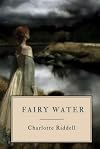
Fairy Water by Victorian author Charlotte Riddell is a rather short novel that encompasses a quiet ghost story as well as the trials of a young widow. The narrator, Stafford Trevor, recounts how his elderly cousin marries a girl young enough to be his granddaughter. When the cousin dies he leaves his young widow and her children tied to the house called Fairy Water and makes it impossible for her to ever marry again. Stafford befriends the widow and vows to act as her and her children's show more protector.
Meanwhile he purchases a country house for himself called Crow Hall from a young friend, Valentine, and this home appears to be haunted. Valentine reports how his own father was driven mad by the ghostly apparition at Crow Hall. Stafford again vows to help him lay the ghost to rest. At first the two plot lines appeared to have no connection, but eventually they are tied together and Stafford has his hands full trying to help both Mary and Valentine.
While Fairy Water was an easy read, I took neither a liking nor a disliking to it. I love a good ghost story but this one was pretty mild. The best part of the book was the narrator, Stafford Trevor. His delivery was earnest, caring and at times quite humorous. show less
Meanwhile he purchases a country house for himself called Crow Hall from a young friend, Valentine, and this home appears to be haunted. Valentine reports how his own father was driven mad by the ghostly apparition at Crow Hall. Stafford again vows to help him lay the ghost to rest. At first the two plot lines appeared to have no connection, but eventually they are tied together and Stafford has his hands full trying to help both Mary and Valentine.
While Fairy Water was an easy read, I took neither a liking nor a disliking to it. I love a good ghost story but this one was pretty mild. The best part of the book was the narrator, Stafford Trevor. His delivery was earnest, caring and at times quite humorous. show less
I absolutely loved this book. It featured short stories with a few illustrations that really added to the story and gave you some visuals. The stories were good for all ages, nothing too scary. These are classic stories from different eras. I'd recommend this book for any time of year and not just Christmas. It was a great assortment of quick reads.
This review was written for LibraryThing Early Reviewers.Lists
You May Also Like


Associated Authors
Statistics
- Works
- 78
- Also by
- 63
- Members
- 421
- Popularity
- #57,941
- Rating
- 3.7
- Reviews
- 13
- ISBNs
- 54
- Languages
- 5
- Favorited
- 3
