
Albert Hofmann (1906–2008)
Author of Plants of the Gods: Their Sacred, Healing, and Hallucinogenic Powers
About the Author
Dr. Albert Hofmann is a world renowned scientist and Fellow member of the World Academy of Art and Science. A leader in pharmaceutical-chemical research, he is the author of several prominent books, among them "LSD-My Problem Child." (McGraw-Hill, New York 1980). Now retired, yet still active in show more scientific and philosophical pursuits, Dr. Hofmann lives in Burg, Switzerland. show less
Image credit: Photo by Philip H. Bailey
Works by Albert Hofmann
LSD My Problem Child: Reflections on Sacred Drugs, Mysticism and Science (1979) 420 copies, 5 reviews
The Physics of Synchrotron Radiation (Cambridge Monographs on Particle Physics, Nuclear Physics and Cosmology) (2004) 7 copies
Associated Works
Pharmacotheon: Entheogenic Drugs, Their Plant Sources and History (1993) — Foreword — 119 copies, 2 reviews
Higher Wisdom: Eminent Elders Explore the Continuing Impact of Psychedelics (2005) — Contributor — 49 copies, 1 review
Gateway to Inner Space: Sacred Plants, Mysticism and Psychotherapy (1990) — Associated Name — 46 copies
Tagged
Common Knowledge
- Other names
- HOFMANN, Albert
- Birthdate
- 1906-01-11
- Date of death
- 2008-04-29
- Gender
- male
- Education
- University of Zürich
- Occupations
- scientist
- Relationships
- Guanella, Gustav (brother-in-law)
- Nationality
- Switzerland
- Birthplace
- Baden, Switzerland
- Places of residence
- Basel, Switzerland
- Place of death
- Burg im Leimental, Switzerland
- Associated Place (for map)
- Switzerland
Members
Reviews
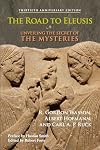
Is the thesis of the book, that the Eleusinian mysteries involved the use of psychoactive drugs, correct? Probably, and the idea has become more widely accepted in the decades since the book was published. However, that change in perception has come in no small part due to more academically rigorous examinations of the question than this book, which devotes quite a large portion of its pages to talking about the authors' experiences with psychoactive drugs, personal opinions, and show more unconventional interpretations of myths and etymology that borders on a 'Chariots of the Gods' level of academic rigor. There is of course some serious archeological discussion but too much time is spent on flowery descriptions of drug trips and speculation presented as fact. That, as much as anything, is why this book wasn't initially taken seriously in academic circles. It deserves credit for being the first to broach the subject, for likely being right, and it is an interesting read, but is hardly authoritative. show less
This book is wrong, as its own afterword admits, as far as the proposed pathways to hallucinogenic experiences go. It's a bit of an exercise in finding what you're looking for in interpreting the ancient material, and the best spin it has to offer for being wrong about the pathway is that it was put there as a red herring to hide the real psychedelic mystery. Except the rather tortured way of producing this thesis in the first place is more easily just dismissed as wrong?
Regardless, it's an show more interesting idea about spiritual initiation through psychedelics which has precedent in other cultures, and does fit to the mythology fairly well. Without a plausible source of that psychedelic you need to look further afield into similar experiences from less fitting sources. Mushrooms perhaps, datura type dream wine? Natural gasses were proposed for inducing visions in the context of oracles but no evidence has been found. There's something here, even if the central argument doesn't hold up. show less
Regardless, it's an show more interesting idea about spiritual initiation through psychedelics which has precedent in other cultures, and does fit to the mythology fairly well. Without a plausible source of that psychedelic you need to look further afield into similar experiences from less fitting sources. Mushrooms perhaps, datura type dream wine? Natural gasses were proposed for inducing visions in the context of oracles but no evidence has been found. There's something here, even if the central argument doesn't hold up. show less

“The ideas which the authors—the banker, the chemist and the classicist—brought forth have been largely unchallenged and ignored by specialists in the culture of ancient and Classical Greece. The situation seems to fulfill the rule of thumb that when ideas are controversial they are discussed, when they are revolutionary, they are ignored.”
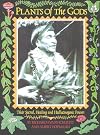
A good overall view. Definitely interested in things like Salvia and Iboga. Some of it was just boring reference stuff that I had to skim. Much of the last chapter was devoted to experiments with hallucinogens and psychoanalysis in the West. Pretty heady stuff.
Lists
You May Also Like


Associated Authors
Statistics
- Works
- 27
- Also by
- 3
- Members
- 1,431
- Popularity
- #17,978
- Rating
- 4.2
- Reviews
- 21
- ISBNs
- 88
- Languages
- 8
- Favorited
- 4

