
Eric Nylund
Author of Halo: The Fall of Reach
About the Author
Series
Works by Eric Nylund
Butterflies Like Jewels 1 copy
Associated Works
Tagged
Common Knowledge
- Birthdate
- 1964-11-12
- Gender
- male
- Education
- University of California, San Diego (MS|Physical Chemistry)
University of California, Santa Barbara (BS|Chemistry) - Relationships
- Mitchell, Syne (wife)
- Nationality
- USA
- Places of residence
- Seattle, Washington, USA
- Associated Place (for map)
- Washington, USA
Members
Discussions
Halo: The Fall of Reach by Eric Nylund in Book talk (April 2023)
Reviews
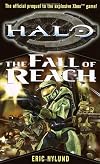
This is the back story to the characters and settings in the video game Halo, something in which I have no interest at all, so it's not something I would ever have picked up to read. But my 14-year old nephew was very insistent that I try it, and I've been very pleasantly surprised.
In a future in which humans have spread throughout the galaxy, two events coincide: a scientist who fears for the future of humanity begins kidnapping and experimenting on selected children to produce super show more soldiers (Spartans), and the galaxy is invaded by outsiders who have superior technology and no desire to communicate or make peace. Some of the Spartans survive and grow to adulthood, and as they do they take on the most hazardous of the alien threats. As the prequel ends, the aliens have destroyed Reach, the planet on which the Spartans were trained and which houses the headquarters of humanity's intelligence and military organizations.
The main character is the leader of the Spartans, but the doctor and various military officers are also treated with depth. There is some discussion of the ethics of what is done to the children (the needs of the many vs. the needs of the few), but for all that the Spartans grow to feel they lead the life they should, it's an unsettling premise. I don't know if it's presented in the game itself.
Exciting, decent space opera. I intend to read at least the next in the series. show less
In a future in which humans have spread throughout the galaxy, two events coincide: a scientist who fears for the future of humanity begins kidnapping and experimenting on selected children to produce super show more soldiers (Spartans), and the galaxy is invaded by outsiders who have superior technology and no desire to communicate or make peace. Some of the Spartans survive and grow to adulthood, and as they do they take on the most hazardous of the alien threats. As the prequel ends, the aliens have destroyed Reach, the planet on which the Spartans were trained and which houses the headquarters of humanity's intelligence and military organizations.
The main character is the leader of the Spartans, but the doctor and various military officers are also treated with depth. There is some discussion of the ethics of what is done to the children (the needs of the many vs. the needs of the few), but for all that the Spartans grow to feel they lead the life they should, it's an unsettling premise. I don't know if it's presented in the game itself.
Exciting, decent space opera. I intend to read at least the next in the series. show less
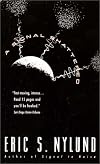
Just when the unlikeable protagonist thinks things can't get any worse - his shady trading deals with aliens have resulted in the total destruction of all life on Earth, because the main character thought that no alien could be as venal as he was, and he was wrong - things get worse.
By the end of the novel, the character is no more likeable, but because he's resurrected a few thousand people into a virtual universe, he's feeling smug and fully justified. I don't often come across a character show more who I'd like to deliver a good kicking to, but in the case of Jack Potter, I'll make an exception.
All still die. O the embarrassment. show less
By the end of the novel, the character is no more likeable, but because he's resurrected a few thousand people into a virtual universe, he's feeling smug and fully justified. I don't often come across a character show more who I'd like to deliver a good kicking to, but in the case of Jack Potter, I'll make an exception.
All still die. O the embarrassment. show less
WHAT I KNEW ABOUT THE FRANCHISE
Going in, this was the sum total of my knowledge about Halo:
* Someone in it was called, "Master Chief."
* The point of the game (presumably as Master Chief), was to kill hostile aliens (perhaps all aliens)
* When I tried to play, I would die in no more than 28.7 seconds.
In other words, I had no preconceptions about this going in. My tabula was about as rasa as you can ask for.
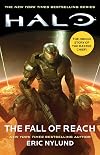
WHAT'S HALO: THE FALL OF REACH ABOUT?
In the 26th century, humanity has colonies in star show more systems throughout the galaxy. And finally, that moment we've been waiting for happens: First Contact. And like SF movies from the early 20th Century tried to warn us: the alien race we make that First Contact with is vastly technologically superior and isn't friendly.
They're called the Covenant, and are apparently made up of an association of various races—each with their own specialties. And unless something dramatic happens, they're going to wipe out humanity. They don't seem that interested in humans joining with them or assimilating humanity. It pretty much seems like they want humans eradicated.
Enter Dr. Catherine Halsey of the Office of Naval Intelligence. She's got an insane, ethically-vacant, implausible idea—she's going to take a bunch of children, train them to become the greatest soldiers in history, surgically/medically augment them, equip them with unbelievably advanced suits of armor, and set them loose on the Covenant. Basically a combination of Urban-Legend understanding of ancient Sparta + Ender's Game + Red Rising + Tony Stark's suits.
We see these Spartans in action, flashback to their early training, and then see them at their—and possibly the war's—most pivotal moment. We get to know a few of them, a bit—but the focus is on the trainee who will become their Master Chief.
There's also a plotline focusing on one starship commander (he switches vessels a couple of times, so I'll go generic there) who takes a lot of risks—and has some solid crew members to back him up. Their combination of nerves, cleverness, and luck makes them about as successful as you can be without the scientific enhancements that the Spartans get. Eventually, they play host to the Spartans on a last-ditch mission, and that's when things really start cooking.
SO, WHAT DID I THINK ABOUT HALO: THE FALL OF REACH?
I don't have a lot to say about this. Like every book (so far) that I was recommended in this 12 Books challenge, this isn't something I'd typically read. But this was pretty fun. Sure, Pierce Brown and Mike Chen aren't going to be looking over their shoulders worrying about Nylund—but the dude can write an entertaining scene with some decent character moments.
The battle scenes in particular were just what you want in a book like this (or a video game like this, I assume). The space battles brought me back to Jack Campbell's books or the Robotech novels that I lived on in the late 80s. I need to make time for more stuff like that.
Reach, I should mention, is the biggest and most important military base for humans outside of Earth—the location of both are tightly kept secrets. So the book focusing on the fall of Reach tells you right away that this book will have an ugly end. And, spoiler alert, the title is apt.
But there's hope—in the Dumb and Dumber "So, you're telling me there's a chance"—kind of hope. But that's enough for a bioengineered super-soldier, a cocky AI, and a starship of maverick officers, right?
I'm definitely not going to rush and grab another Halo book to see what happens next or to learn about other escapades of the Spartans/Master Chief. But if they come across my path? Yeah, I'd read more.
If you're into Halo or if you want to understand what someone in your family/friends group sees in the game, this might be just the ticket. It's a decent amount of fun with just the right amount of action. Give it a shot. show less
Going in, this was the sum total of my knowledge about Halo:
* Someone in it was called, "Master Chief."
* The point of the game (presumably as Master Chief), was to kill hostile aliens (perhaps all aliens)
* When I tried to play, I would die in no more than 28.7 seconds.
In other words, I had no preconceptions about this going in. My tabula was about as rasa as you can ask for.
WHAT'S HALO: THE FALL OF REACH ABOUT?
In the 26th century, humanity has colonies in star show more systems throughout the galaxy. And finally, that moment we've been waiting for happens: First Contact. And like SF movies from the early 20th Century tried to warn us: the alien race we make that First Contact with is vastly technologically superior and isn't friendly.
They're called the Covenant, and are apparently made up of an association of various races—each with their own specialties. And unless something dramatic happens, they're going to wipe out humanity. They don't seem that interested in humans joining with them or assimilating humanity. It pretty much seems like they want humans eradicated.
Enter Dr. Catherine Halsey of the Office of Naval Intelligence. She's got an insane, ethically-vacant, implausible idea—she's going to take a bunch of children, train them to become the greatest soldiers in history, surgically/medically augment them, equip them with unbelievably advanced suits of armor, and set them loose on the Covenant. Basically a combination of Urban-Legend understanding of ancient Sparta + Ender's Game + Red Rising + Tony Stark's suits.
We see these Spartans in action, flashback to their early training, and then see them at their—and possibly the war's—most pivotal moment. We get to know a few of them, a bit—but the focus is on the trainee who will become their Master Chief.
There's also a plotline focusing on one starship commander (he switches vessels a couple of times, so I'll go generic there) who takes a lot of risks—and has some solid crew members to back him up. Their combination of nerves, cleverness, and luck makes them about as successful as you can be without the scientific enhancements that the Spartans get. Eventually, they play host to the Spartans on a last-ditch mission, and that's when things really start cooking.
SO, WHAT DID I THINK ABOUT HALO: THE FALL OF REACH?
I don't have a lot to say about this. Like every book (so far) that I was recommended in this 12 Books challenge, this isn't something I'd typically read. But this was pretty fun. Sure, Pierce Brown and Mike Chen aren't going to be looking over their shoulders worrying about Nylund—but the dude can write an entertaining scene with some decent character moments.
The battle scenes in particular were just what you want in a book like this (or a video game like this, I assume). The space battles brought me back to Jack Campbell's books or the Robotech novels that I lived on in the late 80s. I need to make time for more stuff like that.
Reach, I should mention, is the biggest and most important military base for humans outside of Earth—the location of both are tightly kept secrets. So the book focusing on the fall of Reach tells you right away that this book will have an ugly end. And, spoiler alert, the title is apt.
But there's hope—in the Dumb and Dumber "So, you're telling me there's a chance"—kind of hope. But that's enough for a bioengineered super-soldier, a cocky AI, and a starship of maverick officers, right?
I'm definitely not going to rush and grab another Halo book to see what happens next or to learn about other escapades of the Spartans/Master Chief. But if they come across my path? Yeah, I'd read more.
If you're into Halo or if you want to understand what someone in your family/friends group sees in the game, this might be just the ticket. It's a decent amount of fun with just the right amount of action. Give it a shot. show less

Like I said in my review of the movie based on this book, I've never played any of the Halo games. I got this because I'd heard that the franchise has some good AI-human interaction. Starting with the first Halo novel seemed like the best way to go.
This book covers the origins of the Master Chief, the series protagonist. Dr. Catherine Halsey selected John for the SPARTAN-II program when he was only 6 years old, arranging for him and many other children to be kidnapped from their homes and show more put through intense training and brutal modifications. It's all hugely unethical, but the end result is something humanity turns out to sorely need: a group of super soldiers known as the Spartans, of which John-117 is the best. Their first mission pits them against human rebels, but it's not long before they find themselves fighting a much deadlier enemy, mysterious aliens known as the Covenant.
I really wanted to love this book, but unfortunately it never really gelled for me. Nylund cared a lot about things I didn't, and didn't care much about things I did. As a result, there was a lot of jargon-heavy space and ground warfare, and not much focus on characters as people with relationships and feelings. Dr. Halsey felt some guilt about what she put the children through, but her focus was on her larger mission. John was upset when his fellow Spartans died, but his focus, too, was on his mission. Character emotions and deaths rarely had much impact. I barely felt a pang when characters I'd basically known for hundreds of pages died, because they were more like collections of combat skills than people.
I also would have liked more and meatier AI scenes. Cortana was the most interesting of the bunch and she, sadly, didn't show up until the last third of the book. I was a little peeved that the very first reasons Cortana gave Dr. Halsey for choosing John as her Spartan all had something to do with his looks and general attractiveness (it was also a bit weird because Cortana was essentially Dr. Halsey, and Dr. Halsey was sort of John's mother figure). However, I still liked her overall. I would have loved to see more of her and John learning to work together.
Which brings me to another issue I had: the pacing was kind of choppy. It felt like Nylund spent ages on John's first few years in the SPARTAN-II program. Then I was briefly confused as the Spartans were sent after rebels who were never mentioned again and who turned out to be little more than combat practice. The Covenant swooped in, and suddenly everything became periods of nothing much, with sprinkles of foreshadowing, followed by long, intense battles I wasn't always able to follow. I didn't mind the ground warfare scenes, but the space scenes were kind of boring, and I'm pretty sure there were more of them.
I was usually able to understand what was going on fairly well, despite not being very familiar with the franchise, but I still felt like there were areas where newbies were at a disadvantage. For example, Nylund's descriptions were terrible. Here's what he said about the Grunts: “They reminded the Chief of biped dogs, not only in appearance, but because their speech – even with the new translation software – was an odd combination of high-pitched squeaks, guttural barks, and growls.” (15) So I googled Grunts and got a bunch of pictures of things that looked like some kind of squat, bipedal cross between a turtle and maybe a shark. Even seeing them in action via YouTube videos didn't make me think “biped dog.”
Although this didn't work for me, I'm not writing off the books just yet. Partly because I have several of them sitting in my TBR, and partly because there's always a chance that a different author or different storyline will give me more of the stuff I'm really interested in. Like more and better AI scenes, for starters. Crossing my fingers.
Extras:
- 27 pages of related fictional documents - The documents: a transcript of an interrogation of one of the aliens; a Covenant document (the one time in the whole book that we get a peek at the Covenant's perspective); a human transmission relating to the Covenant document; a letter about a Spartan named Ralph who apparently survived the modifications but didn't ultimately cut it as a Spartan; a transmission from Captain Keyes to Vice Admiral N'Singile; communication between two regular soldiers, talking about the Spartans and other stuff; and the Winter Contingency declaration supplemental orders. I'll be honest, this section was confusing for me. The documents didn't seem to be arranged in chronological order, and some of them referred to things that I hadn't recalled being mentioned in the book. A bit of googling told me that Ralph comes up in other Halo-related stuff, but it was weird that a document mentioning him was included in a book in which he didn't have a single significant appearance (or any appearance at all?). As far as the stuff relating to Dr. Halsey went, a bit more googling told me that that would probably have had a lot more meaning for someone with greater familiarity with the games. Or maybe it'll have something to do with the next book, since this one ended with a great big "to be continued."
-Various illustrations - Unfortunately, they were all black-and-white copies of what I'm guessing were originally full-color images. The contrast was terrible, and so the images were usually just giant blobs of darkness.
(Original review posted on A Library Girl's Familiar Diversions.) show less
This book covers the origins of the Master Chief, the series protagonist. Dr. Catherine Halsey selected John for the SPARTAN-II program when he was only 6 years old, arranging for him and many other children to be kidnapped from their homes and show more put through intense training and brutal modifications. It's all hugely unethical, but the end result is something humanity turns out to sorely need: a group of super soldiers known as the Spartans, of which John-117 is the best. Their first mission pits them against human rebels, but it's not long before they find themselves fighting a much deadlier enemy, mysterious aliens known as the Covenant.
I really wanted to love this book, but unfortunately it never really gelled for me. Nylund cared a lot about things I didn't, and didn't care much about things I did. As a result, there was a lot of jargon-heavy space and ground warfare, and not much focus on characters as people with relationships and feelings. Dr. Halsey felt some guilt about what she put the children through, but her focus was on her larger mission. John was upset when his fellow Spartans died, but his focus, too, was on his mission. Character emotions and deaths rarely had much impact. I barely felt a pang when characters I'd basically known for hundreds of pages died, because they were more like collections of combat skills than people.
I also would have liked more and meatier AI scenes. Cortana was the most interesting of the bunch and she, sadly, didn't show up until the last third of the book. I was a little peeved that the very first reasons Cortana gave Dr. Halsey for choosing John as her Spartan all had something to do with his looks and general attractiveness (it was also a bit weird because Cortana was essentially Dr. Halsey, and Dr. Halsey was sort of John's mother figure). However, I still liked her overall. I would have loved to see more of her and John learning to work together.
Which brings me to another issue I had: the pacing was kind of choppy. It felt like Nylund spent ages on John's first few years in the SPARTAN-II program. Then I was briefly confused as the Spartans were sent after rebels who were never mentioned again and who turned out to be little more than combat practice. The Covenant swooped in, and suddenly everything became periods of nothing much, with sprinkles of foreshadowing, followed by long, intense battles I wasn't always able to follow. I didn't mind the ground warfare scenes, but the space scenes were kind of boring, and I'm pretty sure there were more of them.
I was usually able to understand what was going on fairly well, despite not being very familiar with the franchise, but I still felt like there were areas where newbies were at a disadvantage. For example, Nylund's descriptions were terrible. Here's what he said about the Grunts: “They reminded the Chief of biped dogs, not only in appearance, but because their speech – even with the new translation software – was an odd combination of high-pitched squeaks, guttural barks, and growls.” (15) So I googled Grunts and got a bunch of pictures of things that looked like some kind of squat, bipedal cross between a turtle and maybe a shark. Even seeing them in action via YouTube videos didn't make me think “biped dog.”
Although this didn't work for me, I'm not writing off the books just yet. Partly because I have several of them sitting in my TBR, and partly because there's always a chance that a different author or different storyline will give me more of the stuff I'm really interested in. Like more and better AI scenes, for starters. Crossing my fingers.
Extras:
- 27 pages of related fictional documents - The documents: a transcript of an interrogation of one of the aliens; a Covenant document (the one time in the whole book that we get a peek at the Covenant's perspective); a human transmission relating to the Covenant document; a letter about a Spartan named Ralph who apparently survived the modifications but didn't ultimately cut it as a Spartan; a transmission from Captain Keyes to Vice Admiral N'Singile; communication between two regular soldiers, talking about the Spartans and other stuff; and the Winter Contingency declaration supplemental orders. I'll be honest, this section was confusing for me. The documents didn't seem to be arranged in chronological order, and some of them referred to things that I hadn't recalled being mentioned in the book. A bit of googling told me that Ralph comes up in other Halo-related stuff, but it was weird that a document mentioning him was included in a book in which he didn't have a single significant appearance (or any appearance at all?). As far as the stuff relating to Dr. Halsey went, a bit more googling told me that that would probably have had a lot more meaning for someone with greater familiarity with the games. Or maybe it'll have something to do with the next book, since this one ended with a great big "to be continued."
-Various illustrations - Unfortunately, they were all black-and-white copies of what I'm guessing were originally full-color images. The contrast was terrible, and so the images were usually just giant blobs of darkness.
(Original review posted on A Library Girl's Familiar Diversions.) show less
Lists
Awards


You May Also Like


Associated Authors
Statistics
- Works
- 28
- Also by
- 2
- Members
- 6,586
- Popularity
- #3,720
- Rating
- 3.8
- Reviews
- 129
- ISBNs
- 135
- Languages
- 6
- Favorited
- 14