
William Moulton Marston (1893–1947)
Author of Wonder Woman [1972 Collection]
About the Author
Image credit: Uncredited family photo found at Wikipedia.com
Series
Works by William Moulton Marston
F. F. Proctor, vaudeville pioneer 3 copies
Sensation Comics #2-3 1 copy
Sensation Comics #4-5 1 copy
Sensation Comics #8-9 1 copy
Sensation Comics #6-7 1 copy
Sensation Comics, Vol. 1 #12 — Author — 1 copy
Wonder Woman, Vol. 1 #28 - Villainy, Incorporated — Author — 1 copy
Secret Origins 3 1 copy
Sensation Comics, Vol. 1 #11 — Author — 1 copy
Sensation Comics, Vol. 1 #10 1 copy
Sensation Comics, Vol. 1 #9 1 copy
Sensation Comics, Vol. 1 #8 1 copy
The lie detector test 1 copy
Sensation Comics, Vol. 1 #6 1 copy
Sensation Comics, Vol. 1 #5 1 copy
Sensation Comics, Vol. 1 #4 1 copy
Sensation Comics, Vol. 1 #3 1 copy
Sensation Comics, Vol. 1 #2 1 copy
All-Star Comics: Introducing Wonder Woman — Author — 1 copy
Sensation Comics, Vol. 1 #7 1 copy
Associated Works
Wonder Woman: Love and Murder (2007) — Creator of Wonder Woman, some editions — 293 copies, 15 reviews
All-Star Comics #13 — Author — 1 copy
Spanner NYC (Red) — Contributor — 1 copy
Tagged
Common Knowledge
- Canonical name
- Marston, William Moulton
- Other names
- Moulton, Charles
- Birthdate
- 1893-05-09
- Date of death
- 1947-05-02
- Gender
- male
- Education
- Harvard University (BA|1915)
Harvard University (LLB|1918)
Harvard University (PhD|1921) - Occupations
- psychologist
- Organizations
- American University
Tufts University
Universal Studios - Awards and honors
- Comic Book Hall of Fame (2006)
- Short biography
- Creator of the systolic blood-pressure test (a precursor to the polygraph) and of comic book superheroine Wonder Woman. Lived in a polyamorous relationship with his wife Elizabeth Holloway Marston and student/assistant Olive Byrne.
- Nationality
- USA
- Birthplace
- Saugus, Massachusetts, USA
- Places of residence
- Cliftondale, Massachusetts, USA
Boston, Massachusetts, USA
Washington, D.C., USA
Rye, New York, USA - Place of death
- Rye, New York, USA
- Burial location
- Bethel Cemetery Elmwood Section, Bethel, Connecticut, USA
- Associated Place (for map)
- USA
Members
Reviews
https://nwhyte.livejournal.com/3708841.html
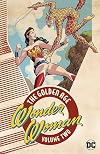
I got this in 2019 because one of the stories, "Battle for Womanhood", was up for the Retro Hugo that year, which I was administering, and it won - topping the poll at nominations stage and convincingly carrying the final ballot. I voted for it too, and on reflection I'm really not sure why; these are a weird set of stories combining an attractively subversive feminism with some pretty awful racism against the Japanese. (But the Chinese, who of show more course are allies and victims of Japan, are all right.) I almost gave up after the first few, which were all about Wonder Woman biffing either the Germans or the Japanese, though getting tied up a lot. Then it starts getting interesting, with weird alien creatures and ancient gods getting involved, and an interesting mentoring relationship between Wonder Woman and human girl; along with the full-figured Etta Candy and her sorority, and recurrent villains Dr Psycho and the Cheetah, and Wonder Woman still gets tied up a lot. Oh, and Steve as well.
But honestly, it's not all that good. Inspiration for what came later, of course, and it's not like any comics were especially brilliant by today's standards at the time. But I am a bit surprised at my own vote, in retrospect. show less
I got this in 2019 because one of the stories, "Battle for Womanhood", was up for the Retro Hugo that year, which I was administering, and it won - topping the poll at nominations stage and convincingly carrying the final ballot. I voted for it too, and on reflection I'm really not sure why; these are a weird set of stories combining an attractively subversive feminism with some pretty awful racism against the Japanese. (But the Chinese, who of show more course are allies and victims of Japan, are all right.) I almost gave up after the first few, which were all about Wonder Woman biffing either the Germans or the Japanese, though getting tied up a lot. Then it starts getting interesting, with weird alien creatures and ancient gods getting involved, and an interesting mentoring relationship between Wonder Woman and human girl; along with the full-figured Etta Candy and her sorority, and recurrent villains Dr Psycho and the Cheetah, and Wonder Woman still gets tied up a lot. Oh, and Steve as well.
But honestly, it's not all that good. Inspiration for what came later, of course, and it's not like any comics were especially brilliant by today's standards at the time. But I am a bit surprised at my own vote, in retrospect. show less
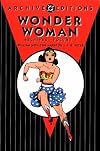
This collection reprints Wonder Woman's first appearance in All Star Comics no. 8 from December 1941-January 1942, the Wonder Woman stories in Sensation Comics nos. 1-12 from January-December 1942, and Wonder Woman no. 1 from Summer 1942. Creator William Moulton Marston created Wonder Woman to advance a feminist message of female strength. By modern standards, many of these stories appear regressive since Marston could not push his message too forcefully, though readers who view them from a show more 1940s perspective will appreciate them. Unfortunately, despite his progressive (for their time) views on gender, Marston, like many 1940s comics writers, fills his stories with racial caricatures. As the inventor of the lie detector, Marston often portrays lie detectors or has Wonder Woman use her magic lasso to compel her enemies to obey her and tell the truth. The lasso, combined with the frequency with which characters tie each other up or otherwise bind each other, fed into Fredric Wertham's condemnation of the character in the 1950s. Though Marston intended this trope to reflect suffragist propaganda that portrayed women as breaking shackles, those unaware of this context interpreted the art at its most basic level. Readers of these classic Wonder Woman stories should also read Jill Lepore's The Secret History of Wonder Woman for background and context. show less
This was a very interesting read, from a historical perspective. Published in the early 1940s, Wonder Woman's first stories are groundbreaking with the first major super heroine. However, the stories are also indicative of attitudes of the era with a bit of misogyny and some very racist caricatures of all the non-white characters. Keeping the historical context in mind, it was good to read the quirky origins of this iconic super hero, even though the storytelling style was a bit of a slog show more for me at times. show less

3.5
Okay so I read this on a whim and it was much better than I was expecting. It was full of action and adventure. It reminded me of the very old Archie comics I used to find in antique shops and book sales because of the way it was styled and told. Wonder Woman's adventure reminded me very much of the T.V. show with Linda Carter and it was cool to see the connection between the show, the comic, and the block-buster film. I like dhow the Amazons were a bit more tech-savvy. It was a lot more show more believable. show less
Okay so I read this on a whim and it was much better than I was expecting. It was full of action and adventure. It reminded me of the very old Archie comics I used to find in antique shops and book sales because of the way it was styled and told. Wonder Woman's adventure reminded me very much of the T.V. show with Linda Carter and it was cool to see the connection between the show, the comic, and the block-buster film. I like dhow the Amazons were a bit more tech-savvy. It was a lot more show more believable. show less
Lists
You May Also Like


Associated Authors
Statistics
- Works
- 61
- Also by
- 22
- Members
- 925
- Popularity
- #27,744
- Rating
- 3.7
- Reviews
- 15
- ISBNs
- 50
- Languages
- 2
- Favorited
- 2