
Stephen Thomas Knight
Author of Medieval Outlaws: Ten Tales in Modern English
About the Author
Works by Stephen Thomas Knight
Robin Hood: The Forresters Manuscript (British Library Additional MS 71158) (1998) 11 copies, 1 review
Associated Works
Tagged
Common Knowledge
- Canonical name
- Knight, Stephen Thomas
- Birthdate
- 1940-09-21
- Gender
- male
- Education
- Bournemouth Grammar School
University of Oxford (MA, Jesus College)
University of Sydney (PhD) - Organizations
- Cardiff University
- Awards and honors
- Australian Academy of the Humanities
Ned Kelly Awards for Crime Writing (Lifetime Achievement, 2001) - Nationality
- UK
- Places of residence
- Bournemouth, Dorset, England, UK
Sydney, New South Wales, Australia
Wales, UK - Associated Place (for map)
- UK
Members
Reviews
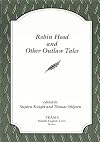
Robin Hood was not known as a master of disguise, but you could be forgiven if this book makes you think otherwise.
Disclaimer: I've published my own book about Robin Hood, so I have my own opinions on the topic. And I freely admit that Knight/Ohlgren was one of the primary sources I used. I also made extensive use of another of Thomas Ohlgren's works. There is a great wealth of information here -- newly-edited copies of all the early "ballads" (actually metrical romances), an assortment of show more more recent materials, texts of early mentions of Robin Hood, and selections from parallels to the Robin Hood tales, such as the stories of Hereward the Wake and Fulk FitzWarren. As a starting point for Robin Hood studies, it is a tremendous "one stop shop."
But it has frustrating aspects, too. This is perhaps most evident in the "Gest of Robyn Hode," the longest Robin Hood romance. We have multiple copies, all early prints, all different editions. There are three complete prints, one other copy containing about half of the whole, and a handful of fragments. Their disagreements are relatively minor but not trivial. To compile a critical edition on this basis is a significant task. (I know full well, because I've done it!) And the Knight/Ohlgren edition, while competent, has some very erratic readings ("beadsman" as an emendation for "leadsman" springs to mind). And while the notes to the early stanzas mostly discuss why they made the decisions they did, the notes are few and far between as we reach the end. Unless one has access to a fuller critical edition, it's hard to know how far to trust the text.
And most of the materials are just thrown at the student, SPLAT! There isn't really enough context. That is, there is no attempt to try to sort out common elements in the materials, or to show where the legends diverge. (E.g. there isn't much discussion of the question of whether Robin was based in Sherwood forest or Barnsdale. The early sources mostly favor the latter, but it isn't quite universal.)
I suppose the summary is that there is a tremendous amount of good material here, but it needs a commentary volume to go with the text, and the commentary isn't there. Get the book, by all means, but if you truly want to be a Robin Hood expert, be prepared to look for more. show less
Disclaimer: I've published my own book about Robin Hood, so I have my own opinions on the topic. And I freely admit that Knight/Ohlgren was one of the primary sources I used. I also made extensive use of another of Thomas Ohlgren's works. There is a great wealth of information here -- newly-edited copies of all the early "ballads" (actually metrical romances), an assortment of show more more recent materials, texts of early mentions of Robin Hood, and selections from parallels to the Robin Hood tales, such as the stories of Hereward the Wake and Fulk FitzWarren. As a starting point for Robin Hood studies, it is a tremendous "one stop shop."
But it has frustrating aspects, too. This is perhaps most evident in the "Gest of Robyn Hode," the longest Robin Hood romance. We have multiple copies, all early prints, all different editions. There are three complete prints, one other copy containing about half of the whole, and a handful of fragments. Their disagreements are relatively minor but not trivial. To compile a critical edition on this basis is a significant task. (I know full well, because I've done it!) And the Knight/Ohlgren edition, while competent, has some very erratic readings ("beadsman" as an emendation for "leadsman" springs to mind). And while the notes to the early stanzas mostly discuss why they made the decisions they did, the notes are few and far between as we reach the end. Unless one has access to a fuller critical edition, it's hard to know how far to trust the text.
And most of the materials are just thrown at the student, SPLAT! There isn't really enough context. That is, there is no attempt to try to sort out common elements in the materials, or to show where the legends diverge. (E.g. there isn't much discussion of the question of whether Robin was based in Sherwood forest or Barnsdale. The early sources mostly favor the latter, but it isn't quite universal.)
I suppose the summary is that there is a tremendous amount of good material here, but it needs a commentary volume to go with the text, and the commentary isn't there. Get the book, by all means, but if you truly want to be a Robin Hood expert, be prepared to look for more. show less

These 14 essays are Stephen Knight's salute to his adopted homeland, a peek into parts of the Australian culture that can't be found in guide books or popular films. Knight had been in Australia for 27 years when these pieces were published, and they reflect his very personal view of Australia and his experience of discovering the hidden corners of a culture that only appeared to be the same as that of the Britain of his earlier years.
A professor of English in one of Australia's tertiary show more educational institutions, Knight is a fine writer and a fine wit. The back cover describes his work as "brisk and pithy," and that it is. With irony, angst, and even affection, Knight tells us of the perpetual need to renovate found among young urban professionals in Sydney and Melbourne, the politics of dinner parties, Australians and their restaurants, and much more about Australian urban life. It would take more than 14 stories to expose the unique qualities of Australian culture, but Stephen Knight has contributed to my education, telling of that part of Australia that has nothing to do with sport, the beach, the Opera House or the great Outback. As important as those things are to Australian life, they simply aren't all of it show less
A professor of English in one of Australia's tertiary show more educational institutions, Knight is a fine writer and a fine wit. The back cover describes his work as "brisk and pithy," and that it is. With irony, angst, and even affection, Knight tells us of the perpetual need to renovate found among young urban professionals in Sydney and Melbourne, the politics of dinner parties, Australians and their restaurants, and much more about Australian urban life. It would take more than 14 stories to expose the unique qualities of Australian culture, but Stephen Knight has contributed to my education, telling of that part of Australia that has nothing to do with sport, the beach, the Opera House or the great Outback. As important as those things are to Australian life, they simply aren't all of it show less
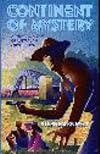
A solid read. Inevitably, a work like this reads somewhat like the thesis or research project that it was. Not every section would be engaging for someone just wanting to learn about crime fiction in Australia, since many works are rushed through or referenced primarily to hammer home a particular thematic point. But as a piece of research during that great period in the 1980s and 1990s when Australian historians were at their best in discovering our cultural past, this is a worthy one. show more Knight is open about the fact that much of this was new research at the time. He occasionally uncovers books that have not been mentioned in the core 20th century texts on Australian lit, and he recognises that future researchers will no doubt find more stories in the genre. And for that we can always be thankful. show less
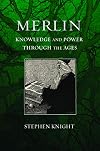
Reviewed In PLANET Magazine (Spring 2010) under the heading 'Spells of Power'.
Much of the modern discussion about the legendary hero known as Arthur has focused on the consideration of whether he was an actual Romano-Celtic chieftain who united resistance to the Saxon invaders, though significant surviving material in which he features is clearly fictional. And Merlin? Even he has been seen as having his origins as an historical bard and Nikolai Tolstoy has tried to prove that he was a sixth show more century remnant druid and has identified the actual cave in which he lived. Stephen Knight dismisses such pursuits as “a re-formation of knowledge in the service of individual identity.” His purpose, rather, is to show how the mythic figure of Merlin is “appropriated” for various purposes in different historical periods and, in particular, how Foucauld’s categories ‘knowledge/power’ can themselves be appropriated (he rejects Foucauld’s assertion that they are necessarily interwoven) to illustrate this process.
If these categories supply Knight with his main conceptual approach, each of the four long chapters into which the book is divided are themselves provided with sub-themes ‘wisdom’, ‘advice’, ‘cleverness’ and ‘education’ to define the development of the mythic figure though time. Although Merlin is inextricably linked to stories about Arthur, they were not brought together until the twelfth century when Geoffrey of Monmouth wrote his History of the Kings of Britain. In fact Merlin had an independent existence in Welsh literature and legend as related by Geoffrey in his Latin poem the ‘Life of Merlin’. Starting with the surviving material in the Black Book of Carmarthen Knight surveys the development of Merlin who, as Myrddin, came to be regarded as one of the cynfeirdd (earliest poets) alongside Taliesin and Aneirin. As with Taliesin, however, much of the prophetic verse ascribed to him must be later than his legendary sixth century setting.
After Geoffrey of Monmouth, Merlin becomes an international figure as the Arthurian romances are developed in French and German, based initially on Geoffrey’s Latin History, but taking on a life of their own and gaining different accretions and emphases on the way. At the same time, a specifically English development of the material takes off via Wace’s Norman French, Layamon’s early English and the subsequent Middle English Arthuriana. The French and English developments were brought together by Malory in the fifteenth century. Knight charts these developments exhaustively, providing a detailed account of the ways in which the material was used and how ‘knowledge’, which the Merlin figure embodies, is configured in relation to the power structures of succeeding generations.
So the ‘wise’ and self-sufficient sage and prophet of the Welsh tradition, living alone in the forest, reserves his knowledge and releases it to those in power on his own terms. The medieval ‘adviser’, by contrast, is tied into the power structures of Christendom in the French romances, particularly the ‘Vulgate Cycle’ where he is characterised by Knight as a ‘Grand Vizier’. The Merlin of the English tradition is ‘clever’ rather than wise and is marginalised in the exercise of power. In Renaissance and later texts he becomes much more of a mage or even a proto-scientist, a technician whose knowledge may or may not be of use to those wielding power and so used accordingly. In Wales, and for English writers such as Peacock and Gray, the ‘bard’ was Taliesin rather than Merlin but the image here is of lost or defeated power.
Modern Merlin enjoys a return to the status of a wise counsellor with Knight’s chosen theme of ‘education’ predominating. The detailed survey of extant material is particularly dense in the coverage of contemporary texts, even those which are superficial or peripheral to the main themes. Knight sees the contemporary status of Merlin as an educator as related to the interests of individuals rather than the larger structures of power. He comments that “the power of the modern individual controls through irony the force of knowledge which it so patently lacks”.
As a comprehensive survey of the Merlin legend this is an exhaustive and informative work. As an interpretation of the significance of the legend as a cultural phenomenon, and the appropriations it has undergone (which might, self-referentially, include the book itself) it is impressive. The schematic framework does not restrict the range of interpretations and commentary. Rather it provides an illuminating focus on a legend seen as mythically embodying the complexities of the relationship between knowledge and power. show less
Much of the modern discussion about the legendary hero known as Arthur has focused on the consideration of whether he was an actual Romano-Celtic chieftain who united resistance to the Saxon invaders, though significant surviving material in which he features is clearly fictional. And Merlin? Even he has been seen as having his origins as an historical bard and Nikolai Tolstoy has tried to prove that he was a sixth show more century remnant druid and has identified the actual cave in which he lived. Stephen Knight dismisses such pursuits as “a re-formation of knowledge in the service of individual identity.” His purpose, rather, is to show how the mythic figure of Merlin is “appropriated” for various purposes in different historical periods and, in particular, how Foucauld’s categories ‘knowledge/power’ can themselves be appropriated (he rejects Foucauld’s assertion that they are necessarily interwoven) to illustrate this process.
If these categories supply Knight with his main conceptual approach, each of the four long chapters into which the book is divided are themselves provided with sub-themes ‘wisdom’, ‘advice’, ‘cleverness’ and ‘education’ to define the development of the mythic figure though time. Although Merlin is inextricably linked to stories about Arthur, they were not brought together until the twelfth century when Geoffrey of Monmouth wrote his History of the Kings of Britain. In fact Merlin had an independent existence in Welsh literature and legend as related by Geoffrey in his Latin poem the ‘Life of Merlin’. Starting with the surviving material in the Black Book of Carmarthen Knight surveys the development of Merlin who, as Myrddin, came to be regarded as one of the cynfeirdd (earliest poets) alongside Taliesin and Aneirin. As with Taliesin, however, much of the prophetic verse ascribed to him must be later than his legendary sixth century setting.
After Geoffrey of Monmouth, Merlin becomes an international figure as the Arthurian romances are developed in French and German, based initially on Geoffrey’s Latin History, but taking on a life of their own and gaining different accretions and emphases on the way. At the same time, a specifically English development of the material takes off via Wace’s Norman French, Layamon’s early English and the subsequent Middle English Arthuriana. The French and English developments were brought together by Malory in the fifteenth century. Knight charts these developments exhaustively, providing a detailed account of the ways in which the material was used and how ‘knowledge’, which the Merlin figure embodies, is configured in relation to the power structures of succeeding generations.
So the ‘wise’ and self-sufficient sage and prophet of the Welsh tradition, living alone in the forest, reserves his knowledge and releases it to those in power on his own terms. The medieval ‘adviser’, by contrast, is tied into the power structures of Christendom in the French romances, particularly the ‘Vulgate Cycle’ where he is characterised by Knight as a ‘Grand Vizier’. The Merlin of the English tradition is ‘clever’ rather than wise and is marginalised in the exercise of power. In Renaissance and later texts he becomes much more of a mage or even a proto-scientist, a technician whose knowledge may or may not be of use to those wielding power and so used accordingly. In Wales, and for English writers such as Peacock and Gray, the ‘bard’ was Taliesin rather than Merlin but the image here is of lost or defeated power.
Modern Merlin enjoys a return to the status of a wise counsellor with Knight’s chosen theme of ‘education’ predominating. The detailed survey of extant material is particularly dense in the coverage of contemporary texts, even those which are superficial or peripheral to the main themes. Knight sees the contemporary status of Merlin as an educator as related to the interests of individuals rather than the larger structures of power. He comments that “the power of the modern individual controls through irony the force of knowledge which it so patently lacks”.
As a comprehensive survey of the Merlin legend this is an exhaustive and informative work. As an interpretation of the significance of the legend as a cultural phenomenon, and the appropriations it has undergone (which might, self-referentially, include the book itself) it is impressive. The schematic framework does not restrict the range of interpretations and commentary. Rather it provides an illuminating focus on a legend seen as mythically embodying the complexities of the relationship between knowledge and power. show less
Lists
Awards

You May Also Like


Associated Authors
Statistics
- Works
- 26
- Also by
- 1
- Members
- 508
- Popularity
- #48,805
- Rating
- 3.9
- Reviews
- 9
- ISBNs
- 53