
R. Albert Mohler, Jr.
Author of The Conviction to Lead: 25 Principles for Leadership That Matters
About the Author
R. Albert Mohler Jr. has been the "reigning intellectual of the evangelical movement" (Time.com). The president of the Southern Baptist Theological Seminary, he writes a popular blog and a regular commentary, available at AlbertMohler.com, and hosts two podcasts: The Briefing and Thinking in show more Public. He is the author of numerous books, including The Apostles Creed and We Cannot Be Silent, and has appeared in the New York Times, the Wall Street Journal, and USA Today. He and his wife, Mary, live in Louisville, Kentucky. show less
Image credit: Urban Christian News
Works by R. Albert Mohler, Jr.
We Cannot Be Silent: Speaking Truth to a Culture Redefining Sex, Marriage, and the Very Meaning of Right and Wrong (2015) 603 copies, 3 reviews
The Prayer That Turns the World Upside Down: The Lord's Prayer as a Manifesto for Revolution (2018) 461 copies, 1 review
The Disappearance of God: Dangerous Beliefs in the New Spiritual Openness (2009) 217 copies, 1 review
Acts 13-28 For You: Mapping the Explosive Multiplying of the Church (God's Word For You) (2019) 107 copies
LIVING THE CROSS CENTERED LIFE KEEPING THE GOSPEL THE MAIN THING (BILLY GRAHAM LIBRARY SELECTION) (2006) 45 copies
Echoes of the Reformation - Bible Study Book: Five Truths That Shape the Christian Life (2017) 24 copies
From Boy to Man: The Marks of Manhood 21 copies
Homosexuality and the Bible 9 copies
Maker of Heaven and Earth : Why Creation Is A Gospel Issue (IRC 40th Anniversary Banquet) (2010) 7 copies
To the Jew first in the 21st century 6 copies
Southern Baptist Journal of Theology : Vol. 11, No. 3 : Fall 2007 : The Epistle to the Romans 5 copies
The Southern Baptist Journal of Theology : Vol. 10, No. 1 : Spring 2006 : Perspectives of the Trinity (2006) 5 copies
Southern Baptist Journal of Theology : Vol. 11, No. 2 : Summer 2007 : The Atonement in Focus 4 copies
La oración que revoluciona al mundo: El Padrenuestro como un manifiesto transformador (Spanish Edition) (2019) 3 copies
We Cannot Be Silent 2 copies
Southern Baptist Journal of Theology : Vol. 5, No. 2 : Summer 2001 : Confronting Postmodernism 2 copies
The Southern Baptist Journal of Theology, Roe vs. Wade Thirty Years Later Summer 2003 Vol. 7 No. 2 2 copies
Culture Shift 2 copies
Five Views on Biblical Inerrancy: Audio Lectures: 28 Lessons on the Spectrum of Evangelical Positions (2019) 2 copies
Evangelical Theology and Karl Barth: Representative Models of Response: Dissertation - 8925772 1 copy
The Southern Baptist Journal of Theology: Theology Transforming Culture (Vol. 1 No. 2 Summer 1997) (1997) 1 copy
Atheism remix 1 copy
Why One Way? (MP3) 1 copy
Sesquicentennial Address 1 copy
Living by Revealed Truth 1 copy
The prayer that turns the world upside down : the Lord's Prayer as a manifesto for revolution (Copy) 1 copy
Associated Works
Give Praise to God: A Vision for Reforming Worship : Celebrating the Legacy of James Montgomery Boice (2003) — Contributor — 673 copies, 2 reviews
Thinking. Loving. Doing.: A Call to Glorify God with Heart and Mind (2011) — Contributor — 237 copies
By Faith Alone: Answering the Challenges to the Doctrine of Justification (2007) — Contributor — 219 copies, 2 reviews
Awakening the Evangelical Mind: An Intellectual History of the Neo-Evangelical Movement (2015) — Foreword — 81 copies
Tagged
Common Knowledge
- Canonical name
- Mohler, R. Albert, Jr.
- Other names
- Mohler, Richard Albert, Jr. (birth name)
- Birthdate
- 1959-10-19
- Gender
- male
- Education
- Florida Atlantic University
Samford University (BA)
Southern Baptist Theological Seminary (MDiv, PhD) - Occupations
- theologian
seminary president - Organizations
- Southern Baptist Convention
Southern Baptist Theological Seminary
Together for the Gospel
Focus on the Family
Council on Biblical Manhood and Womanhood - Nationality
- USA
- Birthplace
- Lakeland, Florida, USA
- Places of residence
- Lakeland, Florida, USA
Louisville, Kentucky, USA - Associated Place (for map)
- USA
Members
Reviews
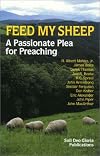
I have to admit a few things as I begin writing about this book. I love preaching. I love to hear preaching. I love to read preached sermons. I love to read about preaching: mechanics, theory, necessity, etc. I love preaching.
I also love preachers. I feel greatly indebted to the men who have given their lives to the public proclamation of God’s Word. I love to read their sermons. I love to read their books. I love to learn about them, their lives, and their faith. I just am sincerely show more blessed by God-fearing Bible-believing Gospel preachers. So when I had the opportunity through the program with Reformation Trust Publishing to read this book and review it, I was eager to do so.
The contributors to this text are top notch. The topics they cover are varied and interesting. As I began reading this book, I was quite excited—diving through the first four chapters in no time. To see what is covered and by whom it would be best to quote Ligon Duncan’s foreword extensively, as he gives a great breakdown of what this book contains.
The subjects covered…commend this volume…
R. Albert Mohler Jr. dares to implore the overstretched, multi-tasking modern technician and spiritual therapist called a “pastor” to prioritize his ministry in such a way that the preaching of the Word becomes so central that everything else must fall into place behind it…
James Boice helps buttress the preacher’s resolve to stick with the “foolishness of preaching” in an age in which biblical authority is at a discount and congregations want their ears tickled instead of their hearts and minds challenged and instructed.
Derek Thomas’s piece on expository preaching is a gem, one of the best short treatments of this issue you’ll ever read…
Joel R. Beeke makes a strong case for the classical Reformed view of ministerial piety and experiential preaching…
R. C. Sproul, in his usual engaging style, urges preachers to know the truth and teach it…
R. C. Sproul Jr. urges us to aim to preach the Word, and thus to preach to both the minds and hearts of our hearers…
Sinclair Ferguson helpfully addresses the task of preaching to the heart….
Don Kistler urges men to preach with authority…
Eric Alexander, one of the archetypal Reformed preachers of our time, provides us with a Pauline perspective on evangelistic preaching…
John Piper’s timely treatment of preaching to those who are in the seminary of suffering (and that’s all of us!) is simply brilliant…
John MacArthur concludes the book by pointing us away from the messenger to the message preached, surely an important word of spiritual counsel in our success-focused and personality-centered culture. We are not the reason the gospel works; the gospel is the reason the gospel works.
Al Mohler’s chapter entitled, “The Primacy of Preaching,” sets out to support the argument that “we must affirm with Martin Luther that the preaching of the Word is the first essential mark of the church”, and I must confess that Mohler does an excellent job of this. He then goes to work recollecting the neo-orthodox recovery of preaching under HH Farmer. The section of his chapter that most ministered to me was the one entitled, “Hidden Results, Frequent Controversies”. In this section, Mohler shows what I believe to be the toughest challenge facing men who sincerely desires to faithfully proclaim God’s Word.
The preacher may sound like Luther on Sunday, but he feels like bathing in Ecclesiastes on Monday morning: “Vanity, vanity, all is vanity.” Preaching can seem like striving after the wind. We feel like the preacher of Ecclesiastes, who laments in 1:15, “What is crooked cannot be straightened and what is lacking cannot be counted.” Vanity. Such is life for those who are called to preach: Hard work with (often) no tangible, positive result. Furthermore, this line of work has a nasty way of getting you into trouble. It seems that the more faithful one is in preaching, the more trouble one encounters.
Mohler shows how preachers are often subject to “product envy”, desiring to be in any profession that you can see tangible results to your work. The fact is, the preacher will not likely see most of the fruit of his labor until we enter Glory, and the time in between is guaranteed to be rocky.
Indeed, I will go so far as to assert that if you are at peace with the world, you have abdicated your calling. You have become a court preacher to some earthly power, no matter how innocuous it may appear. To put it straight: you have been bought! If there is no controversy in your ministry, there is probably very little content to your preaching. The content of the Word of God is not only alive and active, it is sharper than any two-edged sword, and that means it does some surgery. Cutting leads to bleeding, and by God’s grace healing then comes, but there is always controversy.
Mohler then challenges the reader to “contrast the absolute priority of preaching in Paul’s ministry with the frequent confusion in today’s congregations on the priority of preaching. Mohler then expounds on what should be the “Content of Preaching”, the “Goal of Preaching”, and the “Authority of Preaching before concluding with the fact that, for the man who has responded to God’s call to preach, “(i)n the final analysis, we will know how faithful we have been only in glory. When we see our Savior face to face, and when we see all the saints to whom we have preached, we will discover whether or not our preaching contributed to their completeness in Christ.”
As I began reading the article by James Boice I was struck by the realization that I had never read anything by the man. I had read and heard quotes, but I had not read any sermons, articles or books by this great man of faith. Now I have, and now I desire to read even more. Boice deals with “The Foolishness of Preaching”. Dr. Boice begins by outlining the “foolishness” of the Gospel as perceived by the three dominant worldviews surrounding its inception: Jewish, Roman and Greek and how the “foolishness” of the message was especially folly to the Greek mind. He goes on to point out that “we can say that preaching is that wise means of God by which the wisdom of the world is shown to be foolishness, and the folly of the gospel, as the world conceives it, is shown to be true wisdom” as we see the results of the Gospel, which is conversion. Boice then illustrates new birth by comparing it to human birth, an illustration that you have to read. Boice also encourages the preacher to take some advice from his predecessor at Tenth Presbyterian, DG Barnhouse. Barnhouse viewed his congregants as barrels. Some were empty. Some, unbeknownst to him, had varying levels of gunpowder. His job as a minister of the Gospel was, through Gospel proclamation, to throw lit matches into the barrels. When the Gospel hit the prepared heart it was akin to a lit match hitting a barrel full of gunpowder.
However, preaching is not just for the conversion of lost sinners. It is as much for the building up of the church, if not more so. It is not just the unredeemed who need the Gospel, it is all of us. Boice makes what may seem like an overstatement, but I think he is spot-on when he says, “I do not think it is too much to say that preaching really is an essential means, perhaps even the most important means, of grace,” and because of this, “we should be very careful in our Christian lives to expose ourselves to the best teaching and attend the best churches available.” So what kind of preachers should we be/sit under? Boice takes up the next five pages or so showing us and ends with the example of Enoch, the preacher who walked with God.
Derek Thomas’ chapter “Expository Preaching” definitely ruffled my feathers and I am still trying to determine if I agree or disagree with a few of his more “controversial” points. Thomas makes a great point about preaching from the outset. He says simply that “preaching must enable those who hear it to understand their Bibles.” If this were the aim and focus of all preachers, preaching would be in a much better state in this world. Thomas begins to make his argument for expository preaching with a quote. “William Perkins’ The Arte of Prophecying (1617), included this instruction: ‘The Word of God alone is to be preached, in its perfection and inner consistency. Scripture is the exclusive subject of preaching, the only field in which the preacher is to labour.’ “ Not only does Thomas argue for expository sermons, but he argues that true expository preaching is lectio continua, continuous lecturing from one verse to the next, through books of the Bible(citing great examples including John Calvin and Martin Lloyd-Jones). In defining an expository sermon he quotes Bryan Chappell, “an expository sermon (i)s that which ‘requires that it expound Scripture by deriving from a specific text main points and sub points that disclose the thought of the author, cover the scope of the passage, and are applied to the lives of the listeners.’"
Nothing so far has been too earth shaking, but then Thomas dares to take aim at Puritans, Lloyd-Jones, Spurgeon, and the historic-redemptive model all in one section entitled “Bad Homiletical Models”.(To be fair, Thomas is not really taking aim at any of these but rather pointing out some of the error that results from modeling one’s expository preaching improperly after any of these. He is fair, respectful and from what I can tell, pretty accurate in his critique.) Thomas then gives some warnings against taking our focus off the text when we preach and finishes with an extensive argument for the “lectio continua” model of expository preaching.
Joel Beeke, or “Mr. Puritan” as he is known around my living room, takes on the next topic of “Experiential (Experimental) Preaching”. Beeke sets out to answer five questions as he takes us through this article:
1. What is experiential religion and preaching?
2. Why is the experiential aspect of preaching necessary?
3. What are the essential characteristics of experiential preaching?
4. Why must a minister habitually exhibit holiness to be effective in the ministry?
5. What practical lessons on Christian living can we learn from the experiential preaching of our predecessors?
“Experiential preaching stresses the need to know by experience the great truths of the Word of God. A working definition of experiential preaching might be: “Preaching that seeks to explain in terms of biblical truth how matters ought to go, how they do go, and the goal of the Christian life.” Such preaching aims to apply divine truth to the whole range of the believer’s personal experience, including his relationships with family, the church, and the world around him.”
Beeke explains that experiential preaching is discriminatory, applicatory, stresses an intimate, personal relationship with God(but not at the expense of Scripture), and is Theocentric. When comparing reformed, experiential preaching to what most believers endure today, Beeke says, “The Word of God is too often preached in a way that will not transform listeners because it fails to discriminate and fails to apply.” He continues by pointing out that this type of preaching “is reduced to a lecture or a demonstration as the preacher caters to what people want to hear.” The failure of this type of preaching is its inability to”explain from the Bible what the Reformed called ‘vital religion’: how a sinner must be stripped of his righteousness, driven to Christ alone for salvation, and led to the joy of simple reliance upon Christ.” Beeke then outlines why experiential preaching is necessary and what are its distinguishing marks before finishing with a call to personal holiness and a very practical application section at the end…it is almost like he has been reading Puritan literature for decades!
RC Sproul’s chapter on “The Teaching Preacher” follows. Sproul looks at the preacher as teacher based on the teachings of Martin Luther. “What shepherd would so neglect his sheep that he would fail to feed them? It is the feeding of the sheep, according to Luther, that is the prime task of the ministry. And that feeding comes, principally, through teaching.” Sproul makes a great point on the difference between preaching and teaching. “I make a distinction between preaching—which involves exhortation, exposition, admonition, encouragement, and comfort—and teaching, which involves the transfer of information.”
In speaking of the difference, Sproul states, “I’ve always thought that the primary thing, as Luther understood, that I’m responsible to do as a minister is to teach the people the things of God.” I am not certain I would agree with this statement, especially in light of the distinction Sproul made earlier. I believe the primary responsibility is to preach the Gospel (as a means of grace that grants faith), not “transfer (the) information” of the Gospel.
Sproul then gives some great insight on the proclivity of the seminarian to graduate with a firm grasp of an academic field yet lacking even the ability to converse significantly on the actual Scriptures. Sproul then quotes Luther on the pastor’s need to be assertive on doctrines found in Scripture. Replying to the attitude of Erasmus that the scholar need to be “open” and not firm on difficult doctrines Luther responded, ““Nothing is more familiar or characteristic among Christians than assertion. Take away assertions and you take away Christianity.” This point is extremely relevant in our age of “Emergent dialogue” that feels compelled to question all and assert nothing, other than the fact that we are bound to question all and assert nothing. The section on Luther’s teaching to guard against false teaching is worth putting to memory and applying daily. “Avoiding Novelties” is a brilliant section that can be summed up with a single quote, “There is no room for (creative invention) in the pulpit, and there is no room for it in the teaching of the people of God.” We are not called as ministers to “create” or come up with something “new”. We are commanded and privileged to proclaim the “old story”, the one that creates faith in the heart of him who hears it.
Sproul completes the chapter with a section on “Aiming at the Heart through the Mind”. On the way to this section Sproul makes my day as, while dealing with the spectrum of conservative/liberal theology, he reminds us of the left-winged liberalness of the Jesus Seminar by referring to them as the “lunatic fringe” of liberal theology. A more apt description has never been administered to this Grand Hotel cast of “theologians” who’s only genuine link to each other is their disdain for the historical Jesus their desire to supplant Him with a “Jesus” of their own creation.
RC Sproul Jr next addresses “Preaching to the Mind” followed by Sinclair Ferguson’s “Preaching to the Heart”, Don Kistler’s chapter entitled “Preaching with Authority” and Eric Alexander on “Evangelistic Preaching”. The book closes with John Piper’s chapter on “Preaching to the Suffering People and John Macarthur’s “A Reminder to the Shepherds”.
Piper has been my favorite living teacher on this subject now for quite a while (although the teachings of Matt Chandler over these past 18 months may have made him my go to source as of late). Piper has a brilliant way of getting to the heart of the matter and encouraging us all to enjoy God, not in spite of difficult circumstances but because of them with the knowledge that God works all things for the good of those called to love Him. Piper contends(with Scripture) that God is most glorified in us when we are most satisfied in Him and that the universal reality of suffering endangers the faith of every Christian, thus, he asserts that “our preaching must aim, week in and week out, to help our people be satisfied in God while suffering.”
We must help them count suffering as part of why they should be satisfied in God. We must build into their minds and hearts a vi sion of God and His ways that helps them see suffering not merely as a threat to their satisfaction in God (which it is), but also as a means to their satisfaction in God (which it is). We must preach so as to make suffering seem normal and purposeful, and not surprising in this fallen age. The forces of American culture are almost all designed to build the opposite worldview into our people’s minds.
John Macarthur finishes the book with a reminder to pastors from the example of the Apostle Paul. God uses clay pots. He has chosen to use earthen vessels to proclaim His heavenly message and the attraction, validity, focus, love should be on the message, not the vessel. Macarthur assures any who will take up the task of faitfully proclaiming God’s Gospel that they will be attacked. The attacks often come from those the preacher loves most and labors so faithfully to serve. The attacks are sure to come but a response is only necessary in cases where the truth of the Gospel is being compromised. The preacher cares more about the message than he does his reputation, his finances, his comfort, even his own life.
How can God use clay pots when it involves such a glorious message? That is exactly how. God desires the focus to be on the message, not the messenger. The messenger is the grocery bag; the message is the Kobe steak. The messenger is the wooden crate; the message is the sports car. The messenger is the run down feeding trough; the message is the Savior of the World wrapped in swaddling clothes. The messenger is a vessel of clay; the message is God’s glorious Gospel. It is totally about the message, so the messenger should never entertain the idea that it is about him in the least.
This book is excellent. There is not a wasted page. My one and only reservation is that I am not certain how accessible this book is for those not acquainted with/interested in the ministry of preaching from a theoretical or technical aspect. It is not dry academia, but it is definitely academic in nature for the most part. As far as it goes for an academic text, it is very accessible and quite enjoyable. If you have any desire to read this book, you will not be disappointed. If you would like to read this text and review it for a complimentary copy, click here and learn more about Reformation Trust’s program to receive a copy of this book simply for reading it and reviewing it, like I did! show less
I also love preachers. I feel greatly indebted to the men who have given their lives to the public proclamation of God’s Word. I love to read their sermons. I love to read their books. I love to learn about them, their lives, and their faith. I just am sincerely show more blessed by God-fearing Bible-believing Gospel preachers. So when I had the opportunity through the program with Reformation Trust Publishing to read this book and review it, I was eager to do so.
The contributors to this text are top notch. The topics they cover are varied and interesting. As I began reading this book, I was quite excited—diving through the first four chapters in no time. To see what is covered and by whom it would be best to quote Ligon Duncan’s foreword extensively, as he gives a great breakdown of what this book contains.
The subjects covered…commend this volume…
R. Albert Mohler Jr. dares to implore the overstretched, multi-tasking modern technician and spiritual therapist called a “pastor” to prioritize his ministry in such a way that the preaching of the Word becomes so central that everything else must fall into place behind it…
James Boice helps buttress the preacher’s resolve to stick with the “foolishness of preaching” in an age in which biblical authority is at a discount and congregations want their ears tickled instead of their hearts and minds challenged and instructed.
Derek Thomas’s piece on expository preaching is a gem, one of the best short treatments of this issue you’ll ever read…
Joel R. Beeke makes a strong case for the classical Reformed view of ministerial piety and experiential preaching…
R. C. Sproul, in his usual engaging style, urges preachers to know the truth and teach it…
R. C. Sproul Jr. urges us to aim to preach the Word, and thus to preach to both the minds and hearts of our hearers…
Sinclair Ferguson helpfully addresses the task of preaching to the heart….
Don Kistler urges men to preach with authority…
Eric Alexander, one of the archetypal Reformed preachers of our time, provides us with a Pauline perspective on evangelistic preaching…
John Piper’s timely treatment of preaching to those who are in the seminary of suffering (and that’s all of us!) is simply brilliant…
John MacArthur concludes the book by pointing us away from the messenger to the message preached, surely an important word of spiritual counsel in our success-focused and personality-centered culture. We are not the reason the gospel works; the gospel is the reason the gospel works.
Al Mohler’s chapter entitled, “The Primacy of Preaching,” sets out to support the argument that “we must affirm with Martin Luther that the preaching of the Word is the first essential mark of the church”, and I must confess that Mohler does an excellent job of this. He then goes to work recollecting the neo-orthodox recovery of preaching under HH Farmer. The section of his chapter that most ministered to me was the one entitled, “Hidden Results, Frequent Controversies”. In this section, Mohler shows what I believe to be the toughest challenge facing men who sincerely desires to faithfully proclaim God’s Word.
The preacher may sound like Luther on Sunday, but he feels like bathing in Ecclesiastes on Monday morning: “Vanity, vanity, all is vanity.” Preaching can seem like striving after the wind. We feel like the preacher of Ecclesiastes, who laments in 1:15, “What is crooked cannot be straightened and what is lacking cannot be counted.” Vanity. Such is life for those who are called to preach: Hard work with (often) no tangible, positive result. Furthermore, this line of work has a nasty way of getting you into trouble. It seems that the more faithful one is in preaching, the more trouble one encounters.
Mohler shows how preachers are often subject to “product envy”, desiring to be in any profession that you can see tangible results to your work. The fact is, the preacher will not likely see most of the fruit of his labor until we enter Glory, and the time in between is guaranteed to be rocky.
Indeed, I will go so far as to assert that if you are at peace with the world, you have abdicated your calling. You have become a court preacher to some earthly power, no matter how innocuous it may appear. To put it straight: you have been bought! If there is no controversy in your ministry, there is probably very little content to your preaching. The content of the Word of God is not only alive and active, it is sharper than any two-edged sword, and that means it does some surgery. Cutting leads to bleeding, and by God’s grace healing then comes, but there is always controversy.
Mohler then challenges the reader to “contrast the absolute priority of preaching in Paul’s ministry with the frequent confusion in today’s congregations on the priority of preaching. Mohler then expounds on what should be the “Content of Preaching”, the “Goal of Preaching”, and the “Authority of Preaching before concluding with the fact that, for the man who has responded to God’s call to preach, “(i)n the final analysis, we will know how faithful we have been only in glory. When we see our Savior face to face, and when we see all the saints to whom we have preached, we will discover whether or not our preaching contributed to their completeness in Christ.”
As I began reading the article by James Boice I was struck by the realization that I had never read anything by the man. I had read and heard quotes, but I had not read any sermons, articles or books by this great man of faith. Now I have, and now I desire to read even more. Boice deals with “The Foolishness of Preaching”. Dr. Boice begins by outlining the “foolishness” of the Gospel as perceived by the three dominant worldviews surrounding its inception: Jewish, Roman and Greek and how the “foolishness” of the message was especially folly to the Greek mind. He goes on to point out that “we can say that preaching is that wise means of God by which the wisdom of the world is shown to be foolishness, and the folly of the gospel, as the world conceives it, is shown to be true wisdom” as we see the results of the Gospel, which is conversion. Boice then illustrates new birth by comparing it to human birth, an illustration that you have to read. Boice also encourages the preacher to take some advice from his predecessor at Tenth Presbyterian, DG Barnhouse. Barnhouse viewed his congregants as barrels. Some were empty. Some, unbeknownst to him, had varying levels of gunpowder. His job as a minister of the Gospel was, through Gospel proclamation, to throw lit matches into the barrels. When the Gospel hit the prepared heart it was akin to a lit match hitting a barrel full of gunpowder.
However, preaching is not just for the conversion of lost sinners. It is as much for the building up of the church, if not more so. It is not just the unredeemed who need the Gospel, it is all of us. Boice makes what may seem like an overstatement, but I think he is spot-on when he says, “I do not think it is too much to say that preaching really is an essential means, perhaps even the most important means, of grace,” and because of this, “we should be very careful in our Christian lives to expose ourselves to the best teaching and attend the best churches available.” So what kind of preachers should we be/sit under? Boice takes up the next five pages or so showing us and ends with the example of Enoch, the preacher who walked with God.
Derek Thomas’ chapter “Expository Preaching” definitely ruffled my feathers and I am still trying to determine if I agree or disagree with a few of his more “controversial” points. Thomas makes a great point about preaching from the outset. He says simply that “preaching must enable those who hear it to understand their Bibles.” If this were the aim and focus of all preachers, preaching would be in a much better state in this world. Thomas begins to make his argument for expository preaching with a quote. “William Perkins’ The Arte of Prophecying (1617), included this instruction: ‘The Word of God alone is to be preached, in its perfection and inner consistency. Scripture is the exclusive subject of preaching, the only field in which the preacher is to labour.’ “ Not only does Thomas argue for expository sermons, but he argues that true expository preaching is lectio continua, continuous lecturing from one verse to the next, through books of the Bible(citing great examples including John Calvin and Martin Lloyd-Jones). In defining an expository sermon he quotes Bryan Chappell, “an expository sermon (i)s that which ‘requires that it expound Scripture by deriving from a specific text main points and sub points that disclose the thought of the author, cover the scope of the passage, and are applied to the lives of the listeners.’"
Nothing so far has been too earth shaking, but then Thomas dares to take aim at Puritans, Lloyd-Jones, Spurgeon, and the historic-redemptive model all in one section entitled “Bad Homiletical Models”.(To be fair, Thomas is not really taking aim at any of these but rather pointing out some of the error that results from modeling one’s expository preaching improperly after any of these. He is fair, respectful and from what I can tell, pretty accurate in his critique.) Thomas then gives some warnings against taking our focus off the text when we preach and finishes with an extensive argument for the “lectio continua” model of expository preaching.
Joel Beeke, or “Mr. Puritan” as he is known around my living room, takes on the next topic of “Experiential (Experimental) Preaching”. Beeke sets out to answer five questions as he takes us through this article:
1. What is experiential religion and preaching?
2. Why is the experiential aspect of preaching necessary?
3. What are the essential characteristics of experiential preaching?
4. Why must a minister habitually exhibit holiness to be effective in the ministry?
5. What practical lessons on Christian living can we learn from the experiential preaching of our predecessors?
“Experiential preaching stresses the need to know by experience the great truths of the Word of God. A working definition of experiential preaching might be: “Preaching that seeks to explain in terms of biblical truth how matters ought to go, how they do go, and the goal of the Christian life.” Such preaching aims to apply divine truth to the whole range of the believer’s personal experience, including his relationships with family, the church, and the world around him.”
Beeke explains that experiential preaching is discriminatory, applicatory, stresses an intimate, personal relationship with God(but not at the expense of Scripture), and is Theocentric. When comparing reformed, experiential preaching to what most believers endure today, Beeke says, “The Word of God is too often preached in a way that will not transform listeners because it fails to discriminate and fails to apply.” He continues by pointing out that this type of preaching “is reduced to a lecture or a demonstration as the preacher caters to what people want to hear.” The failure of this type of preaching is its inability to”explain from the Bible what the Reformed called ‘vital religion’: how a sinner must be stripped of his righteousness, driven to Christ alone for salvation, and led to the joy of simple reliance upon Christ.” Beeke then outlines why experiential preaching is necessary and what are its distinguishing marks before finishing with a call to personal holiness and a very practical application section at the end…it is almost like he has been reading Puritan literature for decades!
RC Sproul’s chapter on “The Teaching Preacher” follows. Sproul looks at the preacher as teacher based on the teachings of Martin Luther. “What shepherd would so neglect his sheep that he would fail to feed them? It is the feeding of the sheep, according to Luther, that is the prime task of the ministry. And that feeding comes, principally, through teaching.” Sproul makes a great point on the difference between preaching and teaching. “I make a distinction between preaching—which involves exhortation, exposition, admonition, encouragement, and comfort—and teaching, which involves the transfer of information.”
In speaking of the difference, Sproul states, “I’ve always thought that the primary thing, as Luther understood, that I’m responsible to do as a minister is to teach the people the things of God.” I am not certain I would agree with this statement, especially in light of the distinction Sproul made earlier. I believe the primary responsibility is to preach the Gospel (as a means of grace that grants faith), not “transfer (the) information” of the Gospel.
Sproul then gives some great insight on the proclivity of the seminarian to graduate with a firm grasp of an academic field yet lacking even the ability to converse significantly on the actual Scriptures. Sproul then quotes Luther on the pastor’s need to be assertive on doctrines found in Scripture. Replying to the attitude of Erasmus that the scholar need to be “open” and not firm on difficult doctrines Luther responded, ““Nothing is more familiar or characteristic among Christians than assertion. Take away assertions and you take away Christianity.” This point is extremely relevant in our age of “Emergent dialogue” that feels compelled to question all and assert nothing, other than the fact that we are bound to question all and assert nothing. The section on Luther’s teaching to guard against false teaching is worth putting to memory and applying daily. “Avoiding Novelties” is a brilliant section that can be summed up with a single quote, “There is no room for (creative invention) in the pulpit, and there is no room for it in the teaching of the people of God.” We are not called as ministers to “create” or come up with something “new”. We are commanded and privileged to proclaim the “old story”, the one that creates faith in the heart of him who hears it.
Sproul completes the chapter with a section on “Aiming at the Heart through the Mind”. On the way to this section Sproul makes my day as, while dealing with the spectrum of conservative/liberal theology, he reminds us of the left-winged liberalness of the Jesus Seminar by referring to them as the “lunatic fringe” of liberal theology. A more apt description has never been administered to this Grand Hotel cast of “theologians” who’s only genuine link to each other is their disdain for the historical Jesus their desire to supplant Him with a “Jesus” of their own creation.
RC Sproul Jr next addresses “Preaching to the Mind” followed by Sinclair Ferguson’s “Preaching to the Heart”, Don Kistler’s chapter entitled “Preaching with Authority” and Eric Alexander on “Evangelistic Preaching”. The book closes with John Piper’s chapter on “Preaching to the Suffering People and John Macarthur’s “A Reminder to the Shepherds”.
Piper has been my favorite living teacher on this subject now for quite a while (although the teachings of Matt Chandler over these past 18 months may have made him my go to source as of late). Piper has a brilliant way of getting to the heart of the matter and encouraging us all to enjoy God, not in spite of difficult circumstances but because of them with the knowledge that God works all things for the good of those called to love Him. Piper contends(with Scripture) that God is most glorified in us when we are most satisfied in Him and that the universal reality of suffering endangers the faith of every Christian, thus, he asserts that “our preaching must aim, week in and week out, to help our people be satisfied in God while suffering.”
We must help them count suffering as part of why they should be satisfied in God. We must build into their minds and hearts a vi sion of God and His ways that helps them see suffering not merely as a threat to their satisfaction in God (which it is), but also as a means to their satisfaction in God (which it is). We must preach so as to make suffering seem normal and purposeful, and not surprising in this fallen age. The forces of American culture are almost all designed to build the opposite worldview into our people’s minds.
John Macarthur finishes the book with a reminder to pastors from the example of the Apostle Paul. God uses clay pots. He has chosen to use earthen vessels to proclaim His heavenly message and the attraction, validity, focus, love should be on the message, not the vessel. Macarthur assures any who will take up the task of faitfully proclaiming God’s Gospel that they will be attacked. The attacks often come from those the preacher loves most and labors so faithfully to serve. The attacks are sure to come but a response is only necessary in cases where the truth of the Gospel is being compromised. The preacher cares more about the message than he does his reputation, his finances, his comfort, even his own life.
How can God use clay pots when it involves such a glorious message? That is exactly how. God desires the focus to be on the message, not the messenger. The messenger is the grocery bag; the message is the Kobe steak. The messenger is the wooden crate; the message is the sports car. The messenger is the run down feeding trough; the message is the Savior of the World wrapped in swaddling clothes. The messenger is a vessel of clay; the message is God’s glorious Gospel. It is totally about the message, so the messenger should never entertain the idea that it is about him in the least.
This book is excellent. There is not a wasted page. My one and only reservation is that I am not certain how accessible this book is for those not acquainted with/interested in the ministry of preaching from a theoretical or technical aspect. It is not dry academia, but it is definitely academic in nature for the most part. As far as it goes for an academic text, it is very accessible and quite enjoyable. If you have any desire to read this book, you will not be disappointed. If you would like to read this text and review it for a complimentary copy, click here and learn more about Reformation Trust’s program to receive a copy of this book simply for reading it and reviewing it, like I did! show less
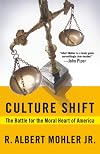
Mohler is perceptive, analytical, and wise in his treatment of so many different topics covered in this book. His work is unique in a handful of ways. For instance, there are 25 chapters, making each about 6-8 pages in length. The coverage is quick but sharp and insightful. Another unique aspect is the presentation; Mohler frequently engages with a line of thinking, recent headline in the news, or literary work on the culture and then weaves in his own biblical evaluation. It is less of an show more advancement of his own ideas and more of an application of wise biblical truth to contemporary issues of the day. Anyone familiar with the daily news briefing Mohler delivers each morning will find this material very similar, just in written form.
In an increasingly divisive, immoral, and relativistic world, Mohler is skillful in equipping Christians with compelling, faithful, and biblical responses to current challenges. While no reader will become an expert from one read over any of the areas Mohler addresses, there are many helpful truths to glean here. Entire books have been written on each individual topic and for those who don't pursue the philosopher's life in the study for extended hours each day, Mohler's work is a fine sketch on a multitude of prevalent issues. I presume that for many, this will be a launching point into deeper conversations sparked by these topics. My only critique comes from the book's occasional brevity. A few of the chapters are almost so short they could be left out. The reader can barely become oriented to the landscape and argumentation put forth before the next chapter rolls around.
In the preface, Mohler references Jesus' summation of the law, to love God and love neighbor. He states that the Christian life can summarized by the two great commands to love God heart, soul, and mind and love our neighbor as ourselves (Matt. 22:36-40). These two great commandments provide the grounds for his thesis and purpose in the book. "We must first understand our culture and its challenges because we are to be faithful witnesses to the gospel. We are called to faithfulness, and faithfulness requires that we be ready to think as Christians when confronted with the crucial issues of the day. This is all rooted in our love of God. But Jesus also commanded love of neighbor, and Christians must be driven by love of neighbor as we confront the issues of our day" (xvii-xviii). Yes, and not only does Mohler seek to help believers be ready, but he realizes the finality of this world, its forms, and ideas. "In the end, the culture and its challenges will pass away. But our Lord has left us here for a reason-as His people, we are to be salt and light in a dying world" (xviii).
While the entire book was solid, a few chapters were of particular interest. Chapter 5 introduces the culture of offendedness which, in my opinion, is a culture that has only grown since Mohler wrote back in 2011. While to be offended formerly carried a very serious weight to it as it indicated causing someone to fall, fail, be brought down, or crushed. And Jesus spoke a very serious warning to those who offended the little ones (Matt. 5:29). However, today, "all that is required is often the vaguest notion of emotional distaste at what another has said, done, proposed, or presented. That shift in the meaning of the word and in its culture usage is subtle but extremely significant" (31). Mohler sums it up with a great point, namely that Christians, "given our mandate to share the gospel and to speak openly and publicly about Jesus Christ and the Christian faith, Christians must understand a particular responsibility to protect free speech and to resist this culture of offendedness that threatens to shut down all public discourse" (33). One can't help but think how society is already being encouraged toward oversensitivity.
Additional high points included his chapters on terrorism, natural disaster, public schooling, and the coddled, soft generation of young people.
Terrorism reminds us that we live in a dangerous world and moral relativism is stripped of its disguise in the face of unavoidable evil (ch. 7). "A naive non-judgmentalism often masquerades as moral humility. But a refusal to make moral judgments is not humility. It is insanity." (49). Mohler goes on to cite how the university culture has wholeheartedly embraced this as a comprehensive worldview.
In his chapter on public schools, Mohler alludes to the checkered historical background of the public school which pales in comparison to the controversies they are facing today. On the positive side, public schools have brought hundreds of millions of American children into a democracy of common citizenship, but this vision has been largely "displaced by an ideologically driven attempt to force a radically secular worldview" (60). Mohler ultimately arrives at the conclusion that it is time for Christians to begin formulating an exit strategy. As new headlines and wave after wave of novel educational initiatives aimed at teaching the next generation a new moral ethic come on to the scene, Christian parents will have to make a decision. As it is their responsibility to disciple, train, educate their children, who will be up to the task? The public school would love to stake their claim.
Chapters 10-11 were also enjoyable as Mohler interacts with a growing trend of the coddling of young people. More often than being split on political values, America is more often split on two competing visions of America: hard or soft. These two views are pitted in terms of coddling vs. competition, therapy vs. truth, and self-esteem vs. pride in genuine achievement. Unfortunately, soft America has left "most young Americans unprepared for the real demands of adulthood" (81). show less
In an increasingly divisive, immoral, and relativistic world, Mohler is skillful in equipping Christians with compelling, faithful, and biblical responses to current challenges. While no reader will become an expert from one read over any of the areas Mohler addresses, there are many helpful truths to glean here. Entire books have been written on each individual topic and for those who don't pursue the philosopher's life in the study for extended hours each day, Mohler's work is a fine sketch on a multitude of prevalent issues. I presume that for many, this will be a launching point into deeper conversations sparked by these topics. My only critique comes from the book's occasional brevity. A few of the chapters are almost so short they could be left out. The reader can barely become oriented to the landscape and argumentation put forth before the next chapter rolls around.
In the preface, Mohler references Jesus' summation of the law, to love God and love neighbor. He states that the Christian life can summarized by the two great commands to love God heart, soul, and mind and love our neighbor as ourselves (Matt. 22:36-40). These two great commandments provide the grounds for his thesis and purpose in the book. "We must first understand our culture and its challenges because we are to be faithful witnesses to the gospel. We are called to faithfulness, and faithfulness requires that we be ready to think as Christians when confronted with the crucial issues of the day. This is all rooted in our love of God. But Jesus also commanded love of neighbor, and Christians must be driven by love of neighbor as we confront the issues of our day" (xvii-xviii). Yes, and not only does Mohler seek to help believers be ready, but he realizes the finality of this world, its forms, and ideas. "In the end, the culture and its challenges will pass away. But our Lord has left us here for a reason-as His people, we are to be salt and light in a dying world" (xviii).
While the entire book was solid, a few chapters were of particular interest. Chapter 5 introduces the culture of offendedness which, in my opinion, is a culture that has only grown since Mohler wrote back in 2011. While to be offended formerly carried a very serious weight to it as it indicated causing someone to fall, fail, be brought down, or crushed. And Jesus spoke a very serious warning to those who offended the little ones (Matt. 5:29). However, today, "all that is required is often the vaguest notion of emotional distaste at what another has said, done, proposed, or presented. That shift in the meaning of the word and in its culture usage is subtle but extremely significant" (31). Mohler sums it up with a great point, namely that Christians, "given our mandate to share the gospel and to speak openly and publicly about Jesus Christ and the Christian faith, Christians must understand a particular responsibility to protect free speech and to resist this culture of offendedness that threatens to shut down all public discourse" (33). One can't help but think how society is already being encouraged toward oversensitivity.
Additional high points included his chapters on terrorism, natural disaster, public schooling, and the coddled, soft generation of young people.
Terrorism reminds us that we live in a dangerous world and moral relativism is stripped of its disguise in the face of unavoidable evil (ch. 7). "A naive non-judgmentalism often masquerades as moral humility. But a refusal to make moral judgments is not humility. It is insanity." (49). Mohler goes on to cite how the university culture has wholeheartedly embraced this as a comprehensive worldview.
In his chapter on public schools, Mohler alludes to the checkered historical background of the public school which pales in comparison to the controversies they are facing today. On the positive side, public schools have brought hundreds of millions of American children into a democracy of common citizenship, but this vision has been largely "displaced by an ideologically driven attempt to force a radically secular worldview" (60). Mohler ultimately arrives at the conclusion that it is time for Christians to begin formulating an exit strategy. As new headlines and wave after wave of novel educational initiatives aimed at teaching the next generation a new moral ethic come on to the scene, Christian parents will have to make a decision. As it is their responsibility to disciple, train, educate their children, who will be up to the task? The public school would love to stake their claim.
Chapters 10-11 were also enjoyable as Mohler interacts with a growing trend of the coddling of young people. More often than being split on political values, America is more often split on two competing visions of America: hard or soft. These two views are pitted in terms of coddling vs. competition, therapy vs. truth, and self-esteem vs. pride in genuine achievement. Unfortunately, soft America has left "most young Americans unprepared for the real demands of adulthood" (81). show less
In this collection of essays, Albert Mohler tackles the most controversial issues in American society today. Now I don't like politics, and I see all political systems as slowly rotting structures that we prop up as best we can for as long as we can. Ultimately they are all doomed to fail... but as a Christian I have a responsibility to prop where I can. This should not be from a desire to see my particular architectural preference take shape, but because I am to love my neighbor as I love show more myself. And that means patching a leaky roof even though the roof will eventually fall in. It means, in Tolkien's words, "fighting the long defeat."
Mohler refers to Augustine's epic view of history from the Christian perspective, City of God, and Augustine's division of all people and all history into two cities, the City of God and the City of Man. We live now in the City of Man that is passing, and yet we have a responsibility to do for it what we can. Political activism cannot save the world and we should never put our hope in flawed human systems—but if we love our neighbors, we will seek their good. And we can't do that without engaging our culture and asking (and answering) the hard questions.
There are so many helpful and relevant topics touched on in this short book. Most were not new to me, but Mohler brings a level of clarity and common sense to the discussion that I have rarely seen. In several places, I felt quite convicted; for example, I've bought into our culture's growing assumption that we all have the right not to be offended—a right that is preposterous in a culture of free speech. If I have the right to never be offended by what others say, others do not have the right to speak freely. We can't have it both ways!
Though Mohler is able to diagnose the problems, he isn't always able to offer an optimistic, practical answer. In the chapter about the educational system in the U.S. and how it is increasingly being used to indoctrinate children in the secularist position, all that Mohler can really offer is the advice that Christian families should have "an exit strategy" from the public school machine. This isn't his fault; the momentum is all on the side of secular activists who have been busy writing curriculum and directing the educational culture in America for decades. We can't fix the system, but we can at least plan ahead to protect our children.
This is a quick and easy read that I finished in a day. But the issues it addresses are anything but simple. Wending his way without hesitation through sensitive issues and general cultural drifts, Mohler makes sense of the chaos and shares a biblical perspective on the most contested questions in our world today. I highly recommend this book for Christians and non-Christians alike; even if you don't agree with Mohler's stance, he is one of the clearest voices articulating the biblical Christian position. Excellent. show less
Mohler refers to Augustine's epic view of history from the Christian perspective, City of God, and Augustine's division of all people and all history into two cities, the City of God and the City of Man. We live now in the City of Man that is passing, and yet we have a responsibility to do for it what we can. Political activism cannot save the world and we should never put our hope in flawed human systems—but if we love our neighbors, we will seek their good. And we can't do that without engaging our culture and asking (and answering) the hard questions.
There are so many helpful and relevant topics touched on in this short book. Most were not new to me, but Mohler brings a level of clarity and common sense to the discussion that I have rarely seen. In several places, I felt quite convicted; for example, I've bought into our culture's growing assumption that we all have the right not to be offended—a right that is preposterous in a culture of free speech. If I have the right to never be offended by what others say, others do not have the right to speak freely. We can't have it both ways!
Though Mohler is able to diagnose the problems, he isn't always able to offer an optimistic, practical answer. In the chapter about the educational system in the U.S. and how it is increasingly being used to indoctrinate children in the secularist position, all that Mohler can really offer is the advice that Christian families should have "an exit strategy" from the public school machine. This isn't his fault; the momentum is all on the side of secular activists who have been busy writing curriculum and directing the educational culture in America for decades. We can't fix the system, but we can at least plan ahead to protect our children.
This is a quick and easy read that I finished in a day. But the issues it addresses are anything but simple. Wending his way without hesitation through sensitive issues and general cultural drifts, Mohler makes sense of the chaos and shares a biblical perspective on the most contested questions in our world today. I highly recommend this book for Christians and non-Christians alike; even if you don't agree with Mohler's stance, he is one of the clearest voices articulating the biblical Christian position. Excellent. show less
 This review was written for LibraryThing Early Reviewers.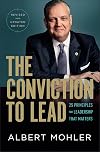
Today, so many good ministries of conviction try to get you to support the teaching ministry of so-and-so in such a way as if the truth of God's Word will die unless the particular personality of that ministry/leadership of so-and- so survives. Mohler's work is a 'breath of fresh air', so to speak, in the seemingly ever present Déjà vu era of "I am of Paul, I am of Apollos...Calvin, Arminius,...etc." Mohler's premise is that, "There are no indispensable people, only indispensable show more convictions." Truth will not die in the death of its teacher. Even if so-and-so's particular ministry does not survive, eternal truths that they spread, even if only in the hearts of a few, will survive, regardless of the ministries demise. God chooses by what means His truth will be spread and He may choose to end particular ministries and simply spread the truth by individuals transformed by the truths that they taught. As the author states, "A legacy is what is left in the wake of a great leader.... The plans and visions of the leader will be outdated soon after his burial.... What matters is that convictions survive...The wise leader does not try to perpetuate matters of style or taste, or even plans and programs. The leader who aims at legacy aims to perpetuate conviction....In truth, there are no indispensable people, only indispensable convictions. The convictions came before us and will last when we are gone. Truth endures when nothing else can...."
Mohler delves into the many essentials of leading, all with the basis of conviction: Leading through communication, teaching, repetition, thinking, teaching your followers how to think, setting the example, writing, managing well etc. Keeping in mind that time is short; remembering that your leadership position is God-given and that you are actually a steward accountable to Him. He notes that "The Christian leader must have mental reflexes that correspond to biblical truth. When something happens or an issue arises, the leader's mind must engage the right intellectual reflex. Once the reflex is engaged, the process of the thought is already far down the road. If the reflex is wrong, the leader is in danger - and so are all those he leads."
One of the things Mohler points out is that leadership is not merely having 'knowledge'. "Knowledge is fundamental, but convictional intelligence is not merely knowledge. If this were the case, all the leader would need is a comprehensive and biblical encyclopedia close at hand. This raises the issue of how leaders actual lead: They make decisions and chart a direction.... He[God]gave us the ability to process that knowledge and exercise reason. He even gave us the ability to think about thinking. But as the leader exercises the role of leadership, that thinking must be translated into something more automatic, something that does not require a constant process of thinking and rethinking everything the leader knows. IF that sounds complicated, just consider how you awoke, got dressed and started your morning. By now most of the actions you took have been forgotten.... You did not have to look for the kitchen because you did not have to think about how to get there...Why? Your intelligence was at work in all of those actions, but you were primarily operating out of habit, reflex, and intuition - three realities that point to the need for convictional intelligence.... If we had to rethink how to tie our shoes every morning, we would never get anything else done. Much of our lives is lived out of habits of action, and most of these habits never rise to our active consciousness.... We all know that we have habits of action, but we also operate out of habits of mind. We did intellectual ruts that our minds grow accustomed to following."
One of the ways he brings up to help exercise and build mental reflexes is reading books and reading them critically. The most important book for us to read is the Bible, and of course, critical reading reverses when you come to the Scriptures, the critical eye and thought must be applied to oneself and ones thoughts and not the word of God. The Word of God is the critique of us. As Mohler writes, "Think of reading like you think of eating. In other words, pay attention to your diet. For the Christian, the highest reading priority is the Word of God. Our spiritual maturity will never exceed our knowledge of the Bible." We Christians get our convictions from God's Word. And "Until conviction is transformed into action it makes no difference in the world."
I thought this book was very 'gripping', perhaps more so because my dad(a pastor/leader)has already been talking about a lot of these things, and its neat to get a repeat of them in this book. This book is a good shove in the right direction. I'll end my review, as I usually do, with one last quote from the book(though I could put in several more): "Every leader needs to know the reality that we will die one day and that others will take our place. Hopefully, these new leaders will bring talents and abilities and vision greater than our own. Our greatest concern, however, is that they come with a wealth of convictions. Otherwise, all that we build can be turned against the very truths we have championed."
Thanks To Bethany House Publishers for sending me a free copy of this book to review! (My review did not have to be favorable) show less
Mohler delves into the many essentials of leading, all with the basis of conviction: Leading through communication, teaching, repetition, thinking, teaching your followers how to think, setting the example, writing, managing well etc. Keeping in mind that time is short; remembering that your leadership position is God-given and that you are actually a steward accountable to Him. He notes that "The Christian leader must have mental reflexes that correspond to biblical truth. When something happens or an issue arises, the leader's mind must engage the right intellectual reflex. Once the reflex is engaged, the process of the thought is already far down the road. If the reflex is wrong, the leader is in danger - and so are all those he leads."
One of the things Mohler points out is that leadership is not merely having 'knowledge'. "Knowledge is fundamental, but convictional intelligence is not merely knowledge. If this were the case, all the leader would need is a comprehensive and biblical encyclopedia close at hand. This raises the issue of how leaders actual lead: They make decisions and chart a direction.... He[God]gave us the ability to process that knowledge and exercise reason. He even gave us the ability to think about thinking. But as the leader exercises the role of leadership, that thinking must be translated into something more automatic, something that does not require a constant process of thinking and rethinking everything the leader knows. IF that sounds complicated, just consider how you awoke, got dressed and started your morning. By now most of the actions you took have been forgotten.... You did not have to look for the kitchen because you did not have to think about how to get there...Why? Your intelligence was at work in all of those actions, but you were primarily operating out of habit, reflex, and intuition - three realities that point to the need for convictional intelligence.... If we had to rethink how to tie our shoes every morning, we would never get anything else done. Much of our lives is lived out of habits of action, and most of these habits never rise to our active consciousness.... We all know that we have habits of action, but we also operate out of habits of mind. We did intellectual ruts that our minds grow accustomed to following."
One of the ways he brings up to help exercise and build mental reflexes is reading books and reading them critically. The most important book for us to read is the Bible, and of course, critical reading reverses when you come to the Scriptures, the critical eye and thought must be applied to oneself and ones thoughts and not the word of God. The Word of God is the critique of us. As Mohler writes, "Think of reading like you think of eating. In other words, pay attention to your diet. For the Christian, the highest reading priority is the Word of God. Our spiritual maturity will never exceed our knowledge of the Bible." We Christians get our convictions from God's Word. And "Until conviction is transformed into action it makes no difference in the world."
I thought this book was very 'gripping', perhaps more so because my dad(a pastor/leader)has already been talking about a lot of these things, and its neat to get a repeat of them in this book. This book is a good shove in the right direction. I'll end my review, as I usually do, with one last quote from the book(though I could put in several more): "Every leader needs to know the reality that we will die one day and that others will take our place. Hopefully, these new leaders will bring talents and abilities and vision greater than our own. Our greatest concern, however, is that they come with a wealth of convictions. Otherwise, all that we build can be turned against the very truths we have championed."
Thanks To Bethany House Publishers for sending me a free copy of this book to review! (My review did not have to be favorable) show less
Lists
You May Also Like


Associated Authors
Statistics
- Works
- 117
- Also by
- 8
- Members
- 11,945
- Popularity
- #1,963
- Rating
- 4.1
- Reviews
- 61
- ISBNs
- 141
- Languages
- 4
- Favorited
- 8
