
Richard Bach
Author of Jonathan Livingston Seagull
About the Author
A direct descendant of the composer Johann Sebastian Bach, Richard Bach was born in Oak Park, Illinois, in 1936. He attended Long Beach State College in 1955 and had a successful career in aviation, as an Air Force pilot, a flight instructor, an aviation mechanic, and an editor for Flying magazine. show more Jonathan Livingston Seagull, the novel that made him famous, was written as the result of a vision. Halfway through the book, the vision disappeared and, finding that he was unable to continue, Bach, put the novel aside. When the vision reappeared, Bach finished the work. Jonathan Livingston Seagull, published in 1972, was an unexpected success and became the best-selling book in the United States for that year. The book is heavily influenced by Bach's love of flying and provides a marvelous inspirational message. The Bridge Across Forever: A Love Story, One, Messiah's Handbook: Reminders for the Advanced Soul (2004), and Hypnotizing Maria (2009) are some of his other novels that blend inspiration, love, fantasy, and hope. In recent years Bach has written Thank Your Wicked Parents: Blessings from a Difficult Childhood (2012), Rainbow Ridge and Travels with Puff: A Gentle Game of Life and Death (2013), NiceTiger, (Bowker Author Biography) He is the author of eleven books, including Stranger to the Ground, Biplane, A Gift of Wings, Illusions, One, and Running from Safety. (Publisher Provided) show less
Series
Works by Richard Bach
Vira-Vira Saraiva - Fernao Capelo Gaivota / Fugindo Do Ninho (Em Portuguese do Brasil) (2010) 3 copies
Richard Bach Set: "Illusions," "A Gift of Wings," "Jonathan Livingston Seagull," "The Bridge Across Forever." (1979) 3 copies
"Holidays on Ice" 2 copies
Biplan. Chuzhoj na zemle 1 copy
Gelincik Güncesi 1 copy
Gertie the Skating Goose 1 copy
Jedro 1 copy
يادداشتهای مرد فرزانه 1 copy
پندار 1 copy
A Crime in the Neighborhood 1 copy
Susret u oblacima 1 copy
Associated Works
Eleven American Stories — Contributor — 1 copy
Tagged
Common Knowledge
- Canonical name
- Bach, Richard
- Legal name
- Bach, Richard David
- Birthdate
- 1936-06-23
- Gender
- male
- Education
- California State University, Long Beach (Long Beach State College)
- Occupations
- pilot
novelist - Organizations
- United States Air Force Reserve
New Jersey Air National Guard
United States Navy Reserve - Relationships
- Fineman, Bette Bach (wife|divorced)
Bach, James Marcus (son)
Parrish, Leslie (wife|divorced) - Short biography
- Richard Bach, a pilot and aviation writer, achieved success as a new age author with the publication of Jonathan Livingston Seagull, a novel that Bach maintains was the result of two separate visionary experiences over a period of eight years. Bach's simple allegory with spiritual and philosophical overtones received little critical recognition but captured the mood of the 1970s, becoming popular with a wide range of readers, from members of the drug culture to mainstream Christian denominations. A direct descendant of Johann Sebastian Bach, Richard David Bach was born in Oak Park, Illinois, to Roland Bach, a former United States Army Chaplain, and Ruth (Shaw) Bach. While attending Long Beach State College in California, he took flying lessons, igniting his lifelong passion for aviation. From 1956-1959 he served in the United States Air Force and earned his pilot wings. In the 1960s he directed the Antique Airplane Association and also worked as a charter pilot, flight instructor, and barnstormer in the Midwest, where he offered plane rides for three dollars a person. During this period, he worked as a free-lance writer, selling articles to Flying, Soaring, Air Facts, and other magazines. He also wrote three books about flying which were Stranger to the Ground (1963), Biplane (1966), and Nothing by Chance (1969).
Since Jonathan Livingston Seagull, he has continued to share his philosophies on life, relationships, and reincarnation in six different books. - Nationality
- USA
- Birthplace
- Oak Park, Illinois, USA
- Places of residence
- Ashland, Oregon, USA
Orcas Island, Washington, USA
Winter Haven, Florida, USA
Ottumwa, Iowa, USA
Long Beach, California, USA - Map Location
- USA
- Associated Place (for map)
- USA
Members
Reviews
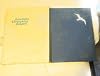
Forty years after my first encounter with Jonathan Livingston Seagull, I stumbled upon a well-worn first edition in my local thrift store. I remembered, somewhat fondly, how I had absolutely no clue what the book was about when I tackled it for high school English. Now, older and wiser, I decided to give it another go. What I discovered was a profound reflection of my own life story.
At its heart, Richard Bach's novella is not simply a story about a bird; it's a philosophical exploration of show more personal freedom, the relentless pursuit of excellence, and the quest for meaning. Like Jonathan Gull, I've often traveled my own path, driven by a cocksure belief that there's more to life than the conventional pursuits of my peers (girls, booze, football, etc.). If this resonates with you and your own stirrings of discontent, then this tale might just speak to you too.
My journey, much like Jonathan's, was shaped by an insatiable curiosity and a refusal to bow to the limitations imposed by others. Self-improvement—learning—was part of my fabric. I was propelled not by a need for recognition but by a desire to make a difference and achieve the (mostly non-material) things I wanted to achieve. In Jonathan's relentless (and often frustrating) efforts to master flight, this same desire was evident. His story reflects every person's potential to transcend their own (and externally imposed) limits through hard work and self-improvement.
I must admit, the spiritual aspects of Jonathan's journey—his ascent to higher realms—remain as elusive to me now as they did forty years ago. (I didn't understand it in Bach's other work of the 70s, Illusions, either.) The spiritual quest still escapes my full grasp, yet I sense its importance to those in search of meaning (and perhaps solace?) beyond the tangible. In this light, I can appreciate Jonathan's ascension as a metaphor for the journey toward enlightenment.
The most relatable aspect of Jonathan's saga is, perhaps, his resilience in the face of adversity. From challenges in my childhood to those in my career, I've faced my share of skeptics and barriers. Yet, I chose never to quit, even when tempted. My strength, much like Jonathan's, came through perseverance despite being ostracized by his flock. Passion. Dedication. These are the bedrocks of conviction, the forces that propel us forward despite obstacles.
Reflecting on the structure of Jonathan Livingston Seagull, it's now strikingly obvious how Bach divided the tale into three distinct parts, each echoing a distinct stage in life's journey—a nuance my teen self completely missed. The first part captures the zeal of youth, reflecting curiosity and defiance of conventions. The second examines introspection and learning, like the soul-searching I did in middle age. The final segment, where Jonathan becomes a teacher and mentor, reflects the later stages of life, where sharing wisdom and guiding others becomes a newfound purpose.
Duh. But not too obvious to someone still in the throes of adolescence.
However, now that I'm enlightened, I can see the book's enduring message:
Whether you're in pursuit of personal freedom, dedicated to self-improvement, or a resilient soul navigating adversity, you can grow and succeed. Jonathan Gull's story reminds us that we can soar to heights previously unimagined, so long as we are willing to spread our wings. show less
At its heart, Richard Bach's novella is not simply a story about a bird; it's a philosophical exploration of show more personal freedom, the relentless pursuit of excellence, and the quest for meaning. Like Jonathan Gull, I've often traveled my own path, driven by a cocksure belief that there's more to life than the conventional pursuits of my peers (girls, booze, football, etc.). If this resonates with you and your own stirrings of discontent, then this tale might just speak to you too.
My journey, much like Jonathan's, was shaped by an insatiable curiosity and a refusal to bow to the limitations imposed by others. Self-improvement—learning—was part of my fabric. I was propelled not by a need for recognition but by a desire to make a difference and achieve the (mostly non-material) things I wanted to achieve. In Jonathan's relentless (and often frustrating) efforts to master flight, this same desire was evident. His story reflects every person's potential to transcend their own (and externally imposed) limits through hard work and self-improvement.
I must admit, the spiritual aspects of Jonathan's journey—his ascent to higher realms—remain as elusive to me now as they did forty years ago. (I didn't understand it in Bach's other work of the 70s, Illusions, either.) The spiritual quest still escapes my full grasp, yet I sense its importance to those in search of meaning (and perhaps solace?) beyond the tangible. In this light, I can appreciate Jonathan's ascension as a metaphor for the journey toward enlightenment.
The most relatable aspect of Jonathan's saga is, perhaps, his resilience in the face of adversity. From challenges in my childhood to those in my career, I've faced my share of skeptics and barriers. Yet, I chose never to quit, even when tempted. My strength, much like Jonathan's, came through perseverance despite being ostracized by his flock. Passion. Dedication. These are the bedrocks of conviction, the forces that propel us forward despite obstacles.
Reflecting on the structure of Jonathan Livingston Seagull, it's now strikingly obvious how Bach divided the tale into three distinct parts, each echoing a distinct stage in life's journey—a nuance my teen self completely missed. The first part captures the zeal of youth, reflecting curiosity and defiance of conventions. The second examines introspection and learning, like the soul-searching I did in middle age. The final segment, where Jonathan becomes a teacher and mentor, reflects the later stages of life, where sharing wisdom and guiding others becomes a newfound purpose.
Duh. But not too obvious to someone still in the throes of adolescence.
However, now that I'm enlightened, I can see the book's enduring message:
We choose our next world through what we learn in this one. Learn nothing, and the next world is the same as this one, all the same limitations and lead weights to overcome.This quote encapsulates the essence of Bach's work—the belief in the boundless potential of the individual to learn and grow. I've lived in many worlds throughout my life, each one distinct (and perhaps better?) than the last, enriched by lessons learned from both success and failure.
Whether you're in pursuit of personal freedom, dedicated to self-improvement, or a resilient soul navigating adversity, you can grow and succeed. Jonathan Gull's story reminds us that we can soar to heights previously unimagined, so long as we are willing to spread our wings. show less
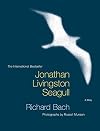
This book is a response to the flawed and disappointing underbelly of humanity, revealed for Bach in Vietnam, the Kennedy assassination, the battles for Civil Rights and Feminism, and the Sexual Revolution. Unfortunately, it is not a work which embraces or explores those changes, but seeks to escape the conflicts surrounding them.
Perhaps it should be unsurprising that the author would want to escape the everyday anxieties which marked the changing world. Certainly, there is a sort of show more optimism in Jonathan Livingston Seagull, though it is merely the sort you get when you take ancient and complex philosophy and distill it down into meaningless fluff. It is from this feel-good denial that the whole New Age movement springs, giving hope without guidance, and offering self-help for our self loathing.
The surface of the pond seems calm and tamed from afar. The ripples almost insensible. It is tempting to hope that the whirling eddies of hate, the tumult of inequality, and the maelstroms of fear do not persist beneath it. We shall someday find, when we must navigate Scylla and Charybdis, whether we have melted down our statues and our cannons both to build a monument to those who will be lost. show less
Perhaps it should be unsurprising that the author would want to escape the everyday anxieties which marked the changing world. Certainly, there is a sort of show more optimism in Jonathan Livingston Seagull, though it is merely the sort you get when you take ancient and complex philosophy and distill it down into meaningless fluff. It is from this feel-good denial that the whole New Age movement springs, giving hope without guidance, and offering self-help for our self loathing.
The surface of the pond seems calm and tamed from afar. The ripples almost insensible. It is tempting to hope that the whirling eddies of hate, the tumult of inequality, and the maelstroms of fear do not persist beneath it. We shall someday find, when we must navigate Scylla and Charybdis, whether we have melted down our statues and our cannons both to build a monument to those who will be lost. show less
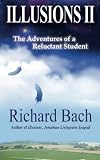
How the mighty are fallen. It isn't just that this is a retread of Bach's earlier work, albeit retold in the context of his near-fatal aircraft accident. It is that he was reduced to self-publishing, a fact that appears in the editing lapses. Granted, even the likes of Kurt Vonnegut turned to smaller presses for some of his later work (e.g., A Man Without a Country), but to find no publisher at all, for someone whose work shaped the seventies, is sobering.
Perhaps the answer lies in the show more quality of this particular effort. The tropes that soothed and gave hope almost fifty years ago, today sound threadbare. Revisiting Donald Shimoda is interesting, and certainly captures the current trend for sequels, but Bach goes on to imagine conversations with his fictional characters (not even Jonathan Livingston, but a boatload of ferrets), his dead dog, and a wrecked airplane. Any philosophical system that deems literally everything a fully sentient immortal entity has multiple hurdles to avoid sounding puerile. These are the spinnings reminiscent of a freshman philosophy student, newly awakened to the power of imaginative world-making, earnest but still naive and shallow. Bach, however, is in his eighties, so cannot claim this excuse. His work has not matured at all, which is a real disappointment, especially to those of us who were so impressed when he began.
The worst of it is that, because everything is an illusion, this includes illness. Bach argues that anyone who is sick or disabled is that way because they have chosen to accept the "lie," and thus in that sense at least they deserve their condition. He offers himself as a counterexample as someone who chose to overcome a serious accident without any permanent injuries. We saw a lot of this garbage in the 80s, when hucksters made huge bucks selling false hope to dying AIDS patients, saying that they could "think" themselves well. That Bach attempts to recycle such nonsense is both disappointing, and oblivious to his privilege
For example, he was able to overcome his own challenges because he could afford to employ two full-time "assistants" for over a year to help with whatever he needed. In this case, choice is a code word for money. As for the rest of us without large bank accounts, the lesson is apparently that we're simply not evolved enough to make the right choices, which of course includes choosing to be rich. That's why we're sick, suffering, and physically infirm. The most we can hope for is to be an audience appreciating his marvelousness. I decline. show less
Perhaps the answer lies in the show more quality of this particular effort. The tropes that soothed and gave hope almost fifty years ago, today sound threadbare. Revisiting Donald Shimoda is interesting, and certainly captures the current trend for sequels, but Bach goes on to imagine conversations with his fictional characters (not even Jonathan Livingston, but a boatload of ferrets), his dead dog, and a wrecked airplane. Any philosophical system that deems literally everything a fully sentient immortal entity has multiple hurdles to avoid sounding puerile. These are the spinnings reminiscent of a freshman philosophy student, newly awakened to the power of imaginative world-making, earnest but still naive and shallow. Bach, however, is in his eighties, so cannot claim this excuse. His work has not matured at all, which is a real disappointment, especially to those of us who were so impressed when he began.
The worst of it is that, because everything is an illusion, this includes illness. Bach argues that anyone who is sick or disabled is that way because they have chosen to accept the "lie," and thus in that sense at least they deserve their condition. He offers himself as a counterexample as someone who chose to overcome a serious accident without any permanent injuries. We saw a lot of this garbage in the 80s, when hucksters made huge bucks selling false hope to dying AIDS patients, saying that they could "think" themselves well. That Bach attempts to recycle such nonsense is both disappointing, and oblivious to his privilege
For example, he was able to overcome his own challenges because he could afford to employ two full-time "assistants" for over a year to help with whatever he needed. In this case, choice is a code word for money. As for the rest of us without large bank accounts, the lesson is apparently that we're simply not evolved enough to make the right choices, which of course includes choosing to be rich. That's why we're sick, suffering, and physically infirm. The most we can hope for is to be an audience appreciating his marvelousness. I decline. show less
"We choose our next world through what we learn in this one. Learn nothing, and the next world is the same as this one, all the same limitations and lead weights to overcome." I don't entirely agree with the sentiment of this fable, at least the part about achieving perfection in your chosen passion at all costs. However, daring to continue to pursue what delights you in spite of close-minded opposition and then being willing to impart any useful knowledge gained to elevate society as a show more whole is admirable and essential to positive growth (individually and societally). Plus, I'm always a sucker for reincarnation and space travel. show less
Lists
A Novel Cure (1)
1970 Club (1)
Put a Bird On It (1)
Overdue Podcast (1)
BBC Big Read (1)
discontinued (1)
1970s (2)
Awards


You May Also Like


Associated Authors
Statistics
- Works
- 57
- Also by
- 4
- Members
- 26,501
- Popularity
- #789
- Rating
- 3.7
- Reviews
- 434
- ISBNs
- 705
- Languages
- 33
- Favorited
- 65
