
Jill Bialosky
Author of History of a Suicide: My Sister's Unfinished Life
About the Author
Jill Bialosky was born in Cleveland, Ohio. She studied at Ohio University and received and M.A. in Writing Seminars at Johns Hopkins University, as well as an M.F.A. from the uNiversity of Iowa. She is an editor at W.W. Norton and lives in New York City with her husband and son.
Image credit: Author Jill Bialosky at the 2017 Texas Book Festival. By Larry D. Moore, CC BY-SA 4.0, https://commons.wikimedia.org/w/index.php?curid=63995430
Works by Jill Bialosky
Wanting a Child: Twenty-Two Writers on Their Difficult but Mostly Successful Quests for Parenthood in a High-Tech Age (1998) — Editor; Contributor — 18 copies
Associated Works
The Bitch in the House: 26 Women Tell the Truth About Sex, Solitude, Work, Motherhood, and Marriage (2002) — Contributor — 735 copies, 20 reviews
McSweeney's 12: Unpublished, Unknown, and/or Unbelievable (2003) — Contributor — 290 copies, 4 reviews
Buzz Words: Poems About Insects (Everyman's Library Pocket Poets Series) (2021) — Contributor — 56 copies
Tagged
Common Knowledge
- Canonical name
- Bialosky, Jill
- Gender
- female
- Occupations
- dichter
uitgever - Nationality
- USA
- Birthplace
- Cleveland, Ohio, USA
- Places of residence
- New York, New York, USA
- Associated Place (for map)
- New York, USA
Members
Reviews
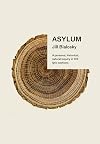
Fifty-four years ago on a May morning, I arrived at my high school to be waylaid by friends. They told me a boy of our acquaintance had had an “accident.” Shortly afterward, another friend told me that he was found dead the previous evening, in his family home’s garage, the car running and the doors closed.
Spring of 1968 had seen the deaths of Martin Luther King, Jr. and Robert F. Kennedy. And now, this boy, the step-son of my favorite teacher, a boy I admired, was dead. Add to this show more mix my mother’s entering the hospital, and finding her medications were harming her, she was taken off them, resulting in illness, weight loss, hair loss. Summer found me depressed.
Some years later I realized that every spring I was haunted by those deaths and near deaths. And in 1986, I wrote a poem about this boy become a ghost, “who could not rest nor resurrect,” rising each spring to “melt my fortress forgetfulness.”
such an act will always remain…up to the ones left behind to…yet the hauntings…could be prevented in the first place. XXXIII
Every April, a requiem, a re-awakening of dawn, the same chorus & players. The garage door sealed, gas turned on & the girl… XXXV
from Asylum by Jill Bialosky
Jill Bialosky’s poems deeply affected me. The loss of her younger sister to suicide permeates these poems.
“Why couldn’t I save her,” she asks in CII. As I had wondered about this boy, who would come into the school newspaper room and argue and talk with our teacher, holding his camera. He was older, smarter, outgoing. A friend asked him if he would date me, and he said he would consider it if he didn’t have a girlfriend. Could I have saved him if we were together? Two years later I had another class with his stepfather, a brilliant, progressive teacher. I could not connect the suicide with this man. I had heard that the boy and his dad argued. Could my teacher have prevented his death?
XXXII
Like just awaking
drenched, they persist,
ghosts in our poems,
ghosts in our imaginations,
ghosts in our waking hours, ghosts
who elude philosophers, poets,
scientists, psychiatrists,
therapists & doctors, ghosts
who perpetuate,
who guileless,
will not keep quiet,
who preside over the populace,
& unknowingly rob
the living, ghosts,
who made their own house
their gallows, Dante says,
will never rest.
Asylum by Jill Bialosky
I left my ghost behind after naming it. Then, I hardly knew that boy. Bialosky lost a sister. They shared a life. Her ghost remains. “What if it is those who survive who never rest?” she asks in LXII.
Other ghosts haunt her. Those lost in the Holocaust. George Floyd. The immigrant children in pens, those seeking asylum and safety finding cages and no sanctuary. Winters become a memory. A baby dies in a fire. The virus and quarantine.
And yet life persists. Pollen thickening the air. The diseased tree cut down sends up sprouts. “things hidden from us,” to which “we mist surrender our trust, the flap of a butterfly wing, for instance, could change the balance of the universe.” (X)
IXX describes listening to a concert that included Johann Strauss II’s waltz Artist’s Life, “composed after Austria’s defeat in battle,/the melody meant to infuse breath into bleakness, elegy into declaration/creation into harmony,/even in a time of ravage & war.”
I listened to Artist’s Life, the hesitation and flowering into happiness and joy, the drama of it, the pure joy of it.
There is pain in these lines. “Abandon hope all ye who enter here” stands at the gates of Dante’s hell, but could also refer to being alive. And yet…life persists, and that alone gives us hope.
I received a free book from the publisher. My review is fair and unbiased. show less
Spring of 1968 had seen the deaths of Martin Luther King, Jr. and Robert F. Kennedy. And now, this boy, the step-son of my favorite teacher, a boy I admired, was dead. Add to this show more mix my mother’s entering the hospital, and finding her medications were harming her, she was taken off them, resulting in illness, weight loss, hair loss. Summer found me depressed.
Some years later I realized that every spring I was haunted by those deaths and near deaths. And in 1986, I wrote a poem about this boy become a ghost, “who could not rest nor resurrect,” rising each spring to “melt my fortress forgetfulness.”
such an act will always remain…up to the ones left behind to…yet the hauntings…could be prevented in the first place. XXXIII
Every April, a requiem, a re-awakening of dawn, the same chorus & players. The garage door sealed, gas turned on & the girl… XXXV
from Asylum by Jill Bialosky
Jill Bialosky’s poems deeply affected me. The loss of her younger sister to suicide permeates these poems.
“Why couldn’t I save her,” she asks in CII. As I had wondered about this boy, who would come into the school newspaper room and argue and talk with our teacher, holding his camera. He was older, smarter, outgoing. A friend asked him if he would date me, and he said he would consider it if he didn’t have a girlfriend. Could I have saved him if we were together? Two years later I had another class with his stepfather, a brilliant, progressive teacher. I could not connect the suicide with this man. I had heard that the boy and his dad argued. Could my teacher have prevented his death?
XXXII
Like just awaking
drenched, they persist,
ghosts in our poems,
ghosts in our imaginations,
ghosts in our waking hours, ghosts
who elude philosophers, poets,
scientists, psychiatrists,
therapists & doctors, ghosts
who perpetuate,
who guileless,
will not keep quiet,
who preside over the populace,
& unknowingly rob
the living, ghosts,
who made their own house
their gallows, Dante says,
will never rest.
Asylum by Jill Bialosky
I left my ghost behind after naming it. Then, I hardly knew that boy. Bialosky lost a sister. They shared a life. Her ghost remains. “What if it is those who survive who never rest?” she asks in LXII.
Other ghosts haunt her. Those lost in the Holocaust. George Floyd. The immigrant children in pens, those seeking asylum and safety finding cages and no sanctuary. Winters become a memory. A baby dies in a fire. The virus and quarantine.
And yet life persists. Pollen thickening the air. The diseased tree cut down sends up sprouts. “things hidden from us,” to which “we mist surrender our trust, the flap of a butterfly wing, for instance, could change the balance of the universe.” (X)
IXX describes listening to a concert that included Johann Strauss II’s waltz Artist’s Life, “composed after Austria’s defeat in battle,/the melody meant to infuse breath into bleakness, elegy into declaration/creation into harmony,/even in a time of ravage & war.”
I listened to Artist’s Life, the hesitation and flowering into happiness and joy, the drama of it, the pure joy of it.
There is pain in these lines. “Abandon hope all ye who enter here” stands at the gates of Dante’s hell, but could also refer to being alive. And yet…life persists, and that alone gives us hope.
I received a free book from the publisher. My review is fair and unbiased. show less
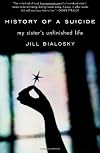
When I picked up Jill Bialosky's new book, I thought: finally, someone who might understand, someone who might have answers. Suicide makes for a different kind of grief. An incomprehensible one: your mind can’t find its logic. Even though our losses and circumstances are quite different, her story resonated with my own journey toward acceptance, forgiveness and reconciliation. Jill Bialosky tries to understand why her sister, Kim, took her own life at the age of 21 in 1990. During the past show more 20 years, Bialosky has been an editor at W.W. Norton as well as an acclaimed poet and novelist, nursing along her own brilliant memoir of grief.
As a reader, I rode a wave of grief memoirs that began with Joan Didion's The Year of Magical Thinking and continues today with Joyce Carol Oates' A Widow's Story. Other fine examples include Meghan O'Rouke's The Long Goodbye, Gail Caldwell's Let's Take the Long Way Home: A Memoir of Friendship, Heather Lende's Take Good Care of the Garden and the Dogs, and Kate Braestrup's Here If You Need Me: A True Story. Local Ithaca author Diane Ackerman has recently published, One Hundred Names for Love, a memoir of anticipatory grief.
The deaths of husbands, mothers, fathers, children, friends, even pets, have been the subject of touching, recent, bestselling memoirs that affirm readers who suffer similar kinds of losses and create compassion in those who can’t even imagine. But none of these recent books tells a story about losing a loved one to suicide.
History of a Suicide begins with the simple facts surrounding her sister’s suicide in 1990 and opens up a narrative on the impact suicide has on those who remain behind. The book starts out like a good mystery or detective story. Jill Bialosky wrote this page-turner in plain language. She weaves together her sister’s diaries and the words of Melville, Dickinson, Wallace Stevens and Sylvia Plath across the weft of words from doctors and psychologists. The author speaks straight into the reader’s heart with unflinching bravery. A voice filled with emotional honesty, Jill Bialosky offers reader both solace and clarity.
In 1897, Durkheim, the father of sociology, published Suicide. He studied the death statistics of France over time and discovered patterns in the aggregated cases. Downturns in the economic market, health epidemics, prospects of war and other social factors correlated to rates of suicides. What predisposing conditions, what circumstantial events, what triggers in social relations lead to self-annihilation? After more than a century we seem to know less, not more about why.
Jill Bialosky doesn’t find the answers in social demographic factors or family dysfunction. The abandonment of Kim’s father at an early age and their mother’s depression are tragic elements, but not explanations. Bialosky offers a profoundly personal and poetic investigation of her sister’s death. Part psychological autopsy, part love letter to Kim’s unfinished life, Bialosky’s memoir mirrors the minds of those loved ones left in the wake of suicide. While the details of her story are unique, the relentless search for meaning is not.
The unanswered questions left in the wake of such an unexpected end haunt survivors. Bialosky writes beautifully and sensitively about this quiet quest. She will never really know what it was like for Kim in those final moments, or, if anyone had done anything differently, would it have changed the trajectory of her sister’s short life. For all the forensic analysis applied to one young woman’s decision to end her life before it had really begun, at the end there is only the mystery. The reader is left with a sense that this feeling of no end to the “what ifs” is central to grieving in a way distinct from all other kinds of grief.
Twenty years of mourning Kim makes her an expert on what happened and how, not why. Bialosky helps the reader understand Kim and the inevitability of her death. Without judgment and filled with compassion, she lets Kim tell her own story and she shares her own with these opening words: “Kim’s suicide has forever altered the way in which I respond to the world around me.” show less
As a reader, I rode a wave of grief memoirs that began with Joan Didion's The Year of Magical Thinking and continues today with Joyce Carol Oates' A Widow's Story. Other fine examples include Meghan O'Rouke's The Long Goodbye, Gail Caldwell's Let's Take the Long Way Home: A Memoir of Friendship, Heather Lende's Take Good Care of the Garden and the Dogs, and Kate Braestrup's Here If You Need Me: A True Story. Local Ithaca author Diane Ackerman has recently published, One Hundred Names for Love, a memoir of anticipatory grief.
The deaths of husbands, mothers, fathers, children, friends, even pets, have been the subject of touching, recent, bestselling memoirs that affirm readers who suffer similar kinds of losses and create compassion in those who can’t even imagine. But none of these recent books tells a story about losing a loved one to suicide.
History of a Suicide begins with the simple facts surrounding her sister’s suicide in 1990 and opens up a narrative on the impact suicide has on those who remain behind. The book starts out like a good mystery or detective story. Jill Bialosky wrote this page-turner in plain language. She weaves together her sister’s diaries and the words of Melville, Dickinson, Wallace Stevens and Sylvia Plath across the weft of words from doctors and psychologists. The author speaks straight into the reader’s heart with unflinching bravery. A voice filled with emotional honesty, Jill Bialosky offers reader both solace and clarity.
In 1897, Durkheim, the father of sociology, published Suicide. He studied the death statistics of France over time and discovered patterns in the aggregated cases. Downturns in the economic market, health epidemics, prospects of war and other social factors correlated to rates of suicides. What predisposing conditions, what circumstantial events, what triggers in social relations lead to self-annihilation? After more than a century we seem to know less, not more about why.
Jill Bialosky doesn’t find the answers in social demographic factors or family dysfunction. The abandonment of Kim’s father at an early age and their mother’s depression are tragic elements, but not explanations. Bialosky offers a profoundly personal and poetic investigation of her sister’s death. Part psychological autopsy, part love letter to Kim’s unfinished life, Bialosky’s memoir mirrors the minds of those loved ones left in the wake of suicide. While the details of her story are unique, the relentless search for meaning is not.
The unanswered questions left in the wake of such an unexpected end haunt survivors. Bialosky writes beautifully and sensitively about this quiet quest. She will never really know what it was like for Kim in those final moments, or, if anyone had done anything differently, would it have changed the trajectory of her sister’s short life. For all the forensic analysis applied to one young woman’s decision to end her life before it had really begun, at the end there is only the mystery. The reader is left with a sense that this feeling of no end to the “what ifs” is central to grieving in a way distinct from all other kinds of grief.
Twenty years of mourning Kim makes her an expert on what happened and how, not why. Bialosky helps the reader understand Kim and the inevitability of her death. Without judgment and filled with compassion, she lets Kim tell her own story and she shares her own with these opening words: “Kim’s suicide has forever altered the way in which I respond to the world around me.” show less
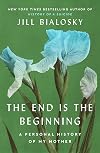
One narrative that will explain it all because we always need a story, an account, to make sense of the inexplicable. from The End Is the Beginning by Jill Bialosky
My mother was fifty-seven years old when she died of cancer. I was thirty-eight. She had been diagnosed with cancer two weeks before her death. I had just moved back to my home state to be near family after our son was born.
During those two weeks, while Mom underwent chemotherapy and called all her friends and relatives to tell show more them the news, I kept up a face of competence during the day, and at night wrote poems to express my grief. Poems about diagnosis, her medical history, the impending loss of a mother, and finally, remembering stories she told me about her teenage years as the local ‘jitterbug queen’.
When I began reading Jill Bialosky’s memoir of her mother, beginning with her death and years with Alzheimer’s, I wondered if I could bear such tragedy. Bialosky told her mother’s story backwards, and frankly, there was tragedy after tragedy. Until she came to her mother’s teenage years, looking over her scrapbooks and diaries, discovering joy and fun and hope. And I realized the brilliance of storytelling backwards, ending with the promise each young life holds.
Unlike Bialosky’s mother, my mother didn’t lose a child, but she did lose two siblings. My mother didn’t lose a husband to death or divorce. But she did deal with deforming autoimmune diseases, psoriasis that made her embarrassed and psoriatic arthritis that left her crippled. She prayed for an early death rather than endure an old age unable to care for herself, especially for the psoriasis. Death came early, sadly after a new medication had stabilized her conditions and allowed her a more active life.
Bialosky’s memoir is beautiful and heart breaking. We each have a story of loss and grief, and there is something cathartic about reading another’s story.
The book title, she shares at the end, is from some of my favorite lines by T. S. Eliot in the Four Quartets, where he writes in East Coker :
What we call the beginning is often the end
And to make an end is to make a beginning.
The end is where we start from.
And from Little Gidding, she adds the lines I once had on my bulletin board at my desk,
We shall not cease from exploration
And the end of all or exploring
WIll be to arrive where we started
And know the place for the first time.
Mom told stories all my life. I loved looking at her old photographs and hearing about the people. I became a genealogist, researching newspapers and documents for facts and information about family. Understanding our parents, grandparents, great-grandparents helps us to understand them and ourselves. It is a circular exploration.
A beautiful book.
Thanks to the publisher for a free book through NetGalley. show less
My mother was fifty-seven years old when she died of cancer. I was thirty-eight. She had been diagnosed with cancer two weeks before her death. I had just moved back to my home state to be near family after our son was born.
During those two weeks, while Mom underwent chemotherapy and called all her friends and relatives to tell show more them the news, I kept up a face of competence during the day, and at night wrote poems to express my grief. Poems about diagnosis, her medical history, the impending loss of a mother, and finally, remembering stories she told me about her teenage years as the local ‘jitterbug queen’.
When I began reading Jill Bialosky’s memoir of her mother, beginning with her death and years with Alzheimer’s, I wondered if I could bear such tragedy. Bialosky told her mother’s story backwards, and frankly, there was tragedy after tragedy. Until she came to her mother’s teenage years, looking over her scrapbooks and diaries, discovering joy and fun and hope. And I realized the brilliance of storytelling backwards, ending with the promise each young life holds.
Unlike Bialosky’s mother, my mother didn’t lose a child, but she did lose two siblings. My mother didn’t lose a husband to death or divorce. But she did deal with deforming autoimmune diseases, psoriasis that made her embarrassed and psoriatic arthritis that left her crippled. She prayed for an early death rather than endure an old age unable to care for herself, especially for the psoriasis. Death came early, sadly after a new medication had stabilized her conditions and allowed her a more active life.
Bialosky’s memoir is beautiful and heart breaking. We each have a story of loss and grief, and there is something cathartic about reading another’s story.
The book title, she shares at the end, is from some of my favorite lines by T. S. Eliot in the Four Quartets, where he writes in East Coker :
What we call the beginning is often the end
And to make an end is to make a beginning.
The end is where we start from.
And from Little Gidding, she adds the lines I once had on my bulletin board at my desk,
We shall not cease from exploration
And the end of all or exploring
WIll be to arrive where we started
And know the place for the first time.
Mom told stories all my life. I loved looking at her old photographs and hearing about the people. I became a genealogist, researching newspapers and documents for facts and information about family. Understanding our parents, grandparents, great-grandparents helps us to understand them and ourselves. It is a circular exploration.
A beautiful book.
Thanks to the publisher for a free book through NetGalley. show less
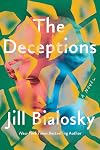
Incredible novel about living in words, being inspired by Greek and Roman mythology, living with centuries of Western civilization's male-centric hierarchy and fighting to be one's own true self, all told within the story of a middle-aged teacher awaiting the publication of her latest book of poems and a promised review in the New York Times. That her book is centered in the myth of Leda and the Swan displays the author's willingness to confront nuance, more than one way of looking at show more something and the lies people tell themselves as well as others. show less
Lists
Awards


You May Also Like


Associated Authors
Statistics
- Works
- 15
- Also by
- 9
- Members
- 659
- Popularity
- #38,282
- Rating
- 3.7
- Reviews
- 21
- ISBNs
- 53
