
Ann Mah
Author of The Lost Vintage
About the Author
Image credit: Annmah.net
Works by Ann Mah
Mastering the Art of French Eating: Lessons in Food and Love from a Year in Paris (2013) 322 copies, 10 reviews
Instantly French!: Classic French Recipes for Your Electric Pressure Cooker (2018) 31 copies, 2 reviews
Tagged
Common Knowledge
Members
Reviews
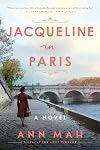
I never tire of books set in Paris. The setting is post-WWII Paris (1949-1950) during the Cold War era in Europe. A young Jackie Bouvier chronicles her Junior Year Abroad experience which opened her eyes to the post war trauma in Europe and to the spy networks that were forming in Paris at the time. This is not a “Jackie Kennedy” story other than her fictional 20-year-old self narrates. The choice of a first person narrator was off-putting to me at first. Once I accepted that voice, I show more moved easily through the book. The focus is on the possibilities of youthful dreams and the realities of political discord. In addition, Ann Mah works in historical writers and notable families who had relevant experiences at the time. Mah regales the reader with descriptions of European cuisine, both homemade and elegant restaurant feasts. You can taste and smell the courses from her accounts of the many meals. And then there is the smoking!!!! My lungs were compromised just reading about the incessant smoking. I would classify this as a light read with a well-researched backbone. show less
Thank you, Ann Mah, for balancing Mercedes King's soap opera of a novel, Jackie's Paris, with a fictional account of Jacqueline Bouvier's year in Paris based on fact, respect and research. I only wish I had read this version first!
For I had glimpsed the possibility of another kind of life —not merely married to someone distinguished, but a person of distinction myself—and I understood that if I was to attain it, my fate depended on my wits. I would need to cultivate my curiosity, read show more more widely, expand my coursework beyond the boundaries of suitability.
JBKO was an inspiring woman in real life, as First Lady and the terrible aftermath, raising her children and her working life in New York, so of course any novel based on even the briefest chapter of her life must capture that same strength, independence, intelligence and style. In 1949, twenty year old Jackie lived in Paris for a year, studying at the Sorbonne and living with a fascinating French host family, the de Rentys. She also met a young American writer, John Marquand Jr, and fell in love ('Perhaps this was the great first love of my life: not a man—not Jack; but France, real France—la France profonde').
Instead of padding a frame of biographical facts with saccharine romantic stuffing, like King's novel, Mah understands that the two most important characters are there in the title - Jacqueline Lee Bouvier and Paris, France. Jackie, telling her own story, is young and impressionable, attempting to break away from her mother's strong influence, but also shows signs of the strong-willed but self-deprecating woman she would become as Mrs Kennedy. She is also fascinated with France - the history, politics, society, culture, language and lifestyle of mid-century Paris captures Jackie's heart and remains a constant inspiration throughout her life ('Paris was awakening me, giving me an energy I hadn’t felt before, challenging me to commit to something larger than myself. But what?') The city also comes alive for the reader through Mah's writing. I could feel the chill in the de Rentys apartment and taste the coffee and cigarette smoke atmosphere of the cafes.
Yes, Jackie falls in love with John 'Jack' Marquand Jr, the son of a famous author, but the romance is never allowed to dominate her character or the story. An intriguing political subplot about the communist threat - as perceived by postwar America - and undercover agents that is based in reality keeps the budding relationship between Jackie and Marquand grounded in time and place. I found Madame de Renty and her daughters far more interesting than the bland Marquand, anyway - the family were agents of the Resistance during the war and were sent to concentration camps. The Comtesse survived, her husband did not. I was even intrigued by a passing reference to the Musée Nissim de Camondo, dedicated by a wealthy Jewish banker, Moise de Camondo, to the memory of his son. We don't need to be told why Jackie fell in love with France if Mah can make us feel the same way!
The story is told in retrospect, with passing references to Jackie's later life as First Lady - particularly her visit to Paris in 1961 with JFK - which I could appreciate but felt sat awkwardly with the growing personality of a young Jacqueline. Mah also has Jackie analysing herself from the perspective of a public persona formed over many decades - 'It wasn’t like me to mix acquaintances—I had always preferred to compartmentalize my relationships, keeping my worlds separate so that no one knew every side of me' - and not a twenty year old debutante. (Although I loved the detail that Jackie needed time to herself and preferred to read rather than make plans.) Past, present and future aside, my only other issue was with the erratic Kindle format with 'Click to buy now!' butting into every other paragraph, for some reason - although I think I might do just that, after spending an engrossing year in Paris with Jackie, and buy a print copy to add to my Kennedy collection! show less
For I had glimpsed the possibility of another kind of life —not merely married to someone distinguished, but a person of distinction myself—and I understood that if I was to attain it, my fate depended on my wits. I would need to cultivate my curiosity, read show more more widely, expand my coursework beyond the boundaries of suitability.
JBKO was an inspiring woman in real life, as First Lady and the terrible aftermath, raising her children and her working life in New York, so of course any novel based on even the briefest chapter of her life must capture that same strength, independence, intelligence and style. In 1949, twenty year old Jackie lived in Paris for a year, studying at the Sorbonne and living with a fascinating French host family, the de Rentys. She also met a young American writer, John Marquand Jr, and fell in love ('Perhaps this was the great first love of my life: not a man—not Jack; but France, real France—la France profonde').
Instead of padding a frame of biographical facts with saccharine romantic stuffing, like King's novel, Mah understands that the two most important characters are there in the title - Jacqueline Lee Bouvier and Paris, France. Jackie, telling her own story, is young and impressionable, attempting to break away from her mother's strong influence, but also shows signs of the strong-willed but self-deprecating woman she would become as Mrs Kennedy. She is also fascinated with France - the history, politics, society, culture, language and lifestyle of mid-century Paris captures Jackie's heart and remains a constant inspiration throughout her life ('Paris was awakening me, giving me an energy I hadn’t felt before, challenging me to commit to something larger than myself. But what?') The city also comes alive for the reader through Mah's writing. I could feel the chill in the de Rentys apartment and taste the coffee and cigarette smoke atmosphere of the cafes.
Yes, Jackie falls in love with John 'Jack' Marquand Jr, the son of a famous author, but the romance is never allowed to dominate her character or the story. An intriguing political subplot about the communist threat - as perceived by postwar America - and undercover agents that is based in reality keeps the budding relationship between Jackie and Marquand grounded in time and place. I found Madame de Renty and her daughters far more interesting than the bland Marquand, anyway - the family were agents of the Resistance during the war and were sent to concentration camps. The Comtesse survived, her husband did not. I was even intrigued by a passing reference to the Musée Nissim de Camondo, dedicated by a wealthy Jewish banker, Moise de Camondo, to the memory of his son. We don't need to be told why Jackie fell in love with France if Mah can make us feel the same way!
The story is told in retrospect, with passing references to Jackie's later life as First Lady - particularly her visit to Paris in 1961 with JFK - which I could appreciate but felt sat awkwardly with the growing personality of a young Jacqueline. Mah also has Jackie analysing herself from the perspective of a public persona formed over many decades - 'It wasn’t like me to mix acquaintances—I had always preferred to compartmentalize my relationships, keeping my worlds separate so that no one knew every side of me' - and not a twenty year old debutante. (Although I loved the detail that Jackie needed time to herself and preferred to read rather than make plans.) Past, present and future aside, my only other issue was with the erratic Kindle format with 'Click to buy now!' butting into every other paragraph, for some reason - although I think I might do just that, after spending an engrossing year in Paris with Jackie, and buy a print copy to add to my Kennedy collection! show less
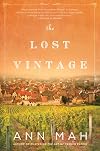
Here's a fast-paced novel about wine, women, and World War II.
Author Ann Mah is a food and travel writer, known more as a writer of food-related books than as a novelist. But in this novel, she offers up a fairly compelling story, in addition to a bit too much detail about protagonist Kate's efforts to pass the notoriously difficult Master of Wine test. For me, a devotee of historical fiction, the part of the story that explored French life during the World War II German Occupation was MUCH show more more interesting than learning about either winemaking or a wine test.
Kate's family has been making unique wines in France for generations, though she now works as a sommelier in San Francisco. During a visit to help her French relatives with the grape harvest, she comes across both her former fiancee AND a series of family secrets involving a mysterious ancestor (Helene) who no one in the family will talk about. Add in a cellar full of old books, one personal diary, a few false walls, and some coded messages and letters-- and you have plenty to keep the plot moving along.
But without question, the most fascinating aspect of this book was the brief description of the "épuration sauvage" (translation: wild purge) --a brutal and humiliating public retaliation French mobs (usually men) enacted on thousands of French women toward the end of the war, accusing them (often falsely) of collaborating with the Germans. In what was actually a violent case of overt sexism (male collaborators were NOT punished in this way), these women were stripped, shaved, beaten, spat upon, and, in about 6,000 cases, murdered. Some of these victims had been raped by German soldiers: others had simply been trying to keep their children alive during the war. Not surprisingly, a shameful story I had never heard before. And one that I will now read more about. show less
Author Ann Mah is a food and travel writer, known more as a writer of food-related books than as a novelist. But in this novel, she offers up a fairly compelling story, in addition to a bit too much detail about protagonist Kate's efforts to pass the notoriously difficult Master of Wine test. For me, a devotee of historical fiction, the part of the story that explored French life during the World War II German Occupation was MUCH show more more interesting than learning about either winemaking or a wine test.
Kate's family has been making unique wines in France for generations, though she now works as a sommelier in San Francisco. During a visit to help her French relatives with the grape harvest, she comes across both her former fiancee AND a series of family secrets involving a mysterious ancestor (Helene) who no one in the family will talk about. Add in a cellar full of old books, one personal diary, a few false walls, and some coded messages and letters-- and you have plenty to keep the plot moving along.
But without question, the most fascinating aspect of this book was the brief description of the "épuration sauvage" (translation: wild purge) --a brutal and humiliating public retaliation French mobs (usually men) enacted on thousands of French women toward the end of the war, accusing them (often falsely) of collaborating with the Germans. In what was actually a violent case of overt sexism (male collaborators were NOT punished in this way), these women were stripped, shaved, beaten, spat upon, and, in about 6,000 cases, murdered. Some of these victims had been raped by German soldiers: others had simply been trying to keep their children alive during the war. Not surprisingly, a shameful story I had never heard before. And one that I will now read more about. show less
Here's a fast-paced novel about wine, women, and World War II.
Author Ann Mah is a food and travel writer, known more as a writer of food-related books than as a novelist. But in this novel, she offers up a fairly compelling story, in addition to a bit too much detail about protagonist Kate's efforts to pass the notoriously difficult Master of Wine test. For me, a devotee of historical fiction, the part of the story that explored French life during the World War II German Occupation was MUCH show more more interesting than learning about either winemaking or a wine test.
Kate's family has been making unique wines in France for generations, though she now works as a sommelier in San Francisco. During a visit to help her French relatives with the grape harvest, she comes across both her former fiancee AND a series of family secrets involving a mysterious ancestor (Helene) who no one in the family will talk about. Add in a cellar full of old books, one personal diary, a few false walls, and some coded messages and letters-- and you have plenty to keep the plot moving along.
But without question, the most fascinating aspect of this book was the brief description of the "épuration sauvage" (translation: wild purge) --a brutal and humiliating public retaliation French mobs (usually men) enacted on thousands of French women toward the end of the war, accusing them (often falsely) of collaborating with the Germans. In what was actually a violent case of overt sexism (male collaborators were NOT punished in this way), these women were stripped, shaved, beaten, spat upon, and, in about 6,000 cases, murdered. Some of these victims had been raped by German soldiers: others had simply been trying to keep their children alive during the war. Not surprisingly, a shameful story I had never heard before. And one that I will now read more about. show less
Author Ann Mah is a food and travel writer, known more as a writer of food-related books than as a novelist. But in this novel, she offers up a fairly compelling story, in addition to a bit too much detail about protagonist Kate's efforts to pass the notoriously difficult Master of Wine test. For me, a devotee of historical fiction, the part of the story that explored French life during the World War II German Occupation was MUCH show more more interesting than learning about either winemaking or a wine test.
Kate's family has been making unique wines in France for generations, though she now works as a sommelier in San Francisco. During a visit to help her French relatives with the grape harvest, she comes across both her former fiancee AND a series of family secrets involving a mysterious ancestor (Helene) who no one in the family will talk about. Add in a cellar full of old books, one personal diary, a few false walls, and some coded messages and letters-- and you have plenty to keep the plot moving along.
But without question, the most fascinating aspect of this book was the brief description of the "épuration sauvage" (translation: wild purge) --a brutal and humiliating public retaliation French mobs (usually men) enacted on thousands of French women toward the end of the war, accusing them (often falsely) of collaborating with the Germans. In what was actually a violent case of overt sexism (male collaborators were NOT punished in this way), these women were stripped, shaved, beaten, spat upon, and, in about 6,000 cases, murdered. Some of these victims had been raped by German soldiers: others had simply been trying to keep their children alive during the war. Not surprisingly, a shameful story I had never heard before. And one that I will now read more about. show less
Lists
Awards

You May Also Like


Statistics
- Works
- 12
- Members
- 1,320
- Popularity
- #19,470
- Rating
- 3.6
- Reviews
- 66
- ISBNs
- 49
- Languages
- 6