
Aldo Buzzi (1910–2009)
Author of The Perfect Egg
About the Author
Aldo Buzzi trained as an architect in Milan, where he now lives. He worked in the Italian cinema for many years and then as a publisher.
Works by Aldo Buzzi
Associated Works
Tagged
Common Knowledge
- Canonical name
- Buzzi, Aldo
- Birthdate
- 1910-08-10
- Date of death
- 2009-10-09
- Gender
- male
- Education
- Milan School of Architecture, Milan, Italy
- Occupations
- filmmaker
cookbook writer
screenwriter
essayist
architect - Nationality
- Italy
- Birthplace
- Como, Italy
- Places of residence
- Milan, Italy
Rome, Italy
France - Place of death
- Milan, Italy
- Associated Place (for map)
- Italy
Members
Reviews
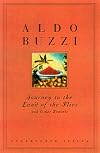
Aldo Buzzi is a master of the personal essay. His mastery is evident in how effortless he makes his achievement look. His essays may appear to be random jottings, observations, and eccentric erudition, but they are arranged in such a way that one has to struggle (but always relents) to keep a smile from appearing on one's face. The first essay in the collection, "Chekhov in Sondrio," is the best thing I've ever read on the Russians (and several other topics as well). For example: "Like show more cabbages, cucumbers are an essential vegetable for Russians. Céline says, 'Over there a man fills his belly with cucumbers,' and Saltykov-Shchedrin, the satirist, sententiously, 'Man needs everything: butter, cabbages, cucumbers.'" show less

Published after his death in 1999, this is a meditation based on a series of interviews of Steinberg by Buzzi. Beginning with his childhood and youth in Romania, through his wartime experience in Italy and his maturity in the United States, Steinberg muses with an acute visual sense, appropriate for an artist. The book is illustrated with his drawings.
His ideas about influences on art are insightful. as he describes early photographers “inspired by the paintings of Delacroix and Ingres”, show more to his thorught that Bacon “clearly derives from the Polaroid”. I was intrigued by his suggestion that the use of industrial paints in American art occurred because of poor artists used cold-water flats as studios, “and to make them livable they had to scrape and paint the walls, doors and windows, and floors . . . and this led them to work on a large scale, to use industrial paints, such as gold or silver on radiators, new materials”. His description of the New York City taxi cab of the ‘40’s as created out of Cubist elements, of the automobile influenced by Constructivism, Cubism, and “Fernandlégerism” makes one look at cars in a whole new light.
The title, Reflections and Shadows, comes from a section in which he discusses how what one sees in reverse in a reflection (in a mirror, in water) or shadow is often better - sharper, more intense - than the original. “If ou look only at the reflection, and not at the reflecting part, you see a gratuitous reality that exists for you alone. For fun I throw a stone into the upside-down landscape, and seeing that the lower part moves I almost expect the upper part to move too.”
If I quoted all my favorite parts of this book, I’d be typing almost the entire thing, so you’ll have to go read it for yourself! show less
His ideas about influences on art are insightful. as he describes early photographers “inspired by the paintings of Delacroix and Ingres”, show more to his thorught that Bacon “clearly derives from the Polaroid”. I was intrigued by his suggestion that the use of industrial paints in American art occurred because of poor artists used cold-water flats as studios, “and to make them livable they had to scrape and paint the walls, doors and windows, and floors . . . and this led them to work on a large scale, to use industrial paints, such as gold or silver on radiators, new materials”. His description of the New York City taxi cab of the ‘40’s as created out of Cubist elements, of the automobile influenced by Constructivism, Cubism, and “Fernandlégerism” makes one look at cars in a whole new light.
The title, Reflections and Shadows, comes from a section in which he discusses how what one sees in reverse in a reflection (in a mirror, in water) or shadow is often better - sharper, more intense - than the original. “If ou look only at the reflection, and not at the reflecting part, you see a gratuitous reality that exists for you alone. For fun I throw a stone into the upside-down landscape, and seeing that the lower part moves I almost expect the upper part to move too.”
If I quoted all my favorite parts of this book, I’d be typing almost the entire thing, so you’ll have to go read it for yourself! show less

Very odd. The other reviewers say about the same thing I do. Let me just add that I found none of it memorable. Here it is, the next day, and all I remember is one image of a beautiful girl.
However, here's a bookdarted quotation (from, actually, that same train of thought):
[re'] the best way of describing a person. The meticulous enumeration of physical characteristics, used so much in bad novels, serves no purpose. Every new characteristic, rathe than blending with the preceding ones and show more little by little completing the portrait, cancels them, so to speak, and increases the fog that forms between the page and the reader. On the other hand, when Gide says of Claudel, 'As a young man he had the look of a nail; now he seems a pestle,' Claudel is immediately present, vivid, even though we do not know if he is tall or short, or what color his eyes are."
If you agree with that sentiment, and like how it is expressed, you might like bits of this book. If you know who Gide or Claudel are, you might like more bits. I'm glad I read the book just for that sentiment - but I still, in all honesty, didn't 'enjoy' the book. Hence the low rating.
(btw, I've no idea what 'abridged' means in the book description. Buzzi says this is a reworking of previous works, but there's no longer, 'unabridged' edition of this...)" show less
However, here's a bookdarted quotation (from, actually, that same train of thought):
[re'] the best way of describing a person. The meticulous enumeration of physical characteristics, used so much in bad novels, serves no purpose. Every new characteristic, rathe than blending with the preceding ones and show more little by little completing the portrait, cancels them, so to speak, and increases the fog that forms between the page and the reader. On the other hand, when Gide says of Claudel, 'As a young man he had the look of a nail; now he seems a pestle,' Claudel is immediately present, vivid, even though we do not know if he is tall or short, or what color his eyes are."
If you agree with that sentiment, and like how it is expressed, you might like bits of this book. If you know who Gide or Claudel are, you might like more bits. I'm glad I read the book just for that sentiment - but I still, in all honesty, didn't 'enjoy' the book. Hence the low rating.
(btw, I've no idea what 'abridged' means in the book description. Buzzi says this is a reworking of previous works, but there's no longer, 'unabridged' edition of this...)" show less
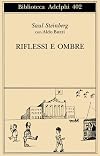
4 stelle sentimentali. Io amo Steinberg e sono rimasta folgorata dalla Squarzola (la follia architettonica di Buzzi).
Queste 70 pagine scritte larghe sono riflessioni e appunti di Steinberg che inquadrano ulteriormente il personaggio. Adesso sono in fremente attesa che mi arrivi l'epistolario.
Queste 70 pagine scritte larghe sono riflessioni e appunti di Steinberg che inquadrano ulteriormente il personaggio. Adesso sono in fremente attesa che mi arrivi l'epistolario.
Awards
You May Also Like


Associated Authors
Statistics
- Works
- 12
- Also by
- 3
- Members
- 279
- Popularity
- #83,280
- Rating
- 3.9
- Reviews
- 9
- ISBNs
- 34
- Languages
- 5
- Favorited
- 1