
Brock Clarke
Author of An Arsonist's Guide to Writers' Homes in New England
About the Author
Brock Clarke teaches creative writing at the University of Cincinnati.
Works by Brock Clarke
Associated Works
You Must Be This Tall to Ride: Contemporary Writers Take You Inside the Story (2009) — Contributor — 21 copies
Astoria to Zion: Twenty-Six Stories of Risk and Abandon from Ecotone's First Decade (2014) — Contributor — 13 copies, 1 review
Oxford American: The Southern Magazine of Good Writing. No. 57 (2007): Best of the South (2007) — Contributor — 1 copy
Tagged
Common Knowledge
- Birthdate
- 1968-11-19
- Gender
- male
- Occupations
- creative writing teacher
author - Organizations
- Bowdoin College
- Nationality
- USA
- Places of residence
- Portland, Maine, USA
- Associated Place (for map)
- Maine, USA
Members
Reviews
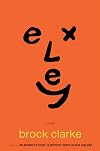
After you finish reading Exley, by Brock Clarke, you may need to take a few moments to catch your breath. You may not sleep well, and that’s certainly not because of anything horrific or scary in the book. This book, quite simply, messes with your mind.
First, the characters are wildly created and completely unpredictable. It starts with Miller, or M-, who is a child prodigy on a quest to find his father who left the family suddenly and without explanation. He’s a weird little kid, but show more likable, and you can’t help but feel sympathy for him as he misses his dad. The only explanation he can find is that his father must have left for Iraq (they live in an army base town), and this explanation doesn’t sit well with his mother. She arranges for him to meet with a psychiatrist to discuss Miller’s ‘wild imagination’. Miller and the doctor form a tentative relationship, with Miller’s explanations sounding more reasonable than anyone else’s.
The key to all of this, to separate it from any number of books about dysfunctional families, is Exley. Frederick Exley, is the author of A Fan’s Notes, the favorite book of Miller’s father. His father’s so tied to Exley’s books that when he gets a phone call on 9/11 to tell him to turn on the television, he can’t be bothered. He’s too busy re-reading the book. The book becomes Miller’s only connection to his dad. He carries on his father’s obsession and turns to Exley (or at least anything even remotely related to Exley or his writing) to bring him back. With book in hand, he searches all over Watertown to find a connection and an explanation. In between searching, he teaches his father’s English class at the Junior College, meets a mysterious young woman who may have known his father, and visits the VA hospital searching for clues. This is one busy kid.
The psychiatrist, Dr. Pahnee, isn’t exactly the appropriate choice for a mental health professional for Miller. This makes him perfect in terms of the book. Because while Dr. Pahnee utters the traditional psychobabble, he’s also not above prowling Miller’s house when no one’s home, and following him around to verify if any of Miller’s claims could possibly be true (both of them on bikes). He’s not above hitting on Miller’s mother, and as several of the chapters are written as his patient notes, we see just how far out of the range of normal he is. He is given to uttering repetitive phrases-repetitive and, indeed, annoying. (Just like that sentence!) Quirky doesn’t even begin to describe him.
Clarke writes the characters in a brisk way that creates instant visuals: he describes the father “like a bear with hurt feelings.” The mother is an uptight lawyer whose emotions are best deciphered by the position of her hands on her hips, and who is so rigid that her business suits are assigned a certain day to be worn. Everyone else that Miller meets fits the same non-mold, and the effect is dizzying. Despite the craziness, there is a genuine thread of humanity that aims to understand how much (or how little) of what we want to believe relates to what actually is true. It also toys with the idea of imagination as a therapeutic process, a means to adjust to and possibly accept changing circumstances.
The book reminded me a bit of Jonathan Safran Foer’s Extremely Loud and Incredibly Close, which has a child protagonist on a similar journey. Yet Clarke’s novel has a more satisfying ending, and doesn’t fold up quite as neatly. The flawed and outrageous characters for the most part were still sympathetic. My only irritation was that the character of Miller’s mother seemed apathetic much of the time, and insensitive to Miller’s father need. And to be honest, at times the unpredictable events almost became predictable once you get involved into the story…it’s as if you begin to expect more of the same. The cleverness that was refreshing at first, did, albeit only a few times, get stale. show less
First, the characters are wildly created and completely unpredictable. It starts with Miller, or M-, who is a child prodigy on a quest to find his father who left the family suddenly and without explanation. He’s a weird little kid, but show more likable, and you can’t help but feel sympathy for him as he misses his dad. The only explanation he can find is that his father must have left for Iraq (they live in an army base town), and this explanation doesn’t sit well with his mother. She arranges for him to meet with a psychiatrist to discuss Miller’s ‘wild imagination’. Miller and the doctor form a tentative relationship, with Miller’s explanations sounding more reasonable than anyone else’s.
The key to all of this, to separate it from any number of books about dysfunctional families, is Exley. Frederick Exley, is the author of A Fan’s Notes, the favorite book of Miller’s father. His father’s so tied to Exley’s books that when he gets a phone call on 9/11 to tell him to turn on the television, he can’t be bothered. He’s too busy re-reading the book. The book becomes Miller’s only connection to his dad. He carries on his father’s obsession and turns to Exley (or at least anything even remotely related to Exley or his writing) to bring him back. With book in hand, he searches all over Watertown to find a connection and an explanation. In between searching, he teaches his father’s English class at the Junior College, meets a mysterious young woman who may have known his father, and visits the VA hospital searching for clues. This is one busy kid.
The psychiatrist, Dr. Pahnee, isn’t exactly the appropriate choice for a mental health professional for Miller. This makes him perfect in terms of the book. Because while Dr. Pahnee utters the traditional psychobabble, he’s also not above prowling Miller’s house when no one’s home, and following him around to verify if any of Miller’s claims could possibly be true (both of them on bikes). He’s not above hitting on Miller’s mother, and as several of the chapters are written as his patient notes, we see just how far out of the range of normal he is. He is given to uttering repetitive phrases-repetitive and, indeed, annoying. (Just like that sentence!) Quirky doesn’t even begin to describe him.
Clarke writes the characters in a brisk way that creates instant visuals: he describes the father “like a bear with hurt feelings.” The mother is an uptight lawyer whose emotions are best deciphered by the position of her hands on her hips, and who is so rigid that her business suits are assigned a certain day to be worn. Everyone else that Miller meets fits the same non-mold, and the effect is dizzying. Despite the craziness, there is a genuine thread of humanity that aims to understand how much (or how little) of what we want to believe relates to what actually is true. It also toys with the idea of imagination as a therapeutic process, a means to adjust to and possibly accept changing circumstances.
The book reminded me a bit of Jonathan Safran Foer’s Extremely Loud and Incredibly Close, which has a child protagonist on a similar journey. Yet Clarke’s novel has a more satisfying ending, and doesn’t fold up quite as neatly. The flawed and outrageous characters for the most part were still sympathetic. My only irritation was that the character of Miller’s mother seemed apathetic much of the time, and insensitive to Miller’s father need. And to be honest, at times the unpredictable events almost became predictable once you get involved into the story…it’s as if you begin to expect more of the same. The cleverness that was refreshing at first, did, albeit only a few times, get stale. show less
http://andalittlewine.blogspot.com/2013/01/review-ordinary-white-boy-by-brock.ht....
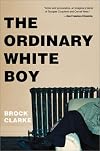
The blurb on the back of Brock Clarke's The Ordinary White Boy could be about me:
At twenty-seven years old he can't dance unless he's had more than a few drinks. His wardrobe is uninspired, at best. He has returned after college to Little Falls, his miserable, working-class hometown in upstate New York...
And we love to read about ourselves don't we?
I've been told, and to a sense I agree, that the history of show more literature is too often regarded as the history of white men. Look at the top ten of the Modern Library's 100 Best Novels: Irish man, American man, the same Irish guy again, Russian man, British man, another American man, a third American man, a Hungarian-British man, another British man, a fourth American man. You have to go #15 to find a woman (Virginia Wolff), to #19 (Ralph Ellison) to find the first non-Caucasian, and I lost interest in searching before I found someone not born in American or Europe.
So, yes: discrimination! But...
I wouldn't say any of those top ten books reflect who I am, beyond the broadest strokes: white men, educated in the Western Judeo-Christian canon, alive in the 20th century...
Sometimes a list of the most important novels of the 20th century is just a list. And sometimes the murder of the only hispanic man in a lily white Upstate New York town is just a murder.
That's the dynamic The Ordinary White Boy explores. And I see so much more of my life in it than in most books.
Stephen Daedalus is exceptional, like Joyce. For White Boy's protagonist Lamar (and for me, and for, I suspect, Brock Clarke) exceptionalism is a less certain thing.
But the expectation of exceptionalism hangs there. Like the narrator of The Zeroes, much has been expected for Lamar from a young age, and his early twenties were supposed to be the launch point. He graduated from college and was ready to set off into the world a man.
Only Lamar wasn't much of a man yet, and he didn't quite set off (the phrase "Failure to Launch" comes to mind). So at 27 going on 28, Lamar is not much more than he was at 22.
He tries. He wants so badly to be galvanized by what is happening in his small town- for a recent murder to kickstart his failed ambitions, as we've seen traumatic events do so often in books and films (think about the long string of films featuring Adam Sandler and Will Ferrell, a genre [I think] subverted by Judd Apatow).
Only the kickstart doesn't take. Lamar, perhaps a little too self-aware for his own good, can't get beyond the reductive drag of modern life. A thing has happened and we should be outraged. And maybe we are, but nothing changes, so when it happens again we can't muster the same level of outrage, and we find that the world goes on just fine in that case too. So long as the tragedy doesn't happen to me, I don't have to care. In fact, it's safer not to care, since no one around you will get all that worked up either.
That's modern life. Caring only as much as is safe.
And that's all Lamar can bring himself to do, and I've read plenty of reviewers that hate him for that. And I agree with their disappointment, and I agree with their indignation. But ultimately, I agree with Lamar- ordinary and safe and predictable bring so many challenges, more challenges than we can possibly overcome, so why bother tilting at windmills? show less
The blurb on the back of Brock Clarke's The Ordinary White Boy could be about me:
At twenty-seven years old he can't dance unless he's had more than a few drinks. His wardrobe is uninspired, at best. He has returned after college to Little Falls, his miserable, working-class hometown in upstate New York...
And we love to read about ourselves don't we?
I've been told, and to a sense I agree, that the history of show more literature is too often regarded as the history of white men. Look at the top ten of the Modern Library's 100 Best Novels: Irish man, American man, the same Irish guy again, Russian man, British man, another American man, a third American man, a Hungarian-British man, another British man, a fourth American man. You have to go #15 to find a woman (Virginia Wolff), to #19 (Ralph Ellison) to find the first non-Caucasian, and I lost interest in searching before I found someone not born in American or Europe.
So, yes: discrimination! But...
I wouldn't say any of those top ten books reflect who I am, beyond the broadest strokes: white men, educated in the Western Judeo-Christian canon, alive in the 20th century...
Sometimes a list of the most important novels of the 20th century is just a list. And sometimes the murder of the only hispanic man in a lily white Upstate New York town is just a murder.
That's the dynamic The Ordinary White Boy explores. And I see so much more of my life in it than in most books.
Stephen Daedalus is exceptional, like Joyce. For White Boy's protagonist Lamar (and for me, and for, I suspect, Brock Clarke) exceptionalism is a less certain thing.
But the expectation of exceptionalism hangs there. Like the narrator of The Zeroes, much has been expected for Lamar from a young age, and his early twenties were supposed to be the launch point. He graduated from college and was ready to set off into the world a man.
Only Lamar wasn't much of a man yet, and he didn't quite set off (the phrase "Failure to Launch" comes to mind). So at 27 going on 28, Lamar is not much more than he was at 22.
He tries. He wants so badly to be galvanized by what is happening in his small town- for a recent murder to kickstart his failed ambitions, as we've seen traumatic events do so often in books and films (think about the long string of films featuring Adam Sandler and Will Ferrell, a genre [I think] subverted by Judd Apatow).
Only the kickstart doesn't take. Lamar, perhaps a little too self-aware for his own good, can't get beyond the reductive drag of modern life. A thing has happened and we should be outraged. And maybe we are, but nothing changes, so when it happens again we can't muster the same level of outrage, and we find that the world goes on just fine in that case too. So long as the tragedy doesn't happen to me, I don't have to care. In fact, it's safer not to care, since no one around you will get all that worked up either.
That's modern life. Caring only as much as is safe.
And that's all Lamar can bring himself to do, and I've read plenty of reviewers that hate him for that. And I agree with their disappointment, and I agree with their indignation. But ultimately, I agree with Lamar- ordinary and safe and predictable bring so many challenges, more challenges than we can possibly overcome, so why bother tilting at windmills? show less

Every so often, a book grabs your attention with the opening sentence and holds you all the way to the last period. Unfortunately, this isn’t one of those books. Brock Clarke’s attempt at a quirky, humorous series of misfortunes simply fails to achieve the most important goal of any story – making the reader care about the story.
An Arsonist’s Guide to Writers’ Homes in New England is the rambling diatribe of a hapless – in fact, clueless – self described ‘everyman’ who show more can’t help being railroaded for crimes he didn’t commit. Clarke foreshadows almost everything that is going to happen to Sam Pulsifer within the first 30 pages, so there is no mystery or tension to propel the reader along. There is an inevitability to everything that happens to Sam and he has no interest in even participating in his own life, blind to what is going on around him only because he has his hand over his own eyes. The entire plot is such a quagmire it prevents the story from being anything other than a bore. In addition to the entire story being uninteresting, the prose is grating. Told from Sam’s perspective, it is an annoying internal dialog where he consistently demonstrates that he is incapable of completing a full sentence without wandering off to some other topic. After about two chapters of this I was not only frustrated with reading it, I didn’t care about what happened to any of the characters, especially Sam. Listening to him tell his story I quickly understood why he didn’t have any friends and nobody wanted to talk to him about anything. Even Sam is uninterested in himself, which leaves anyone reading his story wondering why we should be interested in him either.
I’m not sure if Clarke was attempting to paint a picture of what it is like inside the mind of a hopeless victim of life. But whether it was or not, the story really missed the mark and only succeeded in making me wish I had purchased something else to read. show less
An Arsonist’s Guide to Writers’ Homes in New England is the rambling diatribe of a hapless – in fact, clueless – self described ‘everyman’ who show more can’t help being railroaded for crimes he didn’t commit. Clarke foreshadows almost everything that is going to happen to Sam Pulsifer within the first 30 pages, so there is no mystery or tension to propel the reader along. There is an inevitability to everything that happens to Sam and he has no interest in even participating in his own life, blind to what is going on around him only because he has his hand over his own eyes. The entire plot is such a quagmire it prevents the story from being anything other than a bore. In addition to the entire story being uninteresting, the prose is grating. Told from Sam’s perspective, it is an annoying internal dialog where he consistently demonstrates that he is incapable of completing a full sentence without wandering off to some other topic. After about two chapters of this I was not only frustrated with reading it, I didn’t care about what happened to any of the characters, especially Sam. Listening to him tell his story I quickly understood why he didn’t have any friends and nobody wanted to talk to him about anything. Even Sam is uninterested in himself, which leaves anyone reading his story wondering why we should be interested in him either.
I’m not sure if Clarke was attempting to paint a picture of what it is like inside the mind of a hopeless victim of life. But whether it was or not, the story really missed the mark and only succeeded in making me wish I had purchased something else to read. show less
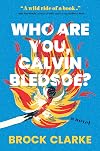
Who are You, Calvin Bledsoe? by Brock Clarke is a fun trip through both a highly unlikely series of events and the everyday thoughts we all have. It is that juxtaposition that gives this novel its strength and fun.
The title probably sets up the book as well as anything I could write. Obviously, in asking that question, you know the person is Calvin Bledsoe. So on one level it is a question that contains its own answer. Yet when we ask that question of someone we know, we mean something show more different, we mean something along the lines of "what type of person are you?" or maybe "what is the essence of your being?" This novel delves into both the obvious (which is not always so simple as it seems) fact he is Calvin Bledsoe as well as the process of becoming who someone is, that core that is always becoming yet never really becomes.
While the events of the story are fun because they are so far-fetched, the novel would probably be just so-so if that was the main aspect. But Calvin's thoughts and, sometimes, comments are the things of everyday life. Observations and assumptions, ponderings and musings. In Clarke's hands these are expressed in wonderful terms, sometimes with startlingly appropriate analogies and sometimes with phrases that make you pause to consider the underlying thoughts.
The frequent quoting of John Calvin is also an important part of the enjoyment of the book. A text, no matter what the writer's intention, can be interpreted and used in ways opposed to that intention. First from Beatrice's mouth and then, more and more, from Calvin's, we see John Calvin's words used to explain or justify almost anything. This is yet another fun element of the book.
I don't think this will appeal to everybody (but what book does) though I think most readers, if they can bracket their usual desire of a realistic plot and "likeable" characters, will find a lot to enjoy. This is not genre fiction, so any tropes from whatever your usual genre is won't be present here. Take the plunge, just let the trip take you where it goes, much as Calvin does in the story.
Reviewed from a copy made available by the publisher via LibraryThing Early Reviewers. show less
The title probably sets up the book as well as anything I could write. Obviously, in asking that question, you know the person is Calvin Bledsoe. So on one level it is a question that contains its own answer. Yet when we ask that question of someone we know, we mean something show more different, we mean something along the lines of "what type of person are you?" or maybe "what is the essence of your being?" This novel delves into both the obvious (which is not always so simple as it seems) fact he is Calvin Bledsoe as well as the process of becoming who someone is, that core that is always becoming yet never really becomes.
While the events of the story are fun because they are so far-fetched, the novel would probably be just so-so if that was the main aspect. But Calvin's thoughts and, sometimes, comments are the things of everyday life. Observations and assumptions, ponderings and musings. In Clarke's hands these are expressed in wonderful terms, sometimes with startlingly appropriate analogies and sometimes with phrases that make you pause to consider the underlying thoughts.
The frequent quoting of John Calvin is also an important part of the enjoyment of the book. A text, no matter what the writer's intention, can be interpreted and used in ways opposed to that intention. First from Beatrice's mouth and then, more and more, from Calvin's, we see John Calvin's words used to explain or justify almost anything. This is yet another fun element of the book.
I don't think this will appeal to everybody (but what book does) though I think most readers, if they can bracket their usual desire of a realistic plot and "likeable" characters, will find a lot to enjoy. This is not genre fiction, so any tropes from whatever your usual genre is won't be present here. Take the plunge, just let the trip take you where it goes, much as Calvin does in the story.
Reviewed from a copy made available by the publisher via LibraryThing Early Reviewers. show less
 This review was written for LibraryThing Early Reviewers.
Lists
Fiction on Fire (1)
Fiction For Men (1)
Awards


You May Also Like


Associated Authors
Statistics
- Works
- 12
- Also by
- 8
- Members
- 2,354
- Popularity
- #10,898
- Rating
- 3.1
- Reviews
- 188
- ISBNs
- 55
- Languages
- 5
- Favorited
- 2
