
R. M. Hare (1919–2002)
Author of The Language of Morals
About the Author
R. M. Hare, FBA, was White's Professor of Moral Philosophy at the University of Oxford from 1966 to 1983, and Graduate Research Professor of Philosophy at the University of Florida, Gainesville, thereafter. His many publications include The Language of Morals (1952), Freedom and Reason (1963), show more Moral Thinking (1981), Plato (Past Masters, 1982), Essays in Ethical Theory (1989), Essays on Political Morality (1989), Essays on Bioethics (1993), and Sorting Out Ethics (1997), all published by Oxford University Press. show less
Works by R. M. Hare
Associated Works
The Critical Approach to Science and Philosophy : In Honor of Karl R. Popper (1964) — Contributor — 19 copies
Tagged
Common Knowledge
- Canonical name
- Hare, R. M.
- Legal name
- Hare, Richard Mervyn
- Birthdate
- 1919-03-21
- Date of death
- 2002-01-29
- Gender
- male
- Education
- Balliol College, University of Oxford (BA)
Rugby School - Occupations
- philosopher
professor
British Army (WWII) - Organizations
- University of Oxford
- Relationships
- McGuinness, Brian (student)
Williams, Bernard (student)
Singer, Peter (student)
Hare, John E. (son) - Cause of death
- complications of a stroke
- Nationality
- UK
- Birthplace
- Backwell, Somerset, England, UK
- Places of residence
- Ewelme, Oxfordshire, England, UK
- Place of death
- Ewelme, Oxfordshire, England, UK
- Associated Place (for map)
- England, UK
Members
Reviews
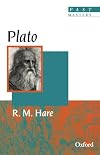
R. M. Hare's book is a brief, clearly written introduction to Plato's thought that makes abstract ideas accessible. One of the author's strengths is his ability to place Plato's arguments in historical context.
He asks the reader to consider why a particular idea arises at a specific time and provides insightful analysis.
I read this text in conjunction with a course on Greek philosophy, and it deepened my understanding. I recommend it to anyone interested in Plato's contribution to philosophy.
He asks the reader to consider why a particular idea arises at a specific time and provides insightful analysis.
I read this text in conjunction with a course on Greek philosophy, and it deepened my understanding. I recommend it to anyone interested in Plato's contribution to philosophy.

As a utilitarian, RM Hare tries to provide a conceptually coherent multi-level description of moral argument, moral reasoning, and moral reflection through a deep and profound empathy for the moral predicaments of others in which moral reflection emerges and in which much or most of it must be carried out. We can criticize his insistence that we are already natively, intuitively using the core concepts of ethical reasoning, but he defends that point of view, that every morally and mentally show more competent human being, when awakened to ethical concerns, has the rudimentary mental apparatus for starting the job of 'doing ethics'. show less

Richard Mervyn Hare (21 March 1919 in Backwell, Somerset – 29 January 2002 in Ewelme, Oxfordshire) was an English moral philosopher who held the post of White's Professor of Moral Philosophy at the University of Oxford from 1966 until 1983. He subsequently taught for a number of years at the University of Florida. His meta-ethical theories were influential during the second half of the twentieth century.
Hare is best known for his development of prescriptivism as a meta-ethical theory. He show more believed that formal features of moral discourse could be used to show that correct moral reasoning will lead most agents to a form of preference utilitarianism.
Some of Hare's students, such as Brian McGuinness and Bernard Williams went on to become well-known philosophers. Peter Singer, known for his involvement with the animal liberation movement, was also a student of Hare's, and has explicitly adopted some elements of Hare's thought, though not his doctrine of universal prescriptivism. show less
Hare is best known for his development of prescriptivism as a meta-ethical theory. He show more believed that formal features of moral discourse could be used to show that correct moral reasoning will lead most agents to a form of preference utilitarianism.
Some of Hare's students, such as Brian McGuinness and Bernard Williams went on to become well-known philosophers. Peter Singer, known for his involvement with the animal liberation movement, was also a student of Hare's, and has explicitly adopted some elements of Hare's thought, though not his doctrine of universal prescriptivism. show less
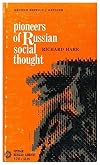
As a later edition's subtitle says, this is strictly the non-Marxian early Russian soocial theorists, from Slavophils to Narodniks
Lists
You May Also Like


Associated Authors
Statistics
- Works
- 26
- Also by
- 8
- Members
- 1,134
- Popularity
- #22,630
- Rating
- 3.9
- Reviews
- 10
- ISBNs
- 77
- Languages
- 10