
Michael Hamburger (1924–2007)
Author of Poems of Paul Celan
About the Author
Michael Hamburger was born on March 22, 1924 in Berlin, Germany. His family moved to the United Kingdom in 1933 as Adolf Hitler was coming to power. He attended Christ Church, Oxford, where he read modern languages (French and German). During World War II, he was drafted in the army as an show more infantryman. After the war, he held a series of teaching positions, initially in Germanic studies, on both sides of the Atlantic, including University College London, Reading University, Mount Holyoke College, Massachusetts, and the University of California at San Diego. He was the author of more than 20 volumes of poetry and many volumes of essays including Flowering Cactus, Collected Poems, and String of Beginnings. He was also a critic and translator of German works. He received numerous translation awards including the Schlegel-Tieck Prize, the Goethe Medal in 1986, and the European Translation Prize in 1990. He died on June 7, 2007 at the age of 83. (Bowker Author Biography) show less
Works by Michael Hamburger
Associated Works
Selected Poems and Fragments (Penguin Classics) (1994) — Translator, some editions; Editor — 294 copies, 1 review
O the Chimneys: Selected Poems, Including the Verse Play, Eli (1967) — Translator, some editions — 120 copies
Brecht : Collected plays : Volume 1 : Baal + Drums in the night + In the jungle of cities + The life of Edward II of England + The wedding + The beggar, or the dead dog + He… (1994) — Translator, some editions — 120 copies
Penguin Twentieth Century Classics : Paul Celan : selected poems (1996) — Translator — 95 copies, 1 review
Early Verse Drama and Prose Plays (Goethe: The Collected Works, Vol. 7) (1994) — Translator, some editions — 54 copies
Shadow Lands: Selected Poems (New Directions Paperbook) (1966) — Introduction, some editions — 50 copies
Brecht Plays 1 : Baal + Drums in the Night + In the Jungle of Cities + Life of Edward II of England + 5 One Act Plays (1994) — Translator — 42 copies, 1 review
Penguin Modern European Poets : Paul Celan : selected poems (1972) — Introduction, Translator — 30 copies
Penguin Modern European Poets : Hans Magnus Enzensberger : selected poems (1968) — Introduction, Translator — 7 copies
Strauss : Death and transfiguration + Four last songs {sound recording} {1972/1973 Karajan/Berlin Philharmonic/Janowitz} (1972) — Translator, some editions — 6 copies
Tagged
Common Knowledge
- Canonical name
- Hamburger, Michael
- Legal name
- Hamburger, Michael Peter Leopold
- Birthdate
- 1924-03-22
- Date of death
- 2007-06-07
- Gender
- male
- Education
- Westminster School, London
University of Oxford (Christ Church) - Occupations
- translator
poet
critic
academic - Organizations
- Deutsche Akademie für Sprache und Dichtung
- Awards and honors
- Order of the British Empire
- Relationships
- Beresford, Anne (wife)
- Nationality
- UK
- Birthplace
- Berlin, Germany
- Places of residence
- Edinburgh, Scotland, UK
London, England, UK
Oxford, Oxfordshire, England, UK - Place of death
- Middleton, Suffolk, England, UK
- Associated Place (for map)
- England, UK
Members
Reviews
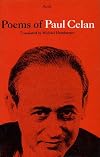
Paul Celan is relentless in the demands he makes upon his readers, just as life--in the form of the Nazis--was relentless in its treatment of him and those he loved. Even in Michael Hamburger's skillfully translated Paul Celan: Selected Poems (Hamburger's introduction, in which he discusses some of the many difficulties of translating a poet like Celan, is fascinating) much of Celan's work will be opaque to all but a few readers--and maybe to all readers. Still, so powerful are Celan's show more words, so searing the flashes of meaning that emerge, that we continue to want to live with these poems, and that is what it will to extract all that we never doubt is there. show less
Sparse, hiccuping, opaque.
Example of what haunted me:
NIGHT
Pebbles and scree. And a shard note, thin,
as the hour's message of comfort.
Exchange of eyes, finite, at the wrong time:
image-constant,
lignified
the retina --:
the sign of eternity.
Conceivable:
up there in the cosmic network of rails,
like stars,
the red of two mouths.
Audible (before dawn?): a stone
that made the other its target.
Example of what haunted me:
NIGHT
Pebbles and scree. And a shard note, thin,
as the hour's message of comfort.
Exchange of eyes, finite, at the wrong time:
image-constant,
lignified
the retina --:
the sign of eternity.
Conceivable:
up there in the cosmic network of rails,
like stars,
the red of two mouths.
Audible (before dawn?): a stone
that made the other its target.

No idea how to rate this one. As translator Michael Hamburger said about confronting the difficulties of figuring out English word choice, I'm just taking "the gesture of the poem[s] as a whole," instead of attempting to come to some understanding about what they even mean. "Death Fugue" and "Fadensonnen," two of my favorites of Celan's, are in here; they're sort of my gateway drugs to this particular poet, and I'm sure I'll keep coming back to this collection in doubtlessly futile attempts show more to nail down what's going on. show less
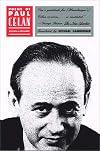
Paul Celan was born Paul Antschel (Ancel) in 1920 in Romania. His parents were murdered in concentration camps and his mother’s grisly death informed many of his most well-known poems. After the war, Celan changed his name, using an anagram, moved to Paris, wrote poetry and today is considered one of the greatest post-war European poets. Like several of his generation of Jewish writers who survived the Holocaust (including Jean Amery, whose name, by the way, was also an anagram of his show more birth name, Hans Maier), Celan ultimately committed suicide. Several of his most famous poems can be found in this anthology.
Celan’s poetry, which centers around the Holocaust, is difficult and frightening. The language is dense, rich in metaphor, musical symbols and allusions to both Biblical and mythical imagery. One of the most haunting poems is Todesfuge or Death Fugue. This poem is at once mournful and caustic. Without explication, it evokes the death of innocence, the crematoria and the genocide of a people. Another great poem is Shibboleth, whose title is, in itself, symbolic of the classification and destruction of a people. Celan’s poetry isn’t easy to read or interpret but is heartbreaking and really powerful. I only wish I could find a recording of his poems because I suspect hearing his poems would be even more powerful and affecting. show less
Celan’s poetry, which centers around the Holocaust, is difficult and frightening. The language is dense, rich in metaphor, musical symbols and allusions to both Biblical and mythical imagery. One of the most haunting poems is Todesfuge or Death Fugue. This poem is at once mournful and caustic. Without explication, it evokes the death of innocence, the crematoria and the genocide of a people. Another great poem is Shibboleth, whose title is, in itself, symbolic of the classification and destruction of a people. Celan’s poetry isn’t easy to read or interpret but is heartbreaking and really powerful. I only wish I could find a recording of his poems because I suspect hearing his poems would be even more powerful and affecting. show less
Lists
Translingualism (1)
Jewish Books (1)
Awards


You May Also Like


Associated Authors
Statistics
- Works
- 50
- Also by
- 39
- Members
- 961
- Popularity
- #26,791
- Rating
- 3.9
- Reviews
- 8
- ISBNs
- 87
- Languages
- 4