

Alistair Urquhart (1919–2016)
Author of The Forgotten Highlander : My Incredible Story of Survival during the War in the Far East
About the Author
Alistair Urquhart was born in 1919 and teaches computer skills in Scotland. He is currently battling skin cancer-a probable result of his years of forced labor in the tropical sun. He lives in Scotland.
Works by Alistair Urquhart
The Forgotten Highlander : My Incredible Story of Survival during the War in the Far East (2010) 356 copies, 18 reviews
Tagged
Common Knowledge
- Birthdate
- 1919-09-08
- Date of death
- 2016-10-07
- Gender
- male
- Nationality
- Scotland
- Birthplace
- Aberdeen, Scotland, UK
- Place of death
- Dundee, Scotland, UK
- Map Location
- Scotland
Members
Reviews
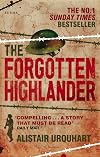
The Forgotten Highlander - Alistair Urquhart *****
I love true stories from the war and have read dozens over the years. Somehow The Forgotten Highlander must have escaped me, but better late than never.
We follow Alistair Urquhart and how after becoming enlisted in the Gordon Highlanders and travelling to Singapore he became captured by the Japanese. Beaten, starved and half dead he was then sent to work on the infamous Burma railways. Being one of the ‘lucky ones’ he managed to survive show more the work gang, only to be taken aboard one of the Deathships and Torpedoed.
Such a well written book (in what I believe was the authors 90th year) that manages to really transport the reader back to those dark days. He describes the situations perfectly without bogging the reader down in too much detail or allowing his own personal feelings to cloud over his recollections. I enjoyed the way that he described his life before and after the war so that the reader can make up their own minds as to how life changing an experience like this really was, affecting him decades after the event.
If this story should stand for anything then it should be a loud cry out for how poorly our soldiers were treated by the very country they fought for.
A must read for anyone with an interest in the horrors of war or human endurance. show less
I love true stories from the war and have read dozens over the years. Somehow The Forgotten Highlander must have escaped me, but better late than never.
We follow Alistair Urquhart and how after becoming enlisted in the Gordon Highlanders and travelling to Singapore he became captured by the Japanese. Beaten, starved and half dead he was then sent to work on the infamous Burma railways. Being one of the ‘lucky ones’ he managed to survive show more the work gang, only to be taken aboard one of the Deathships and Torpedoed.
Such a well written book (in what I believe was the authors 90th year) that manages to really transport the reader back to those dark days. He describes the situations perfectly without bogging the reader down in too much detail or allowing his own personal feelings to cloud over his recollections. I enjoyed the way that he described his life before and after the war so that the reader can make up their own minds as to how life changing an experience like this really was, affecting him decades after the event.
If this story should stand for anything then it should be a loud cry out for how poorly our soldiers were treated by the very country they fought for.
A must read for anyone with an interest in the horrors of war or human endurance. show less
The Forgotten Highlander: My Incredible Story of Survival During the War in the Far East by Alistair Urquhart
The vast majority of those of us who feel we have some understanding of the deprivations endured by the allied prisoners of war of the Japanese and their Korean partners will still be taken aback by the searing descriptions contained in this book. The long-term effects, for example, I had not really comprehended. For anyone approaching it without such understanding it will be a distinctly unpleasant shock.
This book and books like it, however, should be required reading for anyone who studies show more war and for those who glorify it without an understanding of what it can mean. We hear in the West that Japanese schoolchildren do not get taught about the Second World War, well maybe we don't get taught about our nation's defeats either. If any Japanese wishes to understand why many many people would not buy anything made in Japan for decades after the war, though, this book will give them ample explanation.
As a book it does have its drawbacks. The author comes across as someone who thinks quite highly of himself and that sometimes jars, however one can't but think that it may well have been that self-belief that gave him the strength and determination to survive where so many of his compatriots did not. show less
This book and books like it, however, should be required reading for anyone who studies show more war and for those who glorify it without an understanding of what it can mean. We hear in the West that Japanese schoolchildren do not get taught about the Second World War, well maybe we don't get taught about our nation's defeats either. If any Japanese wishes to understand why many many people would not buy anything made in Japan for decades after the war, though, this book will give them ample explanation.
As a book it does have its drawbacks. The author comes across as someone who thinks quite highly of himself and that sometimes jars, however one can't but think that it may well have been that self-belief that gave him the strength and determination to survive where so many of his compatriots did not. show less
The Forgotten Highlander: My Incredible Story of Survival During the War in the Far East by Alistair Urquhart
Written at the age of 90, this is a fascinating, and horrifying, memoir of almost three years (1942-1945) a as a prisoner of war of the Japanese in circumstances that beggar belief. It is a story of immense personal strength and determination, of cruelty beyond measure, of military malfeasance, of government ingratitude and indifference; it is the story of the blasted, torn, sacrificed lives of tens of thousands of prisoners of the Japanese, not just the dead, but also those, like Urquahart, show more who survived but for the rest of their lives were beset by nightmares and physical traumas.
Urquhart grew up in Aberdeen where he worked in a plumbing-supply company, starred in local athletics, especially swimming, and became an accomplished dancer who would spend his weekends on the dance floors. This idyll ended when he was called up almost immediately after war was declared, underwent basic training with the Gordon Highlanders and was shipped to Singapore at the age of 22. Even at his young age, he could see the incompetence of the military leaders and system in Singapore where training was ineffectual, planning was worse, and the most prevailing attitude was one of haughty superiority and derision at the mere thought that the Japanese would even dare to attack impregnable Singapore. Well, they did dare, and they did succeed, and from then on Urquhart’s life was living hell. It is hard to imagine what he survived over the next three years: beginning with working on the 415 kilometre Burma-Siam Railway, aka the Death Railway, including the infamous bridge over the river Kwai, where 16,000 POWs died plus up to 100,000 native Thais, Indians, Malayans, and Tamils in the most terrible circumstances. The cruelty and sadism of the Japanese, and Korean, guards was arbitrary and unrelenting; the physical conditions of life were appalling through back-breaking work with primitive equipment, latrines that were beyond foul, starvation sustenance, and whole catalogues of tropical diseases.
Having fallen dangerously ill, Urquhart was moved to a hospital compound that, by comparison, was a substantial improvement, but once his health recovered somewhat, he and hundreds of others were shipped to Singapore and put into holds in “hellships” that transported prisoners to other parts of the Japanese empire, or to Japan itself, as slave labourers. These holds would shame any circle of hell: hundreds and hundreds of men jammed in so tightly that no one could sit and where you had to stay strong, “protecting your space with elbows and fists”; temperatures of 100F with no water; total darkness; men who had lost their minds screaming; and “The smell inside the hold was indescribable, a repugnant stench. An overpowering mixture of excrement, urine, vomit, sweaty bodies, weeping ulcers, and rotting flesh…”. And then the ship, part of a larger Japanese convoy but with no markings to indicate that it carried prisoners (Red Crosses were painted on munition ships), was torpedoed by American submarines. Hundreds of prisoners drowned. Urquhart found a solitary raft and drifted for days, going out of his mind with thirst and injuries, until picked up by a Japanese freighter; he then completed his trip to Japan and began to work in an open-pit coal mine near Nagasaki. He was there for the atomic bomb, but far enough away that he experienced it as a strong clap of thunder and then a powerful warm wind that almost knocked him over. Finally liberated by US Marines, Urquhart and others began a circuitous trip home, with various stays in hospitals, by ship from Nakasaki to Manila to Hawaii to San Fransicso, train across the USA to New York, then troop transport to the UK and train home to Aberdeen.
Urquhart remains, justifiably, bitter about the continued refusal of the Japanese to recognize or deal with their conduct during the war, but the British government does not escape unscathed for its shameful treatment of its own men, men who had answered the call of their nation and then suffered unimaginable horrors, only to find themselves neglected and worse: on the voyage to Manila, all were asked to sign a document pledging not to speak about their wartime experiences because the ‘bigger picture’ was the new alignment of Japan as an budding ally against the USSR in the fledgling cold war; Urquhart was refused a military disability pension because he could not produce documentation of the debilitating diseases he had suffered in the camps (as if they kept records!) and he even had to agree to be demobilized as A1! In his view the British government treated the returning prisoners “disgracefully” as, “Despite dying in our thousands, sacrificing honest, hard-working and ordinary lives for the greater good, liberty and justice, we found they shunned us, forgot about us, brushed us under the political carpet.” He is right; it was a shameful indifference and expediency.
Urquhart survived through luck, determination to survive, and closing into himself to converse every ounce of physical and mental strength, but he was saved, more than once, by the unstinting care and support of medical people working in the most atrocious conditions, an experience that made him decide to dedicate his life, however he could, to helping others.
An interesting, sobering book that despite its catalogue of immense cruelty, glimmers with the sacrifices and caring and determination of some individuals. show less
Urquhart grew up in Aberdeen where he worked in a plumbing-supply company, starred in local athletics, especially swimming, and became an accomplished dancer who would spend his weekends on the dance floors. This idyll ended when he was called up almost immediately after war was declared, underwent basic training with the Gordon Highlanders and was shipped to Singapore at the age of 22. Even at his young age, he could see the incompetence of the military leaders and system in Singapore where training was ineffectual, planning was worse, and the most prevailing attitude was one of haughty superiority and derision at the mere thought that the Japanese would even dare to attack impregnable Singapore. Well, they did dare, and they did succeed, and from then on Urquhart’s life was living hell. It is hard to imagine what he survived over the next three years: beginning with working on the 415 kilometre Burma-Siam Railway, aka the Death Railway, including the infamous bridge over the river Kwai, where 16,000 POWs died plus up to 100,000 native Thais, Indians, Malayans, and Tamils in the most terrible circumstances. The cruelty and sadism of the Japanese, and Korean, guards was arbitrary and unrelenting; the physical conditions of life were appalling through back-breaking work with primitive equipment, latrines that were beyond foul, starvation sustenance, and whole catalogues of tropical diseases.
Having fallen dangerously ill, Urquhart was moved to a hospital compound that, by comparison, was a substantial improvement, but once his health recovered somewhat, he and hundreds of others were shipped to Singapore and put into holds in “hellships” that transported prisoners to other parts of the Japanese empire, or to Japan itself, as slave labourers. These holds would shame any circle of hell: hundreds and hundreds of men jammed in so tightly that no one could sit and where you had to stay strong, “protecting your space with elbows and fists”; temperatures of 100F with no water; total darkness; men who had lost their minds screaming; and “The smell inside the hold was indescribable, a repugnant stench. An overpowering mixture of excrement, urine, vomit, sweaty bodies, weeping ulcers, and rotting flesh…”. And then the ship, part of a larger Japanese convoy but with no markings to indicate that it carried prisoners (Red Crosses were painted on munition ships), was torpedoed by American submarines. Hundreds of prisoners drowned. Urquhart found a solitary raft and drifted for days, going out of his mind with thirst and injuries, until picked up by a Japanese freighter; he then completed his trip to Japan and began to work in an open-pit coal mine near Nagasaki. He was there for the atomic bomb, but far enough away that he experienced it as a strong clap of thunder and then a powerful warm wind that almost knocked him over. Finally liberated by US Marines, Urquhart and others began a circuitous trip home, with various stays in hospitals, by ship from Nakasaki to Manila to Hawaii to San Fransicso, train across the USA to New York, then troop transport to the UK and train home to Aberdeen.
Urquhart remains, justifiably, bitter about the continued refusal of the Japanese to recognize or deal with their conduct during the war, but the British government does not escape unscathed for its shameful treatment of its own men, men who had answered the call of their nation and then suffered unimaginable horrors, only to find themselves neglected and worse: on the voyage to Manila, all were asked to sign a document pledging not to speak about their wartime experiences because the ‘bigger picture’ was the new alignment of Japan as an budding ally against the USSR in the fledgling cold war; Urquhart was refused a military disability pension because he could not produce documentation of the debilitating diseases he had suffered in the camps (as if they kept records!) and he even had to agree to be demobilized as A1! In his view the British government treated the returning prisoners “disgracefully” as, “Despite dying in our thousands, sacrificing honest, hard-working and ordinary lives for the greater good, liberty and justice, we found they shunned us, forgot about us, brushed us under the political carpet.” He is right; it was a shameful indifference and expediency.
Urquhart survived through luck, determination to survive, and closing into himself to converse every ounce of physical and mental strength, but he was saved, more than once, by the unstinting care and support of medical people working in the most atrocious conditions, an experience that made him decide to dedicate his life, however he could, to helping others.
An interesting, sobering book that despite its catalogue of immense cruelty, glimmers with the sacrifices and caring and determination of some individuals. show less
Heartbreaking read. The war that this man endured was unutterably horrible. His writing is quite good and he gives a narrative that is worth reading. It is fortunate for posterity and the memories of his comrades that he put the time and effort into reliving and dredging up painful memories. The conduct of the Japanese military and government was execrable in the extreme. The behavior of the British army in insisting that he produce documents from camps where he lived in nothing but a show more loincloth should shame beaurocrats everywhere. What a human being he was. show less
Lists
Awards

You May Also Like


Statistics
- Works
- 1
- Members
- 356
- Popularity
- #67,309
- Rating
- 4.1
- Reviews
- 18
- ISBNs
- 14