
Keith Nolan (1964–2009)
Author of Death Valley: The Summer Offensive, I Corps, August 1969
About the Author
Keith W. Nolan's Search and Destroy immerses the reader in two years of combat with 1-1 Cav as officers and soldiers trained in black-and-white conventional warfare encounter Viet Nam's many shades of gray. Through personal interviews with the men who served there, as well as extensive use of show more official and personal documents from the war, Nolan brings the highs and lows to life. This is not the Viet Nam War whitewashed or demonized, this is the complicated reality of what happened to these men in that place and time. Stories of great compassion, heroism under fire, tragic accidents, and brutal payback illuminate the daily existence of frontline soldiers in Viet Nam as they struggle to survive and make it home. show less
Works by Keith Nolan
The Magnificent Bastards: The Joint Army-Marine Defense of Dong Ha, 1968 (1994) 113 copies, 2 reviews
Tagged
Common Knowledge
- Other names
- Nolan, Keith William (birth name)
- Birthdate
- 1964-05-07
- Date of death
- 2009-02-19
- Gender
- male
- Education
- Webster University
- Occupations
- historian
- Short biography
- Keith William Nolan was an American military historian, focusing on the various campaigns of the Vietnam War. Nolan obtained a history degree from Webster University. Nolan pioneered and excelled at his own special brand of military history: the excellent combining of in-depth interviews with those who took part in the fighting and deep research into the official records. That, along with a fluid writing style, added up to ten (eleven, counting one he co-authored) of the best books on Vietnam War military history. Keith Nolan died of lung cancer in February 2009 at the age of 44.
- Cause of death
- lung cancer
- Nationality
- USA
- Birthplace
- Webster Groves, Missouri, USA
- Place of death
- St. Charles, Missouri, USA
- Associated Place (for map)
- Missouri, USA
Members
Reviews

Sappers in the Wire is a detailed historical account of an American military debacle. It was late in the war, the spring of 1971, and the U.S. was gradually disengaging. The moral of the soldiers still on the ground was understandably low. Belief that there was any real purpose to what they were doing was scarce, and nobody wanted to die in a purposeless war. Drug use had grown, resentment of officers was often strong, and racial divisions affected the soldiers, as well. Firebase Mary Ann show more was a fortified encampment on the top of a hill in the jungle in the northern part of South Vietnam, put there to allow the U.S. and South Vietnamese forces to try to disrupt North Vietnamese supply lines into the country. The solders were still going on dangerous patrols in the surrounding jungle, inflicting and receiving casualties. But up on their firebase refuge, they felt safe, and between this feeling of safety and the enlisted soldiers' low morale, it became very difficult for the officers to impose security protocol standards. One night, after a confusion-inducing mortar attack, Viet Cong soldiers snuck past the camp's guards and ran through the camp tossing grenades into bunkers and shooting soldiers who tried to escape the explosions. Thirty U.S. soldiers were killed and 82 were seriously wounded.
Keith William Nolan, a military historian, does an excellent job setting the scene for the American disaster. He starts with a brief description of the event itself, and then goes back several weeks to describe individual patrols that the solders of this division had undertaken in the leadup to the battle. Often the soldiers performed admirably, but it was not unusual for soldiers to refuse orders they thought were inordinately foolhardy. Usually, threats of court martial would get them moving.
The battle, especially when word of the lax security came out, became a scandal within and without of the Army. The Army conducted a thorough investigation of the battle (which Nolan describes in the book's final chapters) and the failings that led up to it, interviewing every surviving soldier in depth, and Nolan was able to access these testimonies. He also conducted phone interviews with dozens of soldiers will to talk to him. The book was written in the 1990s, and Nolan reports that many of the soldiers told him a version of, "We've been waiting 20 years for somebody to tell this story." Between the official testimonies and these interviews, Nolan was able to construct a minute-by-minute account of the terrifying action, and he does so. It is, not surprisingly, very hard reading.
I read this book now, I guess, to remind myself how horrible and tragic this war was, and all war is. Sappers in the Wire certainly accomplishes that. The only flaws in the writing are 1) the fact that he seems to me to identify too closely with and/or wishes to glorify the soldiers themselves. He commonly uses their own slang, referring to the soldiers as "grunts" and speaking of shooting someone as "firing them up" (but only when a U.S. soldier shoots a Vietnamese soldier); and 2) for some reason, Nolan insists on specifying when soldiers he's referring to are black. Having described the racial tensions running through the Army at this point, especially in the rear, perhaps Nolan was trying to stress the fact that these tensions more or less evaporated when it was time for everybody to go into action. I hope there was some such logic, anyway.
At any rate, this is mostly a very good book, for anyone interested in revisiting, or learning about, the daily crazy hell of the Vietnam War. By now, I would assume that's a very small subset of my LT friends. show less
Keith William Nolan, a military historian, does an excellent job setting the scene for the American disaster. He starts with a brief description of the event itself, and then goes back several weeks to describe individual patrols that the solders of this division had undertaken in the leadup to the battle. Often the soldiers performed admirably, but it was not unusual for soldiers to refuse orders they thought were inordinately foolhardy. Usually, threats of court martial would get them moving.
The battle, especially when word of the lax security came out, became a scandal within and without of the Army. The Army conducted a thorough investigation of the battle (which Nolan describes in the book's final chapters) and the failings that led up to it, interviewing every surviving soldier in depth, and Nolan was able to access these testimonies. He also conducted phone interviews with dozens of soldiers will to talk to him. The book was written in the 1990s, and Nolan reports that many of the soldiers told him a version of, "We've been waiting 20 years for somebody to tell this story." Between the official testimonies and these interviews, Nolan was able to construct a minute-by-minute account of the terrifying action, and he does so. It is, not surprisingly, very hard reading.
I read this book now, I guess, to remind myself how horrible and tragic this war was, and all war is. Sappers in the Wire certainly accomplishes that. The only flaws in the writing are 1) the fact that he seems to me to identify too closely with and/or wishes to glorify the soldiers themselves. He commonly uses their own slang, referring to the soldiers as "grunts" and speaking of shooting someone as "firing them up" (but only when a U.S. soldier shoots a Vietnamese soldier); and 2) for some reason, Nolan insists on specifying when soldiers he's referring to are black. Having described the racial tensions running through the Army at this point, especially in the rear, perhaps Nolan was trying to stress the fact that these tensions more or less evaporated when it was time for everybody to go into action. I hope there was some such logic, anyway.
At any rate, this is mostly a very good book, for anyone interested in revisiting, or learning about, the daily crazy hell of the Vietnam War. By now, I would assume that's a very small subset of my LT friends. show less
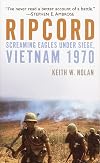
Ripcord is the eponymic analysis of the attack on the Screaming Eagles firebase installation in Vietnam in 1970. it exemplifies many of the structural problems with the way the war was conducted. For example, the commander of the company assigned to Hill 805, Capt. Hewitt, was a young 25 year-old who had been an ARVN advisor and reupped for a second tour, but he lacked real combat experience and that inexperience got him killed. Stringing a hammock on the second night on the hill, when show more it was almost a religious rule never to spend two nights in the same place, he was targeted almost immediately as the commander. The previous captain had been a real hard-ass, but one who had Korean war experience and who insisted on perfection in operations. It kept him and his men alive. The six-month rule mandated that commanders only remained in the field for six months to give everyone a chance at field command and ultimate promotion. It also got many soldiers killed.
The book doesn’t flinch at detailing many of the racial problems. One incident involved a Sergeant Johnson who adamantly refused to take point despite orders to the contrary. Finally a Pfc. Utrecht just stormed up to the front and led the platoon. He was killed shortly thereafter having failed to see a sign on the trail indicating possible ambush. Everyone was furious. “ ‘ Bob Utrecht had been well liked and everyone knew that what had happened was Johnson’s fault,’”said one of the soldiers. Utrecht’s body was hauled out the next day. Johnson had been sent back with a medevac right after the incident. “The times being what they were, an ugly mood was made absolutely incendiary by the fact that Utrecht was white and Johnson black. Judd remembered that ‘no one said anything directly, but it was understood that Johnson wasn’t going to survive the night, and someone had the smarts to send him to the rear.’ “
Despite constant patrolling by Lucas’s battalion to cut the infiltration routes to the heavily populated lowlands, the buildup had gone mostly unnoticed, there being too few troops and too much ground to be covered. Most significantly, the North Vietnamese had been able to fortify a dominant hill only a kilometer west of Ripcord. Once the battle was joined, the enemy shelled Ripcord from that vantage point, their log-reinforced bunkers withstanding the air assaults." This Hill 1000 was to be the bane of the American troops. Storming it repeatedly, the NVA seemed to have a never-ending supply of troops who would appear from tunnels behind the bunkers following the most intense bombardments and shelling. Colonel Lucas insisted on repeated attacks over the objections of his company commanders on the ground who begged for replacements and just a bit of rest time, but Lucas wanted to show his bosses some kind of progress and aggressiveness. When Captain Wilcox, in the harshest terms, refused to take his men back up to hill (to certain death) mixing in some words about the futility of the war. Lucas took the harshest implication, i.e., that he was a coward. (Seems to me that the line between bravery and stupidity is a fine one.) LT Campbell, when asked by Lucas what he would do (a colonel asking a LT?!) Campbell offered they should turn it over to the Air Force and just bomb the shit out of it every day, thereby neutralizing its position with regard to Ripcord. Wilcox was relieved of his command the next day.
Campbell’s judgement (and he thought Lucas was one of the best battalion commanders was harsh. ““I hated Lucas for years for what he ordered us to do that day on Hill 1000,” he said. “I also spent years trying to blame Lucas for what happened, but, really, I was accountable, too. His order to assault across an open saddle in the face of direct fire without close-in gunship support was absolutely stupid—and I was stupid enough to order it carried out. I knew better. I knew that Lucas didn’t know what was happening on the ground because he had never spent a single day in the field with his troops. I didn’t have the moral courage to refuse the order, though. The result was that Hupp and Scott went to their deaths trying to carry out an attack that I knew didn’t have a chance in hell of succeeding. It was a needless sacrifice of brave men.” Campbell later wrote a letter to Lucas requesting transfer to a different battalion.
Campbell had additional comments with regard to the much lauded use of helicopters: “The helicopter was the worst thing that ever happened to leadership,” Campbell added. “The troops didn’t hate the gooks. They hated the commanders flying around in their charlie-charlie birds giving orders without a clue as to what it was like on the ground. You need to be on the ground. You can’t lead men into combat and expect them to have loyalty towards you if they never see you. That’s why there was so much bitterness about Lucas among the troops. He was never there with a word of encouragement or a pat on the back, and he definitely wasn’t where he needed to be when we went up Hill 1000.”
The helicopters could be extremely vulnerable. While under attack, Colonel Lucas ordered in a Chinook with a sling load of large shells for the artillery. Against the recommendations of his Pathfinders, he told them to hover and unload at the spot closest to the bunkers and howitzers presumably so the soldiers wouldn’t have to hump the shells, each weighing about 97 pounds, as far. Unfortunately it was also in the line of fire from a .51 NVA machine gun. The chopper was hit, caught fire and crashed in a scene that was worse than Dante could ever have imagined. The description of the pilot pinned under the machine getting burned to death as aviation fuel washed over him would give anyone nightmares. Then the shells in the load began to cook off and soon they were running and trying to hide from their own exploding shells. People getting killed and wounded all over. Meanwhile the NVA weren’t about to let the opportunity slip by.
One policy that made life difficult for the troops was body count. Often they were sent back into battle zones to locate graves or dead enemy soldiers, anything that the command levels could use to create a positive kill ratio that would help to justify American dead and the enormous amount of ammunition and materiel that was expended to gain ground which was inevitably relinquished making body counts the only measure of success. That affected the way the soldiers thought: “ Captain Wilcox was of the same mind as the grunts in his new company, to include Rodney Moore, who would remark, “The commanders wanted body count, but we really didn’t care if we killed anybody or not. We didn’t know what the hell we were doing there. We fought so we could get everybody home alive.”
There was one very telling quote from a company commander explaining why the NVA continued to fight on and on while often the U.S. troops would back off rather than take heavier casualties: “They were willing to die for their country; we were not willing to die for their country.”
Lots more that could be said, but this review is already too long. Nolan does an amazing job of synthesizing hundreds of interviews to portray a detailed picture of fighting from the grunts’ viewpoint while not losing sight of the larger strategic picture.
And finally, I can’t help but record a comment from one of the participants who wrote a review on Amazon, Benjamin Harrison: “As the brigade commander during the siege of Ripcord, Keith and I had dozens of interchanges. It is common knowledge that retired general officers can recall with precise clarity the details of events that never happened. Nolan's rule that "facts" must be verified by at least three sources probably explains why some of my input to an early draft did not make the final publication. My long-winded point is that you do not have the "whole story" of Ripcord, but what you do have in this superb book is true and accurate.” show less
The book doesn’t flinch at detailing many of the racial problems. One incident involved a Sergeant Johnson who adamantly refused to take point despite orders to the contrary. Finally a Pfc. Utrecht just stormed up to the front and led the platoon. He was killed shortly thereafter having failed to see a sign on the trail indicating possible ambush. Everyone was furious. “ ‘ Bob Utrecht had been well liked and everyone knew that what had happened was Johnson’s fault,’”said one of the soldiers. Utrecht’s body was hauled out the next day. Johnson had been sent back with a medevac right after the incident. “The times being what they were, an ugly mood was made absolutely incendiary by the fact that Utrecht was white and Johnson black. Judd remembered that ‘no one said anything directly, but it was understood that Johnson wasn’t going to survive the night, and someone had the smarts to send him to the rear.’ “
Despite constant patrolling by Lucas’s battalion to cut the infiltration routes to the heavily populated lowlands, the buildup had gone mostly unnoticed, there being too few troops and too much ground to be covered. Most significantly, the North Vietnamese had been able to fortify a dominant hill only a kilometer west of Ripcord. Once the battle was joined, the enemy shelled Ripcord from that vantage point, their log-reinforced bunkers withstanding the air assaults." This Hill 1000 was to be the bane of the American troops. Storming it repeatedly, the NVA seemed to have a never-ending supply of troops who would appear from tunnels behind the bunkers following the most intense bombardments and shelling. Colonel Lucas insisted on repeated attacks over the objections of his company commanders on the ground who begged for replacements and just a bit of rest time, but Lucas wanted to show his bosses some kind of progress and aggressiveness. When Captain Wilcox, in the harshest terms, refused to take his men back up to hill (to certain death) mixing in some words about the futility of the war. Lucas took the harshest implication, i.e., that he was a coward. (Seems to me that the line between bravery and stupidity is a fine one.) LT Campbell, when asked by Lucas what he would do (a colonel asking a LT?!) Campbell offered they should turn it over to the Air Force and just bomb the shit out of it every day, thereby neutralizing its position with regard to Ripcord. Wilcox was relieved of his command the next day.
Campbell’s judgement (and he thought Lucas was one of the best battalion commanders was harsh. ““I hated Lucas for years for what he ordered us to do that day on Hill 1000,” he said. “I also spent years trying to blame Lucas for what happened, but, really, I was accountable, too. His order to assault across an open saddle in the face of direct fire without close-in gunship support was absolutely stupid—and I was stupid enough to order it carried out. I knew better. I knew that Lucas didn’t know what was happening on the ground because he had never spent a single day in the field with his troops. I didn’t have the moral courage to refuse the order, though. The result was that Hupp and Scott went to their deaths trying to carry out an attack that I knew didn’t have a chance in hell of succeeding. It was a needless sacrifice of brave men.” Campbell later wrote a letter to Lucas requesting transfer to a different battalion.
Campbell had additional comments with regard to the much lauded use of helicopters: “The helicopter was the worst thing that ever happened to leadership,” Campbell added. “The troops didn’t hate the gooks. They hated the commanders flying around in their charlie-charlie birds giving orders without a clue as to what it was like on the ground. You need to be on the ground. You can’t lead men into combat and expect them to have loyalty towards you if they never see you. That’s why there was so much bitterness about Lucas among the troops. He was never there with a word of encouragement or a pat on the back, and he definitely wasn’t where he needed to be when we went up Hill 1000.”
The helicopters could be extremely vulnerable. While under attack, Colonel Lucas ordered in a Chinook with a sling load of large shells for the artillery. Against the recommendations of his Pathfinders, he told them to hover and unload at the spot closest to the bunkers and howitzers presumably so the soldiers wouldn’t have to hump the shells, each weighing about 97 pounds, as far. Unfortunately it was also in the line of fire from a .51 NVA machine gun. The chopper was hit, caught fire and crashed in a scene that was worse than Dante could ever have imagined. The description of the pilot pinned under the machine getting burned to death as aviation fuel washed over him would give anyone nightmares. Then the shells in the load began to cook off and soon they were running and trying to hide from their own exploding shells. People getting killed and wounded all over. Meanwhile the NVA weren’t about to let the opportunity slip by.
One policy that made life difficult for the troops was body count. Often they were sent back into battle zones to locate graves or dead enemy soldiers, anything that the command levels could use to create a positive kill ratio that would help to justify American dead and the enormous amount of ammunition and materiel that was expended to gain ground which was inevitably relinquished making body counts the only measure of success. That affected the way the soldiers thought: “ Captain Wilcox was of the same mind as the grunts in his new company, to include Rodney Moore, who would remark, “The commanders wanted body count, but we really didn’t care if we killed anybody or not. We didn’t know what the hell we were doing there. We fought so we could get everybody home alive.”
There was one very telling quote from a company commander explaining why the NVA continued to fight on and on while often the U.S. troops would back off rather than take heavier casualties: “They were willing to die for their country; we were not willing to die for their country.”
Lots more that could be said, but this review is already too long. Nolan does an amazing job of synthesizing hundreds of interviews to portray a detailed picture of fighting from the grunts’ viewpoint while not losing sight of the larger strategic picture.
And finally, I can’t help but record a comment from one of the participants who wrote a review on Amazon, Benjamin Harrison: “As the brigade commander during the siege of Ripcord, Keith and I had dozens of interchanges. It is common knowledge that retired general officers can recall with precise clarity the details of events that never happened. Nolan's rule that "facts" must be verified by at least three sources probably explains why some of my input to an early draft did not make the final publication. My long-winded point is that you do not have the "whole story" of Ripcord, but what you do have in this superb book is true and accurate.” show less
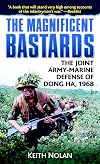
I read this book to learn about the legacy of my former Marine unit, 2/4. I did not anticipate a moving military history on par with the best: The Reason Why, Infantry Attacks, Black Hawk Down, and the Campaigns of Napoleon.
Professor Nolan vividly relates the extreme heroism and sacrifice of the soldiers and Marines in and near Dong Ha, in no small part due to the wealth of oral history collected by the Corps in the aftermath of the battles. I was most impressed by Nolan's ability to convey show more the tactical and operational nuts and bolts, without sacrificing the tone of immediacy and personal desperation the participants must have felt.
I've always been proud to have briefly been a member of 2/4. Nolan's book taught me what made the Bastards truly Magnificent. show less
Professor Nolan vividly relates the extreme heroism and sacrifice of the soldiers and Marines in and near Dong Ha, in no small part due to the wealth of oral history collected by the Corps in the aftermath of the battles. I was most impressed by Nolan's ability to convey show more the tactical and operational nuts and bolts, without sacrificing the tone of immediacy and personal desperation the participants must have felt.
I've always been proud to have briefly been a member of 2/4. Nolan's book taught me what made the Bastards truly Magnificent. show less
Solid book about a late-war engagement / tactical loss exemplifying many disparate themes present as the US involvement waned - the collapse of American morale, in some units and among some men, brought about by chronic mismanagement and careerism from higher ups, racial tensions, as well as ongoing professionalism and quiet heroic competence that remained the norm especially at battalion level and below. 3.5 stars.
Awards

You May Also Like


Statistics
- Works
- 12
- Members
- 802
- Popularity
- #31,797
- Rating
- 4.0
- Reviews
- 8
- ISBNs
- 37
- Favorited
- 2