
Owen Strachan
Author of Jonathan Edwards on Heaven & Hell
About the Author
Owen Strachan is an associate professor of Christian theology at Midwestern Baptist Theological Seminary. He is also the director for the Center on Public Theology at MBTS. Strachan has published numerous books and writes regularly for The Gospel Coalition, The Christian Post and Thought Life, his show more Patheos blog. He is married and is the father of three children. Douglas A. Sweeney is the chair of the church history and history of Christian thought department and director of the Carl F. H. Henry Center for Theological Understanding at Trinity Evangelical Divinity School. He formerly served at Yale University, where he was a contributing editor on the multivolume The Works of Jonathan Edwards. He is a contributor and author of numerous other books and articles about Johathan Edwards and lives in Lindenhurst, Illinois, with his wife and son. show less
Series
Works by Owen Strachan
Christianity and Wokeness: How the Social Justice Movement Is Hijacking the Gospel - and the Way to Stop It (2021) 295 copies, 2 reviews
The Essential Jonathan Edwards: An Introduction to the Life and Teaching of America's Greatest Theologian (2018) 86 copies, 2 reviews
Awakening the Evangelical Mind: An Intellectual History of the Neo-Evangelical Movement (2015) 81 copies
The War on Men 2 copies
Reenchanting Humanity 1 copy
Associated Works
The Pastor as Scholar and the Scholar as Pastor: Reflections on Life and Ministry (2011) — Contributor — 528 copies, 3 reviews
Tagged
Common Knowledge
- Birthdate
- 20th Century
- Gender
- male
- Occupations
- Professor of Christian Theology
- Organizations
- Boyce College
Council on Biblical Manhood and Womanhood
Gospel Coalition - Nationality
- USA
- Places of residence
- Louisville, Kentucky, USA
- Associated Place (for map)
- Kentucky, USA
Members
Reviews
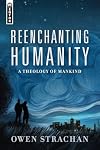
Owen Strachan has written a masterful and insightful piece of theology here. Certainly, the doctrine of anthropology is under fire today both in the church and in the culture. The human person is being reenvisioned in scores of ways. Where previous generations of Christians fought ideological battles on the nature of the Trinity, Christ's hypostatic union, justification by faith alone, and the infallibility of Scripture, today, the major question hinges upon a theology of mankind. Strachan show more puts it in this way: "If the major issue of the sixteenth century was that of acceptance (how man may be forgiven by God), and the major issue of the twentieth century was that of authority (whether the Bible was inerrant), then the major issue of our time is that of anthropology. Does the human person live in an ordered cosmos and have an appointed identity, or does he make his own identity in a world without God?" (3).
The present age is a season where previously held beliefs about humanity are eroding and breaking down. Transhumanism, posthumanism, transgenderism, homosexuality, feminism, and postmarital sexual libertinism are just a few samples of such staunchly anti-biblical ideologies. The church needs to be equipped, standing on the word of God, building up what it means to be a true image bearer.
Human beings are seeking to define themselves in various ways, perhaps vocationally, or even through various forms of sexual expression. But it is the "imago dei that marks out humanity as an enchanted race. Tragically, humanity disenchanted itself by following the anti-wisdom of the serpent" (4). Only through the God-man, "the one who brings light back into our eyes and hope back into our souls," can we find freedom, flourishing, and purpose in becoming who we were made to be and glorify God through offering obedient worship to him (382). show less
The present age is a season where previously held beliefs about humanity are eroding and breaking down. Transhumanism, posthumanism, transgenderism, homosexuality, feminism, and postmarital sexual libertinism are just a few samples of such staunchly anti-biblical ideologies. The church needs to be equipped, standing on the word of God, building up what it means to be a true image bearer.
Human beings are seeking to define themselves in various ways, perhaps vocationally, or even through various forms of sexual expression. But it is the "imago dei that marks out humanity as an enchanted race. Tragically, humanity disenchanted itself by following the anti-wisdom of the serpent" (4). Only through the God-man, "the one who brings light back into our eyes and hope back into our souls," can we find freedom, flourishing, and purpose in becoming who we were made to be and glorify God through offering obedient worship to him (382). show less
Christianity and Wokeness: How the Social Justice Movement Is Hijacking the Gospel—and the Way to Stop It by Owen Strachan

This book is amazing. It is great and should be recommended reading for any and every conservative Christian who wants a reasoned, researched, irenic, and devastating Biblical critique of D.E.I., wokeness, critical theory, and liberal/progressive Christianity-lite. It discusses D.E.I., wokeness, and critical theory using their very own sources, and then demolishes them both logically and Biblically. Wokeness attributes sin collectively, offers no chance at salvation, and chops humanity up show more into racial/ethnic groups who, by the very consequence of immutable characteristics, are forever-guilty of sins uncommitted and irredeemable. It is un-Biblical and un-Christian. Christ provides palliation for ALL sins, even racism and its cohorts, and sex, race, et cetera is no bar to Christianity and Christ and forgiveness. I wish Strachan had pointed out that “God is no respecter of persons” (Acts 10:34), but he gets that point across nonetheless. It is a book that should be read by all thinking Christians, all pastors and churchmen (liberal and conservative), and in all seminaries. It is a classic of this time and a brilliant takedown of the wokeness sin.
Elegantly footnoted (FOOTnoted! Hurrah!), with an extensive bibliography, study questions, and topical index. My only gripe is that it did not have a scriptural index.
Read this book: it is great. show less
Elegantly footnoted (FOOTnoted! Hurrah!), with an extensive bibliography, study questions, and topical index. My only gripe is that it did not have a scriptural index.
Read this book: it is great. show less
The Essential Jonathan Edwards: An Introduction to the Life and Teaching of America's Greatest Theologian by Owen Strachan
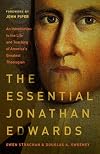
I've read a biography of Jonathan Edwards before, and I've read a small part of his writings, but still have felt as though I don't know Edwards and his works very well. When I saw that this book, The Essential Jonathan Edwards: An Introduction to the Life and Teaching of America's Greatest Theologian, by Owen Strachan and Douglas A. Sweeney, was available to request for review, I thought that this would be a good way to introduce myself more fully to Edwards.
The book is divided into five show more parts. Part one gives a high level biography of Edwards with quotations from his works interspersed throughout. The other sections are more topical, with chapters dealing with Edwards' thoughts on "Beauty" (having chapters such as The Beauty of God, The Beauty of Creation etc.), the other sections are "The Good Life", "True Christianity" and "Heaven and Hell". All of these parts contain summaries of Edwards writings on various subjects along with many quotations from his writings.
Do I feel like I know more about Edwards writings more? I suppose so. Does it make me want to delve into his writings? Sadly, no. This is probably going to sound awful, but I found this book very boring. I stopped when I was about half way through and just skimmed the rest (the book is over four-hundred pages).
Perhaps a lot of my boredom came from Edwards' writing style, he seemed kind of mystical or something, in my opinion. It just grates me the wrong way. It seemed more like some of his thoughts were floating in the air of unlimited conjecture without a firm grounding in exegesis of biblical texts.
Let me give you an example,
"the Old Testament church was as Christ's mother, but the New Testament church is his wife, whom he is joined to and whom he treats with far greater endearment and intimacy. He forsook his mother also in this respect. Vis. As he made a sacrifice of that flesh and blood, and laid down that mortal life which he had from his mother, the Virgin Mary. 'That which [is] born of flesh is flesh,' though he did not derive flesh from his mother in the sense in which it is spoken of, John 3:6, viz. Corrupt sinful nature, and therefore did not forsake his mother for the church in the same sense wherein the church is advised to forsake her father's house for Christ's sake…..Yet Christ derived flesh from his mother, viz. the animal nature and human nature, with the corruption that is the fruit of sin, viz. with frailty and mortality. This Christ forsook, and yielded to be crucified for the sake of the church." Huh? That is really confusing. The editors of this book comment, "The doctrine of the church developed here is quite unique. Old Testament followers of God represent 'Christ's mother, while New Testament believers are 'his wife.'" It certainly does seem like a unique thought, and I don't see its biblical basis…
Edwards seemed to use a lot of typology, and was too….I'm not sure how to term it, scholarly? For my taste. Especially when he makes typological connections that are not given as such in the Bible. Also, at times he seemed to be trying to work up emotions or something with his descriptions of the loveliness of God, of Christ. Can one over 'describe the loveliness of Christ, of God? I think one can if one's descriptions savor more of the imagination than of solid basis in God's revelation of Himself. Don’t we think that one cannot rival God's own descriptions of Himself in His Word? Even Edwards? I'd understand more if he seemed to be exceeding texts, which I suppose he could have been doing, but then my opinion would probably be that he used too many illustrations. I don't know, I'm still thinking about it, It's still rather hard for me to pin down why I don't like his writings, I've read other long dead authors whom I've liked.
I'm sorry if I'm misreading Edwards, but right now, this is my impression. I'm not rating this book only two stars because I thought the authors did a bad job of putting this together. I actually think that they probably did an excellent job. I simply find that I don't particularly like Edwards as an author.
Many thanks to the folks at Moody Publishers (MPNewsroom) for sending me a free review copy of this book (My review did not have to be favorable) show less
The book is divided into five show more parts. Part one gives a high level biography of Edwards with quotations from his works interspersed throughout. The other sections are more topical, with chapters dealing with Edwards' thoughts on "Beauty" (having chapters such as The Beauty of God, The Beauty of Creation etc.), the other sections are "The Good Life", "True Christianity" and "Heaven and Hell". All of these parts contain summaries of Edwards writings on various subjects along with many quotations from his writings.
Do I feel like I know more about Edwards writings more? I suppose so. Does it make me want to delve into his writings? Sadly, no. This is probably going to sound awful, but I found this book very boring. I stopped when I was about half way through and just skimmed the rest (the book is over four-hundred pages).
Perhaps a lot of my boredom came from Edwards' writing style, he seemed kind of mystical or something, in my opinion. It just grates me the wrong way. It seemed more like some of his thoughts were floating in the air of unlimited conjecture without a firm grounding in exegesis of biblical texts.
Let me give you an example,
"the Old Testament church was as Christ's mother, but the New Testament church is his wife, whom he is joined to and whom he treats with far greater endearment and intimacy. He forsook his mother also in this respect. Vis. As he made a sacrifice of that flesh and blood, and laid down that mortal life which he had from his mother, the Virgin Mary. 'That which [is] born of flesh is flesh,' though he did not derive flesh from his mother in the sense in which it is spoken of, John 3:6, viz. Corrupt sinful nature, and therefore did not forsake his mother for the church in the same sense wherein the church is advised to forsake her father's house for Christ's sake…..Yet Christ derived flesh from his mother, viz. the animal nature and human nature, with the corruption that is the fruit of sin, viz. with frailty and mortality. This Christ forsook, and yielded to be crucified for the sake of the church." Huh? That is really confusing. The editors of this book comment, "The doctrine of the church developed here is quite unique. Old Testament followers of God represent 'Christ's mother, while New Testament believers are 'his wife.'" It certainly does seem like a unique thought, and I don't see its biblical basis…
Edwards seemed to use a lot of typology, and was too….I'm not sure how to term it, scholarly? For my taste. Especially when he makes typological connections that are not given as such in the Bible. Also, at times he seemed to be trying to work up emotions or something with his descriptions of the loveliness of God, of Christ. Can one over 'describe the loveliness of Christ, of God? I think one can if one's descriptions savor more of the imagination than of solid basis in God's revelation of Himself. Don’t we think that one cannot rival God's own descriptions of Himself in His Word? Even Edwards? I'd understand more if he seemed to be exceeding texts, which I suppose he could have been doing, but then my opinion would probably be that he used too many illustrations. I don't know, I'm still thinking about it, It's still rather hard for me to pin down why I don't like his writings, I've read other long dead authors whom I've liked.
I'm sorry if I'm misreading Edwards, but right now, this is my impression. I'm not rating this book only two stars because I thought the authors did a bad job of putting this together. I actually think that they probably did an excellent job. I simply find that I don't particularly like Edwards as an author.
Many thanks to the folks at Moody Publishers (MPNewsroom) for sending me a free review copy of this book (My review did not have to be favorable) show less
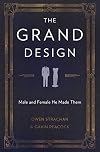
I guess I'm a complementarian. I just didn't know it.
Owen Strachan and Gavin Peacock lay out an introductory overview to complementarianism in The Grand Design. Complementarity is "the way in which men and women find happiness inning their God-given identity and filling their God-given roles. Equal in dignity and worth, men and women share much in terms of Christian discipleship. But we are not the same" (12). This biblical framework for understanding gender identity honors the value of each show more sex while upholding the gender distinctions the Bible lays forth.
Complementarity is not a popular position in this age of egalitarianism. "Anything you can do, I can do better" is the cry of feminism. But is this the position of Scripture? Strachan and Peacock lay out a case to the opposite effect. Their case is strong. They employ sound hermeneutics and faithful exposition to come to their conclusions.
Strachan and Peacock address biblical manhood, biblical womanhood, and the role of the church in declaring the glory of God in his perfect design. My previous studies had not provided me the opportunity to read from those entrenched in the complementarian camp. The Grand Design is a good starting point. It is solidly biblical, gracious in tone, and uncompromising in conviction. show less
Owen Strachan and Gavin Peacock lay out an introductory overview to complementarianism in The Grand Design. Complementarity is "the way in which men and women find happiness inning their God-given identity and filling their God-given roles. Equal in dignity and worth, men and women share much in terms of Christian discipleship. But we are not the same" (12). This biblical framework for understanding gender identity honors the value of each show more sex while upholding the gender distinctions the Bible lays forth.
Complementarity is not a popular position in this age of egalitarianism. "Anything you can do, I can do better" is the cry of feminism. But is this the position of Scripture? Strachan and Peacock lay out a case to the opposite effect. Their case is strong. They employ sound hermeneutics and faithful exposition to come to their conclusions.
Strachan and Peacock address biblical manhood, biblical womanhood, and the role of the church in declaring the glory of God in his perfect design. My previous studies had not provided me the opportunity to read from those entrenched in the complementarian camp. The Grand Design is a good starting point. It is solidly biblical, gracious in tone, and uncompromising in conviction. show less
You May Also Like


Associated Authors
Statistics
- Works
- 27
- Also by
- 2
- Members
- 3,038
- Popularity
- #8,402
- Rating
- 4.2
- Reviews
- 11
- ISBNs
- 49
- Languages
- 1