
Alexis O'Neill
Author of The Recess Queen
About the Author
Image credit: via Amazon.com
Works by Alexis O'Neill
The Kite that Bridged Two Nations: Homan Walsh and the First Niagara Suspension Bridge (2013) 62 copies, 4 reviews
King Philip's War 1675-1676 1 copy
Tagged
Common Knowledge
- Gender
- female
Members
Reviews

Creating a disturbance, almost from the moment of her birth, young Emily lived her life at a volume far higher than her sedate, nineteenth-century parents and tutor would have liked. No matter how hard she tried, she just couldn't help being LOUD. With the threat of boarding school looming over her head - Miss Meekmeister's School for Soft-Spoken Girls being the institution selected - Emily instead finds herself embarking on a sea voyage, aboard a ship that had advertised for someone with a show more loud voice. Here, under the command of soft-spoken Captain Baroo, Emily puts her natural talent to good use, making friends and, eventually, saving the day...
As someone who was counseled one more than one occasion, as a young girl and woman, to walk and talk in a more "ladylike" way - what can I say? I have a bit of a stride (a laughably ungainly one, as it happens), and tend to be rather decided, in my speech - by which was usually meant, that I should be less assertive, and more "properly" feminine, I have great sympathy for the idea behind this picture-book. Little girls sometimes need to SHOUT! I'm not sure they always need to shout, as Emily does (I get a headache, just thinking about it), but I took that as storytelling license, on O'Neill's part. I could have wished for a narrative that didn't rely on the fantasy of girl-whale cooperation and friendship - no, children, New England whalers of the 19th century weren't a benign force, in the cetacean world - although a more accurate picture is given in the author's afterword. The artwork, done in oil, and using a "crackle" technique to simulate 19th-century American painting, was very appealing, as were the decorative endpapers, done in scrimshaw style.
All in all, I enjoyed Loud Emily, and am glad that it was chosen as one of our January selections, over in The Picture-Book Club to which I belong, where our theme this month is "Children on Adventures, or Exploring." show less
As someone who was counseled one more than one occasion, as a young girl and woman, to walk and talk in a more "ladylike" way - what can I say? I have a bit of a stride (a laughably ungainly one, as it happens), and tend to be rather decided, in my speech - by which was usually meant, that I should be less assertive, and more "properly" feminine, I have great sympathy for the idea behind this picture-book. Little girls sometimes need to SHOUT! I'm not sure they always need to shout, as Emily does (I get a headache, just thinking about it), but I took that as storytelling license, on O'Neill's part. I could have wished for a narrative that didn't rely on the fantasy of girl-whale cooperation and friendship - no, children, New England whalers of the 19th century weren't a benign force, in the cetacean world - although a more accurate picture is given in the author's afterword. The artwork, done in oil, and using a "crackle" technique to simulate 19th-century American painting, was very appealing, as were the decorative endpapers, done in scrimshaw style.
All in all, I enjoyed Loud Emily, and am glad that it was chosen as one of our January selections, over in The Picture-Book Club to which I belong, where our theme this month is "Children on Adventures, or Exploring." show less
The Kite that Bridged Two Nations: Homan Walsh and the First Niagara Suspension Bridge by Alexis O'Neill
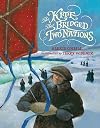
“The Kite That Bridged Two Nations” is about a young boy in Canada who absolutely loved building and flying kites. One day, the boy saw a flyer advertising a monetary award for the first boy who could fly his kite and get the string to cross the Niagara from Canada to the United States of America. The boy built a kite that he named the Union and tried to fly it all the way across the river to the American side; unfortunately, he lost the kite. Instead of giving up, the boy’s father show more found his kite and the boy repaired it to try again. This time, he was successful in getting the kite string across the river to America. Then, the first Niagara Suspension Bridge was built to bridge the two countries together.
I think this is a great book to introduce the Niagara Suspension Bridge because it is relatable for students. I have been to Niagara Falls, and the illustrations were beautiful; the pictures made me feel like I was right back in Canada looking at the waterfalls. I also really liked the perseverance of the young boy, and I think it is a great message to send to students. show less
I think this is a great book to introduce the Niagara Suspension Bridge because it is relatable for students. I have been to Niagara Falls, and the illustrations were beautiful; the pictures made me feel like I was right back in Canada looking at the waterfalls. I also really liked the perseverance of the young boy, and I think it is a great message to send to students. show less
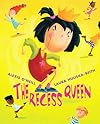
Mean Jean was the playground bully. She became aggressive with other kids if they played with any of the playground equipment before she did. Katie Sue, a new student, was unaware of Mean Jean’s rules. She played freely with whatever she wanted. Mean Jean confronted her, but Katie Sue refused to be bullied. Instead of being mean to Mean Jean Katie, Sue invited her to jump rope.
Bullying happens every day in schools, especially on the playground. I like that Katie Sue didn’t let Mean show more Jean’s attitude affect how she treated her. She simple responded with kindness, something Mean Jean was not used too. I think all children should be introduced to this book to help understand bullying and was to approach it. show less
Bullying happens every day in schools, especially on the playground. I like that Katie Sue didn’t let Mean show more Jean’s attitude affect how she treated her. She simple responded with kindness, something Mean Jean was not used too. I think all children should be introduced to this book to help understand bullying and was to approach it. show less
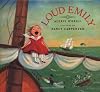
There is much to really, really love about Loud Emily. Both the general plot and the illustrations are wonderful, and the central message and themes of the story itself are both encouraging and thought-provoking. Emily's loud voice might make her unsuited for her genteel, upper-class parents, her tutor, upper-class New England society in general. However, she feels right at home in the kitchen, with the family cook and the so-called help. Emily and her naturally loud voice feel as awkward, show more as alien in her family's expensive, genteel, quiet drawing rooms and at school as they feel natural and acceptable in the family kitchen, and later, on board of the ship (Emily is hired because of her loud voice, but her voice is more than loud, it is melodious, rollicking, it keeps up the spirits of the sailors, and even ends up helping to save the ship in the end). Emily would have been supremely unhappy, she would have been miserable and bullied if she had gone to Miss Meekmeister's boarding school (the illustration of the little girl wearing a too loud type dunce cape demonstrates what life would most probably have been like for Emily if she had ended up at boarding school).
Loud Emily demonstrates the dangers and potential problems of rigidly placing individuals into preconceived niches. Emily is naturally loud and feels more comfortable with the family cook and later, in the company of the sailors on the ship, but her parents, her tutor, society in general cannot adequately perceive that at first; they want to make Emily, turn Emily into something and someone she is not. Emily is in a way fortunate that she is unable to adapt, that she cannot simply rein in her loud voice and boisterous nature (for if Emily had been able to tame her voice, her nature, she would likely simply have become a model little girl, a model little girl who adapted to the strictures of society and class, who changed her very nature and soul to suit the former).
I know that Loud Emily is a more than a bit fantastical and that Emily's constant loud voice is obviously a bit of an exaggeration (if she were really that constantly loud, it could and would be rather hard on those around her). But as someone who has always felt very much out of place both in society in general, but especially in the bourgeois society of my family and their friends and acquaintances, Loud Emily touched me deeply (I would have loved reading a story like this when I was a little girl, a story with the message that being different from one's family, from society, from the strictures imposed by bourgeois idelas is not necessarily problematic, or at least that it should not be problematic, that being yourself is both positive and acceptable).
Like my LT friend Abigail, I do have some problems with one aspect of this story. As a story, as a fantasy, I was originally rather enchanted by Emily's association with the whales and the fact that she sang with the whales and to the whales (and that it was Emily and the whales who finally saved both the ship and its crew). However, historically speaking, this is just too anachronistic, too unbelievable (and in a way gives, or at least can give children the wrong idea about 19th century New England). Whaling was a huge industry, and ship voyages (even those not specifically meant to hunt for whales) certainly did not collaborate with the whales (whales were often hunted on sight, in fact, 19th century whaling almost caused the extinction of many species of whales). I am actually rather glad that the author has chosen not to portray whaling as part of the storyline, but Alexis O'Neill should have just left it at that, she should just not have had any whales in the story, period. Although Loud Emily is in many ways rather fantastical, the main point, the main seed of the story is realistic in nature, and Emily collaborating with the whales is just too fantastical to believe and furthermore, paints an erroneous historical picture (that whales were not hunted, that they helped and were appreciated by the crews of 19th century ships). Yes, the author's note does strive to rectify this potential misunderstanding to a point, but because there is no mention at all of whaling in the story itself, the author's note somehow seems a bit of an add-on, seems to not have all that much to do with either the narrative or the illustrations. That one minor little issue notwithstanding, I do highly recommend Loud Emily. It is a fun story with evocative and equally fun illustrations, while at the same time it is a tale with a very hopeful and important message to anyone (child or adult) who has ever felt left out, who has ever felt like a bit of an alien in and amongst his/her surroundings. show less
Loud Emily demonstrates the dangers and potential problems of rigidly placing individuals into preconceived niches. Emily is naturally loud and feels more comfortable with the family cook and later, in the company of the sailors on the ship, but her parents, her tutor, society in general cannot adequately perceive that at first; they want to make Emily, turn Emily into something and someone she is not. Emily is in a way fortunate that she is unable to adapt, that she cannot simply rein in her loud voice and boisterous nature (for if Emily had been able to tame her voice, her nature, she would likely simply have become a model little girl, a model little girl who adapted to the strictures of society and class, who changed her very nature and soul to suit the former).
I know that Loud Emily is a more than a bit fantastical and that Emily's constant loud voice is obviously a bit of an exaggeration (if she were really that constantly loud, it could and would be rather hard on those around her). But as someone who has always felt very much out of place both in society in general, but especially in the bourgeois society of my family and their friends and acquaintances, Loud Emily touched me deeply (I would have loved reading a story like this when I was a little girl, a story with the message that being different from one's family, from society, from the strictures imposed by bourgeois idelas is not necessarily problematic, or at least that it should not be problematic, that being yourself is both positive and acceptable).
Like my LT friend Abigail, I do have some problems with one aspect of this story. As a story, as a fantasy, I was originally rather enchanted by Emily's association with the whales and the fact that she sang with the whales and to the whales (and that it was Emily and the whales who finally saved both the ship and its crew). However, historically speaking, this is just too anachronistic, too unbelievable (and in a way gives, or at least can give children the wrong idea about 19th century New England). Whaling was a huge industry, and ship voyages (even those not specifically meant to hunt for whales) certainly did not collaborate with the whales (whales were often hunted on sight, in fact, 19th century whaling almost caused the extinction of many species of whales). I am actually rather glad that the author has chosen not to portray whaling as part of the storyline, but Alexis O'Neill should have just left it at that, she should just not have had any whales in the story, period. Although Loud Emily is in many ways rather fantastical, the main point, the main seed of the story is realistic in nature, and Emily collaborating with the whales is just too fantastical to believe and furthermore, paints an erroneous historical picture (that whales were not hunted, that they helped and were appreciated by the crews of 19th century ships). Yes, the author's note does strive to rectify this potential misunderstanding to a point, but because there is no mention at all of whaling in the story itself, the author's note somehow seems a bit of an add-on, seems to not have all that much to do with either the narrative or the illustrations. That one minor little issue notwithstanding, I do highly recommend Loud Emily. It is a fun story with evocative and equally fun illustrations, while at the same time it is a tale with a very hopeful and important message to anyone (child or adult) who has ever felt left out, who has ever felt like a bit of an alien in and amongst his/her surroundings. show less
Awards


You May Also Like


Associated Authors
Statistics
- Works
- 9
- Members
- 2,832
- Popularity
- #9,053
- Rating
- 4.2
- Reviews
- 99
- ISBNs
- 36
- Languages
- 2