
Natalie Zemon Davis (1928–2023)
Author of The Return of Martin Guerre
About the Author
Natalie Zemon Davis is Henry Charles Lea Professor of History emerita at Princeton University and is adjunct professor of history, anthropology, and medieval studies and a senior fellow in the Centre for Comparative Literature at the University of Toronto
Works by Natalie Zemon Davis
A History of Women in the West, Volume III: Renaissance and the Enlightenment Paradoxes (1991) — Editor — 336 copies, 2 reviews
Fiction in the Archives: Pardon Tales and Their Tellers in Sixteenth-Century France (1987) 143 copies, 1 review
Listening to the Languages of the People: Lazare Sainéan on Romanian, Yiddish, and French (2022) 2 copies
Representations 26 1 copy
Associated Works
A Narrative of the Captivity and Restoration of Mrs. Mary Rowlandson (1682) — Foreword, some editions — 538 copies, 13 reviews
The New History: The 1980s and Beyond (Studies in Interdisciplinary History) (1983) — Contributor — 17 copies
Transactions of the Royal Historical Society - Fifth Series, Volume 33 (1983) — Contributor, some editions — 4 copies
Volkskultur : zur Wiederentdeckung d. vergessenen Alltags (16. - 20. Jh.) (1996) — Contributor — 4 copies
Lyon et l'Europe : hommes et sociétés : mélanges d'histoire offerts à Richard Gascon, Vol. 1 (1980) — Contributor — 1 copy
Tagged
Common Knowledge
- Canonical name
- Davis, Natalie Zemon
- Birthdate
- 1928-11-08
- Date of death
- 2023-10-23
- Gender
- female
- Education
- Smith College (BA|1950)
Radcliffe College (MA|1950)
University of Michigan (Ph.D|1959)
Harvard University - Occupations
- professor
historian - Organizations
- Princeton University
University of California, Berkeley
University of Toronto
York University
Brown University
American Historical Association - Awards and honors
- Order of Canada (Companion, 2012)
National Humanities Medal (2012)
American Philosophical Society (Fellow, 2011)
British Academy (International Fellow, 1995)
Chevalier des Palmes Academiques (1976)
American Academy of Arts & Sciences (1979) (show all 11)
Queen Elizabeth II Diamond Jubilee Medal (2012)
Aby Warburg Prize (2000)
Holberg International Memorial Prize (2010)
Phi Beta Kappa's Sidney Hook Memorial Award (2000)
Henry Charles Lea Professor of History, Emerita (Princeton University) - Relationships
- Davis, Chandler (husband)
- Short biography
- Natalie Zemon Davis was born to a middle-class Jewish family in Detroit, Michigan. She attended Smith College, where she participated in several political organizations and explored a passion for historical research. While still an undergraduate, she married Chandler Davis, then a graduate student in mathematics, with whom she had three children. After graduation, she studied social and cultural history at Harvard University and then at the University of Michigan. After earning her PhD from Michigan in 1959, she taught at Brown University and the University of Toronto before going to Princeton University in 1978. She was one of the first historians to specialize in the lives of ordinary people rather than those of major figures. Her best-known book, The Return of Martin Guerre (1983), based on 16th-century court records, was adapted into an acclaimed French film for which she served as historical consultant. In 1987, she became the second woman to serve as president of the American Historical Association.
- Cause of death
- cancer
- Nationality
- USA
Canada - Birthplace
- Detroit, Michigan, USA
- Places of residence
- Toronto, Ontario, Canada
Princeton, New Jersey, USA - Place of death
- Toronto, Ontario, Canada
- Associated Place (for map)
- USA
Members
Reviews

Short but sweet nonfiction account of the research behind the eponymous movie and true life medieval drama. Goes over the scant sources in some detail and adds reasonable speculation and contexts. Though the ground covered isn't vastly different from the movie version, it's still an enjoyable widening for anyone wanting more about the curious slice of late medieval life.
===
Reread 2023:
This time in a critical context. Davis' account is written after consulting for the movie, and tries to show more build out the case from all available historical sources; however, her factual basis for most of these claims are on thin ice, or even contradict the two main sources covering the events. Davis invents a rationale and character for Bertrande where she's an active participant in the deception of the court alongside Panchette, but as a point that's not well supported textually other than in the accurate testimony of the impostor Martin, whom we must assume had been coached somehow, especially in regards to intimate details it would have been easy for Bertrande to deny or alter. This type of analysis has gotten more common in historical contexts over time, but was at the time this was first released more controversial. It's a very well written book that grabs you as a reader, but at the cost of losing the rigorous academic guarded language in the assertions made. show less
===
Reread 2023:
This time in a critical context. Davis' account is written after consulting for the movie, and tries to show more build out the case from all available historical sources; however, her factual basis for most of these claims are on thin ice, or even contradict the two main sources covering the events. Davis invents a rationale and character for Bertrande where she's an active participant in the deception of the court alongside Panchette, but as a point that's not well supported textually other than in the accurate testimony of the impostor Martin, whom we must assume had been coached somehow, especially in regards to intimate details it would have been easy for Bertrande to deny or alter. This type of analysis has gotten more common in historical contexts over time, but was at the time this was first released more controversial. It's a very well written book that grabs you as a reader, but at the cost of losing the rigorous academic guarded language in the assertions made. show less
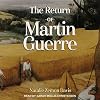
4. The Return of Martin Guerre by Natalie Zemon Davis
reader: Sarah Mollo-Christensen
OPD: 1983
format: 3:35 free audible audiobook (176 pages)
listened: Jan 18-22
rating: 4
genre/style: History theme: random audio
locations: French Pyrenees in the 1560’s
about the author: (1928 – 2023) Davis was Jewish American historian of the early modern period (~1500-1800). She was born and raised in Detroit.
A 16th century story of imposture. After Martin Guerre had left his Gascony town without a word for show more eight years, a man returns saying he is Martin. He is accepted by Martin's family, including Martin's wife, who has two children by him. Three years later this pseudo-Martin finds himself accused as an imposture by this same family, who take him to court. Remarkably he has the court convinced he is truly Martin, until the real, lost, Martin shows up in court after his 11 years absence. In an era when imprisonment was only of necessity, and not an available punishment, the imposture is executed; and the case makes history for both for the legal complications in marriage, inheritance, identity, and in the nature of truth itself, and of the people involved. The judge was prominent intellectual protestant, later executed during the St. Bartholomew's Day massacre of Huguenots in 1575. Montaigne was maybe present in the courtroom. He wrote about the case in terms of the uncertain nature of truth.
This 1983 book has some resonance in the popular history. It's Davis's only well-known book, although she authored other serious works. It must have touched something, maybe just along the lines of how Dava Sobel's [Longitude] seemed to appeal to such a broad audience. Davis sees this as a window into the common people of the 16th-century. In Gascony, these are industrious landowning peasants, with mixed Basque and Gascony French Heritages. And the Reformation has a hand in this. The accuser was Protestant in a kind of unofficial way, and town Protestants supported him, and the regional Protestant judge seems swayed a little too; whereas town Catholics, or whatever traditional Christians were called then, tended to condemn him. Davis brings all this up, but she's very curious about Martin Guerre's wife, who obviously embraced this imposture, and then condemned him and went back to the husband who deserted her. The imposture, who was not some dumb bubba, but was very savvy and careful to learn and remember all Martin's obscure details to prove his identity, never criticized her in court. The record is quiet on her feelings.
It's an entertaining read, only 3.5 hours on audio (which typically means about 100 pages).
2024
https://www.librarything.com/topic/356616#8384848 show less
reader: Sarah Mollo-Christensen
OPD: 1983
format: 3:35 free audible audiobook (176 pages)
listened: Jan 18-22
rating: 4
genre/style: History theme: random audio
locations: French Pyrenees in the 1560’s
about the author: (1928 – 2023) Davis was Jewish American historian of the early modern period (~1500-1800). She was born and raised in Detroit.
A 16th century story of imposture. After Martin Guerre had left his Gascony town without a word for show more eight years, a man returns saying he is Martin. He is accepted by Martin's family, including Martin's wife, who has two children by him. Three years later this pseudo-Martin finds himself accused as an imposture by this same family, who take him to court. Remarkably he has the court convinced he is truly Martin, until the real, lost, Martin shows up in court after his 11 years absence. In an era when imprisonment was only of necessity, and not an available punishment, the imposture is executed; and the case makes history for both for the legal complications in marriage, inheritance, identity, and in the nature of truth itself, and of the people involved. The judge was prominent intellectual protestant, later executed during the St. Bartholomew's Day massacre of Huguenots in 1575. Montaigne was maybe present in the courtroom. He wrote about the case in terms of the uncertain nature of truth.
This 1983 book has some resonance in the popular history. It's Davis's only well-known book, although she authored other serious works. It must have touched something, maybe just along the lines of how Dava Sobel's [Longitude] seemed to appeal to such a broad audience. Davis sees this as a window into the common people of the 16th-century. In Gascony, these are industrious landowning peasants, with mixed Basque and Gascony French Heritages. And the Reformation has a hand in this. The accuser was Protestant in a kind of unofficial way, and town Protestants supported him, and the regional Protestant judge seems swayed a little too; whereas town Catholics, or whatever traditional Christians were called then, tended to condemn him. Davis brings all this up, but she's very curious about Martin Guerre's wife, who obviously embraced this imposture, and then condemned him and went back to the husband who deserted her. The imposture, who was not some dumb bubba, but was very savvy and careful to learn and remember all Martin's obscure details to prove his identity, never criticized her in court. The record is quiet on her feelings.
It's an entertaining read, only 3.5 hours on audio (which typically means about 100 pages).
2024
https://www.librarything.com/topic/356616#8384848 show less
Cherchez l'homme
This Natalie Zenon-Davis scholarly piece of micro-history, told in 1983 by Princeton University professor Natalie Zenon-Davis traces the life of the sixteenth-century French peasant Arnaud du Tilh who successfully pretended to be another man - Martin Guerre - for three years before being taken to court for identity theft.
Arnaud had arrived in the Pyrenean village of Artigat, claiming to be Martin Guerre - the husband of Bertrande de Rols. Martin had been missing for twelve show more years. Arnaud convinced Bertrande and other locals that he was Martin.
When challenged and taken to court the talkative Arnaud du Tilh almost convinced the judges that he was Martin Guerre when a man swaggered into the court on a wooden leg, and denounced Arnaud, and reestablished his claim to the identity, property, and wife of Martin Guerre. On 12 September 1560 at a public sentencing attended by Michel de Montaigne. Arnaud was found guilty, confessed and apologized, and was hanged in front of Martin Guerre's house in Artigat four days later.
Contemporaries Guillaume Le Sueur and jurist Jean de Coras who wrote “Arrest Memorable du parlement de Tolose”(1560) documented the trial. Corras was later lynched by a Catholic mob. His book however continued to be published in France.
The trial has.fascinated lawyers, historians and writers. Many learned theologians and philosophers including Michel de Montaigne wrote commentaries, and all were of the opinion that the peasant Arnaud du Tilh was an imposter, a fast talker who had successfully convinced the Guerre’s family and other villagers that he was the long-lost Martin Guerre. Bertrande was almost written out of the retellings until the twentieth century when women questioned whether she had really been taken in by Arnaud. Natalie Zenon-Davis believed Bertrande had silently or explicitly agreed to the fraud because she needed a husband in that society, and she was treated well by the impostor.
I knew the story, but was fascinated by Davis’s account. She brings to life the peasants and their testimonies, and her account of the trials is backed by solid research.
What I found so fascinating was the form of the book - the telling of the tale by recounting the story through the eyes of various contemporaries and later renaissance writers through to the twentieth century.
You’ve probably seen the movie. I encourage you to read the book. show less
This Natalie Zenon-Davis scholarly piece of micro-history, told in 1983 by Princeton University professor Natalie Zenon-Davis traces the life of the sixteenth-century French peasant Arnaud du Tilh who successfully pretended to be another man - Martin Guerre - for three years before being taken to court for identity theft.
Arnaud had arrived in the Pyrenean village of Artigat, claiming to be Martin Guerre - the husband of Bertrande de Rols. Martin had been missing for twelve show more years. Arnaud convinced Bertrande and other locals that he was Martin.
When challenged and taken to court the talkative Arnaud du Tilh almost convinced the judges that he was Martin Guerre when a man swaggered into the court on a wooden leg, and denounced Arnaud, and reestablished his claim to the identity, property, and wife of Martin Guerre. On 12 September 1560 at a public sentencing attended by Michel de Montaigne. Arnaud was found guilty, confessed and apologized, and was hanged in front of Martin Guerre's house in Artigat four days later.
Contemporaries Guillaume Le Sueur and jurist Jean de Coras who wrote “Arrest Memorable du parlement de Tolose”(1560) documented the trial. Corras was later lynched by a Catholic mob. His book however continued to be published in France.
The trial has.fascinated lawyers, historians and writers. Many learned theologians and philosophers including Michel de Montaigne wrote commentaries, and all were of the opinion that the peasant Arnaud du Tilh was an imposter, a fast talker who had successfully convinced the Guerre’s family and other villagers that he was the long-lost Martin Guerre. Bertrande was almost written out of the retellings until the twentieth century when women questioned whether she had really been taken in by Arnaud. Natalie Zenon-Davis believed Bertrande had silently or explicitly agreed to the fraud because she needed a husband in that society, and she was treated well by the impostor.
I knew the story, but was fascinated by Davis’s account. She brings to life the peasants and their testimonies, and her account of the trials is backed by solid research.
What I found so fascinating was the form of the book - the telling of the tale by recounting the story through the eyes of various contemporaries and later renaissance writers through to the twentieth century.
You’ve probably seen the movie. I encourage you to read the book. show less

Natalie Zemon Davis, along with the likes of Emmanuel Le Roy Ladurie and Carlo Ginzburg, both of whom she explicitly acknowledges in "The Return of Martin Guerre," has carved out a relatively new niche in the academic history. Instead of writing about the movers and shakers, the kings or emperors, or large-scale religious change, she writes here specifically focused on a few families in mid-sixteenth century France. The reputations made by the people that exist within the covers were not the show more result of high birth or diplomatic achievement. The only reason the name "Martin Guerre" has any resonance to our ears is because his story is perhaps the most incredible since that of Odysseus. Except Guerre's has the virtue of being historical fact. Without any of the historiographic jargon that we may have come cynically to expect, Davis has wonderfully harnessed most of the elements that allow the causal reader to fully appreciate the story of Martin Guerre.
Not long after moving from the Basque village of Hendaye to Artigat with his father Sanxi and his uncle Pierre, Martin Guerre, aged 13, marries a certain Bertrande de Rols. After a period of restlessness and sexual impotence, they conceive a child (also named Sanxi); soon afterwards, he gets into a dispute with his father and runs away, never to return. From this point on, there are intermittent lengthy discussions of property transfer in France at the time, specifically detailing how Basque tradition stipulates that the property moves from Bertrande to Pierre (since Sanxi the elder had already died).
In another world, Arnaud du Tilh (aka "Pansette," or "The Belly," for his well-defined paunch), eager to remove himself from the monotony of the seigniory of Sajas, joins Henri II's army. In one of the weaker and more speculative parts of the book, Davis here guesses that Arnaud and Martin might have both met somewhere while in the service of Henri II (in whose service the real Martin might have lost a leg), traded intimate life stories and history to such an extent that Arnaud could then arrive in Artigat, proclaim himself the long-lost Martin Guerre, and insert himself into lives of Pierre Guerre and Bertrande, who quickly learns of du Tilh's imposture, but outwardly fervently maintains that he is really Martin Guerre. Pierre, however, decides to form an inquest into Pansette's identity, suspecting something is out of place.
The inquest turns into a trial where witnesses - Martin's friends, family, doctors, neighbors - cannot agree on his identity. In fact, Pansette is such a good impersonator that about one-third of them say he is Martin, another third say he isn't, and the remaining refuse to comment, being too baffled or fearing retribution from a member of the village. He is found guilty, but appeals to an illustrious court in Toulouse, where the author of one of the first accounts of the story, Jean de Coras, sits as a judge. After careful consideration, he overturns the ruling of the lower court, and announces Pansette innocent. At that moment, a man with a wooden leg enters the courtroom claiming to be Martin Guerre. One by one, everyone begins to recognize "the newcomer" (as Pansette calls him), and within a matter of hours Martin, who has been gone for a several years, regains his reputation, family, and friends inside the courtroom. Coras sees the error of his previous judgment and sentences Pansette to, first, an "amende honorable" (a traditional French assignation of culpability) and then death by hanging (a punishment deeply tied to avarice in the medieval imagination).
Davis ends again on a speculative note, suggesting that perhaps Coras found sympathy with Pansette because of their common sympathy for Reformation ideas (Coras was and remained fairly liberal for the time). Given the time period, there were countless accusations slung back and forth of faithlessness and apostasy. However, the book is much too short and this part in particular too underdeveloped to seriously support this idea.
Interesting, too, is what Davis never explicitly takes much time to discuss, but nevertheless lurks beneath the surface: ideas of identity, gender, property acquisition, incipient capitalism, and belonging in sixteenth-century France. So, while a causal reader can enjoy it for its unique historical cache, those whose interest is more academic have a lot to unpack, too. For those interested in enjoying the latter approach, I recommend a reading in tandem with Valentine Groebner's "Who Are You?: Identification, Deception, and Surveillance in Early Modern Europe," which takes the time to fill out some of the undercurrents in Davis' thought which she only alluded to. show less
Not long after moving from the Basque village of Hendaye to Artigat with his father Sanxi and his uncle Pierre, Martin Guerre, aged 13, marries a certain Bertrande de Rols. After a period of restlessness and sexual impotence, they conceive a child (also named Sanxi); soon afterwards, he gets into a dispute with his father and runs away, never to return. From this point on, there are intermittent lengthy discussions of property transfer in France at the time, specifically detailing how Basque tradition stipulates that the property moves from Bertrande to Pierre (since Sanxi the elder had already died).
In another world, Arnaud du Tilh (aka "Pansette," or "The Belly," for his well-defined paunch), eager to remove himself from the monotony of the seigniory of Sajas, joins Henri II's army. In one of the weaker and more speculative parts of the book, Davis here guesses that Arnaud and Martin might have both met somewhere while in the service of Henri II (in whose service the real Martin might have lost a leg), traded intimate life stories and history to such an extent that Arnaud could then arrive in Artigat, proclaim himself the long-lost Martin Guerre, and insert himself into lives of Pierre Guerre and Bertrande, who quickly learns of du Tilh's imposture, but outwardly fervently maintains that he is really Martin Guerre. Pierre, however, decides to form an inquest into Pansette's identity, suspecting something is out of place.
The inquest turns into a trial where witnesses - Martin's friends, family, doctors, neighbors - cannot agree on his identity. In fact, Pansette is such a good impersonator that about one-third of them say he is Martin, another third say he isn't, and the remaining refuse to comment, being too baffled or fearing retribution from a member of the village. He is found guilty, but appeals to an illustrious court in Toulouse, where the author of one of the first accounts of the story, Jean de Coras, sits as a judge. After careful consideration, he overturns the ruling of the lower court, and announces Pansette innocent. At that moment, a man with a wooden leg enters the courtroom claiming to be Martin Guerre. One by one, everyone begins to recognize "the newcomer" (as Pansette calls him), and within a matter of hours Martin, who has been gone for a several years, regains his reputation, family, and friends inside the courtroom. Coras sees the error of his previous judgment and sentences Pansette to, first, an "amende honorable" (a traditional French assignation of culpability) and then death by hanging (a punishment deeply tied to avarice in the medieval imagination).
Davis ends again on a speculative note, suggesting that perhaps Coras found sympathy with Pansette because of their common sympathy for Reformation ideas (Coras was and remained fairly liberal for the time). Given the time period, there were countless accusations slung back and forth of faithlessness and apostasy. However, the book is much too short and this part in particular too underdeveloped to seriously support this idea.
Interesting, too, is what Davis never explicitly takes much time to discuss, but nevertheless lurks beneath the surface: ideas of identity, gender, property acquisition, incipient capitalism, and belonging in sixteenth-century France. So, while a causal reader can enjoy it for its unique historical cache, those whose interest is more academic have a lot to unpack, too. For those interested in enjoying the latter approach, I recommend a reading in tandem with Valentine Groebner's "Who Are You?: Identification, Deception, and Surveillance in Early Modern Europe," which takes the time to fill out some of the undercurrents in Davis' thought which she only alluded to. show less
Lists
Awards


You May Also Like


Associated Authors
Statistics
- Works
- 23
- Also by
- 12
- Members
- 3,003
- Popularity
- #8,497
- Rating
- 3.7
- Reviews
- 38
- ISBNs
- 119
- Languages
- 15
- Favorited
- 5
