
Ed Ruscha
Author of They Called Her Styrene
About the Author
Image credit: Ruscha in 2016
Works by Ed Ruscha
Edward Ruscha 5 copies
The ancients stole all our great ideas : Ed Ruscha im Kunsthistorischen Museum (2013) 5 copies, 1 review
Ed Ruscha : industrial strength 4 copies
Business cards 2 copies
Couplings 2 copies
Stains 1 copy
Fifty Years of Painting 1 copy
Dutch details 1 copy
Records 1971 1 copy
Edward Ruscha : [exhibition June 9 - July 11, 1976, Albright-Knox Art Gallery, Buffalo, N.Y.] (1976) 1 copy
Thirty four parking lots 1 copy
Ed Ruscha: Dedication Stones 1 copy
Me and The 1 copy
Associated Works
Theories and Documents of Contemporary Art: A Sourcebook of Artists' Writings (1995) — Contributor — 415 copies, 1 review
Pacific Standard Time: Los Angeles Art, 1945-1980 (2011) — Back cover artist, some editions — 69 copies
The Artists' and Writers' Cookbook: A Collection of Stories with Recipes (2016) — Contributor — 19 copies
Tagged
Common Knowledge
- Canonical name
- Ruscha, Ed
- Birthdate
- 1937-12-16
- Gender
- male
- Education
- Chouinard Art Institute
- Occupations
- artist
- Awards and honors
- George Wittenborn Memorial Board Award (Special Award, 1977)
- Relationships
- Goode, Joe (childhood friend)
- Nationality
- USA
- Birthplace
- Omaha, Nebraska, USA
- Places of residence
- Oklahoma City, Oklahoma, USA
Los Angeles, California, USA - Associated Place (for map)
- USA
Members
Reviews

In Busted Glass, Ruscha depicts with delicate precision panes of glass, cracked, broken, or in shards. The transparent substance and its elusive subject matter are defined only through subtle modulations of light and shade. And, like so many of his artistic emanations, these small and exquisite drawings contain a larger paradox.
Ruscha has often evoked the window as metaphor. In drawings from the ’80s, the shadow of a window crossbar and its light play became the background for words as a show more kind of self-reflexive artistic debate—a spectacle engaged in an assault on its own claims of realism. In Busted Glass, mimetic devices participate in their own undoing, as the artist discourses with the formal capacities of drawing. Drawing as a kind of graphological disclosure has an inveterate connection with gesture and its meaning. But in the new drawings is Ruscha’s hand creating the contingent fault line of the glass, or is he pointing to its form as something ultimately intangible? show less
Ruscha has often evoked the window as metaphor. In drawings from the ’80s, the shadow of a window crossbar and its light play became the background for words as a show more kind of self-reflexive artistic debate—a spectacle engaged in an assault on its own claims of realism. In Busted Glass, mimetic devices participate in their own undoing, as the artist discourses with the formal capacities of drawing. Drawing as a kind of graphological disclosure has an inveterate connection with gesture and its meaning. But in the new drawings is Ruscha’s hand creating the contingent fault line of the glass, or is he pointing to its form as something ultimately intangible? show less
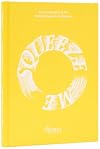
An ode to the simple, sunny brilliance of the lemon, this is a one-of-a-kind cookbook and collaboration between Ruthie Rogers, the celebrated chef behind London’s River Café, and Ed Ruscha, one of the most influential contemporary artists and bookmakers of our time, who cultivates a lemon grove at his home in Los Angeles.
In the hands of Rogers and Ruscha, the humble lemon is transformed into the ultimate kitchen hero. Packed with fifty inventive recipes, the book casts the lemon as the show more star of sweet and savory dishes alike. Whether you are whipping up a creamy risotto al limone, baking a showstopping lemon tart, or brightening a salad with a burst of citrus, Rogers’s signature style makes every recipe, from appetizers to mains, approachable and unforgettable.
Elevating this journey is the singular artistry of Ed Ruscha, whose images, created specifically for this project, transform this book into a visual delight. Ruscha’s style is both visually accessible and intellectually layered and invites viewers to appreciate the beauty in the very ordinary and mundane. Known for documenting a single subject in intensive detail, a Ruscha book is an instant collectible. show less
In the hands of Rogers and Ruscha, the humble lemon is transformed into the ultimate kitchen hero. Packed with fifty inventive recipes, the book casts the lemon as the show more star of sweet and savory dishes alike. Whether you are whipping up a creamy risotto al limone, baking a showstopping lemon tart, or brightening a salad with a burst of citrus, Rogers’s signature style makes every recipe, from appetizers to mains, approachable and unforgettable.
Elevating this journey is the singular artistry of Ed Ruscha, whose images, created specifically for this project, transform this book into a visual delight. Ruscha’s style is both visually accessible and intellectually layered and invites viewers to appreciate the beauty in the very ordinary and mundane. Known for documenting a single subject in intensive detail, a Ruscha book is an instant collectible. show less
Ed Ruscha’s newest body of work is a series of small-scale bleach on linen paintings: cryptic messages stained into muted backgrounds of grey, blue, and maroon linen. With a cover designed by the artist—showing the outline of a clorox bleach bottle—this publication highlights Ruscha’s ongoing fascination with the written word and the power of its isolation in his art.
Exhibition catalogue published in conjunction with show held at Secession, Vienna, Austria, November 16, 2018 - January 20, 2019. Profusely illustrated in black-and-white and color with multiple accordion fold pages.
DOUBLE AMERICANISMS shows a new series of linguistic paintings informed by Ed Ruscha's memories of Oklahoma City, where he spent his teenage years, and the city's distinctive used parchment drumheads are inscribed with locutions whose shared feature is the use of a double show more negation - "I Ain't Telling You No Lie," for example, and "I Can't Find My Keys Nowhere." Expressions like these remind him of the way people around him used to speak, and rather than disavowing them as incorrect English, he picks up on them and transforms them into art. The inexorable passage of time is a recurrent theme in Ruscha's work, and by reminiscing about his upbringing, he also emphasizes the continuity between his younger self and who he is now - as the artist sees it, he really has not changed much at all. Centerpiece of the book is a series of six large-format pictures - digital reproductions of three paintings (again, true to side and laterally reversed) showing the star-spangled banner in different conditions that Ruscha created between 1985 and 2017. In the first pair of pictures (after Mother's Boys, 1987), the American flag proudly waves before a radiant blue sky, but in the second set (after Untitled [American flag on pole], 1985), dark clouds roll in, and in the third (after Our Flag, 2017), a tattered banner before a black backdrop betokens a disastrous outcome.
In more than sixty years, Ed Ruscha has built an oeuvre encompassing conceptual photographs, paintings, drawings, artist’s books, prints, and films that chronicle the development of the American West and of Los Angeles in particular in a singular artistic idiom. Widely acclaimed as a sober-minded and dispassionate witness and historian, outspoken and enigmatic at once, Ruscha is gifted with a keen sense for linguistic humor and the comedy of everyday life. The conception of his most recent exhibition reveals him to be not only an alert observer, but also a master of the well-placed allusion and spellbinding and witty storyteller. Although most of the works on view are recent, Double Americanisms undertakes an unexpected revision of his own oeuvre. The exhibition showcases altogether fifty-seven works—conceptual digital prints and an extended series of painted language pictures as well as handmade book objects and artist’s books in display cases.
Language, in the form of texts or single words, entered Ruscha’s visual art early on; since the 1960s, his paintings have unfolded an increasingly complex interplay between image and text. Making art, he says, is a reaction, almost an automatic reflex, that is often triggered by phrases he overhears, and the selection of works speaks to the vital role that language plays in his art. The majority of the works on view are concerned with language in one way or another, often incorporating painted words or sentences, and numerous books are laid out in display cases.
Ruscha’s show at the Secession marks the public debut of a new series of linguistic paintings informed by his memories of Oklahoma City, where he spent his teenage years, and the city’s distinctive slang: used parchment drumheads are inscribed with locutions whose shared feature is the use of a double negation—“I Ain’t Telling You No Lie,” for example, and “I Can’t Find My Keys Nowhere.” Expressions like these remind him of the way people around him used to speak, and rather than disavowing them as incorrect English, he picks up on them and transforms them into art. The inexorable passage of time is a recurrent theme in Ruscha’s work, and by reminiscing about his upbringing, he also emphasizes the continuity between his younger self and who he is now—as the artist sees it, he really has not changed much at all.
One source of inspiration that Ruscha has drawn on for decades is film. In Los Angeles, the medium is virtually synonymous with Hollywood, whose name, emblazoned on the hills above the city, has become its iconic image. The artist has immortalized the motif in countless works, including a pair of folding screens that occupy a prominent place at the entrance to the gallery. The duplicate digital reproduction, one reading left to right, the other right to left, brings two motifs into play that will recur throughout the exhibition: Ruscha’s reflective revision of his own work and the mirror double, a theme also hinted at in the show’s title.
The screens function as a sort of overture or title sequence for the centerpiece of the presentation, a dramatically staged series of six large-format pictures—digital reproductions of three paintings (again, true to side and laterally reversed) showing the star-spangled banner in different conditions that Ruscha created between 1985 and 2017. In the first pair of pictures (after Mother’s Boys, 1987), the American flag proudly waves before a radiant blue sky, but in the second set (after Untitled [American flag on pole], 1985), dark clouds roll in, and in the third (after Our Flag, 2017), a tattered banner before a black backdrop betokens a disastrous outcome. The climax of the progression visualized by the pictures is underscored by the exhibition architecture: the works are mounted on a series of walls of increasing height.
Double Americanisms exemplifies Ruscha’s trademark concision and dry humor, responding to the current state of American affairs with the suggestion that history’s arc is long and the present is transient. In some respects, the series echoes Course of Empire, an ensemble spotlighting changes in Los Angeles’s urban landscape over the years that was presented in the American pavilion at the Venice Biennale in 2005. Those works in turn harked back to the nineteenth-century British-American landscape painter Thomas Cole’s sequence The Course of Empire, which traced the rise and fall of an exemplary civilization, the implication being that another revolution in the eternal cycle of renewal would follow.
Discretely placed on one of the rear walls, the small work In the Beginning (2011) encapsulates Ruscha’s subtle narrative art—his ability to stir our imagination with allusive understatement—and his conviction that, as Duchamp’s oeuvre taught him, art really is in the eye of the beholder. Like all his works, it leaves plenty of room for interpretation, quoting the first words of the archetypal origin story, the Book of Genesis, to suggest that in a sense the creative process begins when the artist has done his part.
An exhibition that, on closer examination, reads as a tribute to America’s sometimes contradictory pluralism, Double Americanisms rewards the visitor who wanders through the gallery with open eyes. It concludes on a cautiously cheerful note with We the People (2012), a lithograph in which the titular phrase, rendered in an old-fashioned typeface and the foreshortening that is a characteristic feature of Ruscha’s art, recalls the promise of the United States Constitution. show less
DOUBLE AMERICANISMS shows a new series of linguistic paintings informed by Ed Ruscha's memories of Oklahoma City, where he spent his teenage years, and the city's distinctive used parchment drumheads are inscribed with locutions whose shared feature is the use of a double show more negation - "I Ain't Telling You No Lie," for example, and "I Can't Find My Keys Nowhere." Expressions like these remind him of the way people around him used to speak, and rather than disavowing them as incorrect English, he picks up on them and transforms them into art. The inexorable passage of time is a recurrent theme in Ruscha's work, and by reminiscing about his upbringing, he also emphasizes the continuity between his younger self and who he is now - as the artist sees it, he really has not changed much at all. Centerpiece of the book is a series of six large-format pictures - digital reproductions of three paintings (again, true to side and laterally reversed) showing the star-spangled banner in different conditions that Ruscha created between 1985 and 2017. In the first pair of pictures (after Mother's Boys, 1987), the American flag proudly waves before a radiant blue sky, but in the second set (after Untitled [American flag on pole], 1985), dark clouds roll in, and in the third (after Our Flag, 2017), a tattered banner before a black backdrop betokens a disastrous outcome.
In more than sixty years, Ed Ruscha has built an oeuvre encompassing conceptual photographs, paintings, drawings, artist’s books, prints, and films that chronicle the development of the American West and of Los Angeles in particular in a singular artistic idiom. Widely acclaimed as a sober-minded and dispassionate witness and historian, outspoken and enigmatic at once, Ruscha is gifted with a keen sense for linguistic humor and the comedy of everyday life. The conception of his most recent exhibition reveals him to be not only an alert observer, but also a master of the well-placed allusion and spellbinding and witty storyteller. Although most of the works on view are recent, Double Americanisms undertakes an unexpected revision of his own oeuvre. The exhibition showcases altogether fifty-seven works—conceptual digital prints and an extended series of painted language pictures as well as handmade book objects and artist’s books in display cases.
Language, in the form of texts or single words, entered Ruscha’s visual art early on; since the 1960s, his paintings have unfolded an increasingly complex interplay between image and text. Making art, he says, is a reaction, almost an automatic reflex, that is often triggered by phrases he overhears, and the selection of works speaks to the vital role that language plays in his art. The majority of the works on view are concerned with language in one way or another, often incorporating painted words or sentences, and numerous books are laid out in display cases.
Ruscha’s show at the Secession marks the public debut of a new series of linguistic paintings informed by his memories of Oklahoma City, where he spent his teenage years, and the city’s distinctive slang: used parchment drumheads are inscribed with locutions whose shared feature is the use of a double negation—“I Ain’t Telling You No Lie,” for example, and “I Can’t Find My Keys Nowhere.” Expressions like these remind him of the way people around him used to speak, and rather than disavowing them as incorrect English, he picks up on them and transforms them into art. The inexorable passage of time is a recurrent theme in Ruscha’s work, and by reminiscing about his upbringing, he also emphasizes the continuity between his younger self and who he is now—as the artist sees it, he really has not changed much at all.
One source of inspiration that Ruscha has drawn on for decades is film. In Los Angeles, the medium is virtually synonymous with Hollywood, whose name, emblazoned on the hills above the city, has become its iconic image. The artist has immortalized the motif in countless works, including a pair of folding screens that occupy a prominent place at the entrance to the gallery. The duplicate digital reproduction, one reading left to right, the other right to left, brings two motifs into play that will recur throughout the exhibition: Ruscha’s reflective revision of his own work and the mirror double, a theme also hinted at in the show’s title.
The screens function as a sort of overture or title sequence for the centerpiece of the presentation, a dramatically staged series of six large-format pictures—digital reproductions of three paintings (again, true to side and laterally reversed) showing the star-spangled banner in different conditions that Ruscha created between 1985 and 2017. In the first pair of pictures (after Mother’s Boys, 1987), the American flag proudly waves before a radiant blue sky, but in the second set (after Untitled [American flag on pole], 1985), dark clouds roll in, and in the third (after Our Flag, 2017), a tattered banner before a black backdrop betokens a disastrous outcome. The climax of the progression visualized by the pictures is underscored by the exhibition architecture: the works are mounted on a series of walls of increasing height.
Double Americanisms exemplifies Ruscha’s trademark concision and dry humor, responding to the current state of American affairs with the suggestion that history’s arc is long and the present is transient. In some respects, the series echoes Course of Empire, an ensemble spotlighting changes in Los Angeles’s urban landscape over the years that was presented in the American pavilion at the Venice Biennale in 2005. Those works in turn harked back to the nineteenth-century British-American landscape painter Thomas Cole’s sequence The Course of Empire, which traced the rise and fall of an exemplary civilization, the implication being that another revolution in the eternal cycle of renewal would follow.
Discretely placed on one of the rear walls, the small work In the Beginning (2011) encapsulates Ruscha’s subtle narrative art—his ability to stir our imagination with allusive understatement—and his conviction that, as Duchamp’s oeuvre taught him, art really is in the eye of the beholder. Like all his works, it leaves plenty of room for interpretation, quoting the first words of the archetypal origin story, the Book of Genesis, to suggest that in a sense the creative process begins when the artist has done his part.
An exhibition that, on closer examination, reads as a tribute to America’s sometimes contradictory pluralism, Double Americanisms rewards the visitor who wanders through the gallery with open eyes. It concludes on a cautiously cheerful note with We the People (2012), a lithograph in which the titular phrase, rendered in an old-fashioned typeface and the foreshortening that is a characteristic feature of Ruscha’s art, recalls the promise of the United States Constitution. show less
Awards

You May Also Like


Associated Authors
Statistics
- Works
- 104
- Also by
- 5
- Members
- 977
- Popularity
- #26,369
- Rating
- 4.0
- Reviews
- 22
- ISBNs
- 54
- Languages
- 3