
David Stephen Heidler
Author of Henry Clay: The Essential American
About the Author
David S. Heidler is on the faculty at Colorado State University, Pueblo.
Image credit: With wife, Jeanne T. Heidler. Facebook
Works by David Stephen Heidler
Encyclopedia of the American Civil War: A Political, Social, and Military History (2002) 106 copies, 1 review
Encyclopedia of the American Civil War: A Political, Social, and Military History: Volume 5 Documents & Appendices (only) (2000) 3 copies
Encyclopedia of the American Civil War: A Political, Social, and Military History: Volume 1, A-C 2 copies
Associated Works
Tagged
Common Knowledge
- Canonical name
- Heidler, David Stephen
- Birthdate
- 1955-04-04
- Gender
- male
- Education
- Auburn University (PhD|1985)
- Organizations
- American Historical Association
Organization of American Historians
Society of Historians of the Early American Republic
Southern Historical Association - Relationships
- Heidler, Jeanne T. (wife)
- Nationality
- USA
- Birthplace
- Atlanta, Georgia, USA
- Places of residence
- Colorado Springs, Colorado, USA
- Associated Place (for map)
- USA
Members
Reviews
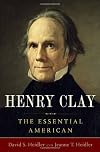
Henry Clay is a singularly unfashionable figure for our times. A professional politician, he was a firm believer in compromise and celebrated as the greatest practitioner of it. Though he hungered for the presidency, he repeatedly reiterated his belief in legislative supremacy and opposed Andrew Jackson’s concentration of power in the executive. And when faced with the growing moral divide over slavery, he attempted to straddle the issue in a manner that would invite derision from both show more sides of the issue. Yet as David and Jeanne Heidler show, his death in June 1852 triggered nationwide mourning, a tribute to his long career and testimony to the esteem in which he was held by his contemporaries.
How he came to earn such passionate devotion is only partly covered in this biography, however, which focuses primarily upon Clay’s political career. This in itself more than justifies the hundreds of pages the authors devote to it, spanning as it does over half a century, from the early days of Kentucky’s statehood to the last major effort at political compromise before the Civil War. Much of this career was focused on becoming president, yet the Heidlers argue that he never really came close to the office, leaving instead an unfulfilled ambition that has given his distinguished career an aura of failure despite his many achievements.
The Heidlers lay our Clay’s career in admiring prose that conveys with clarity many of the issues and battles of his day. Yet is their book really necessary? There are no new arguments about Clay’s career within its pages, merely a lengthy narrative that does little to improve upon Robert Remini’s [b:Henry Clay: Statesman for the Union|379234|Henry Clay Statesman for the Union|Robert V. Remini|https://i.gr-assets.com/images/S/compressed.photo.goodreads.com/books/1388964751l/379234._SY75_.jpg|369051], the yardstick by which Clay biographies must be judged. In most respects the Heidlers’ effort is much inferior, particularly in its coverage of the nonpolitical aspects of Clay’s life and in the frequent use of ahistorical (and ungrammatical) labels that are more reflective of modern-day partisanship than the politics of Clay’s time. Such issues mean that this is merely the latest Clay biography rather than the best, and that readers seeking to understand Clay’s life would be better served picking up Remini’s superior work instead. show less
How he came to earn such passionate devotion is only partly covered in this biography, however, which focuses primarily upon Clay’s political career. This in itself more than justifies the hundreds of pages the authors devote to it, spanning as it does over half a century, from the early days of Kentucky’s statehood to the last major effort at political compromise before the Civil War. Much of this career was focused on becoming president, yet the Heidlers argue that he never really came close to the office, leaving instead an unfulfilled ambition that has given his distinguished career an aura of failure despite his many achievements.
The Heidlers lay our Clay’s career in admiring prose that conveys with clarity many of the issues and battles of his day. Yet is their book really necessary? There are no new arguments about Clay’s career within its pages, merely a lengthy narrative that does little to improve upon Robert Remini’s [b:Henry Clay: Statesman for the Union|379234|Henry Clay Statesman for the Union|Robert V. Remini|https://i.gr-assets.com/images/S/compressed.photo.goodreads.com/books/1388964751l/379234._SY75_.jpg|369051], the yardstick by which Clay biographies must be judged. In most respects the Heidlers’ effort is much inferior, particularly in its coverage of the nonpolitical aspects of Clay’s life and in the frequent use of ahistorical (and ungrammatical) labels that are more reflective of modern-day partisanship than the politics of Clay’s time. Such issues mean that this is merely the latest Clay biography rather than the best, and that readers seeking to understand Clay’s life would be better served picking up Remini’s superior work instead. show less
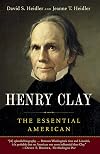
One—if not the most—of the most influential politicians in American history who never became President, though he tried several times, was praised and vilified throughout his life then slowly forgotten in the century and a half after his death. Henry Clay: The Essential American by David S. Heidler and Jeanne T. Heidler follows the dramatic political rise, the stunning setbacks, and tragic family life of the man who became Andrew Jackson’s great enemy and Abraham Lincoln’s great show more hero.
The Heidler’s begins moments after Clay’s death and describes the journey of his body to Lexington with the outpouring of honor along the way then turn their attention as to how Clay became so honored. Born in eastern Virginia as a scion of a long-time colonial family and fatherless early in life, Clay was fortunate to have a stepfather and several mentors who gave him opportunities which he took hold off and used to establish himself in the legal profession in Kentucky. Though idealistic early in his political career, especially on the issue of slavery in the state, Clay downplayed it sooner after to gain connections especially through marriage and accumulation of wealth in which slaves were an important facet though he would continue to advocate for his brand for emancipation throughout his life. Clay’s time in the Kentucky legislature foreshadowed the parliamentary advancements he would bring to the House and later the Senate, especially the Committee of the Whole which allowed Clay as Speaker of both the Kentucky and U.S House to join debates. A staunch Jeffersonian Democratic-Republican, Clay’s views and future policies would shift to include several Hamiltonian policies like a National Bank and tariffs but in Republican language. Upon his arrival in Washington in 1811 until his death 41 years later, Clay would be the most influential man in the city even though he never resided in the White House which would be occupied by either his allies or his avowed enemies though he would campaign for the Presidency either actively or with the am to from 1824 to 1848. Three times during his time in Washington, he championed the Union in the 1820 Missouri Compromise, the 1833 Nullification crisis, and the Compromise of 1850 his final political act as slavery threatened to ripe the country apart.
First and foremost this was a political biography which the Heidlers expertly detailed for the reader, however Clay was a family man with a particularly tragic tinge as all of his daughters predeceased their parents with Clay’s namesake dying in the Mexican-American War while another was to spend half his life in an asylum. The issue of slavery is given significant space in various parts of the book as the Heidlers put Clay’s views in context of their time and how he was as a slaveowner, but don’t excuse him for hold human beings as property. Though not stated explicitly this was also a light history of the Whig party primarily because, until slavery tore it apart, Henry Clay embodied the party even when younger members decided to jettison its ideological center for Presidential victory.
Henry Clay: The Essential American details the life of the most important politician of the Antebellum era. The husband-wife historian team of David S. and Jeanne Heidler write a very scholarly yet lively history of the man and his times that gives the reader a view of how important their subject was during his time on the national scene. show less
The Heidler’s begins moments after Clay’s death and describes the journey of his body to Lexington with the outpouring of honor along the way then turn their attention as to how Clay became so honored. Born in eastern Virginia as a scion of a long-time colonial family and fatherless early in life, Clay was fortunate to have a stepfather and several mentors who gave him opportunities which he took hold off and used to establish himself in the legal profession in Kentucky. Though idealistic early in his political career, especially on the issue of slavery in the state, Clay downplayed it sooner after to gain connections especially through marriage and accumulation of wealth in which slaves were an important facet though he would continue to advocate for his brand for emancipation throughout his life. Clay’s time in the Kentucky legislature foreshadowed the parliamentary advancements he would bring to the House and later the Senate, especially the Committee of the Whole which allowed Clay as Speaker of both the Kentucky and U.S House to join debates. A staunch Jeffersonian Democratic-Republican, Clay’s views and future policies would shift to include several Hamiltonian policies like a National Bank and tariffs but in Republican language. Upon his arrival in Washington in 1811 until his death 41 years later, Clay would be the most influential man in the city even though he never resided in the White House which would be occupied by either his allies or his avowed enemies though he would campaign for the Presidency either actively or with the am to from 1824 to 1848. Three times during his time in Washington, he championed the Union in the 1820 Missouri Compromise, the 1833 Nullification crisis, and the Compromise of 1850 his final political act as slavery threatened to ripe the country apart.
First and foremost this was a political biography which the Heidlers expertly detailed for the reader, however Clay was a family man with a particularly tragic tinge as all of his daughters predeceased their parents with Clay’s namesake dying in the Mexican-American War while another was to spend half his life in an asylum. The issue of slavery is given significant space in various parts of the book as the Heidlers put Clay’s views in context of their time and how he was as a slaveowner, but don’t excuse him for hold human beings as property. Though not stated explicitly this was also a light history of the Whig party primarily because, until slavery tore it apart, Henry Clay embodied the party even when younger members decided to jettison its ideological center for Presidential victory.
Henry Clay: The Essential American details the life of the most important politician of the Antebellum era. The husband-wife historian team of David S. and Jeanne Heidler write a very scholarly yet lively history of the man and his times that gives the reader a view of how important their subject was during his time on the national scene. show less
There's so much substance behind Clay...this biography captures that and his charming, witty personal attributes and deftly blends them. I tend to prefer biographies of men of substance (Alexander the Great, Julius Caesar, Augustine of Hippo, Geoffrey Chaucer, Samuel Johnson, Alexander Hamilton, Madison/Jefferson, Clay, Theodore Roosevelt, Winston Churchill, Clinton) and to treat other biographies with contempt (Stonewall Jackson). Many biographies of public figures have difficulty with that show more blend, which makes the achievement all the more remarkable. Clay comes off as extremely human but great at that. The only minor flaw is the seeming confusion of John Clay with Henry Watkins in the first chapter, though it's apparent that the family relations WERE confusing. Wonderful read and worth every page of effort that you need to put into it. show less

This history is an excellent reminder of how the growing tumult and furor over slavery threatened the survival of the union from President Jackson to the Civil War. Clearly demonstrated is how Henry Clay's great skills helped keep the country together. However a reader could do better by reading Glyndon G. Van Deusen's 1937, better written, The Life of Henry Clay and save oneself from reading 60 extra pages of extraneous questionable material.
Quotes: (page 159) “That subsequent letter of show more February 1815 was not in the files, but Russell,now in Congress, obligingly supplied a copy. Russell's copy described John Quincy Adams as willing to sacrifice all western interests, including the navigation of the Mississippi, to retain New England fishing rights.
Clay's friends chortled, confident that Adams could never recover from revelations that would cost him every vote outside New England. Yet Russell's original letter soon turned up and proved to be seriously at odds with Russells's supposedly true copy. Clearly the 'copy' was a fabrication to hurt Adams. And many suspected that Clay was the author of the scheme if not the letter. Adams certainly thought so and was prepared to class him with Calhoun as willing to stoop low to achieve the presidency. Clay distanced himself from Russell, and Adams eventually wrote a damning refutation that made Russell look deceitful, which he likely was, and foolish, which he most certainly was. Moreover Adams refutation turned the regional tables on Clay by depicting him as advocating only western interests at Ghent. The two briefly pounded each other in the newspapers before dropping the matter, possibly because Clay could see no advantage in challenging the memory of a man who rose hours before dawn to scrawl the minutiae of his life in a dairy. This early round went to Adams.”
(page 286) “The idea for the convention did not originate with Clay---early that summer, William Henry Harrison's Ohio supporters were urging one to nominate their man---but Clay approved it as a way to fend off Webster. The idea made political sense, because it was the best way to avoid the chaotic multiple candidates of 1836. Yet by striking down Webster with this tactic, Clay courted peril, for the timing of the convention was crucial to his chances in it. With the economy in ruin, Clay's popularity instantly rose as his dire warnings about the Democrat's fiscal policy seemed confirmed by events. Suddenly his prescriptions for putting things right through government intervention, especially by reviving the Bank, seemed sensible, and because Clay was their principal advocate, his candidacy looked popular and politically logical. The sooner he could be placed before a convention the better, since improving financial conditions would likely dim the people's enthusiasm for his program and diminish for Whigs his attractiveness as a candidate.”
(pages 386-387) “The timing, however, amounted to a coincidence so incredible and spectacular that almost nobody believed it to be a coincidence at all. Instead,many jumped to the conclusion that Van Buren and Clay had cynically colluded to avoid a controversial issue that could disrupt their respective campaigns.
This most certainly was not the case. For years, Clay and Van Buren had opposed annexation on principle, and for much the same reason: slavery expansion endangered the union. By 1844, the rapid push for Texas annexation directly threatened it, forcing the two men to brake their silence. That they had done so simultaneously was an accident that had everything to do with their friends and nothing to do with them.” show less
Quotes: (page 159) “That subsequent letter of show more February 1815 was not in the files, but Russell,now in Congress, obligingly supplied a copy. Russell's copy described John Quincy Adams as willing to sacrifice all western interests, including the navigation of the Mississippi, to retain New England fishing rights.
Clay's friends chortled, confident that Adams could never recover from revelations that would cost him every vote outside New England. Yet Russell's original letter soon turned up and proved to be seriously at odds with Russells's supposedly true copy. Clearly the 'copy' was a fabrication to hurt Adams. And many suspected that Clay was the author of the scheme if not the letter. Adams certainly thought so and was prepared to class him with Calhoun as willing to stoop low to achieve the presidency. Clay distanced himself from Russell, and Adams eventually wrote a damning refutation that made Russell look deceitful, which he likely was, and foolish, which he most certainly was. Moreover Adams refutation turned the regional tables on Clay by depicting him as advocating only western interests at Ghent. The two briefly pounded each other in the newspapers before dropping the matter, possibly because Clay could see no advantage in challenging the memory of a man who rose hours before dawn to scrawl the minutiae of his life in a dairy. This early round went to Adams.”
(page 286) “The idea for the convention did not originate with Clay---early that summer, William Henry Harrison's Ohio supporters were urging one to nominate their man---but Clay approved it as a way to fend off Webster. The idea made political sense, because it was the best way to avoid the chaotic multiple candidates of 1836. Yet by striking down Webster with this tactic, Clay courted peril, for the timing of the convention was crucial to his chances in it. With the economy in ruin, Clay's popularity instantly rose as his dire warnings about the Democrat's fiscal policy seemed confirmed by events. Suddenly his prescriptions for putting things right through government intervention, especially by reviving the Bank, seemed sensible, and because Clay was their principal advocate, his candidacy looked popular and politically logical. The sooner he could be placed before a convention the better, since improving financial conditions would likely dim the people's enthusiasm for his program and diminish for Whigs his attractiveness as a candidate.”
(pages 386-387) “The timing, however, amounted to a coincidence so incredible and spectacular that almost nobody believed it to be a coincidence at all. Instead,many jumped to the conclusion that Van Buren and Clay had cynically colluded to avoid a controversial issue that could disrupt their respective campaigns.
This most certainly was not the case. For years, Clay and Van Buren had opposed annexation on principle, and for much the same reason: slavery expansion endangered the union. By 1844, the rapid push for Texas annexation directly threatened it, forcing the two men to brake their silence. That they had done so simultaneously was an accident that had everything to do with their friends and nothing to do with them.” show less
Awards


You May Also Like


Associated Authors
Statistics
- Works
- 17
- Also by
- 1
- Members
- 1,101
- Popularity
- #23,343
- Rating
- 4.0
- Reviews
- 14
- ISBNs
- 42
- Favorited
- 1