

Patricia Meyer Spacks
Author of On Rereading
About the Author
Patricia Meyer Spacks is a National Book Award finalist and Edgar Shannon Professor of English, Emerita, at the University of Virginia. She is the editor of Pride and Prejudice: An Annotated Edition and Sense and Sensibility: An Annotated Edition.
Image credit: Jane Austen's World
Works by Patricia Meyer Spacks
The poetry of vision 2 copies
Female Imagination 1 copy
Associated Works
Understanding The Lord of the Rings: The Best of Tolkien Criticism (2004) — Contributor — 232 copies, 2 reviews
Aspects of Alice: Lewis Carroll's Dream Child as Seen Through the Critics' Looking-glasses, 1865-1971 (1971) — Contributor — 124 copies, 3 reviews
Shadows of Imagination: The Fantasies of C. S. Lewis, J. R. R. Tolkien, and Charles Williams (Crosscurrents: Modern Critiques) (1969) — Contributor — 49 copies
Over Ten Million Served: Gendered Service in Language and Literature Workplaces (2010) — Contributor — 7 copies
Tagged
Common Knowledge
- Canonical name
- Spacks, Patricia Meyer
- Gender
- female
- Birthplace
- San Francisco, California, USA
- Associated Place (for map)
- California, USA
Members
Reviews
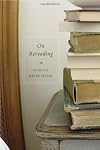
You might pick up On Rereading with two divergent, though related, expectations. You might think that such a book would canvas and interrogate research in the field of cognitive psychology on reading, its processes, and its impact. On the other hand, you might anticipate a theoretical account of rereading steeped in one or another philosophical worldview. Know now then that your expectations will be frustrated. However, also know that what you will find in Patricia Meyer Spacks’ charming show more and personal treatment of her own rereading ‘experiments’ is a thoughtful and thought-provoking exploration of rereading as it relates to at least one individual. No doubt someday the books you were hoping to find will also be written, by someone. In the meantime, do take the time to enjoy Spacks’ mature thoughts on some of the books that she has returned to repeatedly over the course of a long life spent with literature.
The running theme throughout the book is sameness and difference. Clearly one returns to the same text on rereading. How then is it possible to experience a palpable difference in that text’s reception? Either the reader must have missed something the first time around (since the text remains the same), or the reader herself must be different. At various points Spacks opts for both these explanations, though favouring the latter. Her lifetime of reading, she argues, has changed her and in so doing, it changes what is possible for her in relationship to some beloved text.
That reading changes us as readers is taken as read by Spacks. It is, I think, a more controversial claim than she acknowledges. Fortunately, I agree with her, and am therefore more than willing to go along with her on her journey. I especially enjoyed her chapter on Jane Austen, whose novels she too thinks warrant multiple reads. At times she wants to test whether books she loved when she was very young, such as Alice in Wonderland, can hope to sustain anything more than a sepia-tinted pleasure. They can. Of course some books on rereading do not fair so well. And it is this difference in opinion on rereading that Spacks eventually finds most disturbing. Rather unfortunately it undermines her confidence in her judgement. But I think at this point she fails to take seriously her initial axiom: reading changes us. If this is true, then the judgements rendered substantially later on rereading cannot and should not be in conflict with our earlier judgements.
Read this book for its fine prose, its refreshing engagement with literature that you too may wish to reread, and its serious treatment of a phenomenon that deserves far more scrutiny and analysis. It may not be the book you are looking for, but it will serve, perhaps, until that one comes along. Recommended. show less
The running theme throughout the book is sameness and difference. Clearly one returns to the same text on rereading. How then is it possible to experience a palpable difference in that text’s reception? Either the reader must have missed something the first time around (since the text remains the same), or the reader herself must be different. At various points Spacks opts for both these explanations, though favouring the latter. Her lifetime of reading, she argues, has changed her and in so doing, it changes what is possible for her in relationship to some beloved text.
That reading changes us as readers is taken as read by Spacks. It is, I think, a more controversial claim than she acknowledges. Fortunately, I agree with her, and am therefore more than willing to go along with her on her journey. I especially enjoyed her chapter on Jane Austen, whose novels she too thinks warrant multiple reads. At times she wants to test whether books she loved when she was very young, such as Alice in Wonderland, can hope to sustain anything more than a sepia-tinted pleasure. They can. Of course some books on rereading do not fair so well. And it is this difference in opinion on rereading that Spacks eventually finds most disturbing. Rather unfortunately it undermines her confidence in her judgement. But I think at this point she fails to take seriously her initial axiom: reading changes us. If this is true, then the judgements rendered substantially later on rereading cannot and should not be in conflict with our earlier judgements.
Read this book for its fine prose, its refreshing engagement with literature that you too may wish to reread, and its serious treatment of a phenomenon that deserves far more scrutiny and analysis. It may not be the book you are looking for, but it will serve, perhaps, until that one comes along. Recommended. show less
In the first few chapters, Spacks talks about rereading in general, rereading the Narnia books, and now rereading Jane Austen. When she indirectly quoted a letter Darcy sends to Elizabeth, I had to look it up, and spent the last hour agreeably drifting through the conclusion of Pride and Prejudice. So now I'm reading two books (the other one on writing by Francine Prose) that send me to other books along the way.
Ultimately, this is not quite what I thought it would be, but it just may be show more better. I'm very impressed with how much Spacks finds in the Austen books; it looks like I will have to reread Emma again! As the book continues, it becomes a bit more academic, but the first half is certainly a delight. show less
Ultimately, this is not quite what I thought it would be, but it just may be show more better. I'm very impressed with how much Spacks finds in the Austen books; it looks like I will have to reread Emma again! As the book continues, it becomes a bit more academic, but the first half is certainly a delight. show less
Very interesting! Why do we reread?
I notably reread Spindle's End, the Lord of the Rings trilogy, CS Lewis, some Charles de Lint, some of my favorite poetry like Sappho and William Carlos Williams... I've also reread some books and been ever so disappointed in what I'd remembered was wonderful. Rereading is a window looking into our changing selves.
I notably reread Spindle's End, the Lord of the Rings trilogy, CS Lewis, some Charles de Lint, some of my favorite poetry like Sappho and William Carlos Williams... I've also reread some books and been ever so disappointed in what I'd remembered was wonderful. Rereading is a window looking into our changing selves.
A little too much close reading of fiction for me though it is an intelligent book.
You May Also Like


Associated Authors
Statistics
- Works
- 21
- Also by
- 10
- Members
- 488
- Popularity
- #50,612
- Rating
- 4.1
- Reviews
- 4
- ISBNs
- 42
- Favorited
- 1