
David West Reynolds
Author of Star Wars: The Visual Dictionary
About the Author
Image credit: babelio.com
Works by David West Reynolds
Incredible Cross-Sections of Star Wars: The Ultimate Guide to Star Wars Vehicles and Spacecraft (1998) 522 copies, 1 review
Star Wars = [La guerra de las galaxias] : Episodio I, diccionario visual de personajes y equipos (1999) 4 copies
Guerra das Estrelas 2 copies
Star wars fantasztikus gépezetek [járművek és űreszközök a klasszikus Csillagok háborúja világából] (1999) 2 copies
Kennedy Space Center 1 copy
Star Wars The Visual Guide 1 copy
Tagged
Common Knowledge
- Legal name
- Reynolds, David West
- Gender
- male
- Education
- University of Michigan
- Occupations
- archaeologist
- Nationality
- USA
- Associated Place (for map)
- USA
Members
Reviews
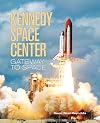
The book was published in 2011, at the tail end of the Shuttle era, although parts of the text appear to have been written at least a few years earlier, based on the fact that it talks in the final chapter about things that may happen in 2008 or 2009.
It offers up a bit of the history of Kennedy Space Center and its precursors, but mostly covers specific missions launched from KSC, with a focus on things like the technologies used on the launchpad and how the missions were enabled and show more supported by KSC facilities.
The writing is okay. There are lots of facts and figures and technical details, and I imagine most people picking up a book like this will know going in whether that's the sort of thing that will excite them or make their eyes glaze over. But the author also sometimes takes a very rah-rah, "Go, USA!" kind of tone about it all that in places seems just a little bit much to me -- and I'm someone who once described seeing a Saturn V rocket in person at the KSC visitors' center as one of the closest things I've ever had to a religious experience. Well, except when he gets to the space shuttle, and then he has some savagely critical things to say. Which aren't exactly unreasonable, but were such an abrupt change of tone that I couldn't help laughing a little. Still, mostly it's full of facts and information, and I certainly did learn some things. If nothing else, reading much of it just before watching the Artemis II launch genuinely gave me a better appreciation for what I was seeing on the pad.
It's also an oversized book with lots of full-color pictures which are very nice, although there are one or two places where I might also have wished for a labeled diagram or two. show less
It offers up a bit of the history of Kennedy Space Center and its precursors, but mostly covers specific missions launched from KSC, with a focus on things like the technologies used on the launchpad and how the missions were enabled and show more supported by KSC facilities.
The writing is okay. There are lots of facts and figures and technical details, and I imagine most people picking up a book like this will know going in whether that's the sort of thing that will excite them or make their eyes glaze over. But the author also sometimes takes a very rah-rah, "Go, USA!" kind of tone about it all that in places seems just a little bit much to me -- and I'm someone who once described seeing a Saturn V rocket in person at the KSC visitors' center as one of the closest things I've ever had to a religious experience. Well, except when he gets to the space shuttle, and then he has some savagely critical things to say. Which aren't exactly unreasonable, but were such an abrupt change of tone that I couldn't help laughing a little. Still, mostly it's full of facts and information, and I certainly did learn some things. If nothing else, reading much of it just before watching the Artemis II launch genuinely gave me a better appreciation for what I was seeing on the pad.
It's also an oversized book with lots of full-color pictures which are very nice, although there are one or two places where I might also have wished for a labeled diagram or two. show less
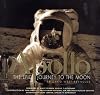
David West Reynolds cornered the Apollo market when he was able to get two former astronauts and a Smithsonian Air and Space Museum curator to contribute to his historical look at the race for space. In addition he used amazing photographs! Reynolds carefully outlines the humble beginnings of man's desire to launch into space, giving credit to Jules Verne as the man responsible for sparking the imagination of men who dared to dream the impossible. The frantic competition was heightened after show more John F. Kennedy was elected president and he promised American citizens we would reach the moon by 1970. Kennedy's subsequent assassination was the driving force to make that promise a reality. Reynolds states the entire nation was held responsible for Kennedy's dream.
But, this is a gorgeous book, filled with interesting facts and photographs taken from beginning to end; from the Mercury and Sputnik to Apollo and Vostok missions. show less
But, this is a gorgeous book, filled with interesting facts and photographs taken from beginning to end; from the Mercury and Sputnik to Apollo and Vostok missions. show less
The Apollo lunar landings are, one would have thought, the perfect subject for a big copiously-illustrated coffee-table book. After all, it was a unique achievement, many people alive today still remember it vividly, and NASA documented it thoroughly – taking thousands of photographs, thousands of feet of film, and writing millions of words. Yet there are few such books available. Piers Bizony’s One Giant Leap – Apollo 11 Forty Years On is one, but it was published only last year as show more part of the fortieth celebration of the first lunar landing. Apollo: The Epic Journey to the Moon by David West Reynolds is another. It was first published in 2002.
Like most books of its type, Apollo: The Epic Journey to the Moon opens with a couple of chapters introducing rocketry and the various pioneers of the field – Tsiolkovsky, Oberth, Goddard… But, of course, it is Wernher von Braun who comes to dominate post-war rocketry, and Apollo: The Epic Journey to the Moon also includes a section on his Collier’s articles from 1952 to 1954, with artwork. The book then moves swiftly through Mercury and Gemini, and onto the Apollo programme. The Soviet achievements are mentioned, but only inasmuch as they reflected on the US space programme.
For rest of review: http://spacebookspace.wordpress.com/2010/03/26/apollo-the-epic-journey-to-the-mo... show less
Like most books of its type, Apollo: The Epic Journey to the Moon opens with a couple of chapters introducing rocketry and the various pioneers of the field – Tsiolkovsky, Oberth, Goddard… But, of course, it is Wernher von Braun who comes to dominate post-war rocketry, and Apollo: The Epic Journey to the Moon also includes a section on his Collier’s articles from 1952 to 1954, with artwork. The book then moves swiftly through Mercury and Gemini, and onto the Apollo programme. The Soviet achievements are mentioned, but only inasmuch as they reflected on the US space programme.
For rest of review: http://spacebookspace.wordpress.com/2010/03/26/apollo-the-epic-journey-to-the-mo... show less

Perfect addition to your Star Wars collection. Includes 3 pop-ups of the Tie fighter, and information about the fighter, it's development, systems, weapons, and battle history.
Awards


You May Also Like


Associated Authors
Statistics
- Works
- 37
- Members
- 3,684
- Popularity
- #6,874
- Rating
- 4.1
- Reviews
- 10
- ISBNs
- 94
- Languages
- 12
- Favorited
- 1