

Raoul Whitfield (1896–1945)
Author of Green Ice
About the Author
Series
Works by Raoul Whitfield
Associated Works
Ellery Queen's Mystery Magazine - 1949/03 — Contributor — 1 copy
Tagged
Common Knowledge
- Legal name
- Whitfield, Raoul Fauconnier
- Other names
- Decolta, Ramon
Field, Temple - Birthdate
- 1896
- Date of death
- 1945
- Gender
- male
- Occupations
- novelist
short story writer - Organizations
- U.S. Army
Pittsburgh Post - Nationality
- USA
- Birthplace
- New York, New York, USA
- Place of death
- Los Angeles, California, USA
- Burial location
- Arlington National Cemetery, Arlington, Virginia, USA
- Associated Place (for map)
- USA
Members
Reviews

'Green Ice' (a reference to stolen emeralds) was Raoul Whitfield's first novel. Although carried off well, it shows its origin in five linked novella published from December 1929 to April 1930 in 'Black Mask' which was to hardboiled noir what 'Weird Tales' was to horror and fantasy.
At the time Whitfield was rated more highly than his good friend Dashiell Hammett but Hammett has perhaps lasted better because his stories are a bit more literary and less deeply embedded in the atmosphere of the show more time. However, Whitfield is not to be sniffed at as a genre author.
The story is very fast-moving and brutal with a death rate more typical today of recent Hollywood pulp thrillers. Hardboiled was to became noir and provide the basis for many classic films but Whitfield lost out on that opportunity, perhaps because he was so unremittingly violent.
The pace is fast and the plotting complex (a derivation of the mystery just as noir was a derivation of hardboiled) but Whitfield has the good grace periodically to summarise the plot and the running theory of the 'hero' as to what precisely is going on (as he would have to do each month).
Why was this sort of story so popular? Well, there is a very American Wild West moral tale of gunfighter integrity, cleaning up the bad hats, but in an urban setting, and the picture of tough ruthless women on the wrong side of the game would be both erotic and a gender wars warning.
But something else is going on where the lived experience of the writer acts as link to the reader's edginess about an unstable ruthless world in which high morality - detached from its puritan roots - faces the reality of dog-eat-dog criminality and desperation in society.
The hero Mal Ourney is released from Sing Sing but it is quickly established that he is a good guy who hates gangsters. He took a drunk driving manslaughter rap for a girl who was not worth it but he did it anyway. It is also established that he is a well-heeled 'gentleman'.
This could position him as a transitional figure between the gentleman-criminal Raffles (though Ourney is only a criminal by default) and Sam Spade (though Ourney is an amateur investigator and not a paid professional) except that 'The Maltese Falcon' came out in the same year as 'Green Ice'
Hammett's Nick Charles in the 'Thin Man' (1934) represents another variation - a well-heeled socialite (though it is clear he married into money) who was once a professional investigator and takes on a case only because he is intrigued and does not like being pushed around.
These are all variations on a theme and what binds them is a male ideal - the tough but decent guy (a 'mensch') who wants a quiet life on a steady income but finds himself getting into scrapes that, because he is fundamentally decent, he will see through to the end.
It is an interesting ideal because it is a gender ideal presumed to be attractive to women - men capable of protection but also willing to protect - which makes the deviousness and ruthlessness of the women a fundamental existential problem for male heroes and, presumably, their readers.
As the corpses pile up (probably reflecting the five novella origin of the novel requiring constant action for the young 'Black Mask' reader), Whitfield does not have just one 'femme fatale' but a sequence of them.
This is what the world looked like to an urban male in 1929 trapped in a competitive world of strict gender differences where the stakes of the unknowability of other minds were that much higher in the anomic world that was (and perhaps is) America.
Three experiences mark this tone of voice - the shock of front line service in the First World War (1917-1918), the enormous viciousness of street gang wars in New York in the age of Dutch Schulz (very much a live issue since 1928) and the desperation of the Great Crash in the year of writing.
If you add to this mix a corrupted law enforcement system and the impunity of criminal gangs as well as the notorious 'condition of the working class' (the evocation of industrial Pittsburgh is excellent) you have the soup ready-made for a hardboiled story.
All in all, this is not a great work of literature and it is no surprise that Whitfield could not gain the immortality of Hammett and later Chandler but the novel may capture the atmosphere of urban America in 1929/1930 better than either precisely because it is less polished and more raw.
It has rough edges but it works as a mystery (up to a point) and it certainly works as hardboiled on its way to noir with moments of extremely good writing. The laconic terse fast-moving character of the book, riddled with repressed rage and despair, is testament to a time's particular psychology.
Even today, most men are going to like this book despite their better nature while most women are going to find it tiresome. There is also an excellent introduction to Whitfield's life and work in this edition. show less
At the time Whitfield was rated more highly than his good friend Dashiell Hammett but Hammett has perhaps lasted better because his stories are a bit more literary and less deeply embedded in the atmosphere of the show more time. However, Whitfield is not to be sniffed at as a genre author.
The story is very fast-moving and brutal with a death rate more typical today of recent Hollywood pulp thrillers. Hardboiled was to became noir and provide the basis for many classic films but Whitfield lost out on that opportunity, perhaps because he was so unremittingly violent.
The pace is fast and the plotting complex (a derivation of the mystery just as noir was a derivation of hardboiled) but Whitfield has the good grace periodically to summarise the plot and the running theory of the 'hero' as to what precisely is going on (as he would have to do each month).
Why was this sort of story so popular? Well, there is a very American Wild West moral tale of gunfighter integrity, cleaning up the bad hats, but in an urban setting, and the picture of tough ruthless women on the wrong side of the game would be both erotic and a gender wars warning.
But something else is going on where the lived experience of the writer acts as link to the reader's edginess about an unstable ruthless world in which high morality - detached from its puritan roots - faces the reality of dog-eat-dog criminality and desperation in society.
The hero Mal Ourney is released from Sing Sing but it is quickly established that he is a good guy who hates gangsters. He took a drunk driving manslaughter rap for a girl who was not worth it but he did it anyway. It is also established that he is a well-heeled 'gentleman'.
This could position him as a transitional figure between the gentleman-criminal Raffles (though Ourney is only a criminal by default) and Sam Spade (though Ourney is an amateur investigator and not a paid professional) except that 'The Maltese Falcon' came out in the same year as 'Green Ice'
Hammett's Nick Charles in the 'Thin Man' (1934) represents another variation - a well-heeled socialite (though it is clear he married into money) who was once a professional investigator and takes on a case only because he is intrigued and does not like being pushed around.
These are all variations on a theme and what binds them is a male ideal - the tough but decent guy (a 'mensch') who wants a quiet life on a steady income but finds himself getting into scrapes that, because he is fundamentally decent, he will see through to the end.
It is an interesting ideal because it is a gender ideal presumed to be attractive to women - men capable of protection but also willing to protect - which makes the deviousness and ruthlessness of the women a fundamental existential problem for male heroes and, presumably, their readers.
As the corpses pile up (probably reflecting the five novella origin of the novel requiring constant action for the young 'Black Mask' reader), Whitfield does not have just one 'femme fatale' but a sequence of them.
This is what the world looked like to an urban male in 1929 trapped in a competitive world of strict gender differences where the stakes of the unknowability of other minds were that much higher in the anomic world that was (and perhaps is) America.
Three experiences mark this tone of voice - the shock of front line service in the First World War (1917-1918), the enormous viciousness of street gang wars in New York in the age of Dutch Schulz (very much a live issue since 1928) and the desperation of the Great Crash in the year of writing.
If you add to this mix a corrupted law enforcement system and the impunity of criminal gangs as well as the notorious 'condition of the working class' (the evocation of industrial Pittsburgh is excellent) you have the soup ready-made for a hardboiled story.
All in all, this is not a great work of literature and it is no surprise that Whitfield could not gain the immortality of Hammett and later Chandler but the novel may capture the atmosphere of urban America in 1929/1930 better than either precisely because it is less polished and more raw.
It has rough edges but it works as a mystery (up to a point) and it certainly works as hardboiled on its way to noir with moments of extremely good writing. The laconic terse fast-moving character of the book, riddled with repressed rage and despair, is testament to a time's particular psychology.
Even today, most men are going to like this book despite their better nature while most women are going to find it tiresome. There is also an excellent introduction to Whitfield's life and work in this edition. show less

Raoul Whitfield was a friend of Dashiell Hammett and a prolific writer for Black Mask. Under the pseudonym "Ramon Decolta" he authored a series of tales about a stoic Manila detective named Jo Gar, and today those stories are Whitfield's primary claim to fame. Green Ice demonstrates why he is more highly regarded as a short story writer than as a novelist: skimpy characterization, lots of violent action, exceedingly awkward prose even by genre standards. Whitfield made up his own lumpy show more street slang and used it so often that it's painfully obvious he was fishing for critical praise. People are "humans," cigarettes are "pills"; humans are constantly lighting pills and narrowing their eyes (also a habit of Jo Gar, Whitfield's Filipino shamus) to indicate how tough they are. This sort of thing is acceptable in a short story, but no one--least of all Whitfield--can reasonably sustain it for more than two hundred pages. As a novel, Green Ice rates two stars out of five. As a work of hardboiled crime fiction, I give it three stars for pure absurd momentum. Better than Carroll John Daly, but nowhere near as good as Hammett or Chandler or John K. Butler. show less

Raoul Whitfield was a contemporary of Dashiell Hammett (and seems to have been well liked by Black Mask editor Joseph Shaw), but it's best to approach his work with modest expectations. The two men were on different planets as far as the quality of their work is concerned: Hammett was a literary genius; Whitfield was a pulp magazine writer. While it would be unfair to call him a hack, it's obvious why his three novels are not highly regarded today. As long as you're aware of his limitations, show more however, these stories about stoic, prematurely gray Filipino detective Jo Gar (which Whitfield wrote under the pseudonym "Ramon Decolta") are fun. Not every one of them works, and the author's inclination toward flat, dull prose can sometimes be a real hindrance, but at his best Whitfield was actually pretty entertaining. My favorites are "Signals of Storm," in which Gar works a kidnapping case as a typhoon approaches Manila, and "The Magician Murder," about the murder of a stage magician at a cockfight.
Whitfield's output was not as strong as the editor and the writer of the introductory essay seem to think, but it had its moments. Diehard fans of the '20s and '30s crime pulps will enjoy Jo Gar's Casebook. show less
Whitfield's output was not as strong as the editor and the writer of the introductory essay seem to think, but it had its moments. Diehard fans of the '20s and '30s crime pulps will enjoy Jo Gar's Casebook. show less
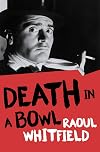
A celebrated European conductor has been gunned down at the Hollywood Bowl. Why and by whom? Well, there's no clear motive and everyone's a suspect in Death in a Bowl, Raoul Whitfield's answer to his buddy Hammett's masterpiece The Maltese Falcon. It's slightly better than Whitfield's previous novel Green Ice, but my enthusiasm was soon dampened by his reliance on the same weary clichés that had always relegated his work to second-rate status: "She sipped her cocktail with narrowed eyes show more upon the liquid in the long stemmed glass"; "Frey narrowed his eyes; lines creased his forehead"; "Then he narrowed his eyes on the detective's lean face." Whitfield is said to have written very quickly, and I don't doubt it; obviously he had no interest in editing. But while his first book was a straightforward, boneheaded action piece, this one actually conjures some suspense and is pervaded by an agreeably murky, mysterious atmosphere. Private eye Ben Jardinn--an off-brand incarnation of Sam Spade--is not an especially distinctive character, but on the whole this book works. (Only just, but it works.)
If it seems like I'm being hard on Whitfield, bear in mind that Dashiell Hammett had many imitators and none of them came close to duplicating his genius. The main problem here is that the author seems not to have noticed--or cared--when gesture and affectation got in the way of pacing. Whitfield was a pretty decent short story writer (see "Mistral," his finest moment, or some of the Jo Gar stories like "The Magician Murder" and "Signals of Storm"), and that's probably where you should start. show less
If it seems like I'm being hard on Whitfield, bear in mind that Dashiell Hammett had many imitators and none of them came close to duplicating his genius. The main problem here is that the author seems not to have noticed--or cared--when gesture and affectation got in the way of pacing. Whitfield was a pretty decent short story writer (see "Mistral," his finest moment, or some of the Jo Gar stories like "The Magician Murder" and "Signals of Storm"), and that's probably where you should start. show less
Lists
You May Also Like


Associated Authors
Statistics
- Works
- 18
- Also by
- 7
- Members
- 194
- Popularity
- #112,876
- Rating
- 3.8
- Reviews
- 5
- ISBNs
- 39
- Languages
- 3
- Favorited
- 1