
About the Author
Works by Lori Baird
Cut the Clutter and Stow the Stuff: The Q. U. I. C. K. Way to Bring Lasting Order to Household Chaos (2002) 318 copies, 4 reviews
The Complete Book of Raw Food: Healthy, Delicious Vegetarian Cuisine Made with Living Foods (2003) 155 copies
Tagged
Common Knowledge
- Birthdate
- 20th century
- Gender
- female
Members
Reviews
Cut the Clutter and Stow the Stuff: The Q.U.I.C.K. Way to Bring Lasting Order to Household Chaos by Lori Baird
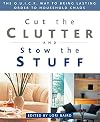
I have a confession to make; I have way too many books. I have books on practically every surface in my room along with several bookcases. So I saw this book at the library with the hope that it would aid me in my crusade on clutter. Cut the Clutter and Stow the Stuff is a book that has collected advice on how to reduce the amount of clutter you have. It was edited by Lori Baird, a woman who straight out in the introduction tells us that she is really terrible at organization. The basis of show more all the advice is an acronym that spells out the word QUICK. QUICK stands for Quantify, Unload, Isolate, Contain, and Keep it up.
The book differentiates itself from other books on clutter management by talking about different types of people and how they store their stuff. There are four major divisions, Accumulators, Collectors, Concealers, and Tossers. It gives you a quiz that reminds me of those online quizzes where there are only four choices. So it asks you questions and has you score your own personality. It talks about how to deal with different personalities as well. Say an Accumulator marries a Tosser. How do you decide what to do without irritating one another? The book has suggestions for that and more.
Once the book establishes the acronym and tells you how to manage your significant others and family members, the book talks about the house room by room. So it has advice for cleaning the living room and the bedroom and so on. Each little chapter has a piece of advice on doing something. Say you have company coming over and you haven’t been able to clean since Christmas or something. It even talks about shortcuts and other things you can do in order to make it look good.
The main thing in this book is that cleaning your space and making something clutter-free is not done in a single day. It is a continuous process. As such, the book has suggestions that enable you to make these actions into habits. It also talks about how to avoid getting stuff altogether. Now there are some turn-offs to the book, but it is still quite informative. The main thing that I am somewhat against are the silly jokes, but it isn’t that big of a deal. The book more than makes up for it in being interesting and helpful. However, this book is slightly out of date with computer information. While it is certainly true that pictures take up space, people have cloud services now and hard drives are much larger than in 2002. Plus, Floppy Drives are obsolete nowadays.
Anyway, the book was great. As I mentioned, it was interesting and informative. The only real problems I had with it were with the humor and the fact that the book is slightly out of date. show less
The book differentiates itself from other books on clutter management by talking about different types of people and how they store their stuff. There are four major divisions, Accumulators, Collectors, Concealers, and Tossers. It gives you a quiz that reminds me of those online quizzes where there are only four choices. So it asks you questions and has you score your own personality. It talks about how to deal with different personalities as well. Say an Accumulator marries a Tosser. How do you decide what to do without irritating one another? The book has suggestions for that and more.
Once the book establishes the acronym and tells you how to manage your significant others and family members, the book talks about the house room by room. So it has advice for cleaning the living room and the bedroom and so on. Each little chapter has a piece of advice on doing something. Say you have company coming over and you haven’t been able to clean since Christmas or something. It even talks about shortcuts and other things you can do in order to make it look good.
The main thing in this book is that cleaning your space and making something clutter-free is not done in a single day. It is a continuous process. As such, the book has suggestions that enable you to make these actions into habits. It also talks about how to avoid getting stuff altogether. Now there are some turn-offs to the book, but it is still quite informative. The main thing that I am somewhat against are the silly jokes, but it isn’t that big of a deal. The book more than makes up for it in being interesting and helpful. However, this book is slightly out of date with computer information. While it is certainly true that pictures take up space, people have cloud services now and hard drives are much larger than in 2002. Plus, Floppy Drives are obsolete nowadays.
Anyway, the book was great. As I mentioned, it was interesting and informative. The only real problems I had with it were with the humor and the fact that the book is slightly out of date. show less

This book is "edited by", and like many of Rodale Press's other productions, seems to be a hodge-podge of hints rather than a cohesive work. The editor attempts to create an over-arching concept under the acronym QUICK, but it doesn't work. Quantify? what does that even mean? - Especially if you simply list stuff (the book wasn't too forthcoming on the actual process in any of the stages) and don't get rid of anything (really. not anything. she says so) until next stage "Unload". Then show more "Isolate"? Huh? "Contain" and "Keep it up" finish the acronym. I didn't find the first part of the book (the QUICK system) helpful, and the second part (room by room hints) was mildly so, although some of the hints were completely out of touch with the real world (Give your cookbooks to the library! You can use them there!) and many were simply familiar common sense. show less
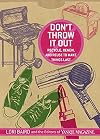
The title of the book kind of says it all. It’s more of a reference book to check when you have something you might need to fix or if it’s time to get rid of, you can look up some alternate ways to use those things.
There are lots of suggestions in the book, some of which I already know about or do. Many, though, (especially the fixes, but even some of the maintenance to help things last longer) require someone handier than I. I am not handy at all. That being said, I do plan to hold on show more to the book so I can check if there is something I might be able to do with something when it’s time to get rid of it. I already try to use most things until they die. show less
There are lots of suggestions in the book, some of which I already know about or do. Many, though, (especially the fixes, but even some of the maintenance to help things last longer) require someone handier than I. I am not handy at all. That being said, I do plan to hold on show more to the book so I can check if there is something I might be able to do with something when it’s time to get rid of it. I already try to use most things until they die. show less
Some sections of this book by Lori Baird I only skimmed as they weren't really applicable. Many of the ideas here are good ones but I didn't find much that I didn't already know. This book would be best as a reference for inexperienced householders, especially those on a tight budget. The emphasis is getting the most out of everything you have and finding creative 'second lives' for items no longer suitable for their original purpose. The author believes in buying quality, taking good care show more of it, fixing it , and throwing away as little as possible. show less
You May Also Like


Statistics
- Works
- 9
- Members
- 699
- Popularity
- #36,216
- Rating
- 3.1
- Reviews
- 7
- ISBNs
- 17