
Herodotus
Author of The Histories
About the Author
Herodotus was the inventor of universal history. Often called the Father of History, his histories are divided into nine books named after the nine muses. A native of Halicarnassus on the coast of Asia Minor (modern Bodrum, Turkey), he traveled extensively, writing lively descriptions of the lands show more he saw and the peoples he encountered. Herodotus set out to relate the story of the conflict of the Greeks of his own time against the "barbarian" Asiatic empire of Achaemenid Persia. His long narrative, titled by modern convention The Histories, begins with the earliest traditions he believed reliable. It ends with a highly colored account of the defeat of the Persian emperor Xerxes and his immense army of slaves by a much smaller number of Greeks fighting to preserve their freedom. Herodotus wrote history, but his methods and assumptions were not those of a modern historian, and his work was unjustly rejected by his successor Thucydides as factually highly unreliable and full of inappropriate romance. By his own admission, Herodotus retold the stories of other peoples without necessarily believing them all. This allowed him total artistic freedom and control to create a picture of the world that corresponded entirely to his own view of it. The result is a picture of Herodotus's world that is also a picture of his mind and, therefore, of many other Greek minds during the period known as "late Archaic." During this period, the Greek mind was dominated by reason, the domain of the first philosophers and the observant and thoughtful medical theorists of the Hippocratic school. Traditional beliefs in the gods of Homer and in their Oracles, especially the Oracle at Delphi, also dominated during this period. The literary genius of Herodotus consisted in the art of the storyteller. The stories he chose to tell, and the order in which he told them, provide his readers with a total view of his world and the way in which the will of the gods and the ambitions of humans interacted to produce what is known as history. For this reason the ancient critic Longinus justly called Herodotus "the most Homeric of all authors." Like Homer, Herodotus strove to understand the world theologically---a goal that makes his work difficult for the reader to understand at first. But, in place of Homer's divine inspiration, Herodotus used his eyes and ears and wrote not poetry but prose. Rejecting what is commonly known as myth, he accepted instead "oral tradition" about remembered events. For example, although he believed that the Trojan War had been fought, he could not investigate it beyond what the poets had said. In his view this "ancient history" of the Greeks and the peoples of Asia was not like contemporary history, because the heroes of old who had created it were beings of a different and superior order who had had a different, direct, and personal relationship with the gods. In recognizing this distinction, Herodotus defined for all time the limits of the historian's discipline. (Bowker Author Biography) show less
Image credit: Roman copy of a Greek original of the early 4th century BC,
Museo Nazionale Romano, Rome, Italy
(Credit: Marie Lan-Nguyen, 2006)
Museo Nazionale Romano, Rome, Italy
(Credit: Marie Lan-Nguyen, 2006)
Series
Works by Herodotus
On the War for Greek Freedom: Selections from The Histories (Hackett Classics) (0440) 85 copies, 1 review
History of the Greek and Persian War. Translated by George Rawlinson / Edited and Abridged with an Introduction by W. G. Forrest (The Great Histories) (1963) 43 copies, 1 review
Grolier Classics: Scarlet Letter, History of Herodotus, Utilitarianism and On Liberty, Sonnets (1956) 21 copies
L'enquête 13 copies
Herodotus Reader: Annotated Passages from Books I-IX of the Histories (Focus Classical Commentary) (2010) 10 copies, 1 review
Herodotus: The Seventh, Eighth, and Ninth Books (Greek History) (English and Greek Edition) (1973) 7 copies
Herodotos, Zweiter Band: Buch III-IV 6 copies
Història 5 copies
Herodote Histoires (Livre IV) 5 copies
History of the Persian Wars: Books I, II (The Great Books Foundation discussion program. The second year course) (1949) 5 copies
Herodots Historie 1 4 copies
Grandes Batallas Del Mundo Antiguo / Great Battles of the Ancient World (Spanish Edition) (2010) 4 copies
Le storie. Libri 89. La vittoria della Grecia.. Introduzione, Traduzione e Note Di Fulvio Barberis Con Un Saggio Di Luciano Canfora (1995) 4 copies
Historia -- Las guerras médicas II 4 copies
Historia 4 copies
The sixth and seventh books of Herodotus : with a life of Herodotus, an epitome of his history, a summary of the dialect, and explanatory notes (2009) 4 copies
Storie - Libro I 3 copies
Le Storie. Libro II: L'Egitto 3 copies
Herodots Historie 2 3 copies
Das Geschichtswerk Zweiter Band 3 copies
Herodoti Historiae 3 copies
L'Enquête Livres 1 a 4 3 copies
L'enquête - Livres I à IV 3 copies
The History of Herodotus, Translated by George Rawlinson. Ed. E H Blakeney. Volume 1 (1930) 3 copies
How to Travel: An Ancient Guide for the Modern Tourist (Ancient Wisdom for Modern Readers) (2026) 3 copies
Herodotus: Persian Wars: A Companion to the Penguin Translation of "Books V-IX (Classical Studies Series) (1991) 3 copies, 1 review
Història. II 3 copies
Història. I 3 copies
Historia. Las guerras medicas III 3 copies
Erodoto e Tucidide 2 copies
Las guerras médicas II 2 copies
Histoires 2 copies
History: Vol 1 2 copies
Herodoti historiarum libri IX 2 copies
Dějiny 2 copies
HISTORIATEOS 1. - WSOY 2 copies
The Greek Historians: The Complete and Unabridged Works of Herodotus, Thucydides, Xenophon and Arrian, Vol. 1 (1942) 2 copies
Storie, volume secondo, Libri V-IX 2 copies
Història III 2 copies
Landmark Herodotus 2 copies
Histories Books I - III 2 copies
Historiarum, Libri 9 2 copies
Història, volum II 2 copies
The History 2 copies
Le storie di Erodoto Libro V-VI-VII 2 copies
Histoires, tome 1 2 copies
Histoires, tome 2 2 copies
Das Geschichtswerk - Zweiter Band 2 copies
Eine Auswahl aus sämtlichen neun Büchern: Eine Auswahl aus sämtlichen neun Büchern. Text. (Lernmaterialien) (Aschend (1972) 2 copies
Herodoti Historiae Libri V-IX 2 copies
2: Le guerre persiane 2 copies
Historiarum libri IX 2 copies
Herodotus History - Greece History of the Persian Wars (Traditional Chinese Edition) (1997) 2 copies
Das Geschichtswerk Erster Band 2 copies
The Persian Wars 2 copies
Ἡρόδοτος: Μοῦσαι, Τόμος Α' 1 copy
Ἡρόδοτος: Μοῦσαι, Τόμος Γ' 1 copy
HISTORITË 1 copy
Historia III 1 copy
Καλλιόπη 1 copy
Πολύμνια Τόμος Α & Β 1 copy
Historia V 1 copy
Ερατώ Τόμος Α & Β 1 copy
Ευτέρπη Τόμος Α & Β 1 copy
Historia II 1 copy
Historia I 1 copy
Historia IV 1 copy
Ἡρόδοτος: Μοῦσαι, Τόμος Β' 1 copy
ΚΑΛΛΙΟΠΗ 1 copy
Κλειώ Τόμος Α & Β 1 copy
Ἡρόδοτος: Μοῦσαι, Τόμος ΣΤ' 1 copy
Ἡρόδοτος: Μοῦσαι, Τόμος Ζ' 1 copy
Ἡρόδοτος: Μοῦσαι, Τόμος Ι' 1 copy
Ἡρόδοτος: Μοῦσαι, Τόμος Θ' 1 copy
Ἡρόδοτος: Μοῦσαι, Τόμος Η' 1 copy
Hellenere og barbarer 1 copy
Historia IV 1 copy
Historia el egipto antiguo 1 copy
Historias, II 1 copy
Historia El Egipto antigüo 1 copy
A Batalha de Termópilas 1 copy
Histoires. Tomes 1 & 2 1 copy
Kong Kroisos 1 copy
Herodotova istorija 2 1 copy
Herodotova istorija 1 1 copy
Ἡρόδοτος: Μοῦσαι, Τόμος Δ' 1 copy
Ἡρόδοτος: Μοῦσαι, Τόμος Ε' 1 copy
Dzieje. [T.] 2 1 copy
Dzieje. [T.] 1 1 copy
Ουρανία 1 copy
Història. Llibre II 1 copy
Wybór z Dziejów Herodota 1 copy
Historias I / 1 copy
Herodotos historia 1 copy
Κλειώ Τόμος Α' 1 copy
Historias II / 1 copy
Découverte du Monde Antique 1 copy
Herodutus - The History 1 copy
Исторически новели 1 copy
Tarih (Historiai) 1 copy
Historias 1 copy
The Histories: Complete 1 copy
تاريخ هيرودوت 1 copy
Histoires... Texte établi et traduit par Ph. E. [Philippe-Alexandre-Ernest-Félix] Legrand,... 1 copy
Herodoti Halicarnassei Historiarum Libri IX, Vol. 1: Adiectus Est Libellus de Vita Homeri (Classic Reprint) (Latin Edition) (2017) 1 copy
Herodot's von Halikarnaß Geschichte, Vol. 6: Zweite Abtheilung (Classic Reprint) (German Edition) (2017) 1 copy
Historiens grecs 1 copy
Histoire. Tome I 1 copy
Histoires. Livre III, Thalie 1 copy
Història, vol. III 1 copy
Història, vol. IV 1 copy
Història, vol. V 1 copy
Història, vol. VI 1 copy
Història IX 1 copy
Història VIII 1 copy
Història V 1 copy
Història IV 1 copy
Història, vol. VII 1 copy
Història, vol. VIII 1 copy
Història, vol. IX i últim 1 copy
Histoire. Tome II 1 copy
Historias. V. 1 1 copy
Herodote, Histoires: Index Analytique Des Neuf Livres: 124 (Collection Des Universites De France) (2003) 1 copy
Herodotos, Historiae 1 copy
La cámara del tesoro 1 copy
LAS GUERRAS MEDICAS II -HERODOTO - BIBLIOTECA GREDOS - CLASICOS ESENCIALES DE GRECIA Y ROMA TOMO 8 1 copy
LAS GUERRAS MEDICAS I - HERODOTO - BIBLIOTECA GREDOS - CLASICOS ESENCIALES DE GRECIA Y ROMA TOMO 7 1 copy
Las guerras médicas I 1 copy
HISTORIA V - HERODOTO 1 copy
HISTORIA IV - HERODOTO 1 copy
HISTORIA III - HERODOTO 1 copy
HISTORIA II- HERODOTO 1 copy
HISTORIA I - HERODOTO 1 copy
HERODOTO HISTORIAS TOMO I 1 copy
HERODOTO HISTORIAS TOMO III 1 copy
HERODOTO HISTORIAS TOMO II 1 copy
Historiateos II 1 copy
Historiarum Libri LX 1 copy
Ιστορία 1 copy
Lịch sử (Historiai) 1 copy
Herodotos Forschungen 1 copy
Herodotus [2] Books III-IV 1 copy
Herodotus [3] Books V-VII 1 copy
Herodotos' historia: 1-4 1 copy
Herodotoksen historia-teos 1 copy
HISTORIATEOS 2 1 copy
Heredot Tarihi 1 copy
Herodotos I 1 copy
Histories livres viii-ix 1 copy
Historiae Books I-IV 1 copy
Historiae 1 copy
Herodotos erklärt 1 copy
Herodotus IX (Kalliope) 1 copy
Storie. Vol. 1: Libri I-IV 1 copy
Storie:vol IV(libri VIII-IX) 1 copy
Histoires IX: Calliope 1 copy
Le Storie. Libro IX 1 copy
The Nine Books of the History of Herodotus Tr. from the Text by T. Gaisford, with Notes and a Summary by P.E. Larent (2012) 1 copy
Herodotus Book I 1 copy
The history of Herodotus 1 copy
Herodotus - 1 1 copy
Herodotus - 2 1 copy
Book IX 1 copy
Histories I, II, III 1 copy
Bibliotheca Classica 1 copy
Antologia erodotea 1 copy
Herodotus, VII 1 copy
Herodotos IX : (Kalliope) 1 copy
The Histories of Herodutus 1 copy
Jude the Obscure 1 copy
Il Quinto libro delle Storie 1 copy
Herodoti Vita Homeri 1 copy
Le Storie, voll. 2 1 copy
Struggle for Greece, The 1 copy
Libri I, II 1 copy
Historiarum libri 1 copy
Le storie 1 copy
9 - La battaglia di Platea 1 copy
Il Terzo libro delle Storie 1 copy
Herodotus Bk I, 1 copy
Herodotus : Translated from the Greek for the Use of General Readers ; with Short Explanatory Notes 1 copy
Dějiny 1 copy
Histories Books V-VII 1 copy
Herodotus Bk. III 1 copy
Herodotus IV, ch. 1-144. 1 copy
Muzen 1 copy
Herodotus VIII 1 copy
Herodotus Index Analytique 1 copy
Herodote Introduction 1 copy
Herodote : l'Égypte ancienne 1 copy
Le storie libro IX 1 copy
Storie - libro terzo (Talia) 1 copy
Storie - libro sesto (Erato) 1 copy
Historiae libri I-IV-V-IX 1 copy
Index analitique 1 copy
Histoires libres v-vi-vii 1 copy
Introduction 1 copy
Storie vol I 1 copy
Il Nilo 1 copy
Il regno di Creso 1 copy
Il libro terzo delle storie 1 copy
Storie. Volume 3 1 copy
Storie. Volume 4 1 copy
STORIE LIBRO I° 1 copy
Storie I (Libri I-II) 1 copy
Storie II (Libri III-IV) 1 copy
Storie III (Libri V-VI-VII) 1 copy
Storie IV (Libri VIII-IX) 1 copy
Storie volume II 1 copy
Storie 1: Impero Persiano 1 copy
Storie 2: Le guerre persiane 1 copy
Le Storie. Libro 1. (Clio) 1 copy
Le Guerre persiane 1 copy
Storie (eNewton Classici) 1 copy
Storie. Libro I 1 copy
Histórias - livro 3º 1 copy
Histórias livro 4º 1 copy
Le storie - vol. 2 1 copy
Le storie - vol. 3 1 copy
Le storie - vol. 4 1 copy
Le storie - vol. 5 1 copy
Le storie - vol. 6 1 copy
Le Guerre Persiane 1 copy
le storie libro nono 1 copy
1: Storie (libri I-III) 1 copy
STORIE (LIBRI III - ERODOTO 1 copy
History: Vol 2 1 copy
Histtory (2 Vols) 1 copy
Herodotus: A New and Literal Version from the Text of Baehr, with a Geographical and General Index 1 copy
Storie (Volume primo (1-II) 1 copy
Herodotus : in four volumes 1 copy
The History of Herodotus: A New English Version, Ed. With Copious Notes and Appendices, Volume 2 (2015) 1 copy
The History of Herodotus: Chiefly after the text of Gaisford, with preliminary observations and appendices, and English notes (2017) 1 copy
Histories , The 1 copy
Historien I/II 1 copy
{Storie} Vol. 1: Libri 1.-4. 1 copy
{Storie} Vol. 2: Libri 5.-9. 1 copy
TheHistories 1 copy
Herodot: Historien 1 copy
Herodotus: Books III–IV 1 copy
Herodotus: Books V–VII 1 copy
Ägyptische Märchen 1 copy
Associated Works
Choice Cuts: A Savory Selection of Food Writing from Around the World and Throughout History (2002) — Contributor — 367 copies, 2 reviews
The Moral Life: An Introductory Reader in Ethics and Literature (1999) — Contributor — 205 copies, 2 reviews
The Sophisticated Cat: A Gathering of Stories, Poems, and Miscellaneous Writings About Cats (1992) — Contributor — 112 copies, 1 review
Women in Power: Classical Myths and Stories, from the Amazons to Cleopatra (2024) — Contributor — 34 copies
Stories from Herodotus; a panorama of events and peoples of the ancient world. Selected and translated by Glanville Downey. Illustrated by Enrico Arno (1969) — Story — 17 copies
The Delphian Course : Part Three : Greek Drama, Philiosopy and Literature, the Story of Rome (1913) — Contributor — 8 copies
Erzählungen der Antike 1 copy
Égypte — Composer — 1 copy
Tagged
Common Knowledge
- Canonical name
- Herodotus
- Legal name
- Ήρόδοτος Άλικαρνάσσεως
- Other names
- Herodotos
- Birthdate
- 484 BCE (circa)
- Date of death
- 425 BCE (circa)
- Gender
- male
- Occupations
- historian
- Nationality
- Ancient Greece
Persian Empire - Birthplace
- Halicarnassus
- Places of residence
- Halicarnassus
Athens
Thurii - Place of death
- Thurii
- Burial location
- Thurii
- Map Location
- Greece
Turkey
Members
Discussions
Herodotus Reread of Book I in Ancient History (February 2021)
New Herodotus in Ancient History (November 2013)
help to choose a translation from Herodutus Histories in Ancient History (May 2010)
Herodotus (Anything and Everything) in Ancient History (December 2008)
Herodotus - article (The "300", book commentaries...) in Ancient History (June 2008)
Herodotus vs. Thucydides in Ancient History (March 2007)
Reviews
Cicero called him the father of history, Plutarch the father of lies. But to me he's more like an affable uncle who's been around and knows what's up and what's gone down. If I could pour a libation out with any Ancient Greek, Herodotus would be the guy. "So," I'd say, hefting the krater in the direction of his goblet, "is it really true that there are Indians who kill no living creature at all? And that their semen is black like that of the Ethiopians?" And H would smile broadly under his show more resplendent beard and say "I did not see this for myself; this is only what I have heard reported — make of it what you will". And then we'd talk and talk and he'd change the subject by saying things like "so much for the snakes and how the Arabians obtain their frankincense..." and he'd relate how there are three kinds of mice in Libya, and how Peisistratos was brought down by wifely buttsex, and how the Greeks got their alphabet from the Phoenicians... And some of it would be true stories, and some would just be stories, but it wouldn't matter because he wouldn't pretend to be dealing in immutable verities, because nothing unquestionable is very interesting.
And his talk would be full of his favourite words, "amazing", "incredible", "marvel", "astonishment", because those are the words that come closest to capturing the amazing, incredible, marvelous, astonishing heterodoxy of his world and ours. I love the assiduous recording of which rivers the Persian army completely drinks dry (or more pertinently, which ones it doesn't). Was it really 1.7 million men plus several million more camp followers? Of course it bloody wasn't, but that's not the point; the point is, it was an absolute unit of a fighting force. The exaggerations are part of the story. But the father of lies is no fool. I'm an atheist, so I'll never get, like Croesus did, VIP status at Delphi ("priority in oracular consultation and exemption from fees, along with front-row places at their festivals") — but I get the impression from passages like this that my unbelief wouldn't set me entirely apart from old polytheistic H:
Herodotus's theme is inexorable Fate and how we try and make sense of it — or at least not lose our goddamn minds at how unfair it is — through stories. History for him is very properly a story, instructive and compelling in the way that only stories can be. Truth isn't just subjective, it's peripheral to his project. Of course he's Hellenocentric — what else could a Greek (albeit one from the periphery of the Greek project) be? But the stories he tells us, about how people of all nations tell themselves and each other stories to bring order to their chaotic world, are universal. What goes around in Herodotus always comes around; his Greek mind, like his understanding of rivers and continents, is balanced, symmetrical. Comeuppance might take generations, but up it'll inevitably come. In the speeches, and in particular in the arguments of the Persians Otanes, Megabyzos, and Darius for democracy, oligarchy, and monarchy/tyranny respectively, we get a foretaste of the exquisitely balanced rhetoric of Thucydides. H has his ear to ground still being trampled today. There are also moments of great immediacy, like when we're told about the oars getting tangled in corpses and wreckage at Aphetai, and epic shit like when the Greeks summon Boreas to wreck the Persian fleet, and the fire beacons being lit, and the general large-scale summoning of allies in a Lord of the Rings fashion.
But it's Herodotus the ethnographer who'll always have my ear. Whether he's telling us about the Arabian sheep with trolleys for their massive tails, or Neurian lycanthropy, or the women of the Gindanes and their ankle bracelets ("they put on one of these for every man with whom they have had intercourse, and the woman who wears the most is considered to be the best"), or how the Scythians are "awed and elated by the vapor" of hemp seeds and their women love mud baths, his curiosity and delight in the "the drunkenness of things being various", as MacNeice put it, is what I come to books for. The Persian practice of considering everything once drunk and once sober before deciding has served me well, as has the remark of Artabanos that dreams, contrary to what everyone else in the book thinks, rather than being god-given visions, "tend to be what one is thinking about during the day". The Egyptian Amasis coins for us the phrase "tightly strung". We get an ancient account of the live-burial of children to consecrate a bridge, a rite reported in Medieval times in Andric's "The Bridge Over the Drina". We get 700 Thespians going into battle, and of course ample Lesbians too. And we get it all in the maximalist, thoroughly Herodotean Landmark edition, which gives uncle H the amazing, incredible, marvelous, astonishing widescreen presentation he deserves. show less
And his talk would be full of his favourite words, "amazing", "incredible", "marvel", "astonishment", because those are the words that come closest to capturing the amazing, incredible, marvelous, astonishing heterodoxy of his world and ours. I love the assiduous recording of which rivers the Persian army completely drinks dry (or more pertinently, which ones it doesn't). Was it really 1.7 million men plus several million more camp followers? Of course it bloody wasn't, but that's not the point; the point is, it was an absolute unit of a fighting force. The exaggerations are part of the story. But the father of lies is no fool. I'm an atheist, so I'll never get, like Croesus did, VIP status at Delphi ("priority in oracular consultation and exemption from fees, along with front-row places at their festivals") — but I get the impression from passages like this that my unbelief wouldn't set me entirely apart from old polytheistic H:
...at last the Magi, by offering sacrificial victims and singing incantations to the wind in addition to performing sacrifices to Thetis and the Nereids, brought about an end to the storm on the fourth day — or perhaps it abated of its own accord.Add the ironic "perhaps" to that list of useful words.
Herodotus's theme is inexorable Fate and how we try and make sense of it — or at least not lose our goddamn minds at how unfair it is — through stories. History for him is very properly a story, instructive and compelling in the way that only stories can be. Truth isn't just subjective, it's peripheral to his project. Of course he's Hellenocentric — what else could a Greek (albeit one from the periphery of the Greek project) be? But the stories he tells us, about how people of all nations tell themselves and each other stories to bring order to their chaotic world, are universal. What goes around in Herodotus always comes around; his Greek mind, like his understanding of rivers and continents, is balanced, symmetrical. Comeuppance might take generations, but up it'll inevitably come. In the speeches, and in particular in the arguments of the Persians Otanes, Megabyzos, and Darius for democracy, oligarchy, and monarchy/tyranny respectively, we get a foretaste of the exquisitely balanced rhetoric of Thucydides. H has his ear to ground still being trampled today. There are also moments of great immediacy, like when we're told about the oars getting tangled in corpses and wreckage at Aphetai, and epic shit like when the Greeks summon Boreas to wreck the Persian fleet, and the fire beacons being lit, and the general large-scale summoning of allies in a Lord of the Rings fashion.
But it's Herodotus the ethnographer who'll always have my ear. Whether he's telling us about the Arabian sheep with trolleys for their massive tails, or Neurian lycanthropy, or the women of the Gindanes and their ankle bracelets ("they put on one of these for every man with whom they have had intercourse, and the woman who wears the most is considered to be the best"), or how the Scythians are "awed and elated by the vapor" of hemp seeds and their women love mud baths, his curiosity and delight in the "the drunkenness of things being various", as MacNeice put it, is what I come to books for. The Persian practice of considering everything once drunk and once sober before deciding has served me well, as has the remark of Artabanos that dreams, contrary to what everyone else in the book thinks, rather than being god-given visions, "tend to be what one is thinking about during the day". The Egyptian Amasis coins for us the phrase "tightly strung". We get an ancient account of the live-burial of children to consecrate a bridge, a rite reported in Medieval times in Andric's "The Bridge Over the Drina". We get 700 Thespians going into battle, and of course ample Lesbians too. And we get it all in the maximalist, thoroughly Herodotean Landmark edition, which gives uncle H the amazing, incredible, marvelous, astonishing widescreen presentation he deserves. show less

To read Herodotus or not to read him: That is the question. The answer for most people will be a resounding no! And I am certainly not going to sit here and say that everybody should. In the immortal words of Hilary Clinton, "What difference does it make?" Frankly, after the passage of 2500 years, who even cares? Admittedly, not many.
However, I am one of the happy few who decided to take the plunge. I ended up making a project out of it. My curiosity about The Histories was stirred when, as show more a young teenager, I happened to open a copy of The Histories to a description of Egyptian embalming methods! This was a wholly new concept and I was ghoulish enough to want to keep reading. But I soon gave up because there were too many strange names and places and I had no background to really understand the whole of Herodotus' massive work which was primarily concerned with the history of the conflict between the Greeks and Persians during the 5th century BC.
Herodotus was the first historian. No one before him had attempted a prose account of important events, and certainly not anything close to the scale of The Histories. In the course of reading I learned many reasons why a nonspecialist might want to undertake the project of plowing through the nine books of The Histories, some from Herodotus himself and some from various commentators'. It was those commentators that made all the difference. More about them later.
First of all, it is interesting to see an ancient mind at work, attempting to assemble enough facts and stories and geographical descriptions — all based on oral tradition and first, second and even third-hand accounts —to paint a complete picture of the whys and wherefores of the wars between Persia and Greece. This indeed is the focus of The Histories, even though it is easy to get lost in the minutiae and forget that this is Herodotus' purpose. After all, what could Egyptian embalming practices have to do with the Persian wars?
We see the seeds of the great man theory of history being sown by Herodotus, the theory that dominated historical discourse right down to the beginnings of the 20th century. Herodotus always tells us that individuals are the causes of events. We see how much Herodotus' approach to rhetoric and style and the structural considerations of The Histories influenced later writers of not only history, but travel writing, ethnographical studies, philosophy and even fiction. Indeed, some detractors — not the least of which was Plutarch — have called The Histories a tissue of lies.
To get a proper perspective, think of someone in the year 2000 attempting to write a history of World War II — sixty years previous — based on nothing but interviews and personal observations and no documentary evidence! Herodotus was a boy at the time of the final battles between the Greeks and Persians, and his later reportage was more dependable than when he was reporting about three, four and five generations before his time. Yes, the work is filled with inaccuracies, as what oral history wouldn't be, yet even if it were entirely a work of fiction it would still be worth reading because a certain amount of "truth" is to be gleaned from even the most prosaic novel. And there is a lot of truth in The Histories.
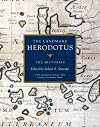
As mentioned above, I chose to make a project out of reading Herodotus. First of all, the edition one chooses is very important. Preferably, pick one with at least a good introduction and copious notes. The edition I chose was The Landmark Herodotus, which constitutes the equivalent of a college course. Not only does it have an introduction, but possibly — as the Austrian Emperor declared in Amadeus — it contains too many notes! It assumes that the reader has opened the book at random to any page and if a location is mentioned as recently as the previous page, a footnote cites a relevant map.
The Landmark Herodotus contains 125 pages of maps. One can be found at the turn of every two to three leaves on average. And each map contains only what you need to see for the related discussion. There is a set of reference maps at the end, complete with gazetteer, which contain nearly everything.
In addition to the introduction, notes and maps, The Landmark edition provides twenty-plus appendices which flesh out subjects too complex for footnotes. These appendices are short essays on subjects like Herodotus' geography; Athenian and Spartan government; the truth or fiction of Herodotus' account of Egypt; hoplite warfare and trireme warfare; converting Greek measurements into modern feet, miles, etc.; and many more. These appendices are written by scholars other than the general editor Robert B. Strassler. A chapter by chapter time line precedes the text.
Taken altogether, The Landmark Herodotus is a treasure house. But like I said, I made a project out of this. Before I was finished, I had listened to a Teaching Company course (24 half-hour lectures) on Herodotus, and I had consulted the Oxford World Classics edition of Herodotus, which contains a wholly different approach than that contained in the Landmark edition both in the introduction and the notes. Both editions are extremely interesting, helpful and all-consuming.
This project took up about two months of my life. I did read other books along the way as a respite from all this, and taken altogether, it was a very rewarding journey, one that I am almost certain to enjoy even more in retrospect. For many reasons, I have to give this whole effort five stars.
I hope that I have given enough fair warning. But for readers who enjoy this sort of thing, you are in for a memorable experience. show less
However, I am one of the happy few who decided to take the plunge. I ended up making a project out of it. My curiosity about The Histories was stirred when, as show more a young teenager, I happened to open a copy of The Histories to a description of Egyptian embalming methods! This was a wholly new concept and I was ghoulish enough to want to keep reading. But I soon gave up because there were too many strange names and places and I had no background to really understand the whole of Herodotus' massive work which was primarily concerned with the history of the conflict between the Greeks and Persians during the 5th century BC.
Herodotus was the first historian. No one before him had attempted a prose account of important events, and certainly not anything close to the scale of The Histories. In the course of reading I learned many reasons why a nonspecialist might want to undertake the project of plowing through the nine books of The Histories, some from Herodotus himself and some from various commentators'. It was those commentators that made all the difference. More about them later.
First of all, it is interesting to see an ancient mind at work, attempting to assemble enough facts and stories and geographical descriptions — all based on oral tradition and first, second and even third-hand accounts —to paint a complete picture of the whys and wherefores of the wars between Persia and Greece. This indeed is the focus of The Histories, even though it is easy to get lost in the minutiae and forget that this is Herodotus' purpose. After all, what could Egyptian embalming practices have to do with the Persian wars?
We see the seeds of the great man theory of history being sown by Herodotus, the theory that dominated historical discourse right down to the beginnings of the 20th century. Herodotus always tells us that individuals are the causes of events. We see how much Herodotus' approach to rhetoric and style and the structural considerations of The Histories influenced later writers of not only history, but travel writing, ethnographical studies, philosophy and even fiction. Indeed, some detractors — not the least of which was Plutarch — have called The Histories a tissue of lies.
To get a proper perspective, think of someone in the year 2000 attempting to write a history of World War II — sixty years previous — based on nothing but interviews and personal observations and no documentary evidence! Herodotus was a boy at the time of the final battles between the Greeks and Persians, and his later reportage was more dependable than when he was reporting about three, four and five generations before his time. Yes, the work is filled with inaccuracies, as what oral history wouldn't be, yet even if it were entirely a work of fiction it would still be worth reading because a certain amount of "truth" is to be gleaned from even the most prosaic novel. And there is a lot of truth in The Histories.
As mentioned above, I chose to make a project out of reading Herodotus. First of all, the edition one chooses is very important. Preferably, pick one with at least a good introduction and copious notes. The edition I chose was The Landmark Herodotus, which constitutes the equivalent of a college course. Not only does it have an introduction, but possibly — as the Austrian Emperor declared in Amadeus — it contains too many notes! It assumes that the reader has opened the book at random to any page and if a location is mentioned as recently as the previous page, a footnote cites a relevant map.
The Landmark Herodotus contains 125 pages of maps. One can be found at the turn of every two to three leaves on average. And each map contains only what you need to see for the related discussion. There is a set of reference maps at the end, complete with gazetteer, which contain nearly everything.
In addition to the introduction, notes and maps, The Landmark edition provides twenty-plus appendices which flesh out subjects too complex for footnotes. These appendices are short essays on subjects like Herodotus' geography; Athenian and Spartan government; the truth or fiction of Herodotus' account of Egypt; hoplite warfare and trireme warfare; converting Greek measurements into modern feet, miles, etc.; and many more. These appendices are written by scholars other than the general editor Robert B. Strassler. A chapter by chapter time line precedes the text.
Taken altogether, The Landmark Herodotus is a treasure house. But like I said, I made a project out of this. Before I was finished, I had listened to a Teaching Company course (24 half-hour lectures) on Herodotus, and I had consulted the Oxford World Classics edition of Herodotus, which contains a wholly different approach than that contained in the Landmark edition both in the introduction and the notes. Both editions are extremely interesting, helpful and all-consuming.
This project took up about two months of my life. I did read other books along the way as a respite from all this, and taken altogether, it was a very rewarding journey, one that I am almost certain to enjoy even more in retrospect. For many reasons, I have to give this whole effort five stars.
I hope that I have given enough fair warning. But for readers who enjoy this sort of thing, you are in for a memorable experience. show less
I think what I enjoyed most was the honesty. Herodotus was trying to write about the known world and the people in it. He reported stuff that he didn’t always personally believe, but he was up front about it and would admit, “Yeah, I’m not so sure, but this is what they say in Myconos,” or wherever. And he did TRY to get reliable sources. Which isn’t to say he didn’t sometimes get his leg pulled – there is not, in fact, a tribe of people in the Sahara who don’t have heads. show more But again, “that’s what the Libyans told me…” It made the book feel like a friend telling you a story as opposed to someone trying to lecture at you.
I really really really (REALLY) liked that he didn’t have an agenda. By which I mean his unbiased coverage: He was Greek, and Greece had just had a bunch of wars with the Persian Empire (ever see “300?” He writes about it). So for him, as a Greek, to say anything nice about the Persian people or anything they do—and he does when it’s deserved—is pretty unheard of in his time. Or, let’s be honest, ours. He tells the story WITHOUT inflicting his personal value judgments on it.
It being the ancient world, women are generally ignored, but there are a few notable ladies he writes about for being wise or clever or what have you (plus there’s Amazons!). Also, the science of geography being the massive joke it was back then, he had NO idea how big Africa really was, and the British Isles were an unproved rumor as far as he was concerned. However, I have to say it was REALLY nice to read a book written before 19-sumpty-some that ISN’T racist. He’ll helpfully inform his European audience that yes, people in Egypt and Ethiopia tend to be a bit dark compared to us, etc. etc., but there are no implicit or explicit judgments associated with skin tone. Maybe because the various Greek city-states were so busy fighting *each other* all the time, meaning that the person most likely to kill you looked like you. As a matter of fact, he can’t say enough nice things about Egypt, and he thought Ethiopians were “the tallest, most handsome and longest lived of all men.”
The book has so many great passages here and there that I actually took to marking their place in the margin – in pencil, of course, but for me to write in my books at all is saying something. show less
I really really really (REALLY) liked that he didn’t have an agenda. By which I mean his unbiased coverage: He was Greek, and Greece had just had a bunch of wars with the Persian Empire (ever see “300?” He writes about it). So for him, as a Greek, to say anything nice about the Persian people or anything they do—and he does when it’s deserved—is pretty unheard of in his time. Or, let’s be honest, ours. He tells the story WITHOUT inflicting his personal value judgments on it.
It being the ancient world, women are generally ignored, but there are a few notable ladies he writes about for being wise or clever or what have you (plus there’s Amazons!). Also, the science of geography being the massive joke it was back then, he had NO idea how big Africa really was, and the British Isles were an unproved rumor as far as he was concerned. However, I have to say it was REALLY nice to read a book written before 19-sumpty-some that ISN’T racist. He’ll helpfully inform his European audience that yes, people in Egypt and Ethiopia tend to be a bit dark compared to us, etc. etc., but there are no implicit or explicit judgments associated with skin tone. Maybe because the various Greek city-states were so busy fighting *each other* all the time, meaning that the person most likely to kill you looked like you. As a matter of fact, he can’t say enough nice things about Egypt, and he thought Ethiopians were “the tallest, most handsome and longest lived of all men.”
The book has so many great passages here and there that I actually took to marking their place in the margin – in pencil, of course, but for me to write in my books at all is saying something. show less
This was quite a slog, and I abandoned ship at the end of book six, so bear that in mind. This is a book that probably is very rewarding to study, to read it in chunks at bedtime can be a bit problematic. Whilst The Histories has a structure the presentation is not as readable as the layperson might be used to, and I found that I was often lost in time and space! Wait, is this same Megacles? There are some fantastic stories here, but lots of similarly named people going places and fighting show more over people, in ways that aren't especially dramatic. I always enjoyed the Pythias though, they sounded like they had fun. I guess that I don't want to badmouth this book, because I can recognise that the failings were mostly mine, but if you're a bit of a thicky like me then you might want to get a well-edited or annotated version. I will definitely come back to the last three books sometime though. show less
Lists
Western Canon (2)
A Reading List (1)
Reading LIst (1)
Folio Society (1)
Unread books (1)
Favourite Books (1)
Awards


You May Also Like


Associated Authors
Statistics
- Works
- 715
- Also by
- 31
- Members
- 19,669
- Popularity
- #1,106
- Rating
- 4.1
- Reviews
- 183
- ISBNs
- 628
- Languages
- 24
- Favorited
- 61

