
Dan McDaid
Author of Firefly: The Unification War Vol. 3
About the Author
Series
Works by Dan McDaid
Associated Works
Tagged
Common Knowledge
- Birthdate
- 1976-10-15
- Gender
- male
- Nationality
- UK
- Birthplace
- Cornwall, England, UK
- Associated Place (for map)
- England, UK
Members
Reviews

Access a version of the below that includes illustrations on my blog.
What the heck happened!? It's so... tiny.
This era sees the strip expand to twelve pages per issue, a sign of unprecedented faith in it. (Compare to the dinky strips we get these days... assuming we get any at all!) But on the other hand, we get the smallest collection I can remember. If you were reading this in the mag, I'm sure it wouldn't matter. (And indeed, I remember liking this era quite a bit... a decade ago.) But show more it's hard to not feel disappointed when you've reached the end of a collection and read three whole stories!
What happened is that the twenty-issue collections weren't selling well. (At least, I guess, since the collection hiatus between The Widow's Curse and The Crimson Hand.) The problem was they had to be priced so high they priced most people out. So, smaller collections could have lower prices and people would be more likely to pick them up. In the future, collections of about thirteen strips would become the norm, but the problem here is that the story arc had been designed with a twenty-issue collection in mind, so it had to be split up into two chunks of roughly ten strips apiece, but based on where the stories divided, we ended up with a nine-issue collection here, followed by an eleven-issue one in Hunters of the Burning Stone. (They were, however, released simultaneously, so you could at least get all twenty strips at once.)
Thirteen strips is more satisfying, but in this case there wouldn't be a way to get to thirteen strips that wouldn't be awkward. If you chucked The Broken Man into The Chains of Olympus, you'd get up to thirteen, but then you'd end up with a pretty weird volume for Hunters of the Burning Stone if it went from #455 to 467. One Amy and Rory story, one companion-less anniversary story that brings an arc to a climax, and then a couple Clara stories.
It seems a weird paradox that the actual strip was doing well enough to get its page length increased while at the same time the reprint sales fell off enough that they needed to be slimmed down!
The Chains of Olympus
Rory makes his DWM debut... but more importantly, Scott Gray returns as scripter of the main strip for the first time since The Flood way back in 2005! There have been many good writers of the strip in the interim, of course, but something I like about Gray is his interest in the character of the Doctor himself. The Doctor goes through a little arc here, which is nice, in terms of his attitude toward Socrates. The plot itself is fun: the beginning sets you up to think that either the Greek gods were aliens all along, or aliens are impersonating the Greek gods, but the answer turns out to be neither, and more tragic. And of course Gray is great at peppering his very serious story with moments of levity, like the Doctor's double-take when he meets Plato, or the blacksmiths who make Rory's magic sword seizing an opportunity to advertise.
Mike Collins is back on art. Since Supernature, I think he's gotten a better handle on Matt Smith... I still feel unconvinced by his Karen Gillan. But he's a great illustrator regardless: lots of big expansive stuff here that he and inker David A Roach capture perfectly. One of the selling points of the strip is it's like what you see on screen but with an unlimited budget, and Collins is always great at that kind of thing. I like the inverted design of the Greek gods; nice work from colourist James Offredi there. Good, breezy fun with a strong undercurrent.
The final moment doesn't just point to a new story arc; it also points at an aspect of the Doctor's character. I like Socrates's evaluation of him.
Sticks & Stones
This is a highly effective two-parter, giving us two styles of story at once: an urban thriller featuring the Doctor and a domestic base-under-siege featuring Rory and Amy. An alien graffiti artist attacks London, spraying his name first across London landmarks and then across language itself: soon everyone finds themselves unable to say any word other than "MONOS" and then everyone finds themselves becoming the word "MONOS." It's a great concept, one of the things that plays very well to the strength of the comics medium, and everyone here works together to make it work: artists Martin Geraghty and David Roach, letterer Roger Langridge, and even DWM art editor Richard Atkinson, who supplied a panel of brand logos turning into "MONOS" again and again. The eventual resolution is quite good, too.
I like how for Rory, almost the entire story takes place in a supermarket. It's very human, and plays to the strengths of his character. I like that, however, meanwhile the Doctor is in a flying van, careening around London landmarks! Again, Gray is great at peppering his writing with small jokes, like Rory complaining about Amy's driving, or all the stuff about Amy's cooking. Geraghty is usually strong at this kind of urban escapade thing (see The Flood, The Age of Ice, The Golden Ones), but he also does well by the story's human elements, capturing all three regulars very well.
I have one complaint: if this had been on screen in, say, the Russell T Davies era, I think the characters trapped in the supermarket and the police detective the Doctor teams up with would have had a bit more material. This was plotted as a three-parter before Gray realized he could do it in two... but I wonder if three parts would have made these characters pop more and make a strong story even stronger.
Oh, I just got the title. Nice.
The Cornucopia Caper
The strip moves from strength to strength with another fun one with serious undercurrents. This brings us to the city of Cornucopia, which becomes the second of the strip's recurring settings alongside Stockbridge, and introduces someone who I am pretty sure goes on to be a recurring character, the unlicensed monkey thief Horatio Lynk. Lynk is an intstantly likeable character: telling the first part through his narration was an inspired move, and his flirtatious repartee with Amy Pond really sings. I loved all their escapades together. The Doctor and Rory get a nice subplot, too, with the Doctor on the back foot but still clever. And, I can't say this enough, lots of good jokes! I always genuinely laugh out loud at least once when reading a Scott Gray story.
I do think that unlike some other strip writers, Gray rarely tries to overtly mimic the style of the tv programme itself, though sometimes the strip resonates a bit with particular aspects of the screen version. Rather, it seems to me that back when he wrote his amazing run of stories from Ophidius to The Flood, he honed in on what a Doctor Who comic strip truly was and ought to be. So now, returning to the strip, he doesn't try to do Moffat on the page, he just takes his Scott Gray formula and applies it to a new set of characters, while still keeping those characters true to their screen counterparts. I imagine it's harder than it looks to strike this balance, but the result is, I think, the platonic ideal of the DWM comic strip.
Plus, of course we get some sweet Dan McDaid goodness. I love his Amy Pond; his less realistic style means he captures her perfectly without being beholden to Karen Gillan's actual likeness! The energy he imparts Lynk, the grubbiness of Cornucopia, the ominousness of his alien Ziggurat, the grotesequeness of his villains, it's all perfect.
Stray Observations:
What the heck happened!? It's so... tiny.
This era sees the strip expand to twelve pages per issue, a sign of unprecedented faith in it. (Compare to the dinky strips we get these days... assuming we get any at all!) But on the other hand, we get the smallest collection I can remember. If you were reading this in the mag, I'm sure it wouldn't matter. (And indeed, I remember liking this era quite a bit... a decade ago.) But show more it's hard to not feel disappointed when you've reached the end of a collection and read three whole stories!
What happened is that the twenty-issue collections weren't selling well. (At least, I guess, since the collection hiatus between The Widow's Curse and The Crimson Hand.) The problem was they had to be priced so high they priced most people out. So, smaller collections could have lower prices and people would be more likely to pick them up. In the future, collections of about thirteen strips would become the norm, but the problem here is that the story arc had been designed with a twenty-issue collection in mind, so it had to be split up into two chunks of roughly ten strips apiece, but based on where the stories divided, we ended up with a nine-issue collection here, followed by an eleven-issue one in Hunters of the Burning Stone. (They were, however, released simultaneously, so you could at least get all twenty strips at once.)
Thirteen strips is more satisfying, but in this case there wouldn't be a way to get to thirteen strips that wouldn't be awkward. If you chucked The Broken Man into The Chains of Olympus, you'd get up to thirteen, but then you'd end up with a pretty weird volume for Hunters of the Burning Stone if it went from #455 to 467. One Amy and Rory story, one companion-less anniversary story that brings an arc to a climax, and then a couple Clara stories.
It seems a weird paradox that the actual strip was doing well enough to get its page length increased while at the same time the reprint sales fell off enough that they needed to be slimmed down!
The Chains of Olympus
Rory makes his DWM debut... but more importantly, Scott Gray returns as scripter of the main strip for the first time since The Flood way back in 2005! There have been many good writers of the strip in the interim, of course, but something I like about Gray is his interest in the character of the Doctor himself. The Doctor goes through a little arc here, which is nice, in terms of his attitude toward Socrates. The plot itself is fun: the beginning sets you up to think that either the Greek gods were aliens all along, or aliens are impersonating the Greek gods, but the answer turns out to be neither, and more tragic. And of course Gray is great at peppering his very serious story with moments of levity, like the Doctor's double-take when he meets Plato, or the blacksmiths who make Rory's magic sword seizing an opportunity to advertise.
Mike Collins is back on art. Since Supernature, I think he's gotten a better handle on Matt Smith... I still feel unconvinced by his Karen Gillan. But he's a great illustrator regardless: lots of big expansive stuff here that he and inker David A Roach capture perfectly. One of the selling points of the strip is it's like what you see on screen but with an unlimited budget, and Collins is always great at that kind of thing. I like the inverted design of the Greek gods; nice work from colourist James Offredi there. Good, breezy fun with a strong undercurrent.
The final moment doesn't just point to a new story arc; it also points at an aspect of the Doctor's character. I like Socrates's evaluation of him.
Sticks & Stones
This is a highly effective two-parter, giving us two styles of story at once: an urban thriller featuring the Doctor and a domestic base-under-siege featuring Rory and Amy. An alien graffiti artist attacks London, spraying his name first across London landmarks and then across language itself: soon everyone finds themselves unable to say any word other than "MONOS" and then everyone finds themselves becoming the word "MONOS." It's a great concept, one of the things that plays very well to the strength of the comics medium, and everyone here works together to make it work: artists Martin Geraghty and David Roach, letterer Roger Langridge, and even DWM art editor Richard Atkinson, who supplied a panel of brand logos turning into "MONOS" again and again. The eventual resolution is quite good, too.
I like how for Rory, almost the entire story takes place in a supermarket. It's very human, and plays to the strengths of his character. I like that, however, meanwhile the Doctor is in a flying van, careening around London landmarks! Again, Gray is great at peppering his writing with small jokes, like Rory complaining about Amy's driving, or all the stuff about Amy's cooking. Geraghty is usually strong at this kind of urban escapade thing (see The Flood, The Age of Ice, The Golden Ones), but he also does well by the story's human elements, capturing all three regulars very well.
I have one complaint: if this had been on screen in, say, the Russell T Davies era, I think the characters trapped in the supermarket and the police detective the Doctor teams up with would have had a bit more material. This was plotted as a three-parter before Gray realized he could do it in two... but I wonder if three parts would have made these characters pop more and make a strong story even stronger.
Oh, I just got the title. Nice.
The Cornucopia Caper
The strip moves from strength to strength with another fun one with serious undercurrents. This brings us to the city of Cornucopia, which becomes the second of the strip's recurring settings alongside Stockbridge, and introduces someone who I am pretty sure goes on to be a recurring character, the unlicensed monkey thief Horatio Lynk. Lynk is an intstantly likeable character: telling the first part through his narration was an inspired move, and his flirtatious repartee with Amy Pond really sings. I loved all their escapades together. The Doctor and Rory get a nice subplot, too, with the Doctor on the back foot but still clever. And, I can't say this enough, lots of good jokes! I always genuinely laugh out loud at least once when reading a Scott Gray story.
I do think that unlike some other strip writers, Gray rarely tries to overtly mimic the style of the tv programme itself, though sometimes the strip resonates a bit with particular aspects of the screen version. Rather, it seems to me that back when he wrote his amazing run of stories from Ophidius to The Flood, he honed in on what a Doctor Who comic strip truly was and ought to be. So now, returning to the strip, he doesn't try to do Moffat on the page, he just takes his Scott Gray formula and applies it to a new set of characters, while still keeping those characters true to their screen counterparts. I imagine it's harder than it looks to strike this balance, but the result is, I think, the platonic ideal of the DWM comic strip.
Plus, of course we get some sweet Dan McDaid goodness. I love his Amy Pond; his less realistic style means he captures her perfectly without being beholden to Karen Gillan's actual likeness! The energy he imparts Lynk, the grubbiness of Cornucopia, the ominousness of his alien Ziggurat, the grotesequeness of his villains, it's all perfect.
Stray Observations:
- Actually, at 129 pages (including commentary) the length of this collection ties for smallest with The Cruel Sea, The Land of the Blind, Ground Zero, Evening's Empire, and The Good Soldier. But I think it feels smaller, because 1) the extras I am pretty sure are a bit longer than normal, so there's less actual strip content, and 2) because the actual strips are longer than they have been, that means fewer actual strips and fewer actual stories are collected here.
- Karen Gillan is a good-looking woman, of course, but I am not convinced she has the breasts that Mike Collins gives Amy. Indeed, I don't think that's true of any of the female companions!
- I like how Gray manages to build up that sense of a DWM universe without obtrusive continuity references: this collection features a return of the Moblox from Ophidius et al. (#300-03) and the Necrotists from The Way of All Flesh (#308-10).
- A city where crime is legal but must be channeled through bureaucratic guilds... it's Ankh-Morpok from Terry Pratchett's Discworld, isn't it? Gray doesn't mention that as an influence, though, so maybe it was just somewhere in his subconscious. I think Izzy was established as a Discworld fan, wasn't she?
- "YOU'RE JUST A TRACER" WATCH: There are exactly four artists who work on this volume. All but one of them receives cover credit. Who could have been left out???

Access a version of the below that includes illustrations on my blog.
With issue #400 we enter the period where I haven't reread any of the strips. Prior to this project, my last DWM graphic novel was The Widow's Curse in April 2010, so from this point on, I might have read every strip before, but only in the context of reading ten pages a month. Kind of. As an American, DWM has never been easy to get ahold of. Issues could be late, out of order, or just skipped when arriving at an American show more comic shop. So even though I've read most of this material in theory, it feels new to me. And even if I got it all in order and on time, it's different to read a twenty-one-issue story in three days than in twenty months! By the time I got to The Crimson Hand on the original read, did I even remember details seeded in Mortal Beloved or The Age of Ice? Seems doubtful.
So anyway: The Crimson Hand. This marks a return the "old" way of doing DWM—original companion, linked storytelling—that went away when Paul McGann did. On top of that, Dan McDaid writes twenty-one strips in a row, the first writer to rack up a run more than five strips long since Scott Gray's run from #333 to 353 (The Power of Thoeuris! to The Flood). This basically covers the whole Tennant specials year, from just after the broadcast of "Journey's End" up to just before the broadcast of "The Eleventh Hour," an enormous canvas for DWM to once again draw its own destiny.
Hotel Historia
This is a nice little one-parter that sets the stage for the whole run, though that wasn't its intention at the time; Dan McDaid makes his DWM debut as an artist for a story he also writes, and really, McDaid's expressive, dynamic, cartoony style is what makes this story stand out so much. Lots of great panels and great dynamic colors and strong sense of characterization for both the Doctor and Majenta Pryce. You can see why they wanted to bring her back—if they hadn't made her into a companion, surely she would have become a Dogbolter if nothing else! My only complaint is the fact the Majenta is running a time-travel hotel almost feels incidental; that idea seems like it could have some fun implications, but the story's just not long enough to do anything with them. It's a shame McDaid didn't have the time to do any more double-duty stories in this volume, though he would return as an artist during the Matt Smith run.
Space Vikings!
This is the volume's only story with no Dan McDaid and no Majenta. It's a bit of a goof but fun enough, and of course Rob Davis is one of those artists who can only enhance such a story with his dynamic storytelling style.
Thinktwice
And Majenta debuts as a companion. This story is mostly here to make that work, and to set up the story arc, but it's all very well done. There are some good jokes, the characters are strongly done (the Doctor pretending to be a doctor is great), and the part two cliffhanger—where Majenta uses her last breath to complain that the Doctor's ruined her life—is excellent. I found the villain a bit perfunctory, but he's not really the point.
The Stockbridge Child
It seems to be a DWM tradition at this point. When the strip begins having story-to-story continuity again, you also need to explicitly link back into the early days of the strip, making clear that not only is it a big story, but it's just one big story. When The Mark of Mandragora pulled together threads from the preceding year or so, it also included a cameo from an Iron Legion villain; when End Game began a new ongoing era, it went back to Stockbridge and Maxwell Edison from the Steve Parkhouse–Dave Gibbons days. So too does The Stockbridge Child: aliens are up to no good in Stockbridge, and the Doctor needs the help of Maxwell Edison to stop them.
It doesn't quite have the weirdness of Parkhouse's own Stockbridge stories, and I got a bit lost with some aspects (what were the parents up to exactly?), but this is an effective use of Maxwell Edison as a character. McDaid complains in the commentary that he gave Max too much angst, but I disagree; this builds on aspects of the character we saw in Stars Fell on Stockbridge and End Game, and also "new series"-ifies him. That is to say, this story treats him the same way "School Reunion" did Sarah Jane. It's got good callbacks without being nostalgic, and it looks forward to the future. Good stuff.
Mortal Beloved
I thought this was a delightful story, sort of off-kilter and unhinged in only the way a Doctor Who comic can be. The Doctor and Majenta end up at the mansion of Majenta's fiancé—whom she doesn't remember. The mansion is built on an asteroid adjacent to a massive space storm. In parallel stories, the Doctor interacts with a self-aware hologram of the dead fiancé, while Majenta finds out he kind of hangs on to life. There's ghosts and monster cyborgs wearing bowties and corpses on a corporate board of directors. Sean Longcroft had drawn two previous strips, but this is his first "serious" one, and he knocks it out of the park with atmosphere, as does James Offredi on colours. Surprising pathos here, to be honest.
The Age of Ice
I remembered not liking this one. I never like those kind of stories that basically come down to "whoa, dinos in the modern age!" Well, that was only a small part of this highly effective contemporary UNIT story. I wouldn't mark this as my favorite strip of the run, but it's perfectly done: good dialogue, good jokes, good characterization, especially for Majenta, some nice twists. It's a good riff on "The Sontaran Stratagem"-style storytelling, except that I thought McDaid managed to create some instantly likable UNIT characters in Colonel McCay and Captain Braxton. Seems a shame neither popped up again; they would have made good recurring characters for the strip. Majenta makes some interesting but very plausible moves here. And Martin Geraghty always excels that kind of high-energy stuff, whilst never losing the characters' essential humanity. My only real complaint is that derived of their drive to be "the first," returning aliens the Skith come across as kind of generic, but McDaid does eventually link them into the ongoing "Crimson Hand" plot in an effective way.
The Deep Hereafter
Now this is my favorite comic of the run, a madcap, hilarious riff on Golden Age detective comics. A dying private eye passes his hat and his charge onto the Doctor, who slips right into the role of investigating a list of bizarre characters, all suspects in a planet's greatest-ever crime, the theft of a world bomb. The Doctor hams it up in the part; Majenta, delightfully, disdains all of it: "If you're going to talk like that the whole time we're here, then I want nothing more to do with you." All the characters are great: the femme fatale who turns out to be a robot driven by "Tiny Danza," Half-Nelson the man where half of him got away in a transmat.. and half didn't, a beleaguered Centaurian lawyer who just wants to retire. Tremendous fun from writing to Rob Davis's pitch-perfect art to the colours that add so much to the atmosphere. Alpha Centauri was made for comics (there's a pinch of Zoidberg there, I feel), and the best part—other than the resolution—has got to be when Majenta threatens to drown Tiny Danza in whisky. Oh, and when he makes his surprise reappearance!
Onomatopoeia / Ghosts of the Northern Line
Onomatopoeia is one of those stories I admire more than enjoy; maybe I am a philistine, but I always struggle with comics where it's all about the images, not the words! That the characters lose their voices is a neat idea, but I struggled with the action a bit. Mike Collins is good at conventional tv tie-in comics, but I wonder if he was the right choice here, and if someone with a more fluid style might have done better. But I have to give kudos to this era's experimental run, which began in Deep Hereafter and continues into Ghosts of the Northern Line, a delightfully grounded (undergrounded?) ghost story with atmospheric art by Paul Grist. You can see that by this point, McDaid has got the tenth Doctor/Majenta partnership down to an art. They have great banter and Majenta some genuine character moments; the tenth Doctor gets in a nice bit of late-period self-loathing. The stuff about the ghosts is all so well done. Unfortunately, this is it, but thankfully it went out on a high...
The Crimson Hand
In his many years on the strip, Scott Gray raised the "season finale" to an art form with stories like Ground Zero, Wormwood, The Glorious Dead, Oblivion, and The Flood. Dan McDaid revives that tradition and does it proud with Gray's consistent collaborator Martin Geraghty back yet again. Lots of drama here, good surprises (I did not expect the return of a character from Thinktwice), nice explanation of the backstory, and a climax that really works, plot-wise and emotion-wise. One last double-cross from Majenta is the perfect way to wrap the whole thing up! My favorite part is the bit where Majenta and the Crimson Hand have won, and the Doctor is trapped in a pocket universe. It's sort of cribbing from those bits of The Glorious Dead where the Doctor is missing and Izzy is all alone... except in this case, it's the companion's own fault! A solid conclusion to a solid run.
Overall, I really enjoyed this volume. Even if there wasn't an ongoing story to hold everything together, it would still be a strong run for showing off the versatility of the strip at its best. Add Majenta—the kind of companion character who plays to the strengths of comics and adds something to every story in which she appears—and you get what is certainly the best run since the Scott Gray years, even if Rose/Martha/Donna years were solid too.
Stray Observations:
With issue #400 we enter the period where I haven't reread any of the strips. Prior to this project, my last DWM graphic novel was The Widow's Curse in April 2010, so from this point on, I might have read every strip before, but only in the context of reading ten pages a month. Kind of. As an American, DWM has never been easy to get ahold of. Issues could be late, out of order, or just skipped when arriving at an American show more comic shop. So even though I've read most of this material in theory, it feels new to me. And even if I got it all in order and on time, it's different to read a twenty-one-issue story in three days than in twenty months! By the time I got to The Crimson Hand on the original read, did I even remember details seeded in Mortal Beloved or The Age of Ice? Seems doubtful.
So anyway: The Crimson Hand. This marks a return the "old" way of doing DWM—original companion, linked storytelling—that went away when Paul McGann did. On top of that, Dan McDaid writes twenty-one strips in a row, the first writer to rack up a run more than five strips long since Scott Gray's run from #333 to 353 (The Power of Thoeuris! to The Flood). This basically covers the whole Tennant specials year, from just after the broadcast of "Journey's End" up to just before the broadcast of "The Eleventh Hour," an enormous canvas for DWM to once again draw its own destiny.
Hotel Historia
This is a nice little one-parter that sets the stage for the whole run, though that wasn't its intention at the time; Dan McDaid makes his DWM debut as an artist for a story he also writes, and really, McDaid's expressive, dynamic, cartoony style is what makes this story stand out so much. Lots of great panels and great dynamic colors and strong sense of characterization for both the Doctor and Majenta Pryce. You can see why they wanted to bring her back—if they hadn't made her into a companion, surely she would have become a Dogbolter if nothing else! My only complaint is the fact the Majenta is running a time-travel hotel almost feels incidental; that idea seems like it could have some fun implications, but the story's just not long enough to do anything with them. It's a shame McDaid didn't have the time to do any more double-duty stories in this volume, though he would return as an artist during the Matt Smith run.
Space Vikings!
This is the volume's only story with no Dan McDaid and no Majenta. It's a bit of a goof but fun enough, and of course Rob Davis is one of those artists who can only enhance such a story with his dynamic storytelling style.
Thinktwice
And Majenta debuts as a companion. This story is mostly here to make that work, and to set up the story arc, but it's all very well done. There are some good jokes, the characters are strongly done (the Doctor pretending to be a doctor is great), and the part two cliffhanger—where Majenta uses her last breath to complain that the Doctor's ruined her life—is excellent. I found the villain a bit perfunctory, but he's not really the point.
The Stockbridge Child
It seems to be a DWM tradition at this point. When the strip begins having story-to-story continuity again, you also need to explicitly link back into the early days of the strip, making clear that not only is it a big story, but it's just one big story. When The Mark of Mandragora pulled together threads from the preceding year or so, it also included a cameo from an Iron Legion villain; when End Game began a new ongoing era, it went back to Stockbridge and Maxwell Edison from the Steve Parkhouse–Dave Gibbons days. So too does The Stockbridge Child: aliens are up to no good in Stockbridge, and the Doctor needs the help of Maxwell Edison to stop them.
It doesn't quite have the weirdness of Parkhouse's own Stockbridge stories, and I got a bit lost with some aspects (what were the parents up to exactly?), but this is an effective use of Maxwell Edison as a character. McDaid complains in the commentary that he gave Max too much angst, but I disagree; this builds on aspects of the character we saw in Stars Fell on Stockbridge and End Game, and also "new series"-ifies him. That is to say, this story treats him the same way "School Reunion" did Sarah Jane. It's got good callbacks without being nostalgic, and it looks forward to the future. Good stuff.
Mortal Beloved
I thought this was a delightful story, sort of off-kilter and unhinged in only the way a Doctor Who comic can be. The Doctor and Majenta end up at the mansion of Majenta's fiancé—whom she doesn't remember. The mansion is built on an asteroid adjacent to a massive space storm. In parallel stories, the Doctor interacts with a self-aware hologram of the dead fiancé, while Majenta finds out he kind of hangs on to life. There's ghosts and monster cyborgs wearing bowties and corpses on a corporate board of directors. Sean Longcroft had drawn two previous strips, but this is his first "serious" one, and he knocks it out of the park with atmosphere, as does James Offredi on colours. Surprising pathos here, to be honest.
The Age of Ice
I remembered not liking this one. I never like those kind of stories that basically come down to "whoa, dinos in the modern age!" Well, that was only a small part of this highly effective contemporary UNIT story. I wouldn't mark this as my favorite strip of the run, but it's perfectly done: good dialogue, good jokes, good characterization, especially for Majenta, some nice twists. It's a good riff on "The Sontaran Stratagem"-style storytelling, except that I thought McDaid managed to create some instantly likable UNIT characters in Colonel McCay and Captain Braxton. Seems a shame neither popped up again; they would have made good recurring characters for the strip. Majenta makes some interesting but very plausible moves here. And Martin Geraghty always excels that kind of high-energy stuff, whilst never losing the characters' essential humanity. My only real complaint is that derived of their drive to be "the first," returning aliens the Skith come across as kind of generic, but McDaid does eventually link them into the ongoing "Crimson Hand" plot in an effective way.
The Deep Hereafter
Now this is my favorite comic of the run, a madcap, hilarious riff on Golden Age detective comics. A dying private eye passes his hat and his charge onto the Doctor, who slips right into the role of investigating a list of bizarre characters, all suspects in a planet's greatest-ever crime, the theft of a world bomb. The Doctor hams it up in the part; Majenta, delightfully, disdains all of it: "If you're going to talk like that the whole time we're here, then I want nothing more to do with you." All the characters are great: the femme fatale who turns out to be a robot driven by "Tiny Danza," Half-Nelson the man where half of him got away in a transmat.. and half didn't, a beleaguered Centaurian lawyer who just wants to retire. Tremendous fun from writing to Rob Davis's pitch-perfect art to the colours that add so much to the atmosphere. Alpha Centauri was made for comics (there's a pinch of Zoidberg there, I feel), and the best part—other than the resolution—has got to be when Majenta threatens to drown Tiny Danza in whisky. Oh, and when he makes his surprise reappearance!
Onomatopoeia / Ghosts of the Northern Line
Onomatopoeia is one of those stories I admire more than enjoy; maybe I am a philistine, but I always struggle with comics where it's all about the images, not the words! That the characters lose their voices is a neat idea, but I struggled with the action a bit. Mike Collins is good at conventional tv tie-in comics, but I wonder if he was the right choice here, and if someone with a more fluid style might have done better. But I have to give kudos to this era's experimental run, which began in Deep Hereafter and continues into Ghosts of the Northern Line, a delightfully grounded (undergrounded?) ghost story with atmospheric art by Paul Grist. You can see that by this point, McDaid has got the tenth Doctor/Majenta partnership down to an art. They have great banter and Majenta some genuine character moments; the tenth Doctor gets in a nice bit of late-period self-loathing. The stuff about the ghosts is all so well done. Unfortunately, this is it, but thankfully it went out on a high...
The Crimson Hand
In his many years on the strip, Scott Gray raised the "season finale" to an art form with stories like Ground Zero, Wormwood, The Glorious Dead, Oblivion, and The Flood. Dan McDaid revives that tradition and does it proud with Gray's consistent collaborator Martin Geraghty back yet again. Lots of drama here, good surprises (I did not expect the return of a character from Thinktwice), nice explanation of the backstory, and a climax that really works, plot-wise and emotion-wise. One last double-cross from Majenta is the perfect way to wrap the whole thing up! My favorite part is the bit where Majenta and the Crimson Hand have won, and the Doctor is trapped in a pocket universe. It's sort of cribbing from those bits of The Glorious Dead where the Doctor is missing and Izzy is all alone... except in this case, it's the companion's own fault! A solid conclusion to a solid run.
Overall, I really enjoyed this volume. Even if there wasn't an ongoing story to hold everything together, it would still be a strong run for showing off the versatility of the strip at its best. Add Majenta—the kind of companion character who plays to the strengths of comics and adds something to every story in which she appears—and you get what is certainly the best run since the Scott Gray years, even if Rose/Martha/Donna years were solid too.
Stray Observations:
- I usually reorder these volumes by publication order as I read, but I kept Space Vikings! where the book had it, even though it's way off; it would have come out around the time of The Crimson Hand. But collection editors Tom Spilsbury and Scott Gray knew what they were doing; you wouldn't want to go from Hotel Historia to Thinktwice any more than you'd want to go straight from "The Runaway Bride" to "Partners in Crime"; vital to the latter story is a sense that time has passed. Plugging in a one-off standalone adventure creates that impression.
-
Space Vikings! is I. N. J. Culbard's only contribution to the DWM universe, but he would go on to be one of the best artistic contributors to Titan's excellent Eleventh Doctor ongoing.
- The ending of Stockbridge Child kind of implies that Max dies! Seven years later we would find out, thankfully, that he was still alive.
- I was kind of disappointed to realize the Worldsmiths in The Deep Hereafter were not the World Shapers.
-
Ghost of the Northern Line is Paul Grist's only DWM contribution, but he would also do a couple stories for IDW, including a fun wordless one with the eleventh Doctor and Santa Claus.
- "YOU'RE JUST A TRACER" WATCH: The new collections design only put three or four names on the cover, so omitting inker David A. Roach is less of a snub, but he inks sixteen of this volume's twenty-three strips. Mike Collins gets cover credit for working on four!

Some nine complete comic stories are collected in this volume, and it's the usual mixed bag for Doctor Who Magazine of late, though this is stronger than the tenth Doctor's first volume, The Betrothal of Sontar. Rob Davis, who dominates this volume, has a great knack for setting up stories but a poor one for ending them; the Doctor is incidental to the ultimate resolution of "The Woman Who Sold the World", and "The Widow's Curse" would be an excellent story if it hadn't ended the exact same show more way as Dan McDaid's very strong "The First" four strips earlier. (Martha Jones has rarely looked as good as she does when pencilled by Martin Geraghty in this story, to boot.) Also very good is Ian Edginton's "Universal Monsters", which reverses some horror tropes to good effect, supplemented by some unique and fantastic artwork by Adrian Salmon.
The real standout writer of the book is Jonathan Morris. Though his "Sun Screen" and "The Immortal Emperor" are too slight to work, his "Death to the Doctor!", which features a poorly-run alliance of Doctor-hating villains, is very funny (and nicely illustrated by Roger Landridge) and his "The Time of My Life" is a moving tribute to the brief run of one of Doctor Who's greatest companions, the best temp in Chiswick, Donna Noble. As always for these collections, there is excellent creator commentary in back, and I do think that despite its weaknesses, this volume plays to the comic strip's strengths more than the earlier ninth and tenth Doctor strips. The stories are visual and unusual without just being goofy or weird, and the tone is much more level and less frantic.
Added February 2023; access a version of the below that includes illustrations on my blog.
This is my era! In spring 2007, I took a three-week trip to the United Kingdom. I was excited to get to see Doctor Who on the tv as it aired... but the person I was staying with didn't have a tv! I had to torrent it just like I was back home in the States.
But the thing I could do was pick up Doctor Who Magazine in any old shop. The three weeks overlapped with the on-sale periods of #382 and 383, if I remember correctly, and I picked up both in the bookstore while I was there. Once I was back home, I realized my local Borders carried the magazine, so I just kept going with it. Soon, I would switch to getting it through my local comic book shop, and I have continued to get the magazine ever since. (I am not sure where my first year's worth of issues actually is, though; the earliest one in my DWM boxes is #397. Did I... gasp... throw them away!?) For me, this was a real high period for the magazine. The covers from 2007 are fantastic; great publicity photos well used (#386 is iconic, I reckon), and I very much miss the in-depth set reports and episode features of this era. And Russell T Davies's "Production Notes" were so good!
This means I would have joined the strip as a regular reader with part two of The Woman Who Sold the World. I was probably very confused! To be honest, though I love reading the strip in collected editions, I often struggle with it in the actual magazine. I find it hard to invest in a story that I read in ten-page segments stretched out across months. Still, I do remember some of the stories of this era from my first read, particularly, Time of My Life from #399. (I also have negative memories of Universal Monsters in the actual magazine, but I enjoyed it both the previous time I read this collection and this time. Maybe I was just not yet an Adrian Salmon devotee?)
It was kind of weird to read this right after watching The Power of the Doctor and seeing the 60th anniversary teaser trailer... Tennant and Tate nostalgia rules the land!
The Woman Who Sold the World
This I found a bit tough to get into at first. It's one of those weird Doctor Who stories where at first there's a bunch of disparate elements and it's not clear how they relate to each other; you're sort of relentlessly thrown from bit to bit. I particularly found it hard to track how I was supposed to feel about Sugarpea and Sweetleaf, the old couple in the flying chair. But by the end of the story I had come around and was totally into it: great characters, so many great concepts packed in here, good jokes, and a real emotional ending like something that might have been done on tv at the time. Only this is so much madder and more expansive! In the notes, editor Clay Hickman says they were trying to get the strip to be like the Mills & Wagner days, and I can totally see it: it has that non-stop breakneck feeling, only with more of a genuine character focus. Only thing that doesn't work for me is the kid who accidentally kills his dad. Felt a bit too gruesome and dark.
Bus Stop!
A one-off gag strip, but a decent one. The Doctor tries to preserve the timeline from rogue time travellers by riding on a bus with a soup made from the Mayor of London, but it's all (mostly) told from the perspective of a passenger (we do have a couple cuts to what Martha is doing on Mars). The narration of the passenger sometimes lays it on a bit thick but overall it's an enjoyable conceit, well executed.
The First
The Doctor and Martha meet Shackleton... and of course aliens made of ice. This is solid: it didn't wow me, but it felt like a reasonably good pastiche of an RTD-era "celebrity historical." I found the ending a bit confusing and rushed, but I enjoyed the experience overall. Nice as always to see Martin Geraghty on the main strip.
Sun Screen
This story made me realize that I'm not sure one strip is really a good length for a Doctor Who comic if it's attempting to do the "traditional" Doctor Who story of the Doctor showing up somewhere, finding a bad thing, and fixing it. You can do a comedy story, you can do a character study, but eight pages for this kind of thing is so compressed that there's no interesting characters, no plot complications that aren't instantly resolved. Morris's other one-offs in this volume show better ways of handling it, though I guess a one-off adventure is what the context of the Doctor Who Storybook pretty much calls for.
Death to the Doctor!
Indeed, here we go. This one is fun: a bunch of old but rubbish foes of the Doctor get together, and are undermined by their own incompetence. Probably my favorite gag was the Mentor, totally not a knock-off of the Master.
Universal Monsters
Again, if not a great story, a very solid one. I like how the story plays into all the horror tropes in parts one and two, and then undoes them all in part three, but does so without feeling gratuitous or contrived. And of course giving this story to Adrian Salmon is a stroke of genius, one of the best-ever artists ever associated with Doctor Who, and this plays perfectly into his wheelhouse.
One thing I do love about this story is how different it is in terms of tone. Since The Green-Eyed Monster in #377, I feel like the strip is reembracing that it is, well, a comic strip more. Though the two Rose volumes had some good and even great stories, I think the ones from #377 are more playful in tone and format in the way that only a comic strip can be. I don't think tv could do something like the shift from Death to the Doctor! to Universal Monsters to The Widow's Curse. Sure, you can shoot each episode like its own film (as the Moffat era did to good effect), but here you can even change how the characters look... but it's somehow all the same thing anyway.
The Widow's Curse
How good is this? Definitely the standout of this volume, except for maybe The Time of My Life. Great visuals, great concepts, great capturing of character. Westminster Abbey on a Caribbean island! Donna flying a Boeing 747! This is the stuff comics were born to do. On top of that, it's populated with a genuine cast of guest characters. This is actually something the strip doesn't do a lot, or doesn't do effectively; most stories I feel like just have one or two people in them who are fully developed. But we have a whole group of tourists and more here, each of which who gets a genuinely great moment. The way the title comes into play at the end is excellent. It's kind of weird to see DWM do such a close sequel to a screen story, but overall it works incredibly well. If Donna only got one multi-part story, I'm glad it was this one.
The Immortal Emperor
Like Sun Screen, this is pretty breakneck. It works a bit better, in that I love the stylized art of Rob Davis, and a bit worse, in that I'm a bit skeptical of the fact that in one of Doctor Who's rare forays into the history of a non-UK country, every significant character other than the Doctor and Donna is evil.
The Time of My Life
Again, how good is this? I love this style of storytelling, a number of quick one-page excerpts from unseen adventures that show off the Doctor and Donna at their best. Lots of great jokes and great concepts and beautiful moments. The page where they just have fun seeing the Beatles is probably the best, but they're all great. On top of that you get the amazing art and layouts of Rob Davis, which adds so much to each page.
In the past I kind of thought the early new series–era comics weren't very good... on this reread I haven't felt that way—they're good on the whole even if they're not great—but since #377 they've been on a definite upward trajectory, and I can't wait to see what happens next...
Other Notes:
The real standout writer of the book is Jonathan Morris. Though his "Sun Screen" and "The Immortal Emperor" are too slight to work, his "Death to the Doctor!", which features a poorly-run alliance of Doctor-hating villains, is very funny (and nicely illustrated by Roger Landridge) and his "The Time of My Life" is a moving tribute to the brief run of one of Doctor Who's greatest companions, the best temp in Chiswick, Donna Noble. As always for these collections, there is excellent creator commentary in back, and I do think that despite its weaknesses, this volume plays to the comic strip's strengths more than the earlier ninth and tenth Doctor strips. The stories are visual and unusual without just being goofy or weird, and the tone is much more level and less frantic.
Added February 2023; access a version of the below that includes illustrations on my blog.
This is my era! In spring 2007, I took a three-week trip to the United Kingdom. I was excited to get to see Doctor Who on the tv as it aired... but the person I was staying with didn't have a tv! I had to torrent it just like I was back home in the States.
But the thing I could do was pick up Doctor Who Magazine in any old shop. The three weeks overlapped with the on-sale periods of #382 and 383, if I remember correctly, and I picked up both in the bookstore while I was there. Once I was back home, I realized my local Borders carried the magazine, so I just kept going with it. Soon, I would switch to getting it through my local comic book shop, and I have continued to get the magazine ever since. (I am not sure where my first year's worth of issues actually is, though; the earliest one in my DWM boxes is #397. Did I... gasp... throw them away!?) For me, this was a real high period for the magazine. The covers from 2007 are fantastic; great publicity photos well used (#386 is iconic, I reckon), and I very much miss the in-depth set reports and episode features of this era. And Russell T Davies's "Production Notes" were so good!
This means I would have joined the strip as a regular reader with part two of The Woman Who Sold the World. I was probably very confused! To be honest, though I love reading the strip in collected editions, I often struggle with it in the actual magazine. I find it hard to invest in a story that I read in ten-page segments stretched out across months. Still, I do remember some of the stories of this era from my first read, particularly, Time of My Life from #399. (I also have negative memories of Universal Monsters in the actual magazine, but I enjoyed it both the previous time I read this collection and this time. Maybe I was just not yet an Adrian Salmon devotee?)
It was kind of weird to read this right after watching The Power of the Doctor and seeing the 60th anniversary teaser trailer... Tennant and Tate nostalgia rules the land!
The Woman Who Sold the World
This I found a bit tough to get into at first. It's one of those weird Doctor Who stories where at first there's a bunch of disparate elements and it's not clear how they relate to each other; you're sort of relentlessly thrown from bit to bit. I particularly found it hard to track how I was supposed to feel about Sugarpea and Sweetleaf, the old couple in the flying chair. But by the end of the story I had come around and was totally into it: great characters, so many great concepts packed in here, good jokes, and a real emotional ending like something that might have been done on tv at the time. Only this is so much madder and more expansive! In the notes, editor Clay Hickman says they were trying to get the strip to be like the Mills & Wagner days, and I can totally see it: it has that non-stop breakneck feeling, only with more of a genuine character focus. Only thing that doesn't work for me is the kid who accidentally kills his dad. Felt a bit too gruesome and dark.
Bus Stop!
A one-off gag strip, but a decent one. The Doctor tries to preserve the timeline from rogue time travellers by riding on a bus with a soup made from the Mayor of London, but it's all (mostly) told from the perspective of a passenger (we do have a couple cuts to what Martha is doing on Mars). The narration of the passenger sometimes lays it on a bit thick but overall it's an enjoyable conceit, well executed.
The First
The Doctor and Martha meet Shackleton... and of course aliens made of ice. This is solid: it didn't wow me, but it felt like a reasonably good pastiche of an RTD-era "celebrity historical." I found the ending a bit confusing and rushed, but I enjoyed the experience overall. Nice as always to see Martin Geraghty on the main strip.
Sun Screen
This story made me realize that I'm not sure one strip is really a good length for a Doctor Who comic if it's attempting to do the "traditional" Doctor Who story of the Doctor showing up somewhere, finding a bad thing, and fixing it. You can do a comedy story, you can do a character study, but eight pages for this kind of thing is so compressed that there's no interesting characters, no plot complications that aren't instantly resolved. Morris's other one-offs in this volume show better ways of handling it, though I guess a one-off adventure is what the context of the Doctor Who Storybook pretty much calls for.
Death to the Doctor!
Indeed, here we go. This one is fun: a bunch of old but rubbish foes of the Doctor get together, and are undermined by their own incompetence. Probably my favorite gag was the Mentor, totally not a knock-off of the Master.
Universal Monsters
Again, if not a great story, a very solid one. I like how the story plays into all the horror tropes in parts one and two, and then undoes them all in part three, but does so without feeling gratuitous or contrived. And of course giving this story to Adrian Salmon is a stroke of genius, one of the best-ever artists ever associated with Doctor Who, and this plays perfectly into his wheelhouse.
One thing I do love about this story is how different it is in terms of tone. Since The Green-Eyed Monster in #377, I feel like the strip is reembracing that it is, well, a comic strip more. Though the two Rose volumes had some good and even great stories, I think the ones from #377 are more playful in tone and format in the way that only a comic strip can be. I don't think tv could do something like the shift from Death to the Doctor! to Universal Monsters to The Widow's Curse. Sure, you can shoot each episode like its own film (as the Moffat era did to good effect), but here you can even change how the characters look... but it's somehow all the same thing anyway.
The Widow's Curse
How good is this? Definitely the standout of this volume, except for maybe The Time of My Life. Great visuals, great concepts, great capturing of character. Westminster Abbey on a Caribbean island! Donna flying a Boeing 747! This is the stuff comics were born to do. On top of that, it's populated with a genuine cast of guest characters. This is actually something the strip doesn't do a lot, or doesn't do effectively; most stories I feel like just have one or two people in them who are fully developed. But we have a whole group of tourists and more here, each of which who gets a genuinely great moment. The way the title comes into play at the end is excellent. It's kind of weird to see DWM do such a close sequel to a screen story, but overall it works incredibly well. If Donna only got one multi-part story, I'm glad it was this one.
The Immortal Emperor
Like Sun Screen, this is pretty breakneck. It works a bit better, in that I love the stylized art of Rob Davis, and a bit worse, in that I'm a bit skeptical of the fact that in one of Doctor Who's rare forays into the history of a non-UK country, every significant character other than the Doctor and Donna is evil.
The Time of My Life
Again, how good is this? I love this style of storytelling, a number of quick one-page excerpts from unseen adventures that show off the Doctor and Donna at their best. Lots of great jokes and great concepts and beautiful moments. The page where they just have fun seeing the Beatles is probably the best, but they're all great. On top of that you get the amazing art and layouts of Rob Davis, which adds so much to each page.
In the past I kind of thought the early new series–era comics weren't very good... on this reread I haven't felt that way—they're good on the whole even if they're not great—but since #377 they've been on a definite upward trajectory, and I can't wait to see what happens next...
Other Notes:
- Mike Collins's design for the space bank here (a giant space pyramid) is basically identical to his design for the Redeemer spaceships in the Star Trek comic New Frontier: Double Time.
- My hypothetical "only-knows-Doctor-Who-from-the-strip" reader must have been very confused reading Death to the Doctor! "Who the heck is this lady in white? Where's Sharon!?" But it is nice to see Frobisher and Izzy again. I think this is the strip's first post-2005 reference to its pre-2005 history, right? Am I forgetting something? And then a few stories later we get the freakin' zyglots! Only thing that could have been better would be making the Dan Abnett–style space marines in Time of My Life the actual Foreign Hazard Duty.
- Here we're back to a run with neither a consistent writer (there are four different ones across nine stories) nor a consistent penciller (six different ones). But unlike past instances of this, the strip still feels coherent. I think this probably comes down to 1) strong editorial work from Clay Hickman/Tom Spilsbury and especially Scott Gray, and 2) strong capturing of the voices of the regulars, especially David Tennant. All these various creators seem to be on the same page despite their varied styles, unlike, say, the early McCoy-era strips collected in A Cold Day in Hell!
- Universal Monsters is Ian Edginton's only contribution to Doctor Who Magazine. He has, however, written a mediocre Big Finish audio drama, Shield of the Jötunn. Outside of the world of Doctor Who, he is a prolific comics writer: I know him best from his Star Trek work (an excellent run for Marvel on the Captain Pike series Early Voyages, plus an IDW one-off), but his best-known work is probably Scarlet Traces, a series of The War of the Worlds sequels.
- This collection skips over Hotel Historia from #394, because it makes more sense to collect it in the next volume, The Crimson Hand, as we'll see. I guess because of when it was published, I always think of that story as featuring Martha... but it totally does not!
- I usually read the strips in these collections in order publication order; this means I should have moved The Immortal Emperor to the end. (It would actually properly go between strips in the next volume by publication order.) But it was clearly sequenced here based on reading flow, and in this case, I made an exception and bowed to book's position, which was the right choice.
- Both Martha and Donna had been written out of the tv show by the time their first comic story came to an end. At five strips, Donna has one of the shortest runs of any multi-story companion, tying Olla the Heat Vampire (#130-34). This is exacerbated by the fact that, as a tv companion, she just blips into existence... though she actually does kind of get written out.
- Two of the writers here would go on to become the "main" writer of the strip in the future. Dan McDaid, writer of The First, would do the tenth Doctor and Majenta Pryce run (#400-20), while Jonathan Morris would do the eleventh Doctor and Amy run (#421-41). No offense to either writer, though, who have both turned out strong work, but the surprising thing to me—based purely on the quality of work in this collection—is that Rob Davis never got a run. Two excellent stories as a writer in this collection, one excellent story as an artist, and some other solid work as well. Able to do big stories and little stories in a variety of styles; knows how to crash weird things together in the best DWM tradition.
- "YOU'RE JUST A TRACER" WATCH: This collection has ten writers and artists. Nine of them get cover credit. The only one who doesn't? Inker David A. Roach, who works on thirteen of the nineteen strips. John Ross draws just one and still manages to snag cover credit. Indeed, he gets second billing!
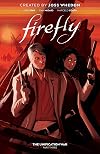
If this is the end of the Unification War series, then I am disappointed. I knew the main characters would not die; I didn't care about the secondary ones. The introduction of Mal's mom into the storyline gives the reader some insight into the start of the civil war. The ruination of Mal Reynold's homeworld played a part at the beginning of the war. Bringing Mal's mother as a powerful figure into the storyline seemed like a modern-day cliche. At this point, male and female character roles show more seem interchangeable. Both can be badass show strength etc. None of the writers seem to write unique characteristics and motivations for each sex. Finally, I wish that the various armies changing sides had long term ramifications for stories that take place after the movie. I doubt this will be the case. show less
Lists
You May Also Like


Associated Authors
Statistics
- Works
- 13
- Also by
- 11
- Members
- 307
- Popularity
- #76,699
- Rating
- 3.8
- Reviews
- 18
- ISBNs
- 26
- Languages
- 2