
Cavan Scott
Author of Doctor Who: Who-ology
About the Author
Series
Works by Cavan Scott
Journey to Star Wars: The Rise of Skywalker A Finn & Poe Adventure (A Choose Your Destiny Chapter Book) (2019) 97 copies
Star Wars: Choose Your Destiny (Book 1) A Han & Chewie Adventure (A Choose Your Destiny Chapter Book) (2018) 93 copies, 1 review
The Mask of Power: Gill Grunt and the Curse of the Fish Master #2 (Skylanders Universe) (2013) 93 copies, 2 reviews
The Mask of Power: Terrafin Battles the Boom Brothers #4 (Skylanders Universe) (2014) 28 copies, 1 review
The Phantom of the Opera - Official Graphic Novel (Phantom of the Opera Collection) (2021) 23 copies, 2 reviews
Claws of the Genestealer (Volume 2) (Warhammer Adventures: Warped Galaxies) (2019) 14 copies, 1 review
2000 Ad Regened: A Thrill-Powered Comics Collection for Earthlets of All Ages!: Volume 1 (2021) 10 copies
Blake's 7: The Liberator Chronicles, Volume 6: Incentive, Jenna's Story and Blake's Story (2013) — Author — 9 copies
Blake's 7: The Liberator Chronicles, Volume 9: Defector, Planetfall and Secrets (2014) — Author — 6 copies, 1 review
Doctor Who: The Ninth Doctor #5 4 copies
The Heroic Legends Series - Solomon Kane: Where the Whitethorn Meets the Black (2026) 4 copies, 1 review
Doctor Who: The Nu-Humans and The Empty House: Two Audio-Exclusive Adventures Featuring the 11th Doctor (2012) 4 copies
Star Wars: Yoda (2022-) #10 3 copies
Gwenpool (2025-) #2 (of 5) 3 copies
Gwenpool (2025-) #5 (of 5) 2 copies
Gwenpool (2025-) #4 (of 5) 2 copies
Gwenpool (2025-) #3 (of 5) 2 copies
Vikings Uprising #3 Cvr A 2 copies
Iron & Frost (2025) #1 (of 3) 2 copies
Star Wars Adventures: Return to Vader's Castle #1 (of 5) (Star Wars Adventures: Return to Vader's Castle) (2019) 2 copies
Iron & Frost (2025) #2 (of 3) 2 copies
Wonder Woman: Agent of Peace #18 2 copies
The Feast Of Stone 1 copy
Doctor Who Ninth Doctor #8 1 copy
Doctor Who Ninth Doctor #7 1 copy
Time of Death 1 copy
Just Do It 1 copy
First Duty 1 copy
Past Mistaken 1 copy
Star Wars #206 (Panini 081) 1 copy
Vikings #2 1 copy
Star Wars Adventures: Return to Vader's Castle #2 (of 5) (Star Wars Adventures: Return to Vader's Castle) (2019) 1 copy
The Transformers/Back to the Future #3 — Author — 1 copy
The Transformers/Back to the Future #4 — Author — 1 copy
Titans United (2021-) #3 1 copy
Titans United (2021-) #1 1 copy
Time of Death {short story} 1 copy
Star Wars Adventures: Return to Vader's Castle #3 (of 5) (Star Wars Adventures: Return to Vader's Castle) (2019) 1 copy
Star Wars Adventures: Return to Vader's Castle #4 (of 5) (Star Wars Adventures: Return to Vader's Castle) (2019) 1 copy
Star Wars Adventures: Return to Vader's Castle #5 (of 5) (Star Wars Adventures: Return to Vader's Castle) (2019) 1 copy
Titans United (2021-) #2 1 copy
Star Wars Adventures 11 1 copy
Dead Seas #1 (of 6) 1 copy
Godfather of Hell Vol. 1 1 copy
Vikings: Godhead 4 1 copy
Star Wars #205 (Panini 080) 1 copy
Vikings: Godhead 3 1 copy
Star Wars #207 (Panini 082) 1 copy
Dead Seas #4 (of 6) 1 copy
Vikings: Godhead 2 1 copy
Associated Works
From a Certain Point of View: 40 Stories Celebrating 40 Years of Star Wars (2017) — Contributor — 1,069 copies, 41 reviews
From a Certain Point of View: 40 Stories Celebrating 40 Years of The Empire Strikes Back (2020) — Contributor — 524 copies, 8 reviews
The Other Side of Never: Dark Tales from the World of Peter & Wendy (2023) — Contributor — 32 copies
The Hopes and Fears of All the Years and Other Doctor Who Christmas Short Trips — Contributor — 1 copy
The Lonely Computer and Other Internet Doctor Who Short Trips, 2004-21 — Contributor — 1 copy
Tagged
Common Knowledge
- Legal name
- Scott, Cavan
- Birthdate
- 1973-04-17
- Gender
- male
- Education
- University of Manchester (BA|1994)
- Occupations
- comic book writer
author
journalist
editor - Organizations
- Lucasfilm
Marvel Entertainment
Strange Matter Media
DC Comics - Nationality
- UK
- Birthplace
- Bristol, Gloucestershire, England, UK
- Map Location
- England, UK
Members
Reviews
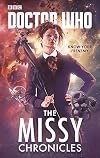
A collection of short Doctor Who stories focusing on Missy, aka the latest incarnation of the Master, the Doctor's old friend and long-term nemesis. Personally I adore Missy; I think she's enormous fun, and the best version of the Master since the original. So how could I resist?
To address each of the six stories included here individually:
"Dismemberment" by James Goss: Shortly after regenerating, Missy visits her favorite evil gentlemen's club, discovers she is no longer welcome as a show more member, and wreaks horrible vengeance on the people who kicked her out. There's some genuinely funny moments, and some darkly satiric sensibilities. And Missy gets some great lines. But the sheer levels of horror and gruesomeness to some of her actions actually made me feel a little uncomfortable by the end. I think this particular kind of villainous depravity might almost be a little over the top, even for Missy.
"Lords and Masters" by Cavan Scott: The Time Lords send Missy off on an assignment for them. They really ought to know better. I liked the concept of this one, and the way it offers up some rather dark little details about how things have been going on Gallifrey. I do wish the "companion" she was given for the job felt less two-dimensional, though. And it's genuinely a little unsettling to get a Doctor Who story like this where the Doctor doesn't get to show up to make things right in the end.
"Teddy Sparkles Must Die!" by Paul Magrs: A weird, weird little send-up of kids' adventure stories, featuring evil governess Missy and a magical talking teddy bear. I honestly can't quite decide whether this one is pleasantly ridiculous or just plain ridiculous.
"The Liar, the Glitch and the War Zone" by Peter Anghelides: An adventure in Venice featuring a damaged TARDIS, a temporal rift, and an army of angry space gryphons. But despite the fact that there's a lot going on here, I found it a bit dull. There's less good Missy dialog here than in the other stories, too. I did like her villainous plan to flood Venice, though.
"Girl Power!" by Jacqueline Rayner: An epistolary story, also featuring the Twelfth Doctor and Nardole, in which Missy hatches a plan that gives new meaning to the phrase "smash the patriarchy.". Now, this one was pleasantly ridiculous. Delightfully ridiculous, even. I was laughing out loud through pretty much the whole thing.
"Alit in Underland" by Richard Dinnick: This one is told from the POV of Alit, the little girl from the episodes "World Enough and Time"/The Doctor Falls," and is set during the period between those episodes when the Doctor is unconscious. I don't know that it's a bit from that story that really needed filling in, but it does give us the opportunity for a little more interaction between Missy and her previous incarnation, and I will never say no to that.
Rating: It's enough of a mixed bag that I'm going to call it 3.5/5, but the best stories are fun enough that I'd say it's worth checking out if you're a fan of the character. show less
To address each of the six stories included here individually:
"Dismemberment" by James Goss: Shortly after regenerating, Missy visits her favorite evil gentlemen's club, discovers she is no longer welcome as a show more member, and wreaks horrible vengeance on the people who kicked her out. There's some genuinely funny moments, and some darkly satiric sensibilities. And Missy gets some great lines. But the sheer levels of horror and gruesomeness to some of her actions actually made me feel a little uncomfortable by the end. I think this particular kind of villainous depravity might almost be a little over the top, even for Missy.
"Lords and Masters" by Cavan Scott: The Time Lords send Missy off on an assignment for them. They really ought to know better. I liked the concept of this one, and the way it offers up some rather dark little details about how things have been going on Gallifrey. I do wish the "companion" she was given for the job felt less two-dimensional, though. And it's genuinely a little unsettling to get a Doctor Who story like this where the Doctor doesn't get to show up to make things right in the end.
"Teddy Sparkles Must Die!" by Paul Magrs: A weird, weird little send-up of kids' adventure stories, featuring evil governess Missy and a magical talking teddy bear. I honestly can't quite decide whether this one is pleasantly ridiculous or just plain ridiculous.
"The Liar, the Glitch and the War Zone" by Peter Anghelides: An adventure in Venice featuring a damaged TARDIS, a temporal rift, and an army of angry space gryphons. But despite the fact that there's a lot going on here, I found it a bit dull. There's less good Missy dialog here than in the other stories, too. I did like her villainous plan to flood Venice, though.
"Girl Power!" by Jacqueline Rayner: An epistolary story, also featuring the Twelfth Doctor and Nardole, in which Missy hatches a plan that gives new meaning to the phrase "smash the patriarchy.". Now, this one was pleasantly ridiculous. Delightfully ridiculous, even. I was laughing out loud through pretty much the whole thing.
"Alit in Underland" by Richard Dinnick: This one is told from the POV of Alit, the little girl from the episodes "World Enough and Time"/The Doctor Falls," and is set during the period between those episodes when the Doctor is unconscious. I don't know that it's a bit from that story that really needed filling in, but it does give us the opportunity for a little more interaction between Missy and her previous incarnation, and I will never say no to that.
Rating: It's enough of a mixed bag that I'm going to call it 3.5/5, but the best stories are fun enough that I'd say it's worth checking out if you're a fan of the character. show less
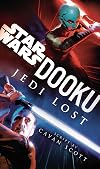
I haven't read a single Star Wars novel since 2016's Bloodlines (which was genuinely one of the best Star Wars stories, in general, and should be read by all Star Wars fans). It's not that I don't have any interest in them, although I did find it a little frustrating that so many of them were being published in the eras of the Prequel Trilogy and the Original Trilogy instead of during the era I was more interested in reading about - the Sequel Trilogy. It's just that I didn't really have the show more time to read these books that might get invalidated in a few years by another canon overhaul alongside all the other books I wanted to read. So, many Star Wars books fell by the wayside. But when I heard about Dooku: Jedi Lost, I was immediately interested. I love audio dramas and I have really enjoyed Cavan Scott's work on various Doctor Who titles, so I was definitely intrigued. Unfortunately, having read the script and listened to the audio drama, Dooku: Jedi Lost feels more like a lost opportunity than a truly good audio drama. It's got a good plot but the story doesn't work well in this medium.
I'm not sure an audio drama of this length (roughly six hours) was the right format to tell this story. Audio dramas are great for a lot of different kinds of stories, but I'm not sure a story that is as complex as this one is or that covers as much time as this one does is really the right fit for an audio drama. In fact, I think Dooku: Jedi Lost would probably have been better suited as a novel. What Cavan Scott has written here is often very good, it's just that the narrative doesn't have the space it desperately needs to breathe. The pacing is all over the place, alternating between spending way too much time on a scene, speeding through other scenes, or jumping forward in time by an unknown amount of years. So much is crammed into these six hours that the narrative ends up lacking any true forward momentum because it has to keep bouncing back and forth between things to try and tie them all together and it just doesn't quite work as well as it should.
In Dooku: Jedi Lost, there are two narrative threads happening at the same time: Ventress has been sent on a quest to find and rescue Dooku's sister and goes on an emotional journey as she decides whether to trust Dooku as her Master or not; then there's the narrative of Dooku's rise and fall from the Jedi Order, told to the audience via various holocoms and diaries that Ventress finds throughout her journey. And it's this structure that causes the bulk of the story's problems. We are constantly jumping back and forth between the two threads, robbing either of them from really building any forward momentum. Honestly, I remain completely unsure why Asajj Ventress needed to be in this story at all. Scott tries to tie the story of Dooku's past and his doubts about the Jedi Council with the story of Ventress's doubts about him, but the connection never quite materializes. If anything, it just detracts from the interesting things we're learning about Dooku because nothing Ventress does in the story is all that interesting. While I can see what Scott is trying to do by tying these stories together, I don't think it ever quite worked.
I wonder if this story would have worked better as a novel. Perhaps having the Ventress stuff as a prologue, epilogue, and interludes and spending the vast majority of the rest of the time on Dooku's backstory, told with little interruption, might have been a better route to take for this story. As it is, it feels like a story that's not really meant for an audio drama format. While audio dramas can totally be complex and nonlinear and all of that, I feel like the nonlinear aspect hurt this story. It's hard to get invested in what's going on when the next scene jumps forward an indeterminate amount of time. At no point is it ever clear when any of Dooku's flashback scenes are happening in relation to the "present" storyline (IE: we have no idea how many years before the Clone Wars any of Dooku's flashbacks are set) so it's extremely difficult to track where we are in Dooku's life. When, exactly, did he leave the Jedi Order? Unclear. He's old, but how old is he in relation to how old he is during the Clone Wars? We have no idea. These frequent time jumps make tracking Dooku's development over the years difficult because we don't really get to see how he develops. He goes through an event and then... it's years later and he's already changed and then he goes through another event. Lather, rinse, repeat. I feel like a fairly-lengthy book might have been able to balance all of this a bit better, giving us time to properly see how these events in Dooku's life shaped him while still covering a lot of ground. Audio dramas just don't quite work for stories like that.
To be fair, there is a lot about Dooku: Jedi Lost that's good. Like I said, a lot of what Scott wrote about Dooku and his relationship with the Jedi Council is immensely interesting. I've always found the Jedi's philosophy to be extremely flawed, bordering on utterly ridiculous - and that's a view that Scott seems to share throughout this story. Here we see just how borderline-immoral the Jedi's views are as they choose multiple times not to help planets in need so they can keep up their totally neutral appearances. And every time, their noninterference blows up in their faces and results in these planets suffering massive amounts of destruction and loss of life. In this context, it's completely believable that Dooku would grow more and more jaded with the Jedi Order - anyone with half a shred of empathy would. So, getting to see a story where the Jedi's viewpoint is thoroughly critiqued proves extremely entertaining.
I've always thought that Dooku was less of a true antagonist and more of an antihero, in a way. Yes, in the prequels and Clone Wars TV show, he's certainly depicted as a villain but that's because we're seeing him at a point in his story where he's become so fed up with the nonsense spouted by the Jedi and the Republic that he's turned to actively rebelling against them. It's really interesting getting a good glimpse at what led up to those events. Seeing a Dooku who struggles, much like Anakin did, with distancing himself from his family and his emotions is really interesting. It's nice to get to see a character like Dooku really struggling with all of that in a way we were unable to see Anakin do in the films. The story that Scott spins makes it extraordinarily understandable why Dooku might leave the Jedi and how he might turn into the Sith Lord we know him as. It's a really intriguing character study - I just wish more of the story focused on that.
As for the actual production of the audio drama, it's fairly well done though the are some weird choices that detract from the experience a bit and seem emblematic of a first attempt at breaking into the format. There is a lot of narration in this production. Sometimes it works (listening to Dooku narrate his own holo-diary, the same way Ventress would be listening to it, works very well - especially with the echo effect used on his voice) and sometimes it really doesn't (it's incredibly difficult to tell when Ventress is narrating and when she's actually speaking in a scene because there was no effect used on her voice to differentiate and the actress's performance is exactly the same in both scenarios.) This kind of thing just feels like the mistakes of a first attempt at an audio drama and would certainly be ironed out in future audio dramas but it was something I noticed and thought worth bringing up.
Speaking of actors, the acting in this is kinda weird. While everybody does a very solid job, several of the actors don't sound like the characters they're playing. This is most notable in Euan Morton's performance as Dooku. Morton doesn't sound anything like Count Dooku. At all. I understand you wouldn't want to have an actor merely imitating Sir Christopher Lee's voice, but Morton sounds so unlike Lee that it's distracting. The Clone Wars cartoon managed to find a nice balance between the actor bringing their own style to the role while still sounding like the character. In an audiobook, this kind of performance would be fine but in an audio drama, it's incredibly distracting. Not to say that Morton doesn't do a good job, because he does, it's just that his voice pulled me right out of the story. The whole cast does a great job, and most of them do sound like their characters, so that's good. It just seems to me that in a story about Count Dooku, you might want to ensure you get Dooku's voice right.
At the end of the day, I wouldn't say that Dooku: Jedi Lost is bad - because it's not. It feels like a bit of a missed opportunity, trying to cram a story that clearly would have better fit the constraints of a novel into a medium that isn't built for such a vast, era-spanning tale. While the frequent jumps in time and the bouncing between Dooku's and Ventress's storylines never quite works, a lot of what actually happens is very interesting. It's nice to finally have a true glimpse into Dooku's past, allowing us the chance to understand what led him to become the man we know him as in the films. Scott excels at bringing us right into Dooku's mindset throughout his life and it's an utter joy to witness. While I can see what Scott was going for by tying Dooku and Ventress's stories together, I don't think it ever quite worked the way he was hoping it would. Still, it's not bad. The audio drama itself is a great first attempt at bringing Star Wars in the format and I'd hope that Lucasfilm would continue to experiment with this medium - just, maybe using stories that are better fitted for it. For a first attempt, this wasn't bad. But it wasn't the best way to tell this story and it never quite lands as well as it should. show less
I'm not sure an audio drama of this length (roughly six hours) was the right format to tell this story. Audio dramas are great for a lot of different kinds of stories, but I'm not sure a story that is as complex as this one is or that covers as much time as this one does is really the right fit for an audio drama. In fact, I think Dooku: Jedi Lost would probably have been better suited as a novel. What Cavan Scott has written here is often very good, it's just that the narrative doesn't have the space it desperately needs to breathe. The pacing is all over the place, alternating between spending way too much time on a scene, speeding through other scenes, or jumping forward in time by an unknown amount of years. So much is crammed into these six hours that the narrative ends up lacking any true forward momentum because it has to keep bouncing back and forth between things to try and tie them all together and it just doesn't quite work as well as it should.
In Dooku: Jedi Lost, there are two narrative threads happening at the same time: Ventress has been sent on a quest to find and rescue Dooku's sister and goes on an emotional journey as she decides whether to trust Dooku as her Master or not; then there's the narrative of Dooku's rise and fall from the Jedi Order, told to the audience via various holocoms and diaries that Ventress finds throughout her journey. And it's this structure that causes the bulk of the story's problems. We are constantly jumping back and forth between the two threads, robbing either of them from really building any forward momentum. Honestly, I remain completely unsure why Asajj Ventress needed to be in this story at all. Scott tries to tie the story of Dooku's past and his doubts about the Jedi Council with the story of Ventress's doubts about him, but the connection never quite materializes. If anything, it just detracts from the interesting things we're learning about Dooku because nothing Ventress does in the story is all that interesting. While I can see what Scott is trying to do by tying these stories together, I don't think it ever quite worked.
I wonder if this story would have worked better as a novel. Perhaps having the Ventress stuff as a prologue, epilogue, and interludes and spending the vast majority of the rest of the time on Dooku's backstory, told with little interruption, might have been a better route to take for this story. As it is, it feels like a story that's not really meant for an audio drama format. While audio dramas can totally be complex and nonlinear and all of that, I feel like the nonlinear aspect hurt this story. It's hard to get invested in what's going on when the next scene jumps forward an indeterminate amount of time. At no point is it ever clear when any of Dooku's flashback scenes are happening in relation to the "present" storyline (IE: we have no idea how many years before the Clone Wars any of Dooku's flashbacks are set) so it's extremely difficult to track where we are in Dooku's life. When, exactly, did he leave the Jedi Order? Unclear. He's old, but how old is he in relation to how old he is during the Clone Wars? We have no idea. These frequent time jumps make tracking Dooku's development over the years difficult because we don't really get to see how he develops. He goes through an event and then... it's years later and he's already changed and then he goes through another event. Lather, rinse, repeat. I feel like a fairly-lengthy book might have been able to balance all of this a bit better, giving us time to properly see how these events in Dooku's life shaped him while still covering a lot of ground. Audio dramas just don't quite work for stories like that.
To be fair, there is a lot about Dooku: Jedi Lost that's good. Like I said, a lot of what Scott wrote about Dooku and his relationship with the Jedi Council is immensely interesting. I've always found the Jedi's philosophy to be extremely flawed, bordering on utterly ridiculous - and that's a view that Scott seems to share throughout this story. Here we see just how borderline-immoral the Jedi's views are as they choose multiple times not to help planets in need so they can keep up their totally neutral appearances. And every time, their noninterference blows up in their faces and results in these planets suffering massive amounts of destruction and loss of life. In this context, it's completely believable that Dooku would grow more and more jaded with the Jedi Order - anyone with half a shred of empathy would. So, getting to see a story where the Jedi's viewpoint is thoroughly critiqued proves extremely entertaining.
I've always thought that Dooku was less of a true antagonist and more of an antihero, in a way. Yes, in the prequels and Clone Wars TV show, he's certainly depicted as a villain but that's because we're seeing him at a point in his story where he's become so fed up with the nonsense spouted by the Jedi and the Republic that he's turned to actively rebelling against them. It's really interesting getting a good glimpse at what led up to those events. Seeing a Dooku who struggles, much like Anakin did, with distancing himself from his family and his emotions is really interesting. It's nice to get to see a character like Dooku really struggling with all of that in a way we were unable to see Anakin do in the films. The story that Scott spins makes it extraordinarily understandable why Dooku might leave the Jedi and how he might turn into the Sith Lord we know him as. It's a really intriguing character study - I just wish more of the story focused on that.
As for the actual production of the audio drama, it's fairly well done though the are some weird choices that detract from the experience a bit and seem emblematic of a first attempt at breaking into the format. There is a lot of narration in this production. Sometimes it works (listening to Dooku narrate his own holo-diary, the same way Ventress would be listening to it, works very well - especially with the echo effect used on his voice) and sometimes it really doesn't (it's incredibly difficult to tell when Ventress is narrating and when she's actually speaking in a scene because there was no effect used on her voice to differentiate and the actress's performance is exactly the same in both scenarios.) This kind of thing just feels like the mistakes of a first attempt at an audio drama and would certainly be ironed out in future audio dramas but it was something I noticed and thought worth bringing up.
Speaking of actors, the acting in this is kinda weird. While everybody does a very solid job, several of the actors don't sound like the characters they're playing. This is most notable in Euan Morton's performance as Dooku. Morton doesn't sound anything like Count Dooku. At all. I understand you wouldn't want to have an actor merely imitating Sir Christopher Lee's voice, but Morton sounds so unlike Lee that it's distracting. The Clone Wars cartoon managed to find a nice balance between the actor bringing their own style to the role while still sounding like the character. In an audiobook, this kind of performance would be fine but in an audio drama, it's incredibly distracting. Not to say that Morton doesn't do a good job, because he does, it's just that his voice pulled me right out of the story. The whole cast does a great job, and most of them do sound like their characters, so that's good. It just seems to me that in a story about Count Dooku, you might want to ensure you get Dooku's voice right.
At the end of the day, I wouldn't say that Dooku: Jedi Lost is bad - because it's not. It feels like a bit of a missed opportunity, trying to cram a story that clearly would have better fit the constraints of a novel into a medium that isn't built for such a vast, era-spanning tale. While the frequent jumps in time and the bouncing between Dooku's and Ventress's storylines never quite works, a lot of what actually happens is very interesting. It's nice to finally have a true glimpse into Dooku's past, allowing us the chance to understand what led him to become the man we know him as in the films. Scott excels at bringing us right into Dooku's mindset throughout his life and it's an utter joy to witness. While I can see what Scott was going for by tying Dooku and Ventress's stories together, I don't think it ever quite worked the way he was hoping it would. Still, it's not bad. The audio drama itself is a great first attempt at bringing Star Wars in the format and I'd hope that Lucasfilm would continue to experiment with this medium - just, maybe using stories that are better fitted for it. For a first attempt, this wasn't bad. But it wasn't the best way to tell this story and it never quite lands as well as it should. show less

This is one big story, and I don't have meaningfully distinct comments about each volume, so this review takes in both.
Titan's Doctor Who crossovers got bigger every year. This one is eight issues and two collected editions, and crossed through its ongoings (instead of just featuring characters from them), taking in issues of The Tenth Doctor: Year Three, The Eleventh Doctor: Year Three, and The Twelfth Doctor: Year Three. It also features the ninth Doctor, Rose, Jack, Tara, Madame Vastra, show more and Jenny; Jenny, the Doctor's daughter; the fourth Doctor and second Romana; and River Song in a set of specials. Plus every other incarnation of the Doctor puts in at least a one-scene cameo. Is that enough already?
It is, in fact, too much. It follows the Big Finish model: the characters are mostly separate for most of it, which means they undertake pretty generic adventures, and then the characters come together at the end, which means the narrative doesn't have room for anything other than simple solutions and generic Doctor sniping... something we've seen twice in the past two years! I have posited in the past that Big Finish's nostalgic crossovers are pointless because they bring together characters we see in ongoing adventures all the time already, and the same is true here. There is no novelty to bringing "back" the tenth Doctor, Gabby, and Cindy when I read their adventures already. The only characters we don't already see all the time in Titan adventures are Jenny, the fourth Doctor and Romana, and River, but the first of those I had no desire to see come back, and the others I listen to the adventures of already via Big Finish. (Plus, I didn't find the stories or dialogue very good; the River story in particular was confusingly written and poorly illustrated.)
If we aren't getting nostalgia, then we're not getting anything, because this story isn't really about anything. A dimension turns people into mindless zombies... as Doctor Who threats go, it's definitively bottom tier and generic. Does this story have any interesting themes or clever characterization? Basically, no. The one exception is the Eleventh Doctor issue, which isn't by any of the regular Eleventh Doctor writers but is at least by regular Eleventh Doctor artists Leandro Casco and I. N. J. Culbard. It's a decent tale of the eleventh Doctor and Alice being trapped on ancient Gallifrey and becoming inadvertently involved with the Time Lord's early TARDIS experiments. The rest of it all is sound and fury, signifying nothing. I'm glad that after three goes, Titan finally abandoned these annual events; I had mixed thoughts about Four Doctors, but it was overall pretty interesting. The latter two have been exercises in tedium.
Titan Doctor Who: « Previous in sequence | Next in sequence » show less
Titan's Doctor Who crossovers got bigger every year. This one is eight issues and two collected editions, and crossed through its ongoings (instead of just featuring characters from them), taking in issues of The Tenth Doctor: Year Three, The Eleventh Doctor: Year Three, and The Twelfth Doctor: Year Three. It also features the ninth Doctor, Rose, Jack, Tara, Madame Vastra, show more and Jenny; Jenny, the Doctor's daughter; the fourth Doctor and second Romana; and River Song in a set of specials. Plus every other incarnation of the Doctor puts in at least a one-scene cameo. Is that enough already?
It is, in fact, too much. It follows the Big Finish model: the characters are mostly separate for most of it, which means they undertake pretty generic adventures, and then the characters come together at the end, which means the narrative doesn't have room for anything other than simple solutions and generic Doctor sniping... something we've seen twice in the past two years! I have posited in the past that Big Finish's nostalgic crossovers are pointless because they bring together characters we see in ongoing adventures all the time already, and the same is true here. There is no novelty to bringing "back" the tenth Doctor, Gabby, and Cindy when I read their adventures already. The only characters we don't already see all the time in Titan adventures are Jenny, the fourth Doctor and Romana, and River, but the first of those I had no desire to see come back, and the others I listen to the adventures of already via Big Finish. (Plus, I didn't find the stories or dialogue very good; the River story in particular was confusingly written and poorly illustrated.)
If we aren't getting nostalgia, then we're not getting anything, because this story isn't really about anything. A dimension turns people into mindless zombies... as Doctor Who threats go, it's definitively bottom tier and generic. Does this story have any interesting themes or clever characterization? Basically, no. The one exception is the Eleventh Doctor issue, which isn't by any of the regular Eleventh Doctor writers but is at least by regular Eleventh Doctor artists Leandro Casco and I. N. J. Culbard. It's a decent tale of the eleventh Doctor and Alice being trapped on ancient Gallifrey and becoming inadvertently involved with the Time Lord's early TARDIS experiments. The rest of it all is sound and fury, signifying nothing. I'm glad that after three goes, Titan finally abandoned these annual events; I had mixed thoughts about Four Doctors, but it was overall pretty interesting. The latter two have been exercises in tedium.
Titan Doctor Who: « Previous in sequence | Next in sequence » show less

I didn't care for vol 1 of this series, and I feel much the same about this. In my review of that one, I wrote, "[t]he plot seemed to pile complication on complication and incident on incident for the sake of it." The same is true here. More specifically, the stories read like they were made up as they went along, with no attempt at unity of character or theme. The first one, "Doctormania," is about the Doctor, Jack, and Rose arriving on a planet where everyone is a big fan of the Doctor; it show more turns out that this is because a Slitheen is running around in Doctor skinsuit. But the story isn't really about this in any meaningful way, the implications and permutations of this concept aren't explored. Instead, they're discarded and it becomes a story about Rose being stuck on a jungle planet with a Slitheen, and the climax of the story is about negotiations between different factions in the Raxacoricofallapatorius solar system. There's a brief return to the original hook at the end, but the permutations of the story feel arbitrary and inorganic. I hate saying something doesn't follow "rules" for writing, but it really doesn't live up to the MICE Quotient. It's an event story, but the event that is solved at the ending isn't the one that was a problem at the beginning!
The second story, "The Hunted," wastes a good premise too for no readily apparent reason. The Doctor is summoned by Mickey-- only it's post-"Journey's End" Mickey who's married to Martha, not the useless "Mickey the idiot" that he knows. I think there's potential here for a story about how the Doctor has misjudged Mickey, but it's not used, it's just a random continuity detail, not a storytelling concept. Worse, Martha is there to just be a mute woman in distress for Mickey to worry about! Like, she's a protagonist in her own right, you shouldn't be treating her like this... except that, of course, she's a woman. The actual plot of the story (something something superpowers something something mutations something something a wormhole) is too dependent on techno-gubbins to be interesting. I think a lot of writers who try to imitate Russell T Davies-style Who don't get that, for all its flash and speed and color, his stories were about something, they were about people in real and meaningful ways rarely equaled on television. These stories have flash and speed and color, but aren't about anything at all.
This also contains what was originally published as a Free Comic Book Day story, "Hacked." There are no credits for it anywhere in the book: if I was artist Mariano Laclaustro, I'd be pretty hacked off.
Titan Doctor Who: « Previous in sequence | Next in sequence » show less
The second story, "The Hunted," wastes a good premise too for no readily apparent reason. The Doctor is summoned by Mickey-- only it's post-"Journey's End" Mickey who's married to Martha, not the useless "Mickey the idiot" that he knows. I think there's potential here for a story about how the Doctor has misjudged Mickey, but it's not used, it's just a random continuity detail, not a storytelling concept. Worse, Martha is there to just be a mute woman in distress for Mickey to worry about! Like, she's a protagonist in her own right, you shouldn't be treating her like this... except that, of course, she's a woman. The actual plot of the story (something something superpowers something something mutations something something a wormhole) is too dependent on techno-gubbins to be interesting. I think a lot of writers who try to imitate Russell T Davies-style Who don't get that, for all its flash and speed and color, his stories were about something, they were about people in real and meaningful ways rarely equaled on television. These stories have flash and speed and color, but aren't about anything at all.
This also contains what was originally published as a Free Comic Book Day story, "Hacked." There are no credits for it anywhere in the book: if I was artist Mariano Laclaustro, I'd be pretty hacked off.
Titan Doctor Who: « Previous in sequence | Next in sequence » show less
Lists
Awards


You May Also Like


Associated Authors
Statistics
- Works
- 380
- Also by
- 33
- Members
- 6,556
- Popularity
- #3,743
- Rating
- 3.7
- Reviews
- 153
- ISBNs
- 517
- Languages
- 8
- Favorited
- 1