
George Mann
Author of The Affinity Bridge
About the Author
Image credit: George Mann
Series
Works by George Mann
Doctor Who: Dalek: The Astounding Untold History of the Greatest Enemies of the Universe (2017) 48 copies, 1 review
JUDGES Volume One: The Avalanche, Lone Wolf & When the Light Lay Still (2019) — Contributor — 17 copies
What Lies Beneath 7 copies
Star Wars: The High Republic: Haunted Starlight — Author — 5 copies
Star Wars: The High Republic: Seeds of Starlight — Author — 5 copies
Team Up (The Dreadful Flap and other stories/ The Sacrificial Pawn and other stories) — Author — 3 copies
Dark Souls: Mother of Mourning #2 3 copies
Star Wars™ Die Hohe Republik - Das Auge der Finsternis: Deutsche Erstausgabe (Die Hohe Republik – Phase 3, Band 1) (2024) 2 copies
Star Wars™ Die Hohe Republik - Die Schlacht von Jedha: Deutsche Erstausgabe (Die Hohe Republik – Phase 2, Band 2) (2024) 2 copies
Dragon Age: The Missing #4 2 copies
Dragon Age: The Missing #2 2 copies
Prey 2 copies
Doctor Who Twelfth Doctor #2 1 copy
Dark Souls, Band 3 - Die Legenden der Flamme: Bd. 3: Die Legenden der Flamme (German Edition) 1 copy
Doctor Who - Der Zwölfte Doctor, Band 5 - Rock'n'Doc: Bd. 5: Rock'n'Doc! (German Edition) (2018) 1 copy
Doctor Who Eighth Doctor #3 1 copy
Sensual Classics 1 copy
Vengeful Waves 1 copy
This Chain 1 copy
Sensual Classics Disc One 1 copy
The Nature Of Blood 1 copy
School Days 1 copy
Antologia fantasy 1 copy
The Maharajah’s Star 1 copy
The Witch & The Wookiee 1 copy
The Wanderer 1 copy
The Knight & The Dragon 1 copy
The Droid with a Heart 1 copy
The Dark Wraith 1 copy
The Black Spire 1 copy
Gaze of Stone 1 copy
Chasing Ghosts 1 copy
Patience in These Times 1 copy
Will of Iron #2 1 copy
Will of Iron #3 1 copy
Will of Iron #4 1 copy
Into the Fire 1 copy
Fallen #4 (Warhammer 40,000) 1 copy
Rise and Fall (Short Trips) 1 copy
Lone Wolf 1 copy
Associated Works
Stories of Hope and Wonder: In Support of the UK's Healthcare Workers (2020) — Contributor — 11 copies, 1 review
Tagged
Common Knowledge
- Birthdate
- 1978-12-22
- Gender
- male
- Occupations
- novelist
screenwriter
comic writer - Nationality
- UK
- Birthplace
- Darlington, County Durham, England, UK
- Places of residence
- Nottingham, Nottinghamshire, England, UK
- Associated Place (for map)
- England, UK
Members
Discussions
***Group Read: Steampunk (spoiler-free) in 75 Books Challenge for 2010 (September 2010)
***Group Read: Steampunk (SPOILERS) in 75 Books Challenge for 2010 (June 2010)
Reviews

I'm of two minds about Titan's Twelfth Doctor ongoing. I find the plots very uninteresting. Evil fire monsters who are ancient enemies of the Time Lords invade the Earth, blah blah blah. It's Doctor Who at its most generic, which is a shame, because on screen, the Peter Capaldi era was Doctor Who at some of its most inventive and clever. In his three seasons, we only got three alien invasion stories by my count, and all of them (the 2014 Missy/Cyberman two-parter, the 2015 Zygon two-parter, show more and the 2017 Monks trilogy) did really interesting and clever stuff with the concept, and mostly used alien invasions as a way of exploring other issues: mortality, xenophobia, compliance and resistance. The Hyperion storyline does nothing like that; these are just stompy alien fire monsters who want to burn down the Earth and drain the sun, and the human guest characters are about as complex as a bad drawing. Plus there's this really clunky bit where the Doctor leaves in the middle of a crisis to get the stuff he needs to defeat the aliens from other times and places, which I think creates more problems than it solves.
But writer Robbie Morrison really gets the voices of Peter Capaldi as the Doctor and Jenna Coleman as Clara. I can imagine Capaldi saying these lines, and can hear how he would balance warmth and coldness in that way only he can do. So even if the experience of reading the overall story was meh, the experience of reading any individual page was usually pretty enjoyable, so long as the Doctor was on it. (On the other hand, George Mann, who pens a single-issue story about Victorian vampires, writes a pretty generic Doctor.) So far the best this series has been is the Las Vegas story in vol 2, which was fun and inventive just like the twelfth Doctor's era on screen. If Morrison can do more stuff like that and less stuff like this, he can do something really interesting, I reckon. I hope so.
Titan Doctor Who: « Previous in sequence | Next in sequence » show less
But writer Robbie Morrison really gets the voices of Peter Capaldi as the Doctor and Jenna Coleman as Clara. I can imagine Capaldi saying these lines, and can hear how he would balance warmth and coldness in that way only he can do. So even if the experience of reading the overall story was meh, the experience of reading any individual page was usually pretty enjoyable, so long as the Doctor was on it. (On the other hand, George Mann, who pens a single-issue story about Victorian vampires, writes a pretty generic Doctor.) So far the best this series has been is the Las Vegas story in vol 2, which was fun and inventive just like the twelfth Doctor's era on screen. If Morrison can do more stuff like that and less stuff like this, he can do something really interesting, I reckon. I hope so.
Titan Doctor Who: « Previous in sequence | Next in sequence » show less
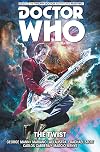
Twelve can never resist a good rock concert, and the planet Twist serves up the best punk rock this side of the 40th century. He sneaks backstage after the show to say hi to the band, then he and the bassist, Hattie, end up becoming swept up in a hunt for a wanted murderer and discover a secret about the very planet itself. Later, he and Hattie track some bizarre readings to a haunted house with ghostly apparitions, extra rooms, and monsters knocking at the door.
I enjoyed the stories show more themselves, mainly because I love when Twelve gets to indulge his musical side. Hattie made a good travelling companion too, especially because she and Twelve could jam out on guitars together. And it was neat to have two stories that followed each other so seamlessly; the other volumes had two very different stories (or more) per volume. But overall the collection was just OK, because it wasn’t Robbie Morrison writing (I feel he has a better handle on Twelve’s voice) and the art didn’t look that much like Twelve (or at least there are others that look more like him). So it was good, but could have been better. show less
I enjoyed the stories show more themselves, mainly because I love when Twelve gets to indulge his musical side. Hattie made a good travelling companion too, especially because she and Twelve could jam out on guitars together. And it was neat to have two stories that followed each other so seamlessly; the other volumes had two very different stories (or more) per volume. But overall the collection was just OK, because it wasn’t Robbie Morrison writing (I feel he has a better handle on Twelve’s voice) and the art didn’t look that much like Twelve (or at least there are others that look more like him). So it was good, but could have been better. show less

Two rollicking good Twelfth Doctor adventures made all the better, imho, for not having Clara in them.
The first story finds the Doctor attending a rock concert on a space station where he meets Hattie, the band's bass player and his companion for the book. Soon the two of them are trying to solve a murder and uncover the hidden secrets of the station. Story two has the Doctor and Hattie trying to help a family with a house that has suddenly become bigger on the inside...
I enjoyed this one show more much more than I have the previous Twelfth Doctor graphic novels--and not just because it is Clara-free. The first story has the Doctor fighting to protect non-humans from humans, something that isn't seen often enough; the second story, while hardly mind-blowing, is a well told tale with characters who actually do more than sit around and let the Doctor save them. Hattie is an intelligent and thoughtful companion whom I wouldn't mind seeing again. And on top of all that, the art is fantastic. show less
The first story finds the Doctor attending a rock concert on a space station where he meets Hattie, the band's bass player and his companion for the book. Soon the two of them are trying to solve a murder and uncover the hidden secrets of the station. Story two has the Doctor and Hattie trying to help a family with a house that has suddenly become bigger on the inside...
I enjoyed this one show more much more than I have the previous Twelfth Doctor graphic novels--and not just because it is Clara-free. The first story has the Doctor fighting to protect non-humans from humans, something that isn't seen often enough; the second story, while hardly mind-blowing, is a well told tale with characters who actually do more than sit around and let the Doctor save them. Hattie is an intelligent and thoughtful companion whom I wouldn't mind seeing again. And on top of all that, the art is fantastic. show less
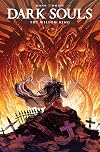
A much better foray into the world of Fromsoft goodness in graphic novel form. My opinions regarding the "Lady of the Lanterns" Bloodborne adaptation are utterly irrelevant here unless they are explicitly being used as a comparison.
Let it be said that I'm a sucker for tales of hope. Dark Souls is often described as a depressing series, but I find there is a lot of hope buried in the dreariness, else nobody would be fighting for anything at all. This adaptation captures that, the flickering show more remnants of hope in the midst of sorrow. The world is ending, you see, the immortal flame that keeps all things alive is fading. Yet, against that impenetrable despair, our unlikely heroes rise to the task.
The Willow King extrapolates on the time-honored feeling of a good cooperative playthrough of a Dark Souls DLC, rife with interesting lore and crazy NPCs whose voice acting puts you in the headspace to bash undead skulls. I personally really enjoyed the pacing, how each assistive phantom-style companion had a reason for fighting. Plus, it was nice to see a feminine character be badass in all the ways you expect a Fromsoft woman to be. Yllis of the Cascade, an assassin worshipping a dead goddess, evokes just as much pain and emotion as Bol of the Dream—a madman believing the world is yet living—and Gern of the Forest—the final remnants of a woodland force.
To say nothing of Herad the Unlived, the Unkindled of this story. The Willow King alters a few details about what is an Unkindled, and how it approaches the matter of saving the world. It is a staving off of the inevitable that Herad, a once great soldier turned shameful failure, takes up his sword in death to push back again. His company is four-strong against demons... giant snakes... more giant snakes... It's definitely [un]living up to its inspiration.
As for the art: wow. WOW! The entire graphic novel would only come together if the art was able to keep pace with the story. Vibrant colors are not avoided here, but they are used in just enough moderation, sometimes monochroming an entire scene in just bright gold and black, to keep the story interesting. Dark Souls is typically associated with being very grey with brilliant spots of color—a detail that is managed well here. The way fire is drawn with so much life, or the way that the stark white of Herad's eyes almost seem to burn through the page... Really gorgeous stuff. Loved every second of it.
Oh, and there's a big fuckoff giant at the end that just goes full Jaeger Mech. Herad becoming the beating heart of a towering titan is like... everything I love about monster media. Highly recommend to both non-gamers and Fromsoft fans! show less
Let it be said that I'm a sucker for tales of hope. Dark Souls is often described as a depressing series, but I find there is a lot of hope buried in the dreariness, else nobody would be fighting for anything at all. This adaptation captures that, the flickering show more remnants of hope in the midst of sorrow. The world is ending, you see, the immortal flame that keeps all things alive is fading. Yet, against that impenetrable despair, our unlikely heroes rise to the task.
The Willow King extrapolates on the time-honored feeling of a good cooperative playthrough of a Dark Souls DLC, rife with interesting lore and crazy NPCs whose voice acting puts you in the headspace to bash undead skulls. I personally really enjoyed the pacing, how each assistive phantom-style companion had a reason for fighting. Plus, it was nice to see a feminine character be badass in all the ways you expect a Fromsoft woman to be. Yllis of the Cascade, an assassin worshipping a dead goddess, evokes just as much pain and emotion as Bol of the Dream—a madman believing the world is yet living—and Gern of the Forest—the final remnants of a woodland force.
To say nothing of Herad the Unlived, the Unkindled of this story. The Willow King alters a few details about what is an Unkindled, and how it approaches the matter of saving the world. It is a staving off of the inevitable that Herad, a once great soldier turned shameful failure, takes up his sword in death to push back again. His company is four-strong against demons... giant snakes... more giant snakes... It's definitely [un]living up to its inspiration.
As for the art: wow. WOW! The entire graphic novel would only come together if the art was able to keep pace with the story. Vibrant colors are not avoided here, but they are used in just enough moderation, sometimes monochroming an entire scene in just bright gold and black, to keep the story interesting. Dark Souls is typically associated with being very grey with brilliant spots of color—a detail that is managed well here. The way fire is drawn with so much life, or the way that the stark white of Herad's eyes almost seem to burn through the page... Really gorgeous stuff. Loved every second of it.
Oh, and there's a big fuckoff giant at the end that just goes full Jaeger Mech. Herad becoming the beating heart of a towering titan is like... everything I love about monster media. Highly recommend to both non-gamers and Fromsoft fans! show less
Lists
Awards


You May Also Like


Associated Authors
Statistics
- Works
- 240
- Also by
- 27
- Members
- 6,978
- Popularity
- #3,503
- Rating
- 3.5
- Reviews
- 264
- ISBNs
- 345
- Languages
- 9
- Favorited
- 6
