
Rob Davis (1) (1954–)
Author of The Motherless Oven
For other authors named Rob Davis, see the disambiguation page.
Series
Works by Rob Davis
Slang 2 1 copy
Associated Works
Femme Magnifique: 50 Magnificent Women who Changed the World (2018) — Contributor — 60 copies, 2 reviews
Tagged
Common Knowledge
- Birthdate
- 1954-10-30
- Gender
- male
- Nationality
- UK
- Associated Place (for map)
- UK
Members
Reviews
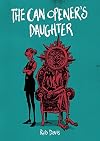
This continues the story of Motherless Oven, but leans into its strengths (the strange logic and beautiful illustration of the allegorical world) & fixes some weaknesses (the main characters now have some emotional depth).
This also continues to verify my theory that all British art is ultimately about social class. Man. Being British must be suffocating.
This also continues to verify my theory that all British art is ultimately about social class. Man. Being British must be suffocating.

Some nine complete comic stories are collected in this volume, and it's the usual mixed bag for Doctor Who Magazine of late, though this is stronger than the tenth Doctor's first volume, The Betrothal of Sontar. Rob Davis, who dominates this volume, has a great knack for setting up stories but a poor one for ending them; the Doctor is incidental to the ultimate resolution of "The Woman Who Sold the World", and "The Widow's Curse" would be an excellent story if it hadn't ended the exact same show more way as Dan McDaid's very strong "The First" four strips earlier. (Martha Jones has rarely looked as good as she does when pencilled by Martin Geraghty in this story, to boot.) Also very good is Ian Edginton's "Universal Monsters", which reverses some horror tropes to good effect, supplemented by some unique and fantastic artwork by Adrian Salmon.
The real standout writer of the book is Jonathan Morris. Though his "Sun Screen" and "The Immortal Emperor" are too slight to work, his "Death to the Doctor!", which features a poorly-run alliance of Doctor-hating villains, is very funny (and nicely illustrated by Roger Landridge) and his "The Time of My Life" is a moving tribute to the brief run of one of Doctor Who's greatest companions, the best temp in Chiswick, Donna Noble. As always for these collections, there is excellent creator commentary in back, and I do think that despite its weaknesses, this volume plays to the comic strip's strengths more than the earlier ninth and tenth Doctor strips. The stories are visual and unusual without just being goofy or weird, and the tone is much more level and less frantic.
Added February 2023; access a version of the below that includes illustrations on my blog.
This is my era! In spring 2007, I took a three-week trip to the United Kingdom. I was excited to get to see Doctor Who on the tv as it aired... but the person I was staying with didn't have a tv! I had to torrent it just like I was back home in the States.
But the thing I could do was pick up Doctor Who Magazine in any old shop. The three weeks overlapped with the on-sale periods of #382 and 383, if I remember correctly, and I picked up both in the bookstore while I was there. Once I was back home, I realized my local Borders carried the magazine, so I just kept going with it. Soon, I would switch to getting it through my local comic book shop, and I have continued to get the magazine ever since. (I am not sure where my first year's worth of issues actually is, though; the earliest one in my DWM boxes is #397. Did I... gasp... throw them away!?) For me, this was a real high period for the magazine. The covers from 2007 are fantastic; great publicity photos well used (#386 is iconic, I reckon), and I very much miss the in-depth set reports and episode features of this era. And Russell T Davies's "Production Notes" were so good!
This means I would have joined the strip as a regular reader with part two of The Woman Who Sold the World. I was probably very confused! To be honest, though I love reading the strip in collected editions, I often struggle with it in the actual magazine. I find it hard to invest in a story that I read in ten-page segments stretched out across months. Still, I do remember some of the stories of this era from my first read, particularly, Time of My Life from #399. (I also have negative memories of Universal Monsters in the actual magazine, but I enjoyed it both the previous time I read this collection and this time. Maybe I was just not yet an Adrian Salmon devotee?)
It was kind of weird to read this right after watching The Power of the Doctor and seeing the 60th anniversary teaser trailer... Tennant and Tate nostalgia rules the land!
The Woman Who Sold the World
This I found a bit tough to get into at first. It's one of those weird Doctor Who stories where at first there's a bunch of disparate elements and it's not clear how they relate to each other; you're sort of relentlessly thrown from bit to bit. I particularly found it hard to track how I was supposed to feel about Sugarpea and Sweetleaf, the old couple in the flying chair. But by the end of the story I had come around and was totally into it: great characters, so many great concepts packed in here, good jokes, and a real emotional ending like something that might have been done on tv at the time. Only this is so much madder and more expansive! In the notes, editor Clay Hickman says they were trying to get the strip to be like the Mills & Wagner days, and I can totally see it: it has that non-stop breakneck feeling, only with more of a genuine character focus. Only thing that doesn't work for me is the kid who accidentally kills his dad. Felt a bit too gruesome and dark.
Bus Stop!
A one-off gag strip, but a decent one. The Doctor tries to preserve the timeline from rogue time travellers by riding on a bus with a soup made from the Mayor of London, but it's all (mostly) told from the perspective of a passenger (we do have a couple cuts to what Martha is doing on Mars). The narration of the passenger sometimes lays it on a bit thick but overall it's an enjoyable conceit, well executed.
The First
The Doctor and Martha meet Shackleton... and of course aliens made of ice. This is solid: it didn't wow me, but it felt like a reasonably good pastiche of an RTD-era "celebrity historical." I found the ending a bit confusing and rushed, but I enjoyed the experience overall. Nice as always to see Martin Geraghty on the main strip.
Sun Screen
This story made me realize that I'm not sure one strip is really a good length for a Doctor Who comic if it's attempting to do the "traditional" Doctor Who story of the Doctor showing up somewhere, finding a bad thing, and fixing it. You can do a comedy story, you can do a character study, but eight pages for this kind of thing is so compressed that there's no interesting characters, no plot complications that aren't instantly resolved. Morris's other one-offs in this volume show better ways of handling it, though I guess a one-off adventure is what the context of the Doctor Who Storybook pretty much calls for.
Death to the Doctor!
Indeed, here we go. This one is fun: a bunch of old but rubbish foes of the Doctor get together, and are undermined by their own incompetence. Probably my favorite gag was the Mentor, totally not a knock-off of the Master.
Universal Monsters
Again, if not a great story, a very solid one. I like how the story plays into all the horror tropes in parts one and two, and then undoes them all in part three, but does so without feeling gratuitous or contrived. And of course giving this story to Adrian Salmon is a stroke of genius, one of the best-ever artists ever associated with Doctor Who, and this plays perfectly into his wheelhouse.
One thing I do love about this story is how different it is in terms of tone. Since The Green-Eyed Monster in #377, I feel like the strip is reembracing that it is, well, a comic strip more. Though the two Rose volumes had some good and even great stories, I think the ones from #377 are more playful in tone and format in the way that only a comic strip can be. I don't think tv could do something like the shift from Death to the Doctor! to Universal Monsters to The Widow's Curse. Sure, you can shoot each episode like its own film (as the Moffat era did to good effect), but here you can even change how the characters look... but it's somehow all the same thing anyway.
The Widow's Curse
How good is this? Definitely the standout of this volume, except for maybe The Time of My Life. Great visuals, great concepts, great capturing of character. Westminster Abbey on a Caribbean island! Donna flying a Boeing 747! This is the stuff comics were born to do. On top of that, it's populated with a genuine cast of guest characters. This is actually something the strip doesn't do a lot, or doesn't do effectively; most stories I feel like just have one or two people in them who are fully developed. But we have a whole group of tourists and more here, each of which who gets a genuinely great moment. The way the title comes into play at the end is excellent. It's kind of weird to see DWM do such a close sequel to a screen story, but overall it works incredibly well. If Donna only got one multi-part story, I'm glad it was this one.
The Immortal Emperor
Like Sun Screen, this is pretty breakneck. It works a bit better, in that I love the stylized art of Rob Davis, and a bit worse, in that I'm a bit skeptical of the fact that in one of Doctor Who's rare forays into the history of a non-UK country, every significant character other than the Doctor and Donna is evil.
The Time of My Life
Again, how good is this? I love this style of storytelling, a number of quick one-page excerpts from unseen adventures that show off the Doctor and Donna at their best. Lots of great jokes and great concepts and beautiful moments. The page where they just have fun seeing the Beatles is probably the best, but they're all great. On top of that you get the amazing art and layouts of Rob Davis, which adds so much to each page.
In the past I kind of thought the early new series–era comics weren't very good... on this reread I haven't felt that way—they're good on the whole even if they're not great—but since #377 they've been on a definite upward trajectory, and I can't wait to see what happens next...
Other Notes:
The real standout writer of the book is Jonathan Morris. Though his "Sun Screen" and "The Immortal Emperor" are too slight to work, his "Death to the Doctor!", which features a poorly-run alliance of Doctor-hating villains, is very funny (and nicely illustrated by Roger Landridge) and his "The Time of My Life" is a moving tribute to the brief run of one of Doctor Who's greatest companions, the best temp in Chiswick, Donna Noble. As always for these collections, there is excellent creator commentary in back, and I do think that despite its weaknesses, this volume plays to the comic strip's strengths more than the earlier ninth and tenth Doctor strips. The stories are visual and unusual without just being goofy or weird, and the tone is much more level and less frantic.
Added February 2023; access a version of the below that includes illustrations on my blog.
This is my era! In spring 2007, I took a three-week trip to the United Kingdom. I was excited to get to see Doctor Who on the tv as it aired... but the person I was staying with didn't have a tv! I had to torrent it just like I was back home in the States.
But the thing I could do was pick up Doctor Who Magazine in any old shop. The three weeks overlapped with the on-sale periods of #382 and 383, if I remember correctly, and I picked up both in the bookstore while I was there. Once I was back home, I realized my local Borders carried the magazine, so I just kept going with it. Soon, I would switch to getting it through my local comic book shop, and I have continued to get the magazine ever since. (I am not sure where my first year's worth of issues actually is, though; the earliest one in my DWM boxes is #397. Did I... gasp... throw them away!?) For me, this was a real high period for the magazine. The covers from 2007 are fantastic; great publicity photos well used (#386 is iconic, I reckon), and I very much miss the in-depth set reports and episode features of this era. And Russell T Davies's "Production Notes" were so good!
This means I would have joined the strip as a regular reader with part two of The Woman Who Sold the World. I was probably very confused! To be honest, though I love reading the strip in collected editions, I often struggle with it in the actual magazine. I find it hard to invest in a story that I read in ten-page segments stretched out across months. Still, I do remember some of the stories of this era from my first read, particularly, Time of My Life from #399. (I also have negative memories of Universal Monsters in the actual magazine, but I enjoyed it both the previous time I read this collection and this time. Maybe I was just not yet an Adrian Salmon devotee?)
It was kind of weird to read this right after watching The Power of the Doctor and seeing the 60th anniversary teaser trailer... Tennant and Tate nostalgia rules the land!
The Woman Who Sold the World
This I found a bit tough to get into at first. It's one of those weird Doctor Who stories where at first there's a bunch of disparate elements and it's not clear how they relate to each other; you're sort of relentlessly thrown from bit to bit. I particularly found it hard to track how I was supposed to feel about Sugarpea and Sweetleaf, the old couple in the flying chair. But by the end of the story I had come around and was totally into it: great characters, so many great concepts packed in here, good jokes, and a real emotional ending like something that might have been done on tv at the time. Only this is so much madder and more expansive! In the notes, editor Clay Hickman says they were trying to get the strip to be like the Mills & Wagner days, and I can totally see it: it has that non-stop breakneck feeling, only with more of a genuine character focus. Only thing that doesn't work for me is the kid who accidentally kills his dad. Felt a bit too gruesome and dark.
Bus Stop!
A one-off gag strip, but a decent one. The Doctor tries to preserve the timeline from rogue time travellers by riding on a bus with a soup made from the Mayor of London, but it's all (mostly) told from the perspective of a passenger (we do have a couple cuts to what Martha is doing on Mars). The narration of the passenger sometimes lays it on a bit thick but overall it's an enjoyable conceit, well executed.
The First
The Doctor and Martha meet Shackleton... and of course aliens made of ice. This is solid: it didn't wow me, but it felt like a reasonably good pastiche of an RTD-era "celebrity historical." I found the ending a bit confusing and rushed, but I enjoyed the experience overall. Nice as always to see Martin Geraghty on the main strip.
Sun Screen
This story made me realize that I'm not sure one strip is really a good length for a Doctor Who comic if it's attempting to do the "traditional" Doctor Who story of the Doctor showing up somewhere, finding a bad thing, and fixing it. You can do a comedy story, you can do a character study, but eight pages for this kind of thing is so compressed that there's no interesting characters, no plot complications that aren't instantly resolved. Morris's other one-offs in this volume show better ways of handling it, though I guess a one-off adventure is what the context of the Doctor Who Storybook pretty much calls for.
Death to the Doctor!
Indeed, here we go. This one is fun: a bunch of old but rubbish foes of the Doctor get together, and are undermined by their own incompetence. Probably my favorite gag was the Mentor, totally not a knock-off of the Master.
Universal Monsters
Again, if not a great story, a very solid one. I like how the story plays into all the horror tropes in parts one and two, and then undoes them all in part three, but does so without feeling gratuitous or contrived. And of course giving this story to Adrian Salmon is a stroke of genius, one of the best-ever artists ever associated with Doctor Who, and this plays perfectly into his wheelhouse.
One thing I do love about this story is how different it is in terms of tone. Since The Green-Eyed Monster in #377, I feel like the strip is reembracing that it is, well, a comic strip more. Though the two Rose volumes had some good and even great stories, I think the ones from #377 are more playful in tone and format in the way that only a comic strip can be. I don't think tv could do something like the shift from Death to the Doctor! to Universal Monsters to The Widow's Curse. Sure, you can shoot each episode like its own film (as the Moffat era did to good effect), but here you can even change how the characters look... but it's somehow all the same thing anyway.
The Widow's Curse
How good is this? Definitely the standout of this volume, except for maybe The Time of My Life. Great visuals, great concepts, great capturing of character. Westminster Abbey on a Caribbean island! Donna flying a Boeing 747! This is the stuff comics were born to do. On top of that, it's populated with a genuine cast of guest characters. This is actually something the strip doesn't do a lot, or doesn't do effectively; most stories I feel like just have one or two people in them who are fully developed. But we have a whole group of tourists and more here, each of which who gets a genuinely great moment. The way the title comes into play at the end is excellent. It's kind of weird to see DWM do such a close sequel to a screen story, but overall it works incredibly well. If Donna only got one multi-part story, I'm glad it was this one.
The Immortal Emperor
Like Sun Screen, this is pretty breakneck. It works a bit better, in that I love the stylized art of Rob Davis, and a bit worse, in that I'm a bit skeptical of the fact that in one of Doctor Who's rare forays into the history of a non-UK country, every significant character other than the Doctor and Donna is evil.
The Time of My Life
Again, how good is this? I love this style of storytelling, a number of quick one-page excerpts from unseen adventures that show off the Doctor and Donna at their best. Lots of great jokes and great concepts and beautiful moments. The page where they just have fun seeing the Beatles is probably the best, but they're all great. On top of that you get the amazing art and layouts of Rob Davis, which adds so much to each page.
In the past I kind of thought the early new series–era comics weren't very good... on this reread I haven't felt that way—they're good on the whole even if they're not great—but since #377 they've been on a definite upward trajectory, and I can't wait to see what happens next...
Other Notes:
- Mike Collins's design for the space bank here (a giant space pyramid) is basically identical to his design for the Redeemer spaceships in the Star Trek comic New Frontier: Double Time.
- My hypothetical "only-knows-Doctor-Who-from-the-strip" reader must have been very confused reading Death to the Doctor! "Who the heck is this lady in white? Where's Sharon!?" But it is nice to see Frobisher and Izzy again. I think this is the strip's first post-2005 reference to its pre-2005 history, right? Am I forgetting something? And then a few stories later we get the freakin' zyglots! Only thing that could have been better would be making the Dan Abnett–style space marines in Time of My Life the actual Foreign Hazard Duty.
- Here we're back to a run with neither a consistent writer (there are four different ones across nine stories) nor a consistent penciller (six different ones). But unlike past instances of this, the strip still feels coherent. I think this probably comes down to 1) strong editorial work from Clay Hickman/Tom Spilsbury and especially Scott Gray, and 2) strong capturing of the voices of the regulars, especially David Tennant. All these various creators seem to be on the same page despite their varied styles, unlike, say, the early McCoy-era strips collected in A Cold Day in Hell!
- Universal Monsters is Ian Edginton's only contribution to Doctor Who Magazine. He has, however, written a mediocre Big Finish audio drama, Shield of the Jötunn. Outside of the world of Doctor Who, he is a prolific comics writer: I know him best from his Star Trek work (an excellent run for Marvel on the Captain Pike series Early Voyages, plus an IDW one-off), but his best-known work is probably Scarlet Traces, a series of The War of the Worlds sequels.
- This collection skips over Hotel Historia from #394, because it makes more sense to collect it in the next volume, The Crimson Hand, as we'll see. I guess because of when it was published, I always think of that story as featuring Martha... but it totally does not!
- I usually read the strips in these collections in order publication order; this means I should have moved The Immortal Emperor to the end. (It would actually properly go between strips in the next volume by publication order.) But it was clearly sequenced here based on reading flow, and in this case, I made an exception and bowed to book's position, which was the right choice.
- Both Martha and Donna had been written out of the tv show by the time their first comic story came to an end. At five strips, Donna has one of the shortest runs of any multi-story companion, tying Olla the Heat Vampire (#130-34). This is exacerbated by the fact that, as a tv companion, she just blips into existence... though she actually does kind of get written out.
- Two of the writers here would go on to become the "main" writer of the strip in the future. Dan McDaid, writer of The First, would do the tenth Doctor and Majenta Pryce run (#400-20), while Jonathan Morris would do the eleventh Doctor and Amy run (#421-41). No offense to either writer, though, who have both turned out strong work, but the surprising thing to me—based purely on the quality of work in this collection—is that Rob Davis never got a run. Two excellent stories as a writer in this collection, one excellent story as an artist, and some other solid work as well. Able to do big stories and little stories in a variety of styles; knows how to crash weird things together in the best DWM tradition.
- "YOU'RE JUST A TRACER" WATCH: This collection has ten writers and artists. Nine of them get cover credit. The only one who doesn't? Inker David A. Roach, who works on thirteen of the nineteen strips. John Ross draws just one and still manages to snag cover credit. Indeed, he gets second billing!
I enjoyed ‘The Can Opener’s Daughter’ by Rob Davis but it is one weird graphic novel. Mind you, men wearing their underpants on the outside to fight criminals in New York are weird, too, but we are used to super-heroes. Just as Radio can be used for the ‘Today Programme’ or ‘The Goons’, so comics, too, are a flexible medium with many possibilities. ‘The Can Opener’s Daughter’ is certainly different from mainstream comics.
In the opening scene, Vera Pike wakes up in bed to show more find her drunken mom leaning over her and demanding to know who she loves best: mother or father. This is unsettling for any child but even more so when mother is a big naked female covered in sharp spikes with a weather clock for a head and dad is a can opener. Not a modern electric one or anything, the old-fashioned kind that’s just a handle with a curved blade. Mother keeps him locked in a drawer in the kitchen most of the time.
He’s not very assertive. She, on the other hand, is the Prime-Minister and Vera lives with her in the vast Parliament building. Mum is usually busy, so Vera is homeschooled by three talking inkpots on pedestals known as the Ink Gods. She tends to bunk off school and spend time with the other Gods, the statues in the large garden. They give her advice, ‘Listen to the warm-hearted and dear departed. Listen to the loam strangling the bones.’
One day, Vera is taken to a psychiatrist, Dr. Goose-Kennington and regressed to her childhood. She recalls creating her mother in a sort of factory called the Motherless Oven and then moving to Bear Park where they lived in a small terraced house with a tiny back garden.
After the visit to the psychiatrist, Vera is sent to boarding school where she is despised for having only one surname. Everyone else has two, hyphenated. The girls work on suicide graphs which chart their future lives from career advancement to middle-aged disillusionment and suicide. They have textbooks on Cullcullus.
That’s a plot summary of the first fifty pages in a one hundred and fifty-page book. I wouldn’t normally give away so much but it seemed the best way to convey the content which is all very strange. I was tempted to put it down but, one facet of being a dutiful reviewer is that it forces you to persist with the difficult stuff. Often this is a good thing. Nowadays, with so much entertainment available, we are inclined to put away anything that doesn’t hook us in the first few pages, a bad habit. Keep reading and you get a chip pan with damaged Neo-Paganist filaments, a ‘Book Of Forks’ which is an encyclopaedia of all possible histories and a post-mortem of all possible futures. Hippies run a Gazette Nursery where they care for the souls of lost children. There are Errorists, hunted down by old people whose duty it is to uphold the Lore.
That’s the story. The art is more cartoonish than illustrative but perfectly acceptable and the storytelling is excellent. The layouts and camera angles work well to show Vera’s isolation at key points and to highlight dramatic moments, often with ‘silent’ panels containing no captions or word balloons. I had better make clear that it’s black and white lest some dimwit who only likes colour books should buy it in error. I would also like to mention that you get a lot of content for your money here. It’s a dense script, carefully drawn and a lot of work has gone into it. Too often, comic book fans are foisted off with a thin plot and some splashy poster panels. Not here.
The whole thing is perhaps best summed up by a quote from a printer on page 110: ‘Making sense is overrated. It’s just confirming what people already think. Making new sense is more important.’ Probably the best thing to do with ‘The Can Opener’s Daughter’ is to enjoy the inventive, original, inscrutable ride and don’t worry too much about sense. Somehow, it works. Vera has a couple of loyal friends and the story gallops down its own peculiar path to a dramatic and moving conclusion. Apparently, this is part two of a trilogy. I would like to read part one, ‘The Motherless Oven’,– and look forward to part three.
I recommend it to open-minded readers who fancy something different but don’t take whatever drugs Rob Davis is using. They obviously mess with your brain.
Eamonn Murphy
This review first appeared at https://www.sfcrowsnest.info/ show less
In the opening scene, Vera Pike wakes up in bed to show more find her drunken mom leaning over her and demanding to know who she loves best: mother or father. This is unsettling for any child but even more so when mother is a big naked female covered in sharp spikes with a weather clock for a head and dad is a can opener. Not a modern electric one or anything, the old-fashioned kind that’s just a handle with a curved blade. Mother keeps him locked in a drawer in the kitchen most of the time.
He’s not very assertive. She, on the other hand, is the Prime-Minister and Vera lives with her in the vast Parliament building. Mum is usually busy, so Vera is homeschooled by three talking inkpots on pedestals known as the Ink Gods. She tends to bunk off school and spend time with the other Gods, the statues in the large garden. They give her advice, ‘Listen to the warm-hearted and dear departed. Listen to the loam strangling the bones.’
One day, Vera is taken to a psychiatrist, Dr. Goose-Kennington and regressed to her childhood. She recalls creating her mother in a sort of factory called the Motherless Oven and then moving to Bear Park where they lived in a small terraced house with a tiny back garden.
After the visit to the psychiatrist, Vera is sent to boarding school where she is despised for having only one surname. Everyone else has two, hyphenated. The girls work on suicide graphs which chart their future lives from career advancement to middle-aged disillusionment and suicide. They have textbooks on Cullcullus.
That’s a plot summary of the first fifty pages in a one hundred and fifty-page book. I wouldn’t normally give away so much but it seemed the best way to convey the content which is all very strange. I was tempted to put it down but, one facet of being a dutiful reviewer is that it forces you to persist with the difficult stuff. Often this is a good thing. Nowadays, with so much entertainment available, we are inclined to put away anything that doesn’t hook us in the first few pages, a bad habit. Keep reading and you get a chip pan with damaged Neo-Paganist filaments, a ‘Book Of Forks’ which is an encyclopaedia of all possible histories and a post-mortem of all possible futures. Hippies run a Gazette Nursery where they care for the souls of lost children. There are Errorists, hunted down by old people whose duty it is to uphold the Lore.
That’s the story. The art is more cartoonish than illustrative but perfectly acceptable and the storytelling is excellent. The layouts and camera angles work well to show Vera’s isolation at key points and to highlight dramatic moments, often with ‘silent’ panels containing no captions or word balloons. I had better make clear that it’s black and white lest some dimwit who only likes colour books should buy it in error. I would also like to mention that you get a lot of content for your money here. It’s a dense script, carefully drawn and a lot of work has gone into it. Too often, comic book fans are foisted off with a thin plot and some splashy poster panels. Not here.
The whole thing is perhaps best summed up by a quote from a printer on page 110: ‘Making sense is overrated. It’s just confirming what people already think. Making new sense is more important.’ Probably the best thing to do with ‘The Can Opener’s Daughter’ is to enjoy the inventive, original, inscrutable ride and don’t worry too much about sense. Somehow, it works. Vera has a couple of loyal friends and the story gallops down its own peculiar path to a dramatic and moving conclusion. Apparently, this is part two of a trilogy. I would like to read part one, ‘The Motherless Oven’,– and look forward to part three.
I recommend it to open-minded readers who fancy something different but don’t take whatever drugs Rob Davis is using. They obviously mess with your brain.
Eamonn Murphy
This review first appeared at https://www.sfcrowsnest.info/ show less
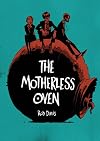
Like Jan Svankmajer doing Grange Hill, this sets up a bizarre but kind of recognisable world that has its own internal logic and very little in the way of explanation. Scarper Lee is a schoolboy doing normal schoolboy things in a place where your dad might be a steam-powered boat on wheels and it rains knives on a regular basis. He's got three weeks to live and he knows this because everyone knows when their deathday is. Then things start to change when he meets new girl and agent of chaos show more Vera Pike. It's hard to explain where things go from here because it only makes sense if you read it (and you have to read all three books in the trilogy to get anything like a complete story), but the worldbuilding and character development are top notch. show less
Lists
Awards

You May Also Like


Associated Authors
Statistics
- Works
- 8
- Also by
- 5
- Members
- 361
- Popularity
- #66,479
- Rating
- 3.9
- Reviews
- 19
- ISBNs
- 26
- Languages
- 2