
Stephen R. Haynes
Author of Bonhoeffer for Armchair Theologians
About the Author
Stephen R. Haynes is professor of religious studies at Rhodes College and theologian-in-residence at Idlewild Presbyterian Church in Memphis, Tennessee. The coauthor of Bonhoeffer for Armchair Theologians, he has also written articles about Bonhoeffer and American culture for the Huffington Post show more and the Christian Century. show less
Works by Stephen R. Haynes
The Last Segregated Hour: The Memphis Kneel-Ins and the Campaign for Southern Church Desegregation (2012) 29 copies
Professing in the Postmodern Academy: Faculty and the Future of Church-Related Colleges (2002) 18 copies
Why Can't Church Be More Like an AA Meeting?: And Other Questions Christians Ask about Recovery (2021) 15 copies
Associated Works
Bonhoeffer and King: Their Legacies and Import for Christian Social Thought (2010) — Contributor — 32 copies, 1 review
Tagged
Common Knowledge
- Canonical name
- Haynes, Stephen R.
- Legal name
- Haynes, Stephen Ronald
- Birthdate
- 1958-07-02
- Gender
- male
Members
Reviews
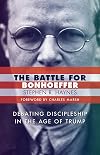
To say I "liked" this book doesn't quite fit how it strikes me. Why? Because I love Bonhoeffer, I was disappointed to read how Bonhoeffer's life and work has been misappropriated. I do think this is an important book, because it both corrects the misinterpretations by a Bonhoeffer scholar and also shows us as readers how easy it is for people to twist a powerful message of servanthood into something much less than that.
Noah's Curse : The Biblical Justification of American Slavery (Religion in America Series) by Stephen R. Haynes
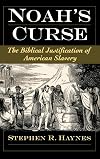
Although it reads like a revised dissertation (which it may perhaps be), the initial chapters offer a useful overview of the employment of Biblical mythology to support and sustain American racism from slavery to Jim Crow. He dwells overlong on the example of one preacher, Benjamin Palmer, and the final chapter in which he strives to put a new spin on the tale of Noah's Curse may be skipped for all those not of a theological bent.
There are two related thrusts to this book.
First, it provides a critique of Eric Metaxas' large Bonhoeffer biography. Second, it provides an analysis of how Metaxas, that book, and his later media appearances contributed to a right-wing Evangelical appropriation of Bonhoeffer contributing to the election of Donald Trump. In both cases, he is able to make his case by appealing to a broader set of Bonhoeffer scholarship. While he makes his case against the "Big Book of Bonhoeffer" on grounds show more of misattribution, misquoting, and misuse, I feel it could be even stronger. The reality is, though, the author provides numerous citations which probably do the job better than he can in this particular volume. As to the second point, he necessarily qualifies his claims. He does show the abuse of Bonhoeffer by "both sides" but fails to make any definitive case that Metaxas and the Right's use of Herr Dietrich made a measurable difference in the election. It's probably impossible to do so. He does successfully call into question the use of Bonhoeffer to defend the actions of the President on moral grounds. This book is dense and took me months to get through. The first part lays so much background it felt difficult to wade through at times. The final parts were a much quicker read. The letter to supporters of Trump which concludes the book is worth the price of admission, alone. Valuable read and may become even more valuable in the coming election. show less
First, it provides a critique of Eric Metaxas' large Bonhoeffer biography. Second, it provides an analysis of how Metaxas, that book, and his later media appearances contributed to a right-wing Evangelical appropriation of Bonhoeffer contributing to the election of Donald Trump. In both cases, he is able to make his case by appealing to a broader set of Bonhoeffer scholarship. While he makes his case against the "Big Book of Bonhoeffer" on grounds show more of misattribution, misquoting, and misuse, I feel it could be even stronger. The reality is, though, the author provides numerous citations which probably do the job better than he can in this particular volume. As to the second point, he necessarily qualifies his claims. He does show the abuse of Bonhoeffer by "both sides" but fails to make any definitive case that Metaxas and the Right's use of Herr Dietrich made a measurable difference in the election. It's probably impossible to do so. He does successfully call into question the use of Bonhoeffer to defend the actions of the President on moral grounds. This book is dense and took me months to get through. The first part lays so much background it felt difficult to wade through at times. The final parts were a much quicker read. The letter to supporters of Trump which concludes the book is worth the price of admission, alone. Valuable read and may become even more valuable in the coming election. show less
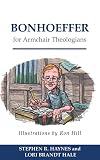
The authorities manage to combine a captivating life story with a solid theological analysis.
You May Also Like


Associated Authors
Statistics
- Works
- 14
- Also by
- 1
- Members
- 472
- Popularity
- #52,189
- Rating
- 3.9
- Reviews
- 6
- ISBNs
- 32
- Languages
- 1