
Hart Crane (1899–1932)
Author of The Complete Poems of Hart Crane
About the Author
Born in Ohio, Hart Crane's early life was filled with change and trauma. His family's many moves and his parents' divorce turned him to writing at age 13. In 1923, Crane moved to New York, where he published his first book of poetry, White Buildings, in 1926. In 1930 he published The Bridge, show more considered by most to be his best work. That same year he won the Levinson Prize from Poetry Magazine; he was awarded a Guggenheim Fellowship in 1931. Crane's life ended in 1932 when he committed suicide by drowning. He jumped from a ship as he was returning to the United States from a trip to Mexico. (Bowker Author Biography) show less
Image credit: From Wikipedia
Works by Hart Crane
The poet's vocation; selections from letters of Hölderlin, Rimbaud, & Hart Crane (1967) — Contributor — 6 copies
Il ponte e altre poesie 2 copies
< Edifici bianchi > ("White buildings", U.S.A., 1926) /// < Il ponte > ("The bridge", U.S.A., 1930) 1 copy, 1 review
Eternity 1 copy
Moment Fugue 1 copy
“At Melville’s Tomb” 1 copy
“The Broken Tower” 1 copy
“Voyages” 1 copy
“O Carib Isle!” 1 copy
“Passage” 1 copy
Seven lyrics 1 copy
“Chaplinesque” 1 copy
Prose and Poetry 1 copy
North Labrador 1 copy
To Brooklyn Bridge 1 copy
Broen 1 copy
Il ponte 1 copy
Associated Works
The Making of a Poem: A Norton Anthology of Poetic Forms (2000) — Contributor — 1,474 copies, 9 reviews
The Best Poems of the English Language: From Chaucer Through Robert Frost (2004) — Contributor — 1,249 copies, 3 reviews
World Poetry: An Anthology of Verse from Antiquity to Our Time (1998) — Contributor — 499 copies, 2 reviews
American Poetry: The Twentieth Century, Volume Two: E. E. Cummings to May Swenson (2000) — Contributor — 444 copies, 1 review
The Norton Anthology of American Literature, Volume 2: 1865 to Present (1979) — Contributor, some editions — 137 copies
The Fugitive Poets: Modern Southern Poetry (Southern Classics Series) (1991) — Contributor — 121 copies
The Poet's Work: 29 Poets on the Origins and Practice of Their Art (1979) — Contributor — 96 copies, 1 review
The Heath Anthology of American Literature, Concise Edition (2003) — Contributor — 73 copies, 1 review
The Serpent and the Fire: Poetries of the Americas from Origins to Present (2024) — Contributor — 18 copies
Gender in Modernism: New Geographies, Complex Intersections (2007) — Contributor — 12 copies, 1 review
Sunlight on the River: Poems About Paintings, Paintings About Poems (2015) — Contributor — 11 copies, 2 reviews
A Pagan anthology composed of poems by contributors to the Pagan magazine — Contributor — 2 copies
The Ethnic Image in Modern American Literature, 1900-1950, Volumes 1-2 (1984) — Contributor — 1 copy
Tennessee Williams: Die tätowierte Rose — Contributor — 1 copy
Tagged
Common Knowledge
- Legal name
- Crane, Harold Hart
- Birthdate
- 1899-07-21
- Date of death
- 1932-04-27
- Gender
- male
- Education
- self-educated
- Occupations
- poet
advertising manager
advertising copywriter
shipyard laborer
reporter
shipping clerk (show all 7)
salesman - Organizations
- The Fugitives
- Awards and honors
- Levinson Prize (1930)
Guggenheim fellow (1931-1932) - Relationships
- Tate, Allen (friend)
Frank, Waldo (friend)
Munson, Gorham (friend)
Cowley, Malcolm (friend)
Winters, Yvor (friend) - Cause of death
- probable suicide
- Nationality
- USA
- Birthplace
- Garrettsville, Ohio, USA
- Places of residence
- Cleveland, Ohio, USA
New York, New York, USA
Paris, France
Mexico - Place of death
- Gulf of Mexico
- Associated Place (for map)
- USA
Members
Reviews
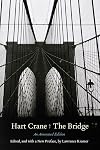
Rating: 3.5* of five
The Publisher Says: Now in paperback, with a new preface and clear, reader-friendly annotations that unlock Crane’s landmark poem.
Hart Crane’s modernist masterpiece The Bridge has steadily grown in stature since its 1930 publication. Once dismissed by influential critics as a noble failure, a view that hardened into conventional wisdom, it is now widely regarded as one of the major achievements of twentieth-century American poetry. The poem unites mythology and show more modernity to reckon with the promises, kept and broken, of American experience.
The Bridge is challenging in the best sense, exacting and ultimately rewarding. Beloved yet often misunderstood, it threads indirect and finely grained allusions through period-specific references to 1920s life that can elude contemporary readers. Crane’s elaborate compound metaphors braid disparate sources, making the poem’s movement at times hard to track. Its topical and geographic markers call not only for identification but for explanation. Without specialized knowledge, much of it not readily available even online, many passages remain opaque.
Until now, there was no single, convenient resource to help readers unlock Crane’s vision. This book is that guide. Its detailed, far-reaching annotations make The Bridge fully accessible, whether you are a scholar, a student, or a devoted reader of poetry.
I RECEIVED A DRC FROM THE PUBLISHER VIA EDELWEISS+. THANK YOU.
My Review: I am not "...a scholar, a student, or a devoted reader of poetry," so I had no business reading this queer poet's great edifice of thought. I loved the Walker Evans photos, and appreciated Lawrence Kraamer's erudite and informative annotations, but it took me from October 2025 until now to finish this #PrideMonth read.
He might be one of gay history's "might have been great"s but I simply could not care less about poetry no matter how hard I try.
Fordham University Press requests and requires the surrender of $23.99 for an ebook. You do you, Boo. show less
The Publisher Says: Now in paperback, with a new preface and clear, reader-friendly annotations that unlock Crane’s landmark poem.
Hart Crane’s modernist masterpiece The Bridge has steadily grown in stature since its 1930 publication. Once dismissed by influential critics as a noble failure, a view that hardened into conventional wisdom, it is now widely regarded as one of the major achievements of twentieth-century American poetry. The poem unites mythology and show more modernity to reckon with the promises, kept and broken, of American experience.
The Bridge is challenging in the best sense, exacting and ultimately rewarding. Beloved yet often misunderstood, it threads indirect and finely grained allusions through period-specific references to 1920s life that can elude contemporary readers. Crane’s elaborate compound metaphors braid disparate sources, making the poem’s movement at times hard to track. Its topical and geographic markers call not only for identification but for explanation. Without specialized knowledge, much of it not readily available even online, many passages remain opaque.
Until now, there was no single, convenient resource to help readers unlock Crane’s vision. This book is that guide. Its detailed, far-reaching annotations make The Bridge fully accessible, whether you are a scholar, a student, or a devoted reader of poetry.
I RECEIVED A DRC FROM THE PUBLISHER VIA EDELWEISS+. THANK YOU.
My Review: I am not "...a scholar, a student, or a devoted reader of poetry," so I had no business reading this queer poet's great edifice of thought. I loved the Walker Evans photos, and appreciated Lawrence Kraamer's erudite and informative annotations, but it took me from October 2025 until now to finish this #PrideMonth read.
He might be one of gay history's "might have been great"s but I simply could not care less about poetry no matter how hard I try.
Fordham University Press requests and requires the surrender of $23.99 for an ebook. You do you, Boo. show less
This was a surprising collection of poetry by a man besought by his own personal troubles and eventual suicide. The poems are at times lucid, other times evocative of the classics and religious themes. There is a lot of variation and the form was not what I thought it would be upon hearing this book of poetry as a recommendation. Nevertheless, there is something gripping here that stands the test of time- something elusive, phantasmagoric, and daunting. That is the power of this collection show more and why I enjoyed it. It was challenging and worthwhile.
3.75 stars. show less
3.75 stars. show less
"The Broken Tower"
The bell-rope that gathers God at dawn
Dispatches me as though I dropped down the knell
Of a spent day - to wander the cathedral lawn
From pit to crucifix, feet chill on steps from hell.
Have you not heard, have you not seen that corps
Of shadows in the tower, whose shoulders sway
Antiphonal carillons launched before
The stars are caught and hived in the sun's ray?
The bells, I say, the bells break down their tower;
And swing I know not where. Their tongues engrave
Membrane through show more marrow, my long-scattered score
Of broken intervals... And I, their sexton slave!
Oval encyclicals in canyons heaping
The impasse high with choir. Banked voices slain!
Pagodas, campaniles with reveilles outleaping -
O terraced echoes prostrate on the plain!...
And so it was I entered the broken world
To trace the visionary company of love, its voice
An instant in the wind (I know not whither hurled)
But not for long to hold each desperate choice.
My word I poured. But was it cognate, scored
Of that tribunal monarch of the air
Whose thigh embronzes earth, strikes crystal Word
In wounds pledged once to hope, - cleft to despair?
The steep encroachments of my blood left me
No answer (could blood hold such a lofty tower
As flings the question true?) - or is it she
Whose sweet mortality stirs latent power? -
And through whose pulse I hear, counting the strokes
My veins recall and add, revived and sure
The angelus of wars my chest evokes:
What I hold healed, original now, and pure...
And builds, within, a tower that is not stone
(Not stone can jacket heaven) - but slip
Of pebbles, - visible wings of silence sown
In azure circles, widening as they dip
The matrix of the heart, lift down the eye
That shrines the quiet lake and swells a tower...
The commodious , tall decorum of that sky
Unseals her earth, and lifts love in its shower.
- Hart Crane, 1932
I feel daunted in trying to review Hart Crane's entire oeuvre. He is such an allusive/elusive poet, that I often felt helplessly lost in reading his poetry, especially his magnum opus in praise of Brooklyn Bridge, called simply The Bridge. The title is probably the only thing simple about this dense, immense poem, which is probably the long American poem of the 20th century.
Because I feel so daunted by Crane's difficulty, I am only going to give a few personal responses to his work, without trying to analyse the poetry in any depth. I will start of by saying that, although I felt desperately in need of guidance while reading Crane, I also felt a wonderful ebullience and joy while reading his poetry. Crane, although deeply influenced by Walt Whitman's poetics of "free" verse, has a much more classical style than Whitman, incorporating classical metres and rhyme to great effect. Just looking at the above poem, one notices the careful use of a varied iamic pentameter and unobtrusive cross-rhyme, which serves to structure a very obscure poem. Crane was extremely widely read, even though he only lived to the age of 32. Homosexual, or at least bisexual, Crane experienced loneliness and became an alcoholic, finally commiting suicide by jumping into the Gulf of Mexico from the steamship Orizaba while en route to America from a trip to Mexico. What he might still have produced in terms of poetry is something sad to reflect upon.
Some have described Crane as "word-drunk", an American Dylan Thomas without the rigour of contemporaries like Eliot and Wallace Stevens. This is false. Crane worked and re-worked his poems incessantly, trying to achieve the perfection of form and content that all good poetry strives after. His poems can seem wordy because he is so concerned with finding the correct expression, the one word that will say as much as a score of imperfect lines. Look again at the above poem, especially the lines "(Not stone can jacket heaven) - but slip / Of pebbles". The words "jacket" and "slip" are exquisite, chosen with care and precision. "Jacket" means "to enclose or encase in a jacket or other covering", implying the close, tight enclosure of "heaven" in a tower made not of stone. "Slip" has been interpreted in many ways, but the most likely meaning is "a thin, slippery mix of clay and water", refering to the clay from which humanity is fashioned.
As you can see, Crane is so careful in choosing his words that it is easy to miss the meaning of a single phrase, not even to mention the meaning of a whole stanza, or the poem itself. This may lead to a lot of frustration when reading Crane; he certainly does not mind being obscure, and rarely gives the reader signposts to his meaning. That said, I hesitate to ascribe fixed meanings to any poem - there are only better and worse reading of poems, not universal or eternal ones. Therefore, my personal response to Crane is more important to me than the disparaging comments of some of his contemporaries (such as Ezra Pound), who either thought he was too classical, or too obscure. I take their criticisms on board, but I do not swallow them whole.
Crane is a figure of sadness to me, but also one of brilliance and hope. He produced wonderful poetry in trying circumstances, and left a legacy of verse that will endure. I hope to encourage more people to read his poetry. Even though he may prove difficult, keep faith and try him. As Whitman wrote at the end of his Song of Myself:
Failing to fetch me at first keep encouraged,
Missing me one place search another,
I stop somewhere waiting for you.
So does Crane. show less
The bell-rope that gathers God at dawn
Dispatches me as though I dropped down the knell
Of a spent day - to wander the cathedral lawn
From pit to crucifix, feet chill on steps from hell.
Have you not heard, have you not seen that corps
Of shadows in the tower, whose shoulders sway
Antiphonal carillons launched before
The stars are caught and hived in the sun's ray?
The bells, I say, the bells break down their tower;
And swing I know not where. Their tongues engrave
Membrane through show more marrow, my long-scattered score
Of broken intervals... And I, their sexton slave!
Oval encyclicals in canyons heaping
The impasse high with choir. Banked voices slain!
Pagodas, campaniles with reveilles outleaping -
O terraced echoes prostrate on the plain!...
And so it was I entered the broken world
To trace the visionary company of love, its voice
An instant in the wind (I know not whither hurled)
But not for long to hold each desperate choice.
My word I poured. But was it cognate, scored
Of that tribunal monarch of the air
Whose thigh embronzes earth, strikes crystal Word
In wounds pledged once to hope, - cleft to despair?
The steep encroachments of my blood left me
No answer (could blood hold such a lofty tower
As flings the question true?) - or is it she
Whose sweet mortality stirs latent power? -
And through whose pulse I hear, counting the strokes
My veins recall and add, revived and sure
The angelus of wars my chest evokes:
What I hold healed, original now, and pure...
And builds, within, a tower that is not stone
(Not stone can jacket heaven) - but slip
Of pebbles, - visible wings of silence sown
In azure circles, widening as they dip
The matrix of the heart, lift down the eye
That shrines the quiet lake and swells a tower...
The commodious , tall decorum of that sky
Unseals her earth, and lifts love in its shower.
- Hart Crane, 1932
I feel daunted in trying to review Hart Crane's entire oeuvre. He is such an allusive/elusive poet, that I often felt helplessly lost in reading his poetry, especially his magnum opus in praise of Brooklyn Bridge, called simply The Bridge. The title is probably the only thing simple about this dense, immense poem, which is probably the long American poem of the 20th century.
Because I feel so daunted by Crane's difficulty, I am only going to give a few personal responses to his work, without trying to analyse the poetry in any depth. I will start of by saying that, although I felt desperately in need of guidance while reading Crane, I also felt a wonderful ebullience and joy while reading his poetry. Crane, although deeply influenced by Walt Whitman's poetics of "free" verse, has a much more classical style than Whitman, incorporating classical metres and rhyme to great effect. Just looking at the above poem, one notices the careful use of a varied iamic pentameter and unobtrusive cross-rhyme, which serves to structure a very obscure poem. Crane was extremely widely read, even though he only lived to the age of 32. Homosexual, or at least bisexual, Crane experienced loneliness and became an alcoholic, finally commiting suicide by jumping into the Gulf of Mexico from the steamship Orizaba while en route to America from a trip to Mexico. What he might still have produced in terms of poetry is something sad to reflect upon.
Some have described Crane as "word-drunk", an American Dylan Thomas without the rigour of contemporaries like Eliot and Wallace Stevens. This is false. Crane worked and re-worked his poems incessantly, trying to achieve the perfection of form and content that all good poetry strives after. His poems can seem wordy because he is so concerned with finding the correct expression, the one word that will say as much as a score of imperfect lines. Look again at the above poem, especially the lines "(Not stone can jacket heaven) - but slip / Of pebbles". The words "jacket" and "slip" are exquisite, chosen with care and precision. "Jacket" means "to enclose or encase in a jacket or other covering", implying the close, tight enclosure of "heaven" in a tower made not of stone. "Slip" has been interpreted in many ways, but the most likely meaning is "a thin, slippery mix of clay and water", refering to the clay from which humanity is fashioned.
As you can see, Crane is so careful in choosing his words that it is easy to miss the meaning of a single phrase, not even to mention the meaning of a whole stanza, or the poem itself. This may lead to a lot of frustration when reading Crane; he certainly does not mind being obscure, and rarely gives the reader signposts to his meaning. That said, I hesitate to ascribe fixed meanings to any poem - there are only better and worse reading of poems, not universal or eternal ones. Therefore, my personal response to Crane is more important to me than the disparaging comments of some of his contemporaries (such as Ezra Pound), who either thought he was too classical, or too obscure. I take their criticisms on board, but I do not swallow them whole.
Crane is a figure of sadness to me, but also one of brilliance and hope. He produced wonderful poetry in trying circumstances, and left a legacy of verse that will endure. I hope to encourage more people to read his poetry. Even though he may prove difficult, keep faith and try him. As Whitman wrote at the end of his Song of Myself:
Failing to fetch me at first keep encouraged,
Missing me one place search another,
I stop somewhere waiting for you.
So does Crane. show less
Oh Fathers, forgive me, for I have sinned! I've wanted to indulge and drink in the shining baroque myths of Hart Crane for so long. I've only done so now, after watching the James Franco film a while back. So I've been picking at it for a while since then.
This is a broad mythical poem, somewhere between Walt Whitman and Ezra Pound. Modern. Starts from the Brooklyn Bridge, and makes a circuit through a historical foundation story of the United States, through Pocahontas, the frontier, the show more oceans, and to a dream-like vision of an ideal Atlantis before walking once again through Brooklyn.
The language is fluid, mythical, making historical, religious, mythical references. Symbols and myths and meanings. A fantastic use of metaphor, although it's almost incomprehensible at first glance. You have to go over it several times and the it hits you.
Fantastic. I'll have to revisit this again. show less
This is a broad mythical poem, somewhere between Walt Whitman and Ezra Pound. Modern. Starts from the Brooklyn Bridge, and makes a circuit through a historical foundation story of the United States, through Pocahontas, the frontier, the show more oceans, and to a dream-like vision of an ideal Atlantis before walking once again through Brooklyn.
The language is fluid, mythical, making historical, religious, mythical references. Symbols and myths and meanings. A fantastic use of metaphor, although it's almost incomprehensible at first glance. You have to go over it several times and the it hits you.
Fantastic. I'll have to revisit this again. show less
Lists
Awards


You May Also Like


Associated Authors
Statistics
- Works
- 47
- Also by
- 41
- Members
- 1,954
- Popularity
- #13,155
- Rating
- 4.0
- Reviews
- 12
- ISBNs
- 53
- Languages
- 6
- Favorited
- 22