
Tony Holmes
Author of Flying Legends
About the Author
Tony Holmes has been Osprey's aviation editor since 1989
Works by Tony Holmes
American Eagles, Volume 1: American Volunteer Fighter Pilots in the RAF, 1937-43 (2001) 18 copies, 1 review
Wings of Courage: Tales from America's Elite Fighter Groups of World War II (General Aviation) (2010) 11 copies
Lo scenario scandinavo 1 copy
Associated Works
Hellcat Aces of World War 2 (1996) — Series Editor, Editor, Captions and Plate Commentary — 72 copies
P-38 Lightning Aces of the Pacific and CBI (Osprey Aircraft of the Aces No 14) (1997) — Editor — 69 copies
Focke-Wulf Fw 190 (Osprey Production Line to Frontline 5) (2003) — Editor, some editions — 28 copies
Tagged
Common Knowledge
- Canonical name
- Holmes, Tony
- Birthdate
- 1967
- Gender
- male
- Nationality
- Australia
- Birthplace
- East Fremantle, Western Australia, Australia
- Associated Place (for map)
- Western Australia, Australia
Members
Reviews

About the only reason why I don't give this booklet another half star is that it is over twenty years old and the topic could probably stand to be revisited. On the other hand, actual journalism apparently went in to this work and it partakes of secondary sources that are probably none-to-available at this stage of the game. This is not to mention one gets some sense of the impact on British air defense as the cadre of pre-war pilots was ground down and new trainees and refugee pilots were show more thrown into the meat grinder. There's a reason why "The Few" are venerated. In short, still worth reading. show less
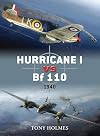
Good overview of the combat systems and tactics employed by the Hurricane and Bf-110 pilots. Standard Osprey, good intro to the subject, inevitably leaves you wanting to know more on the subject.

Supercarriers is a beautifully photographed coffee table book of a variety of American carriers in the mid-1980s, with blurbs explaining daily life. Today, in an age of Google images and HD video on your phone, military photos are cheap, but the authors managed to capture naval aviation at one of its most diverse times, with nine planes and two helicopters, some still in traditional bright colors as opposed to low-visibility grey. The star of the show is the F-14 Tomcat (cue Danger Zone), show more but there's plenty of love for A-7 Corsairs, EA-6B Prowlers, and the less glamorous support planes that keep the carrier safe and supplied. show less
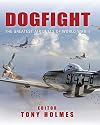
This book looks very impressive, and as I skimmed through the pages it felt that this would be a very dedicated and professionally put together volume on a favourite topic of mine. Well, it was, and it wasn't.
The title of the book does misrepresent the content a little; I got the impression it would chronicle and dissect famous dogfights while providing background on the planes and the amazing pilots that flew them, and if you know anything about air warfare of WWII you'd know that there are show more many of all to choose from.
But this book is dedicated to three 'pairs' of duelling combatants which was ultimately disappointing. It took two specific planes from either side of the fighting spectrum and analysed them to death from the plane itself, its inception and variants, and then into the training required to fly and fight them, and then a post-match analysis. There were smatterings of actual fighting narrative and the odd bio of pilots but these were too far few and between.
As it goes, however, the book is a great reference and is so thoroughly researched that I came out knowing a whole lot more about the subject, and I know a fair bit!
My biggest gripe was the selection of planes and pilots, as the book suggests only the 'greatest need apply', and I don;t think they have, but it could be seen as subjective. First is the trusty Spitfire vs. the Messerschmitt Bf109; fair enough, there are probably no two more distinguishable planes than these. Then we moved onto the P47 Thunderbolt and again the Bf109 (later variant); the P40 Warhawk and Ki-43 'Oscar' fighting over China; P51 Mustang and the Focke Wulf 190, and finally the Seafire and Mitsubishi 'Zero'.
It lost continuity and at times (especially where the Spitfire/Seafire, and Bf109s were involved, a lot of doubling up of information to read. And too many times I found myself asking "What about the Hurricane? Where is the Me 262? The Corsair and Hellcat? Bader and Galland?"
Nope, as the book goes it is wrong in the sense it doesn't deliver what it suggests, but nevertheless it is a good read if you can shift your focus from your own conclusions. Diagrams, photos, artwork and tactical notes are great, top-notch, and some of the facts and figures are detailed. Where there were a few pilot bios there weren't enough and these themselves were missing more intricate detail.
Only for the real plane-spotters. show less
The title of the book does misrepresent the content a little; I got the impression it would chronicle and dissect famous dogfights while providing background on the planes and the amazing pilots that flew them, and if you know anything about air warfare of WWII you'd know that there are show more many of all to choose from.
But this book is dedicated to three 'pairs' of duelling combatants which was ultimately disappointing. It took two specific planes from either side of the fighting spectrum and analysed them to death from the plane itself, its inception and variants, and then into the training required to fly and fight them, and then a post-match analysis. There were smatterings of actual fighting narrative and the odd bio of pilots but these were too far few and between.
As it goes, however, the book is a great reference and is so thoroughly researched that I came out knowing a whole lot more about the subject, and I know a fair bit!
My biggest gripe was the selection of planes and pilots, as the book suggests only the 'greatest need apply', and I don;t think they have, but it could be seen as subjective. First is the trusty Spitfire vs. the Messerschmitt Bf109; fair enough, there are probably no two more distinguishable planes than these. Then we moved onto the P47 Thunderbolt and again the Bf109 (later variant); the P40 Warhawk and Ki-43 'Oscar' fighting over China; P51 Mustang and the Focke Wulf 190, and finally the Seafire and Mitsubishi 'Zero'.
It lost continuity and at times (especially where the Spitfire/Seafire, and Bf109s were involved, a lot of doubling up of information to read. And too many times I found myself asking "What about the Hurricane? Where is the Me 262? The Corsair and Hellcat? Bader and Galland?"
Nope, as the book goes it is wrong in the sense it doesn't deliver what it suggests, but nevertheless it is a good read if you can shift your focus from your own conclusions. Diagrams, photos, artwork and tactical notes are great, top-notch, and some of the facts and figures are detailed. Where there were a few pilot bios there weren't enough and these themselves were missing more intricate detail.
Only for the real plane-spotters. show less
You May Also Like


Associated Authors
Statistics
- Works
- 64
- Also by
- 20
- Members
- 1,120
- Popularity
- #22,934
- Rating
- 3.7
- Reviews
- 16
- ISBNs
- 106
- Languages
- 6