
George R. Stewart (1895–1980)
Author of Earth Abides
About the Author
George R. Stewart (1895-1980) was a professor of English at the University of California, Berkeley
Works by George R. Stewart
Names on the Land: A Historical Account of Place-Naming in the United States (1945) 666 copies, 15 reviews
American place-names; a concise and selective dictionary for the continental United States of America (1970) 85 copies
American Given Names: Their Origin and History in the Context of the English Language (1986) 61 copies, 1 review
The year of the oath; the fight for academic freedom at the University of California (1971) 19 copies
Take your Bible in one hand; the life of William Henry Thomes, author of A whaleman's adventures on land and sea, Lewey (1939) 8 copies
Unterwegs in die Welt von Morgen 116 : George R. Stewart - Leben ohne Ende / Eric Frank Russell - Störfaktor (1990) 8 copies, 1 review
N. A. 1 - The North-South Continental Highway - Looking South - From the Mexican Border to Costa Rica (1957) 5 copies
John Phoenix, ESQ., The Veritable Squibob: A Life of Captain George H. Derby (1969) 5 copies, 1 review
Doctor's oral 5 copies
Good lives 4 copies
A bibliography of the writings of Bret Harte in the magazines and newspapers of California, 1857-1871 (1977) 1 copy
La terra sull'abisso 1 copy
Diary of Patrick Breen. 1 copy
Associated Works
A Sense of History: The Best Writing from the Pages of American Heritage (1985) — Contributor — 492 copies, 4 reviews
Reader's Digest Best of the West: A Treasury of Western Adventure Volumes 1 & 2 (1976) — Contributor — 38 copies
Reader's Digest Best of the West: A Treasury of Western Adventure Volume 1 (1975) — Contributor — 13 copies
Recollections of Old Times in California or, California Life in 1843 (1974) — Introduction — 5 copies
Tagged
Common Knowledge
- Canonical name
- Stewart, George R.
- Legal name
- Stewart, George Rippey, Jr.
- Birthdate
- 1895-05-31
- Date of death
- 1980-08-22
- Gender
- male
- Education
- Princeton University (BA|1917)
University of California, Berkeley (MA|1920)
Columbia University (PhD|English literature|1922) - Occupations
- historian
toponymist
novelist
English professor - Organizations
- University of California, Berkeley
American Name Society - Awards and honors
- International Fantasy Award (1951)
- Nationality
- USA
- Birthplace
- Sewickley, Pennsylvania, USA
- Places of residence
- Berkeley, California, USA
- Place of death
- San Francisco, California, USA
- Map Location
- Pennsylvania, USA
Members
Discussions
George R Stewart's Earth Abides in Post-apocalyptic Literature (July 2010)
Reviews
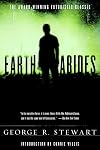
A post-apocalyptic gem. An academic awakes from delirium to find a disease has driven away or killed all except a few who are immune. The following story is more than a tale of survival. It's a thoughtful study of society, environment, and the human condition. What thoughts and urges pass through the survivors? How do their outlooks differ? Do the stragglers work together and, if so, do they form a new civilisation? What tenets or mores do newly founded societies hold? How does the animal show more extinct to preserve its species manifest itself? These are universal, ageless questions; and the fact Stewart addresses them is why at no point does the novel feel dated.
Earth Abides inspired Stephen King's post-apocalyptic The Stand. show less
Earth Abides inspired Stephen King's post-apocalyptic The Stand. show less
Brian Aldiss coined the term "cozy catastrophe" about John Wyndham's work. It being an end of the world event where the character doesn't suffer enough or there's not always impending doom right at the door. In Earth Abides, the main character, Ish, is bedridden throughout the entire apocalypse. Then we follow him when he is clear-headed. No zombies. No aliens. No evil government stooges.
Ish isn't a scientist or a doctor, or a superhuman soldier; he's just a slightly more intelligent person show more who understands the present and the importance the future holds. Along the way he picks up a few group of survivors. The dynamic of the group is something that is interesting as we see a small society form. Within this, Ish becomes a defacto leader and the idealist - but an idealist who has reality smack into him several times, especially when it concerns other people. While you do get a semblance of others actions and reasons, we are constantly following Ish and his internal dialogue. Society is gone and all that remains are the remains.
But now children come into the mix. Society is still in struggle within their group. Ish wants to build the children to take over and remember the times before and achieve order once again. But what does order and society look like when you only have less than a dozen people who existed in the "before times".
There are some amazing juxopositions in this book as well. Ish takes a wife, Emma, names that have origin towards "Adam" and "Eve". We see the story starts out with Ish (Adam) being bitten by a snake and then he's thrust out into a world of disorder but also the Earth continues. Within this, there is small discussions of religion as in Ish is not religious and views it as a distraction from the unity needed among the group and focus on survival tasks. Then to double back, mythology springs up on things that for Ish are common place but for the children who only know the world after the Great Disaster become totems and exalted titles.
There's no big shootouts in this book. There's no stopping the mad bomber or brigand. It is a calm book but the tension and drama are beautifully done. The dealing with an outside stranger to the group and the impact of actions taken is such a high point. But there are little movements that are big deals and then there are big deals where you think the story will focus on but it settles into a more somber and carefree tone. It's amazing.
I almost come to think of apocalypse stories truly bringing questions of the purpose of life and humanity front and center and this one has done it the most by not focusing on the disaster but on the life and humanity. This would be an amazing book for a group discussion or reading group. I was tempted not to finish it as I saw the end coming and didn't want it to end - a sure sign of a good book. A definite recommendendation. Don't let it sit on your shelf. But if you do, the Earth Abides. Final Grade - A+ show less
Ish isn't a scientist or a doctor, or a superhuman soldier; he's just a slightly more intelligent person show more who understands the present and the importance the future holds. Along the way he picks up a few group of survivors. The dynamic of the group is something that is interesting as we see a small society form. Within this, Ish becomes a defacto leader and the idealist - but an idealist who has reality smack into him several times, especially when it concerns other people. While you do get a semblance of others actions and reasons, we are constantly following Ish and his internal dialogue. Society is gone and all that remains are the remains.
But now children come into the mix. Society is still in struggle within their group. Ish wants to build the children to take over and remember the times before and achieve order once again. But what does order and society look like when you only have less than a dozen people who existed in the "before times".
There are some amazing juxopositions in this book as well. Ish takes a wife, Emma, names that have origin towards "Adam" and "Eve". We see the story starts out with Ish (Adam) being bitten by a snake and then he's thrust out into a world of disorder but also the Earth continues. Within this, there is small discussions of religion as in Ish is not religious and views it as a distraction from the unity needed among the group and focus on survival tasks. Then to double back, mythology springs up on things that for Ish are common place but for the children who only know the world after the Great Disaster become totems and exalted titles.
There's no big shootouts in this book. There's no stopping the mad bomber or brigand. It is a calm book but the tension and drama are beautifully done. The dealing with an outside stranger to the group and the impact of actions taken is such a high point. But there are little movements that are big deals and then there are big deals where you think the story will focus on but it settles into a more somber and carefree tone. It's amazing.
I almost come to think of apocalypse stories truly bringing questions of the purpose of life and humanity front and center and this one has done it the most by not focusing on the disaster but on the life and humanity. This would be an amazing book for a group discussion or reading group. I was tempted not to finish it as I saw the end coming and didn't want it to end - a sure sign of a good book. A definite recommendendation. Don't let it sit on your shelf. But if you do, the Earth Abides. Final Grade - A+ show less
Rating: 4* of five
The Publisher Says: A disease of unparalleled destructive force has sprung up almost simultaneously in every corner of the globe, all but destroying the human race. One survivor, strangely immune to the effects of the epidemic, ventures forward to experience a world without man. What he ultimately discovers will prove far more astonishing than anything he'd either dreaded or hoped for.
My Review: Call him Isherwood. (Cause that's his name.) On a camping trip in the show more mountains, Ish gets bitten by a rattlesnake and barely survives. Clearly he can't call for help on his cell because 1) the mountains and 2) 1949. After all his sufferings, Ish drives down the mountain and finds humanity...in Los Angeles...gone. Just not there. (Oddly, there are also not heaping mounds of dead bodies everywhere...he's only been gone a week or so, and the Plague killed quick. That nit being picked, I resume.) Ish spends his time alternately looking for survivors and ruminating on the justice and inevitability of the plague:
When he stops being stunned, he sets out to contact and assess his fellow survivors. He spends a lot of the book out a-wanderin', and he picks up here and there some fellow remnants. No one is a medical research genius or a high government official or anything, thank goodness, so no one knows where this plague came from, how many are dead in other places, or any of that other stuff that pockmarks other post-apocalyptic stories I've read. I completely buy that the survivors are shocked and isolated, where I've always been hmmphy about the better-informed-character stories.
Any road, time passes, life goes on, babies are born and people die and food is grown in tune with nature. We revert, in other words, to the way things were for ~10,000 years before monoculture and factory farming. Ish ages, and the younger people without strong attachments to the pre-apocalyptic world start to think about what the meaning of life is:
If there is an apocalypse while I'm alive, I'm makin' this my post-apocalyptic mission: Disestablishing religion. Ish is my soul-brother in this regard. But as you can imagine, he's fighting a rear-guard action despite being the oldest person anyone knows, and also the last survivor of Before in the Now. Having lived through the AIDS apocalypse, some days I feel the same way.
And as it must, Death comes for Ish at last, putting an end to his moanings about the stupidity of the human race for making the same mistakes that cost us so dearly before, his pessimistic views on the sustainability of his made tribe, and his invaluable store of knowledge...despite the fact that the whippersnappers don't listen:
I suspect all of us over a Certain Age feel this way to a greater or lesser degree. Plague or no plague, Youth isn't inclined to listen to Age, and apocalypse is relative. My apocalypse...the endangerment of tree books...is youth's Bright New Dawn, bulkless environmentally sound infinite stories! Yes, I'm going, I'm going, stop pushing me!
This work is licensed under a Creative Commons Attribution-NonCommercial-ShareAlike 3.0 Unported License. show less
The Publisher Says: A disease of unparalleled destructive force has sprung up almost simultaneously in every corner of the globe, all but destroying the human race. One survivor, strangely immune to the effects of the epidemic, ventures forward to experience a world without man. What he ultimately discovers will prove far more astonishing than anything he'd either dreaded or hoped for.
My Review: Call him Isherwood. (Cause that's his name.) On a camping trip in the show more mountains, Ish gets bitten by a rattlesnake and barely survives. Clearly he can't call for help on his cell because 1) the mountains and 2) 1949. After all his sufferings, Ish drives down the mountain and finds humanity...in Los Angeles...gone. Just not there. (Oddly, there are also not heaping mounds of dead bodies everywhere...he's only been gone a week or so, and the Plague killed quick. That nit being picked, I resume.) Ish spends his time alternately looking for survivors and ruminating on the justice and inevitability of the plague:
As for man, there is little reason to think that he can in the long run escape the fate of other creatures, and if there is a biological law of flux and reflux, his situation is now a highly perilous one. During ten thousand years his numbers have been on the upgrade in spite of wars, pestilences, and famines. This increase in population has become more and more rapid. Biologically, man has for too long a time been rolling an uninterrupted run of sevens.
When he stops being stunned, he sets out to contact and assess his fellow survivors. He spends a lot of the book out a-wanderin', and he picks up here and there some fellow remnants. No one is a medical research genius or a high government official or anything, thank goodness, so no one knows where this plague came from, how many are dead in other places, or any of that other stuff that pockmarks other post-apocalyptic stories I've read. I completely buy that the survivors are shocked and isolated, where I've always been hmmphy about the better-informed-character stories.
Any road, time passes, life goes on, babies are born and people die and food is grown in tune with nature. We revert, in other words, to the way things were for ~10,000 years before monoculture and factory farming. Ish ages, and the younger people without strong attachments to the pre-apocalyptic world start to think about what the meaning of life is:
If there is a God who made us and we did wrong before His eyes—as George says—at least we did wrong only because we were as God made us, and I do not think that He should set traps. Oh, you should know better than George! Let us not bring all that back into the world again—the angry God, the mean God—the one who does not tell us the rules of the game, and then strikes us when we break them. Let us not bring Him back.
If there is an apocalypse while I'm alive, I'm makin' this my post-apocalyptic mission: Disestablishing religion. Ish is my soul-brother in this regard. But as you can imagine, he's fighting a rear-guard action despite being the oldest person anyone knows, and also the last survivor of Before in the Now. Having lived through the AIDS apocalypse, some days I feel the same way.
And as it must, Death comes for Ish at last, putting an end to his moanings about the stupidity of the human race for making the same mistakes that cost us so dearly before, his pessimistic views on the sustainability of his made tribe, and his invaluable store of knowledge...despite the fact that the whippersnappers don't listen:
Then, though his sight was now very dim, he looked again at the young men. "They will commit me to the earth," he thought. "Yet I also commit them to the earth. There is nothing else by which men live. Men go and come, but earth abides."
I suspect all of us over a Certain Age feel this way to a greater or lesser degree. Plague or no plague, Youth isn't inclined to listen to Age, and apocalypse is relative. My apocalypse...the endangerment of tree books...is youth's Bright New Dawn, bulkless environmentally sound infinite stories! Yes, I'm going, I'm going, stop pushing me!
This work is licensed under a Creative Commons Attribution-NonCommercial-ShareAlike 3.0 Unported License. show less
More than speculative disaster fiction, Earth Abides is a post-apocalyptic novel about human civilization after a planet wide cataclysm. As revelatory narrative, it is not only sweeping and thoughtful, but also elemental and philosophical enough to show how futile were the backyard fallout shelters of the1950’s, and also the gasoline hoarding, food-stuffed lairs of 21st century doomsday preppers now. Author George R. Stewart travels beyond such temporary human stopgaps to illuminate the show more depth and breadth of a calamity affecting generations of humans.
Set in the San Francisco East Bay Area, not only does his novel introduce and follow individual men and women characters who grow, develop, and decay across their life spans; but also he makes Nature (weather, climate, season, fire, water, birth, growth, regression and succession, population collapse, death, and pandemic) and the Planet Earth brilliant primary characters that drive this tale. Stewart wrote about what he knew: including great 20th century Bay Area icons---the Golden Gate and Bay Bridge, and the colossal Doe Library (built 1910) at the University of California, Berkeley. All play roles as physical links to possibility, connection, and knowledge in Earth Abides, as Stewart attempts to discover what is essential, and what of civilization will or will not atrophy or survive. All three were very familiar to Stewart, who was a professor at the University of California, Berkeley.
Words like “staggering” and “heroic” describe the progress of this work. The result is amazing, considering Stewart’s novel was published in1949, before personal computers, satellites, and spacecraft. In this book he recreates the sympathetic and sobering tone of the prayer, “earth to earth, ashes to ashes, dust to dust” from the Book of Common Prayer, itself derived from Genesis 3:19, and combines it with the poetic perspective of Ecclesiastes. In fact Earth Abides owes much of its point-of-view, including its title, to the voice of the “teacher” Koheleth at the heart of Ecclesiastes, who investigates and ponders the gravity, moral purpose, and meaning of human life. But, this novel is no religious tract. Instead it develops a logical and spiritual consideration of what a devastated humanity set into a fragile landscape, can be or become. Both yesterday’s earthbound, and today’s orbiting, see-all humans can empathize with the hope and sorrow inherent in such an enterprise. As always Mankind’s character must bear the result, whether joy or blame in the end. Either way, no reader of Earth Abides will fail to be moved by the journey.___Val Morehouse, Reviewer. show less
Set in the San Francisco East Bay Area, not only does his novel introduce and follow individual men and women characters who grow, develop, and decay across their life spans; but also he makes Nature (weather, climate, season, fire, water, birth, growth, regression and succession, population collapse, death, and pandemic) and the Planet Earth brilliant primary characters that drive this tale. Stewart wrote about what he knew: including great 20th century Bay Area icons---the Golden Gate and Bay Bridge, and the colossal Doe Library (built 1910) at the University of California, Berkeley. All play roles as physical links to possibility, connection, and knowledge in Earth Abides, as Stewart attempts to discover what is essential, and what of civilization will or will not atrophy or survive. All three were very familiar to Stewart, who was a professor at the University of California, Berkeley.
Words like “staggering” and “heroic” describe the progress of this work. The result is amazing, considering Stewart’s novel was published in1949, before personal computers, satellites, and spacecraft. In this book he recreates the sympathetic and sobering tone of the prayer, “earth to earth, ashes to ashes, dust to dust” from the Book of Common Prayer, itself derived from Genesis 3:19, and combines it with the poetic perspective of Ecclesiastes. In fact Earth Abides owes much of its point-of-view, including its title, to the voice of the “teacher” Koheleth at the heart of Ecclesiastes, who investigates and ponders the gravity, moral purpose, and meaning of human life. But, this novel is no religious tract. Instead it develops a logical and spiritual consideration of what a devastated humanity set into a fragile landscape, can be or become. Both yesterday’s earthbound, and today’s orbiting, see-all humans can empathize with the hope and sorrow inherent in such an enterprise. As always Mankind’s character must bear the result, whether joy or blame in the end. Either way, no reader of Earth Abides will fail to be moved by the journey.___Val Morehouse, Reviewer. show less
Lists
Awards


You May Also Like


Associated Authors
Statistics
- Works
- 48
- Also by
- 8
- Members
- 7,235
- Popularity
- #3,385
- Rating
- 3.9
- Reviews
- 180
- ISBNs
- 118
- Languages
- 6
- Favorited
- 11

