
Stanley Winchester (1922–2012)
Author of The White Mountains
About the Author
Disambiguation Notice:
Christopher Samuel Youd wrote under a number of pseudonyms, the most important of which was John Christopher. Some pages also list William Vine as a pseudonym, but there are no works listed under that name anywhere.
The single-author pages are combined here; if the name is shared with another author, the works are aliased here.
Author names combined: Christopher Youd, Stanley Winchester, Hilary Ford.
Split author names where the works are aliased here: John Christopher(1).
No author page at present: Peter Graaf.
Author page exists, but has no works by Youd: Peter Nichols, Anthony Rye.
Works by Stanley Winchester
Socrates [short story] 4 copies
Felix Walking 3 copies
Christmas Tree [short story] 2 copies
Der Fürst von morgen (sf6t) Sammelband mit: Fürst von Morgen - Hinter dem brennenden Land - Das Schwert des Geistes (1977) 2 copies
Man of Destiny [short story] 2 copies
Balance [short story] 2 copies
The Drop [short story] 2 copies
Il confine nella metropoli. 1 copy
Dreibeinige Monster auf Erdkurs. Auf der Flucht vor den außerirdischen Herrschern der Welt (1971) 1 copy
I tripodi 1 copy
Os Possessores Livro 1 1 copy
Life at Cornell 1 copy
Weapon [short story] 1 copy
Vacation [short story] 1 copy
Inte den du tror 1 copy
Colonial [short story] 1 copy
Associated Works
Menace of the Monster: Classic Tales of Creatures from Beyond (2019) — Contributor — 44 copies, 2 reviews
Beyond Human Ken: 21 Startling Stories of Science Fiction and Fantasy (1952) — Contributor — 20 copies
Gateway to the Stars: A Science Fiction Anthology — Contributor — 2 copies
Authentic Science Fiction Monthly No. 32 (April 1953) — Contributor — 1 copy
Tagged
Common Knowledge
- Legal name
- Youd, Christopher Samuel
- Other names
- Christopher, John
Ford, Hilary
Godfrey, William
Graaf, Peter
Nichols, Peter
Rye, Anthony - Birthdate
- 1922-04-16
- Date of death
- 2012-02-03
- Gender
- male
- Education
- Peter Symonds' School
- Occupations
- writer
- Awards and honors
- Deutscher Jugendliteraturpreis (1976)
- Nationality
- UK
- Birthplace
- Knowsley, Lancashire, England, UK
- Places of residence
- Winchester, Hampshire, England, UK
Guernsey, Bailiwick of Guernsey, UK
Rye, Sussex, England, UK - Place of death
- Bath, Somerset, England, UK
- Map Location
- England, UK
- Disambiguation notice
- Christopher Samuel Youd wrote under a number of pseudonyms, the most important of which was John Christopher. Some pages also list William Vine as a pseudonym, but there are no works listed under that name anywhere.
The single-author pages are combined here; if the name is shared with another author, the works are aliased here.
Author names combined: Christopher Youd, Stanley Winchester, Hilary Ford.
Split author names where the works are aliased here: John Christopher(1).
No author page at present: Peter Graaf.
Author page exists, but has no works by Youd: Peter Nichols, Anthony Rye.
Members
Discussions
John Christopher is Not Amused in Good Show Sir! — bad science fiction and fantasy covers (September 2024)
Found: YA SF novel lunar underground-dwelling polymorphic creature found by two teenage boys in Name that Book (May 2024)
post apocalyptic fantasy trilogy in Name that Book (October 2020)
70s-80s?, fantasy, post-apocalyptic, journey, YA?, trilogy in Name that Book (December 2013)
Sci/fi trilogy: creatures killed by hitting their noses, boy riding a hot air balloon on the cover in Name that Book (January 2013)
Reviews
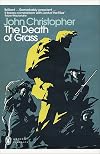
Ah, another day, another apocalypse. Although according to the Financial Times, that well known literary reviewer, this, ‘of all fiction’s apocalypses…is one of the most haunting’. Billed as ‘a chilling psychological thriller’ and ‘one of greatest post-apocalyptic novels ever written’, this “modern classic” (for my reservations about this term, see my review of ‘Cat’s Eye’ – although in fairness this novel has a good 60 years under its belt) certainly had a lot to show more live up to. I am often drawn towards this type of exploratory what-if fiction, so I was initially ready to be impressed, even though I’d never heard of the book or its author until the book group meeting where it was introduced. Or at least, I thought I hadn’t. A bit of research revealed that John Christopher (a pseudonym for Sam Youd) was also author of ‘the Guardians’, a thoroughly unmemorable book that I’m sure I studied at school and never cared for. The synopsis of that has echoes of this book: a community split into competing factions; life and death struggle; hard moral choices. The fact that the earlier book, which sounded similar in terms of its action and themes, had made so little impression on me meant that I put off reading this one for a few weeks, but once I was a couple of chapters in I was gripped by the plot’s potential. Could it last?
The premise
While Asia is devastated by a new virus which preys on rice grass, Europe, and England in particular, looks on smugly: the British would never riot over food; they would never allow the situation to get so out of control. They know how to form an orderly queue. As horrifying images of starvation and rioting are flashed around newspapers and then, perhaps even more disturbingly, hidden from view, one English family in particular discuss the morality of the new policy of withholding grain stores from the starving continent ‘in case’ the virus begins to attack Europe. As months pass, the virus mutates and begins a slow but unstoppable wave of destruction until – suddenly – it becomes clear that the British government has been lying to its people. They have no cure, and no more food. Instead, there are horrifying contingency plans in place to help selected communities survive the disaster. As society begins to disintegrate into shocking barbarism, John Custance and his family begin to journey towards a place that promises safety: the family farm, which is held by John’s brother David and protected by its sheltered position in a valley. As civilised society evaporates, the Custance’s find their moral standards have to change rapidly to accommodate new dangers. Can they make it to their brother’s farm? If they do, what kind of people will they have become?
I found the premise intriguing, especially as it promised to approach the collapse of democratic/civilised society from a very specific viewpoint, although I do wonder how intentional that was on the writer’s part. John and Ann Custance are firmly upper middle class. Their children are at boy and girl only boarding schools (of course) and they are able to discuss the misery and savagery being experienced in Asia in a pitying yet slightly contemptuous manner, having never really experienced any difficulties of their own. However guilty Ann feels at their collective ability to forget other people’s suffering, the men are adamant that this is necessary. Of course, the reader can easily anticipate that this attitude may yet return to haunt them as the crops in Europe deteriorate, but it is difficult to reject their conclusions, however callous one might feel they are. I was anticipating a dramatic tale but one which would present difficult moral questions to think over.
The prologue
A family argument is healed and a decision made regarding land ownership. A child surveys a valley and their sibling nearly drowns in a fast flowing river. The prologue is a short chapter which is easy to read, although it feels rather insignificant at the time. There are no obvious signs that the writer is ‘setting up’ any strands for later on, but the events in this chapter are at the heart of events in the final two chapters, which I did feel was skilful without being show-offy on the writer’s part. The events depicted within the prologue occur twenty five years before the main action and can be enjoyed as a pastoral interlude. It is this idyll which John and his family will desperately seek to reach later on, and the opening scene does it justice by sketching a place of comfort and safety with an underlying danger. This is peaceful to read, and although it didn’t exactly grip my attention, it is a nice slow burning start to what is quite a slow burning book.
The plot and characters
Initially the pace is rather slow as we are introduced to the main characters through their dialogue, which mostly concerns the disintegration of society in Asia and the moral responsibilities of the European and American governments. Gradually, there are hints that all is not well in England either, but the novel journeys fairly prosaically over a good fourteen month period first. This sounds dull but I was actually quite interested at this point as I listened to the characters pontificating and began to anticipate how they might react in the upcoming turmoil. It was evident that Britain was going to suffer from the mutating virus from the blurb on the back of the book, but it takes a good few chapters and forty odd pages before disaster strikes. This section of the book was a pleasant, engaging read. The lurking danger was nicely clear without being over emphasised by dramatic foreshadowing or symbolism. Then, the ending of the fourth chapter makes it clear that trouble is ahead:
“Yet again…it falls to the British people to set an example to the world in the staunch and steadfast bearing of their misfortunes. Things may grow darker yet, but that patience and fortitude is something we know will not fail.”
Oh dear. Pride cometh before a fall…and what a mighty fall this writer to the Daily Telegraph sets up for the British people. The surprise in this section of the story was how quickly characters adapted to lawless Britain, but more of that in a moment. I felt that this was where the story began to lose its way. I found that after the gently building tension of the opening chapters, the news of the government’s intended solution seemed absurd, and terrible events piled up rapidly as society rather disappeared than disintegrated. I was unable to believe fully in the events that happened or in the characters responses to them. I believed in their increasing desperation to reach the farm, which assumed an almost mythical status in the book, but I found the increasing hardship and brutality almost unfathomable.
Christopher suggests that society is really a rather tenuous notion and civility a thin veneer glossed over essential human selfishness. He shows how readily people adapt to a kill or be killed mentality and revert to a hierarchy built on violence and respect rather than democracy. As the novel progresses, the farm becomes a symbol of civilisation and the current behaviour of the characters is rationalised and excused, but also rather set aside: it is irrelevant, as they will be able to return to their true, civilised selves once they have reached the safety and security of the land David has promised to hold for them. In fact, Christopher shows that they adapt shockingly fast to their circumstances and I wondered, as John’s wife Ann queries, whether or not they could really revert to their old selves if they reached their sanctuary.
In a way then, this is a powerful novel, depicting the collapse of civilisation and showing how the threads that bind us to each other can be snapped, even disregarded (this is especially true at the novel’s shocking conclusion). However, I found it too difficult to believe in. The characters never seem to cry or to struggle with the choices they have to make. They rationalise, shoot and move on. In particular, Jane, a young girl who becomes conscripted into the group after a particularly meaningless piece of violence, responds in dutiful silence to those she surely ought to kill out of fury. I felt that these characters lacked humanity; they fought to live, but they did not care about death, even when it should have affected them.
A novel bound by its context
The only justification I can find for this is that the novel is set shortly after the Second World War and most of the male characters make explicit reference to fighting in that. I would imagine that shooting people in war could well dehumanise you and make shooting civilians more plausible. I wonder whether this novel has aged poorly. I would argue that modern warfare has little impact on the vast proportion of British people; we are insulated from the terror that previous wars caused us as we are essentially taking sides in other countries’ civil wars, rather than being at war with other stable entities. Unless you know a soldier fighting in one of these conflicts, it is all a rather distant affair. These characters, familiar with the warning sirens and with senseless deaths, inhabit a different world which I cannot claim to judge fairly. However, I still feel that other modern readers may instinctively feel as I have done, that these characters are too cold, too unfeeling, to be convincing. If this is the case, the novel unquestionably loses some of its impact and power.
Another historical issue is the treatment of women and children within the story. They are simply chattels; objects to be protected – or used as desired by their male protectors. One woman, who tries to break free from sexual norms, (perhaps a reasonable expectation, given that social norms have been decimated,) is killed by her husband, who explicitly claims his right over her. The leader of the group reflects that the man is worth ten of any woman, as he is a sharp shooter with a perceptive mind. He gives the cuckold his rights and later reflects without concern that perhaps he might have been able to save the woman. Ann rightly states that the men treat women like creatures. Although I appreciate that children and women may be a burden in a wartime setting, especially young children, I do not accept that they have to be. Again, though, I feel that this is largely a historical issue. The children are never really heard from; they are always off ‘playing’, even one girl who suffers a brutal assault. Their voices are not heard. Although this does not detract from the quality of the story telling, I felt the sidelining of women and children endorsed traditional negative stereotypes and reinforced the notion that women are overly emotional and unreliable. It is true that Ann is perhaps the more perceptive of the main characters, though; she identifies and articulates the changes in John almost before he is aware of them himself. However, this does not really affect the overall depiction of women as burdens.
A more modern concern is evident in the cause of the disease afflicting the grass. Although this is never more than touched upon by the various characters, it is clear that the catastrophic growth of the virus is in some way caused by man’s lack of respect for nature and tendency to expose it to unnatural chemicals. Man’s arrogance, assuming that he can fix the problem long before it can kill him, is also exposed through the behaviour of the governments. Furthermore, the West’s smug conviction of its superiority is condemned and shown to be a fallacy, for Britain does collapse, and it is clear that the catastrophe will be complete and global. Despite these targets of criticism, the novel never feels didactic or strident. The message is implicit rather than shouted at you, which I feel makes it more powerful, creeping into your consciousness. These are still highly topical concerns, perhaps even more so today than in the 50s when this book was published. It is simultaneously appalling, fascinating and humbling to read about the unfolding crisis.
It also begs the question of how well we would cope today. These characters grow potatoes and salt the last of the beef to keep it. They are able to live off the earth of the land, should it allow them to do so, in a way that I imagine few people in modern Britain could do, although I believe that growing your own is experiencing something of a revival. I did find it fascinating and oddly frightening as symbols of safety and society crumbled: no news channels, no homes, no cars. The matter of fact manner in which these losses are assimilated by the characters made it somehow scarier; these items are not simply lost, they become irretrievable, impossible. There is no question of safety within your own home. Even the shimmering prospect of safety at the farm seemed a false prospect to me: a valley might be defensible, but it is not a retreat from the dying hordes of desperate humanity. In this sense then, the book is compelling, as I think that apocalyptic fantasies inevitably are, playing as they do on humanity’s deepest fears.
The epilogue
After the dramatic conclusion of the second to last chapter, the calmness of the final chapter and some other aspects make it feel like an epilogue, although it is not explicitly called this by the author. This chapter neatly links back to the opening scenes and allows the reader to envisage what is likely to happen in the future, without explicitly stating it. I felt that this was a very effective ending on the whole, although it took me a few moments to work out what had happened. This is presumably meant to intensify the shock of the realisation, which I suppose it did do, but I also found it slightly confusing that an important event was hinted at rather than simply stated. The final chapter is a very fitting conclusion and helps to emphasise the themes Christopher is concerned about: the essential nature of man and co-operative society. I did feel that the story was suitably ‘rounded of’. As befits an apocalyptic ending, it is a sad and troubling ending, with the scope for further death and distress inbuilt. This is not a criticism; in fact, the novel’s consistently bleak vision helps to give it a certain strength and there is a definite sense of closure created through the events in the plot and the character’s actions.
The introduction
I’m discussing this at the end of my review because most readers will want to read this after they have read the story, if at all. As is typical in introductions to ‘classic’ works, it does contain plot spoilers, (although it does not reveal the ending,) so I would advise waiting until you have finished reading the book if you wish to experience the twists and turns of the plot.
Robert Macfarlane’s up to date introduction discusses the context of the novel when it was originally published and now. This is interesting to read and informative. If you especially enjoy reading apocalyptic fiction based on plant life (!) then there are even some reading suggestions to be found. I was amused by the account of the novel’s recent surge in popularity and am glad I was able to borrow mine from my local library, rather than having to fork over the amount of pounds demanded in the retail market!
The opening section of the introduction is also a little disturbing, as I assume it is intended to be, as the critic draws worrying links between Christopher’s vision of viral destruction and the evolution of Ug99. Apparently it poses ‘an unprecedented international threat to wheat and barley’ (US Agricultural Research Service) and there is presently no reason to think that its spread is containable. I dare you to read this story and not find those facts rather chilling. Of course, inundated as we are by multiple potential threats to the future of human existence, most of which seem to come to nothing (see: SARS, Avian flu, Swine flu etc.), it may be easy to detach ourselves from any sense of fear. Perhaps too easy – although it would hardly be productive to exist in a state of nervous anticipation.
Conclusions
When I originally finished reading this I was slightly disappointed and underwhelmed. I felt that the narrative structure was sound, the message chilling and man’s inhumanity to man frightening, but the rapid development of the situation and coldness of the characters reduced its ultimate impact on me. Upon reflection, however, I feel that this is a powerful novel as it has stayed with me – at least for the past few days! The violence is never described in detail, so there are no gory passages, nor is it graphic, but it the novel is still very dark due to the cold brutality of the characters. Shootings are committed with forethought, execution style, and the casual nature of the act elevates it to an inhuman kind of cruelty. Although it is rather bound by its context, the overall text somehow transcends that to create a memorable and rather scary depiction of a disintegrating society. Recommended. show less
The premise
While Asia is devastated by a new virus which preys on rice grass, Europe, and England in particular, looks on smugly: the British would never riot over food; they would never allow the situation to get so out of control. They know how to form an orderly queue. As horrifying images of starvation and rioting are flashed around newspapers and then, perhaps even more disturbingly, hidden from view, one English family in particular discuss the morality of the new policy of withholding grain stores from the starving continent ‘in case’ the virus begins to attack Europe. As months pass, the virus mutates and begins a slow but unstoppable wave of destruction until – suddenly – it becomes clear that the British government has been lying to its people. They have no cure, and no more food. Instead, there are horrifying contingency plans in place to help selected communities survive the disaster. As society begins to disintegrate into shocking barbarism, John Custance and his family begin to journey towards a place that promises safety: the family farm, which is held by John’s brother David and protected by its sheltered position in a valley. As civilised society evaporates, the Custance’s find their moral standards have to change rapidly to accommodate new dangers. Can they make it to their brother’s farm? If they do, what kind of people will they have become?
I found the premise intriguing, especially as it promised to approach the collapse of democratic/civilised society from a very specific viewpoint, although I do wonder how intentional that was on the writer’s part. John and Ann Custance are firmly upper middle class. Their children are at boy and girl only boarding schools (of course) and they are able to discuss the misery and savagery being experienced in Asia in a pitying yet slightly contemptuous manner, having never really experienced any difficulties of their own. However guilty Ann feels at their collective ability to forget other people’s suffering, the men are adamant that this is necessary. Of course, the reader can easily anticipate that this attitude may yet return to haunt them as the crops in Europe deteriorate, but it is difficult to reject their conclusions, however callous one might feel they are. I was anticipating a dramatic tale but one which would present difficult moral questions to think over.
The prologue
A family argument is healed and a decision made regarding land ownership. A child surveys a valley and their sibling nearly drowns in a fast flowing river. The prologue is a short chapter which is easy to read, although it feels rather insignificant at the time. There are no obvious signs that the writer is ‘setting up’ any strands for later on, but the events in this chapter are at the heart of events in the final two chapters, which I did feel was skilful without being show-offy on the writer’s part. The events depicted within the prologue occur twenty five years before the main action and can be enjoyed as a pastoral interlude. It is this idyll which John and his family will desperately seek to reach later on, and the opening scene does it justice by sketching a place of comfort and safety with an underlying danger. This is peaceful to read, and although it didn’t exactly grip my attention, it is a nice slow burning start to what is quite a slow burning book.
The plot and characters
Initially the pace is rather slow as we are introduced to the main characters through their dialogue, which mostly concerns the disintegration of society in Asia and the moral responsibilities of the European and American governments. Gradually, there are hints that all is not well in England either, but the novel journeys fairly prosaically over a good fourteen month period first. This sounds dull but I was actually quite interested at this point as I listened to the characters pontificating and began to anticipate how they might react in the upcoming turmoil. It was evident that Britain was going to suffer from the mutating virus from the blurb on the back of the book, but it takes a good few chapters and forty odd pages before disaster strikes. This section of the book was a pleasant, engaging read. The lurking danger was nicely clear without being over emphasised by dramatic foreshadowing or symbolism. Then, the ending of the fourth chapter makes it clear that trouble is ahead:
“Yet again…it falls to the British people to set an example to the world in the staunch and steadfast bearing of their misfortunes. Things may grow darker yet, but that patience and fortitude is something we know will not fail.”
Oh dear. Pride cometh before a fall…and what a mighty fall this writer to the Daily Telegraph sets up for the British people. The surprise in this section of the story was how quickly characters adapted to lawless Britain, but more of that in a moment. I felt that this was where the story began to lose its way. I found that after the gently building tension of the opening chapters, the news of the government’s intended solution seemed absurd, and terrible events piled up rapidly as society rather disappeared than disintegrated. I was unable to believe fully in the events that happened or in the characters responses to them. I believed in their increasing desperation to reach the farm, which assumed an almost mythical status in the book, but I found the increasing hardship and brutality almost unfathomable.
Christopher suggests that society is really a rather tenuous notion and civility a thin veneer glossed over essential human selfishness. He shows how readily people adapt to a kill or be killed mentality and revert to a hierarchy built on violence and respect rather than democracy. As the novel progresses, the farm becomes a symbol of civilisation and the current behaviour of the characters is rationalised and excused, but also rather set aside: it is irrelevant, as they will be able to return to their true, civilised selves once they have reached the safety and security of the land David has promised to hold for them. In fact, Christopher shows that they adapt shockingly fast to their circumstances and I wondered, as John’s wife Ann queries, whether or not they could really revert to their old selves if they reached their sanctuary.
In a way then, this is a powerful novel, depicting the collapse of civilisation and showing how the threads that bind us to each other can be snapped, even disregarded (this is especially true at the novel’s shocking conclusion). However, I found it too difficult to believe in. The characters never seem to cry or to struggle with the choices they have to make. They rationalise, shoot and move on. In particular, Jane, a young girl who becomes conscripted into the group after a particularly meaningless piece of violence, responds in dutiful silence to those she surely ought to kill out of fury. I felt that these characters lacked humanity; they fought to live, but they did not care about death, even when it should have affected them.
A novel bound by its context
The only justification I can find for this is that the novel is set shortly after the Second World War and most of the male characters make explicit reference to fighting in that. I would imagine that shooting people in war could well dehumanise you and make shooting civilians more plausible. I wonder whether this novel has aged poorly. I would argue that modern warfare has little impact on the vast proportion of British people; we are insulated from the terror that previous wars caused us as we are essentially taking sides in other countries’ civil wars, rather than being at war with other stable entities. Unless you know a soldier fighting in one of these conflicts, it is all a rather distant affair. These characters, familiar with the warning sirens and with senseless deaths, inhabit a different world which I cannot claim to judge fairly. However, I still feel that other modern readers may instinctively feel as I have done, that these characters are too cold, too unfeeling, to be convincing. If this is the case, the novel unquestionably loses some of its impact and power.
Another historical issue is the treatment of women and children within the story. They are simply chattels; objects to be protected – or used as desired by their male protectors. One woman, who tries to break free from sexual norms, (perhaps a reasonable expectation, given that social norms have been decimated,) is killed by her husband, who explicitly claims his right over her. The leader of the group reflects that the man is worth ten of any woman, as he is a sharp shooter with a perceptive mind. He gives the cuckold his rights and later reflects without concern that perhaps he might have been able to save the woman. Ann rightly states that the men treat women like creatures. Although I appreciate that children and women may be a burden in a wartime setting, especially young children, I do not accept that they have to be. Again, though, I feel that this is largely a historical issue. The children are never really heard from; they are always off ‘playing’, even one girl who suffers a brutal assault. Their voices are not heard. Although this does not detract from the quality of the story telling, I felt the sidelining of women and children endorsed traditional negative stereotypes and reinforced the notion that women are overly emotional and unreliable. It is true that Ann is perhaps the more perceptive of the main characters, though; she identifies and articulates the changes in John almost before he is aware of them himself. However, this does not really affect the overall depiction of women as burdens.
A more modern concern is evident in the cause of the disease afflicting the grass. Although this is never more than touched upon by the various characters, it is clear that the catastrophic growth of the virus is in some way caused by man’s lack of respect for nature and tendency to expose it to unnatural chemicals. Man’s arrogance, assuming that he can fix the problem long before it can kill him, is also exposed through the behaviour of the governments. Furthermore, the West’s smug conviction of its superiority is condemned and shown to be a fallacy, for Britain does collapse, and it is clear that the catastrophe will be complete and global. Despite these targets of criticism, the novel never feels didactic or strident. The message is implicit rather than shouted at you, which I feel makes it more powerful, creeping into your consciousness. These are still highly topical concerns, perhaps even more so today than in the 50s when this book was published. It is simultaneously appalling, fascinating and humbling to read about the unfolding crisis.
It also begs the question of how well we would cope today. These characters grow potatoes and salt the last of the beef to keep it. They are able to live off the earth of the land, should it allow them to do so, in a way that I imagine few people in modern Britain could do, although I believe that growing your own is experiencing something of a revival. I did find it fascinating and oddly frightening as symbols of safety and society crumbled: no news channels, no homes, no cars. The matter of fact manner in which these losses are assimilated by the characters made it somehow scarier; these items are not simply lost, they become irretrievable, impossible. There is no question of safety within your own home. Even the shimmering prospect of safety at the farm seemed a false prospect to me: a valley might be defensible, but it is not a retreat from the dying hordes of desperate humanity. In this sense then, the book is compelling, as I think that apocalyptic fantasies inevitably are, playing as they do on humanity’s deepest fears.
The epilogue
After the dramatic conclusion of the second to last chapter, the calmness of the final chapter and some other aspects make it feel like an epilogue, although it is not explicitly called this by the author. This chapter neatly links back to the opening scenes and allows the reader to envisage what is likely to happen in the future, without explicitly stating it. I felt that this was a very effective ending on the whole, although it took me a few moments to work out what had happened. This is presumably meant to intensify the shock of the realisation, which I suppose it did do, but I also found it slightly confusing that an important event was hinted at rather than simply stated. The final chapter is a very fitting conclusion and helps to emphasise the themes Christopher is concerned about: the essential nature of man and co-operative society. I did feel that the story was suitably ‘rounded of’. As befits an apocalyptic ending, it is a sad and troubling ending, with the scope for further death and distress inbuilt. This is not a criticism; in fact, the novel’s consistently bleak vision helps to give it a certain strength and there is a definite sense of closure created through the events in the plot and the character’s actions.
The introduction
I’m discussing this at the end of my review because most readers will want to read this after they have read the story, if at all. As is typical in introductions to ‘classic’ works, it does contain plot spoilers, (although it does not reveal the ending,) so I would advise waiting until you have finished reading the book if you wish to experience the twists and turns of the plot.
Robert Macfarlane’s up to date introduction discusses the context of the novel when it was originally published and now. This is interesting to read and informative. If you especially enjoy reading apocalyptic fiction based on plant life (!) then there are even some reading suggestions to be found. I was amused by the account of the novel’s recent surge in popularity and am glad I was able to borrow mine from my local library, rather than having to fork over the amount of pounds demanded in the retail market!
The opening section of the introduction is also a little disturbing, as I assume it is intended to be, as the critic draws worrying links between Christopher’s vision of viral destruction and the evolution of Ug99. Apparently it poses ‘an unprecedented international threat to wheat and barley’ (US Agricultural Research Service) and there is presently no reason to think that its spread is containable. I dare you to read this story and not find those facts rather chilling. Of course, inundated as we are by multiple potential threats to the future of human existence, most of which seem to come to nothing (see: SARS, Avian flu, Swine flu etc.), it may be easy to detach ourselves from any sense of fear. Perhaps too easy – although it would hardly be productive to exist in a state of nervous anticipation.
Conclusions
When I originally finished reading this I was slightly disappointed and underwhelmed. I felt that the narrative structure was sound, the message chilling and man’s inhumanity to man frightening, but the rapid development of the situation and coldness of the characters reduced its ultimate impact on me. Upon reflection, however, I feel that this is a powerful novel as it has stayed with me – at least for the past few days! The violence is never described in detail, so there are no gory passages, nor is it graphic, but it the novel is still very dark due to the cold brutality of the characters. Shootings are committed with forethought, execution style, and the casual nature of the act elevates it to an inhuman kind of cruelty. Although it is rather bound by its context, the overall text somehow transcends that to create a memorable and rather scary depiction of a disintegrating society. Recommended. show less

Having re-read The White Mountains, I couldn't exactly stop there. The second in the trilogy is where our inept hero (but at least he can catch, right?!) gets his ass saved by Beanpole at least twice. But not a single live woman exists in this book. The only woman in the trilogy is now dead and on display as a literal museum piece in the City of Gold and Lead.
I started wondering how the rebels living in the White Mountains could hope to sustain themselves without, you know, having kids. How show more exactly is a group of literally 100% men going to save the world if they have to replenish their stock all the time? I guess this is science fiction, where everything is possible, especially if it excludes women. show less
I started wondering how the rebels living in the White Mountains could hope to sustain themselves without, you know, having kids. How show more exactly is a group of literally 100% men going to save the world if they have to replenish their stock all the time? I guess this is science fiction, where everything is possible, especially if it excludes women. show less
This was a scary but excellent read. 3 families flee the collapse of society as famine approaches. Christopher doesn't sensationalise - in fact its matter of factness is what makes it so scary. And I did not see the end coming. I can see why this is a 50s classic but I still prefer "Day of the Triffids" - I think I like a bit of hope with my world ending scenarios.
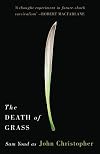
4/5
This is my first introduction to what I think is referred to as 'cosy catastrophe' type novels. While The Death of Grass is certainly a brutal and dark story, everything is viewed through the lens of the 'stiff upper lip' of stereotypical British sensibilities. Characters spring back from traumatic events rather quickly, and more often than not they think that they could've had it worse, even as society crumbles around them. This ties into the authors criticism of both British show more exceptionalism, and government inadequacy. It's clear that Christopher has a pessimistic view on both, as both the characters in the story and their government fail to prepare for the oncoming storm at all, even when given several years warning.
Christopher also explores the psychological effects that a catastrophe like this might have on their survivors. How fast will someone change their morals and values for survival? What will we sacrifice to help our tribe? Would we relish a new power structure regardless of who it exploited if we were at the top? Christoper goes to some dark places to showcase just how slippery of a slope it is to go from a mild mannered suburbanite, to a feudalistic warlord.
The novel itself was extremely well-paced. I was never bored or stalled in my reading. The characters are unique and all easily hate-able in their own way. I enjoyed being given context on the world outside of Britain in the form of the characters listening to the radio during their travels, a really smart way to build the world. The conclusion is morally depressing, but satisfying and well-written. Overall, I really enjoyed it. I think it stacks up well to other post-apocalyptic classics, though obviously set at the beginning of events instead of after. show less
This is my first introduction to what I think is referred to as 'cosy catastrophe' type novels. While The Death of Grass is certainly a brutal and dark story, everything is viewed through the lens of the 'stiff upper lip' of stereotypical British sensibilities. Characters spring back from traumatic events rather quickly, and more often than not they think that they could've had it worse, even as society crumbles around them. This ties into the authors criticism of both British show more exceptionalism, and government inadequacy. It's clear that Christopher has a pessimistic view on both, as both the characters in the story and their government fail to prepare for the oncoming storm at all, even when given several years warning.
Christopher also explores the psychological effects that a catastrophe like this might have on their survivors. How fast will someone change their morals and values for survival? What will we sacrifice to help our tribe? Would we relish a new power structure regardless of who it exploited if we were at the top? Christoper goes to some dark places to showcase just how slippery of a slope it is to go from a mild mannered suburbanite, to a feudalistic warlord.
The novel itself was extremely well-paced. I was never bored or stalled in my reading. The characters are unique and all easily hate-able in their own way. I enjoyed being given context on the world outside of Britain in the form of the characters listening to the radio during their travels, a really smart way to build the world. The conclusion is morally depressing, but satisfying and well-written. Overall, I really enjoyed it. I think it stacks up well to other post-apocalyptic classics, though obviously set at the beginning of events instead of after. show less
Lists
Read in 2007 (1)
Best First Lines (1)
1980s (1)
al.vick-series (1)
Ambleside Year 7 (4)
Ambleside Books (4)
1960s (3)
Best Dystopias (2)
Best Young Adult (2)
Awards


You May Also Like


Associated Authors
Statistics
- Works
- 69
- Also by
- 36
- Members
- 13,528
- Popularity
- #1,715
- Rating
- 3.8
- Reviews
- 282
- ISBNs
- 444
- Languages
- 13