

John Wyndham (1903–1969)
Author of The Day of the Triffids
About the Author
Series
Works by John Wyndham
The John Wyndham Omnibus: The Day of the Triffids, The Kraken Wakes, The Chrysalids (1979) 70 copies
The Trojan Beam 4 copies
Close Behind Him [short fiction] 3 copies
The Stare 3 copies
Triffidien kapina : Tieteisromaani 2 copies
John Wyndham Omnibus 2 copies
The Lost Machine 2 copies
Adaptation 2 copies
Vengeance By Proxy 1 copy
Uncollected short stories 1 copy
Curse of the Burdens 1 copy
Troons: The Complete Stories 1 copy
Troon 1 copy
John Wyndham Novels 1 copy
The Red Stuff 1 copy
Les Transofromés 1 copy
Amazing Stories 1 copy
Time Stops Today 1 copy
The Secret People 1 copy
Bert: The Complete Stories 1 copy
The Midwich Cuckoo 1 copy
Stowaway to Mars 1 copy
The World of John Wyndham 1 copy
The Moon Devils 1 copy
Exiles on Asperus [short story] — Author — 1 copy
Collected Novels 1 copy
Планета в подарок (сборник) 1 copy
" Zolotoglazye". 1 copy
Novels of John Wyndham 1 copy
Science-Fiction-Stories 42 1 copy
I racconti del tempo 1 copy
Wyndham Trilogy 1 copy
De werelden van Barter 1 copy
Das Dorf der Verdammten 1 copy
Prva žena na Marsu 1 copy
Associated Works
Moonrise: The Golden Age of Lunar Adventures (British Library Science Fiction Classics) (2018) — Contributor — 68 copies, 3 reviews
Village of the Damned [1960 film] / Children of the Damned [1964 film] (2004) — Original novel — 31 copies
The Day of the Triffids [1981 film] — Original book — 12 copies
New Worlds Science Fiction 75, September 1958 — Contributor — 4 copies
Un passo avanti e due indietro — Contributor — 3 copies
Great tales of adventure: A selection of condensed novels and full-length short stories (1982) — Contributor — 2 copies
Gateway to the Stars: A Science Fiction Anthology — Contributor — 2 copies
Fantasy Fiction Magazine, June 1953 (Vol. 1, No. 2) — Contributor — 2 copies
Weird Tales Volume 49 Number 2, Winter 1985 — Contributor — 1 copy
Tagged
Common Knowledge
- Legal name
- Harris, John Wyndham Parkes Lucas Beynon
- Other names
- Beynon, John (pen name)
Parkes, Lucas (pen name)
Wyndham, John (pen name)
Harris, Johnson (pen name)
Beynon-Harris, John (pen name) - Birthdate
- 1903-07-10
- Date of death
- 1969-03-11
- Gender
- male
- Education
- Bedales School
- Occupations
- government official
soldier
author
farmer
commercial artist
advertising executive - Organizations
- Science Fiction and Fantasy Writers of America
Royal Corps of Signals
Ministry of Information - Short biography
- Born in the village of Knowle in Warwickshire, England. After leaving school, Wyndham tried several careers including farming, law, commercial art and advertising, but mostly relied on an allowance from his family. He eventually turned to writing for money in 1925, and by 1931 was selling short stories and serial fiction to American science fiction pulp magazines, most under the pen names of 'John Beynon' or 'John Beynon Harris'. After WWII Wyndham returned to writing. Using the John Wyndham pen name for the first time, he wrote the novel The Day of the Triffids. The book proved to be an enormous success and established Wyndham as an important exponent of science fiction. He went on to write and publish six more novels.John Wyndham wrote several short stories before World War II under various names, including Lucas Parkes, John Harris, and Lucas Beynon. It was not until after the war that he began to focus on the themes of disaster, invasion, and evolution under the name of John Wyndham and created two of the most well-known stories of our time – The Day of the Triffids and The Midwich Cuckoos. John Wyndham died in 1969, but his works continue to be read as classics of speculative fiction.
- Nationality
- UK
- Birthplace
- Dorridge, Knowle, Warwickshire, England, UK
- Places of residence
- Knowle, Warwickshire, England, UK (birthplace)
Edgbaston, Birmingham, West Midlands, UK
London, Middlesex, England, UK
Petersfield, Hampshire, England, UK - Place of death
- Oakridge House, Mill Lane, Steep, Petersfield, Hampshire, England, UK
- Map Location
- England, UK
Members
Discussions
February 2026: John Wyndham in Monthly Author Reads (February 15)
Found: U.K. Sci-Fi; Alien visits Earth through the eyes of a boy in Name that Book (June 2023)
Found: YA - Set in post-apocalypse (nuclear holocaust?) society that shuns and exterminates people who have deformities in Name that Book (April 2021)
OCTOBER READ - NO SPOILERS - The Day of the Triffids in The Green Dragon (September 2014)
OCTOBER READ - SPOILERS - The Day of the Triffids in The Green Dragon (December 2013)
The Midwich Cuckoos in And we Recommend... (August 2011)
Chat about... The Day of the Triffids by John Wyndham in The SF&F Book Chat (August 2011)
The Day of the Triffids in Group Reads - Sci-Fi (May 2009)
Reviews

I really liked this. The wide ranging points of view; the main character who speaks her mind rather than conform to society and wants to do something with her education other than marry; the in-depth considerations of what the discovery of a true anti-aging drug would mean to every aspect of society. Absolutely enthralling.
I mean and then she gets married anyway because authors just *cannot* imagine a happy ending that doesn't include finding True Love no matter how out of character they've show more established this to be, but fine, whatever, it's the end of the book anyway I guess, I'll just try and pretend that bit didn't happen. show less
I mean and then she gets married anyway because authors just *cannot* imagine a happy ending that doesn't include finding True Love no matter how out of character they've show more established this to be, but fine, whatever, it's the end of the book anyway I guess, I'll just try and pretend that bit didn't happen. show less

The opening chapter does a wonderful job of playing up fears about what mysterious thing has gone wrong with the world, but then I felt it was undercut by the general population's extreme reaction to blindness. Throwing themselves out windows? Gassing their children? What's wrong with these people? It turns out they better foresaw what was to come than I did. For one, there's the eventual proof that the effect is worldwide (though they might have waited to confirm that). For another, as the show more title indicates, there's the triffids. If you ever found sunflowers creepy, this novel presents the stuff of nightmares: a mobile, carnivorous, semi-sentient sunflower capable of striking you down with a well-aimed and poisonous whip vine from ten feet away.
But the nastiest and most horrific element of the whole story is the moral quandary, the recurring question of what obligation the few remaining sighted have towards millions upon millions of blind. Wyndham posits in this scenario that there are two overriding facts: whatever help is provided the millions it will only delay the inevitable, and that if the sighted are to have any hope of survival they must immediately concentrate upon supporting themselves to achieve it. This does not make the question go away, and it keeps cropping up in the most awful ways.
Of course, having been published in the 1950s, the novel has many dated elements but it is written with such skill that the tension is still palpable as if it were happening today. There's many parallels with today's most popular zombie stories, including the battles over views about the best way forward as the enemy closes in. There's the same theme about the human race having brought doom upon itself by means far beyond the average person's knowledge or ability to control, a mind state that nearly anyone can relate to despite its pessimism. And there is always the hope that somehow and someway the survivors can avoid repeating those mistakes if only they can learn from them. show less
But the nastiest and most horrific element of the whole story is the moral quandary, the recurring question of what obligation the few remaining sighted have towards millions upon millions of blind. Wyndham posits in this scenario that there are two overriding facts: whatever help is provided the millions it will only delay the inevitable, and that if the sighted are to have any hope of survival they must immediately concentrate upon supporting themselves to achieve it. This does not make the question go away, and it keeps cropping up in the most awful ways.
Of course, having been published in the 1950s, the novel has many dated elements but it is written with such skill that the tension is still palpable as if it were happening today. There's many parallels with today's most popular zombie stories, including the battles over views about the best way forward as the enemy closes in. There's the same theme about the human race having brought doom upon itself by means far beyond the average person's knowledge or ability to control, a mind state that nearly anyone can relate to despite its pessimism. And there is always the hope that somehow and someway the survivors can avoid repeating those mistakes if only they can learn from them. show less
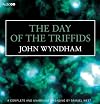
The Day of the Triffids (1951) is solidly rooted in the history of its era despite the science fiction theme. It concerns the paranoia, stress and sense of menace in the every day that permeated the opening years of the Cold War. At any moment the world could come crashing down in a rain of atomic fire. Society was a blind passenger except the few sighted ones in power and at the controls who, we hope, will act civilly. What does it mean to be civil? The novel explores by looking at various show more modes of ordering society: aristocracy, feudalism, hunting and gathering, and communism. The successful model is described by Coker in a rousing speech:
"[First] we'll have to plow; still later we'll have to learn how to make plowshares; later than that we'll have to learn how to smelt the iron to make the shares. What we are on now is a road that will take us back and back and back until we can - if we can - make good all that we wear out. Not until then shall we be able to stop ourselves on the trail that's leading down to savagery. But once we can do that, then maybe we'll begin to crawl slowly up again."
Coker is describing materialism, growth and progress ie. capitalism. Wyndham was correct for 1951. Today in 2012, we face new threats that may not be so easily solved with unlimited growth. So I'll end by suggesting on the surface this is an innovative post-apocolyptic genre story but at its heart the ideas, while not irrelevant, the debate has moved on. show less
"[First] we'll have to plow; still later we'll have to learn how to make plowshares; later than that we'll have to learn how to smelt the iron to make the shares. What we are on now is a road that will take us back and back and back until we can - if we can - make good all that we wear out. Not until then shall we be able to stop ourselves on the trail that's leading down to savagery. But once we can do that, then maybe we'll begin to crawl slowly up again."
Coker is describing materialism, growth and progress ie. capitalism. Wyndham was correct for 1951. Today in 2012, we face new threats that may not be so easily solved with unlimited growth. So I'll end by suggesting on the surface this is an innovative post-apocolyptic genre story but at its heart the ideas, while not irrelevant, the debate has moved on. show less
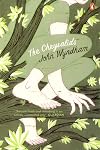
This was my first John Wyndham novel and I had no idea what to expect. I wasn't even sure what it was about! I needn't have worried, because it entirely lived up to Wyndham's reputation as a classic science fiction writer.
The plot revolves around a group of children living in a dystopian society obsessed with 'God's True Image'. Anyone and anything that is seen to be 'wrong' is immediately stamped out as an agent of the devil. If a field of crops is less than perfect, it is burned. If a cow show more is malformed in some way, it is killed. And any human found to be different is stripped, sterilized and sent out into the 'Fringes', an area filled with exiled deviants, to live or die as they will. By taking these measures, the people of Labrador hope to appease God and rebuild the incredible society that existed before the Tribulation that turned the Badlands to deadly black lakes of burnt land and wiped out the 'Old People'. These children, who can communicate with a kind of advanced form of telepathy, know it's only a matter of time before their secret deviation is discovered and they'll have to fight for their lives...
I found this novel to be beautifully written and deeply thought-provoking. The obsession with the 'right' attributes that make someone human reminded me of the Nazi Aryan race, and was quite disturbing to read. There were elements of religion and philosophy, with characters musing on life and spirituality, and the real meaning of humanity. There were messages of tolerance, friendship and love. And behind all this there was a cracking good post-nuclear-apocalypse science-fiction story. With writing this good and plots this fascinating, this certainly won't be my last Wyndham - I think I might have to loan my houseplants out to someone and read 'The Day of the Triffids' next! show less
The plot revolves around a group of children living in a dystopian society obsessed with 'God's True Image'. Anyone and anything that is seen to be 'wrong' is immediately stamped out as an agent of the devil. If a field of crops is less than perfect, it is burned. If a cow show more is malformed in some way, it is killed. And any human found to be different is stripped, sterilized and sent out into the 'Fringes', an area filled with exiled deviants, to live or die as they will. By taking these measures, the people of Labrador hope to appease God and rebuild the incredible society that existed before the Tribulation that turned the Badlands to deadly black lakes of burnt land and wiped out the 'Old People'. These children, who can communicate with a kind of advanced form of telepathy, know it's only a matter of time before their secret deviation is discovered and they'll have to fight for their lives...
I found this novel to be beautifully written and deeply thought-provoking. The obsession with the 'right' attributes that make someone human reminded me of the Nazi Aryan race, and was quite disturbing to read. There were elements of religion and philosophy, with characters musing on life and spirituality, and the real meaning of humanity. There were messages of tolerance, friendship and love. And behind all this there was a cracking good post-nuclear-apocalypse science-fiction story. With writing this good and plots this fascinating, this certainly won't be my last Wyndham - I think I might have to loan my houseplants out to someone and read 'The Day of the Triffids' next! show less
Lists
1950s (4)
Classic Sci-Fi (1)
Hidden Classics (1)
Favourite Books (1)
Ocean Setting (1)
Read in 2007 (1)
Nifty Fifties (1)
BBC Big Read (1)
To Read (1)
Tagged Cold War (1)
Kayla (1)
Folio Society (3)
Favourite Books (2)
To Read - Horror (2)
SF Masterworks (3)
A Novel Cure (2)
Five star books (2)
Unread books (1)
Science Fiction (2)
Best Dystopias (2)
Read These Too (1)
Elevenses (1)
Awards


You May Also Like


Associated Authors
Statistics
- Works
- 173
- Also by
- 86
- Members
- 29,514
- Popularity
- #680
- Rating
- 3.8
- Reviews
- 783
- ISBNs
- 489
- Languages
- 22
- Favorited
- 116

