
Barbara Lachman
Author of The Journal of Hildegard of Bingen: A Novel
Works by Barbara Lachman
Tagged
Common Knowledge
- Gender
- female
Members
Reviews
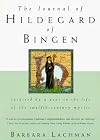
My love of Hildegard's music attracted me to Lachman's book but this wasn't an easy read. The author describes the year 1152 in the form of a journal by Hildegard. The text was structured to imply 12th century speech and had to be read carefully although it became clearer about halfway through the book. Added to this were extensive annotations on every page that required jumping back and forward from one to the other. The main themes were Hildegard's devotion to music and her goal to have show more and autonomous convent free from the paternalism of the church, in which she succeeded, being the first woman to do so. The book begins with a chronology of her life from her birth in 1098 to the beginning of this journal and ends with another covering 1152 until her death in 1179.
Remembering a time past when she gathered herbs with a friend:
"I dizzy easily in its contemplation; my head and inner senses flood with insistent light. I am filled with the figure of Disibode in the responsory: He sings himself as the greening of God's finger, transforming the entire mountain from a bleached-out, barren cone into its fructification as the plantation of God from the reciting tone of the mode, as the green creative finger refuses to rest." show less
Remembering a time past when she gathered herbs with a friend:
"I dizzy easily in its contemplation; my head and inner senses flood with insistent light. I am filled with the figure of Disibode in the responsory: He sings himself as the greening of God's finger, transforming the entire mountain from a bleached-out, barren cone into its fructification as the plantation of God from the reciting tone of the mode, as the green creative finger refuses to rest." show less
At first, I was excited to find this book, so eager to read writings of Hildegard. Then as I read, the format of the footnotes was so distracting that I put it down for a time. Large chunks of footnotes placed in the middle of the "journal" caused the reading to be chopped up and disjointed.
When I picked it back up, something in the reading made be go back and re-read the preface. It was then that saw on the title page was the first mention of "novel" as opposed to a true journal written BY show more Hildegard. I felt misled by the publisher and author because I wanted to read Hildegard's journal, not Lachman's fictional interpretation. Still tried reading on because of my interest in Hildegard.
Then when she used the word "crayon" (as Hildegard talked about drawing on a wall) I could read no more of Lachman's "journal" exercise. Lachman said she was writing from the historical point of view of the year 1152. While some form of oil pastels (through use of beeswax) may have been around for thousands of years, the word "crayon" is after Hildegard's time with all instances showing the word being added to Webster's in 1644...long past 1152.
While this seems a minor point, for me, it was just the straw that broke the camel's back and for me said that reading the rest of the book was not worth my time. I read all of her footnotes and still learned little about Hildegard that I did not already know. show less
When I picked it back up, something in the reading made be go back and re-read the preface. It was then that saw on the title page was the first mention of "novel" as opposed to a true journal written BY show more Hildegard. I felt misled by the publisher and author because I wanted to read Hildegard's journal, not Lachman's fictional interpretation. Still tried reading on because of my interest in Hildegard.
Then when she used the word "crayon" (as Hildegard talked about drawing on a wall) I could read no more of Lachman's "journal" exercise. Lachman said she was writing from the historical point of view of the year 1152. While some form of oil pastels (through use of beeswax) may have been around for thousands of years, the word "crayon" is after Hildegard's time with all instances showing the word being added to Webster's in 1644...long past 1152.
While this seems a minor point, for me, it was just the straw that broke the camel's back and for me said that reading the rest of the book was not worth my time. I read all of her footnotes and still learned little about Hildegard that I did not already know. show less
Didactically "uplifting." I like Hildegard's music and was ready to enjoy a necessarily factionalized biography but it was unpalatably preachy in its first pages.
Lists
el (1)
You May Also Like


Statistics
- Works
- 3
- Members
- 239
- Popularity
- #94,924
- Rating
- 3.2
- Reviews
- 3
- ISBNs
- 6