

Aemilia Lanyer (1569–1645)
Author of The Poems of Aemilia Lanyer: Salve Deus Rex Judaeorum
About the Author
Works by Aemilia Lanyer
Associated Works
The Making of a Poem: A Norton Anthology of Poetic Forms (2000) — Contributor — 1,471 copies, 9 reviews
Tagged
Common Knowledge
- Other names
- Bassano, Aemilia(birth)
Lanier, Emilia - Birthdate
- 1569
- Date of death
- 1645
- Gender
- female
- Occupations
- poet
- Short biography
- Aemilia Lanyer (or Lanier) was the first Englishwoman to assert herself as a professional poet. She was the daughter of a Venetian musician, Baptist Bassano, and an English musician, Margaret Johnson. Her parents, who were not married, performed at the court of Queen Elizabeth I. Her father died during her childhood, and after the death of her mother in 1587, Aemilia became the mistress of Henry Carey, Lord Hunsdon, the queen’s first cousin and Lord Chamberlain. The couple had at least one child. In 1592, Aemilia married Alfonso Lanyer or Lanier, a musician and soldier, but the marriage is said to have been unhappy. Aemilia Lanyer mixed in the social circle of William Shakespeare and may have had a romantic liasion with the popular astrologer Simon Forman, which has led to speculation that she was the "Dark Lady" of Shakespeare's sonnets. She wrote and published the lengthy religious poem Salve Deus Rex Judaeorum (1611), which included a prose address dedicated to Margaret, Countess of Cumberland, who had commissioned the work. In the work, she lectures women who are not loyal to other women and calls for the rights of women. With the death of her husband in 1613, Aemilia set up a school in London, but was arrested for non-payment of debts in 1619. Not much else is known about her life.
- Nationality
- UK
- Places of residence
- London, England, UK
- Associated Place (for map)
- England, UK
Members
Reviews

Aemilia Lanyer - Salve Deus Rex Judaeorum
Aemilia Lanyer's (1569-1645) Salve Deus Rex Judaeorum (Hail, God, King of the Jews) was the first significant book of original poetry published by an Englishwoman (1611). It had been neglected for over 400 years until a version was printed in the 1960's and critics at that time were were keen to hail it as an early feminine text. It is a poem of 1840 lines written in eight line stanzas with a regular rhyming scheme. Its main concern is a description show more of the passion of Christ, but contained within this is 'Eves apology in the Defence of Women', the tears of the daughters of Jerusalem and the salutation and sorrow of the virgin Mary. Before the poem gets started there are over 820 lines of poetry in the form of dedications to 10 other women as well as a couple of short essays. To complete the collection there is a a further poem of 210 lines in rhyming couplets entitled Description of Cooke-Ham.
The first thing to say about the poetry is that it reads well and seems to be technically good, certainly the work of a professional poet. My impression of the poem is that because its focus is on the passion of Christ; from the time of his entrance into the garden of Gethsemane until his resurrection, it should be considered as primarily a religious poem, which tells vividly a well known story from the New Testament. The first stanza starts:
"Renowned empress, and great Britain's Queen,
Most gracious mother of succeeding kings
Vouchsafe to view that which is seldom seen,
A woman's writing of divinest things"
While it makes clear in that fourth line that it is a divine poem it also says it is A woman's writing, which breaks new ground and provides the evidence for its feminist viewpoint. In her essay titled to the virtuous reader she says: I have written this little book for the general use of all virtuous ladies and this I have done to make known to the world that women deserve not to be blamed...............:
"they would refer such points of folly to be practised by evil-disposed men, who forgetting they were born of women, nourished of women, and if it were not by the means of women they would be quite extinguished out of the world, and a final end of them all, do like vipers deface the wombs wherein they were bred, only to give way to their want of discretion and goodness"
In the story of betrayal of Christ in the Garden of Gethsemane Lanyer makes the point that the disciples were all men, it was men that did not acknowledge him when questioned later. It was Pontius Pilate's wife who pleaded for him, it was Pilate, a man who washed his hands. On Calvary it was the women who attended him, while on the cross and who washed and bathed his wounds for his burial. This leads her on to talk about Adam and Eve in the garden of Eden, making the point that Eve was ignorant and deceived by the serpent but:
"But surely Adam cannot be excused
Her fault though great, yet he was most to blame
And then to lay the fault on patience back
That we (poor women) must endure it all
We know right well he did discretion lack
Being not persuaded thereunto at all
If eve did err, it was for knowledge sake
The fruit being fair persuaded him to fall
No subtle serpent's falsehood did betray him
If he would eat it, who had power to stay him.
Now Eve, whose fault was only too much love
Which made her give this present to her dear......"
She makes clear her feelings in a stanza that rounds off this section of the poem:
"Then let us have our liberty again,
And challenge to yourselves no sov'reignty
You came not in the world without our pain
Make that a bar against your cruelty.
Your fault being greater, why should you disdain
Our being your equals, free from tyranny?
If one weak women simply did offend
This sin of yours hath no excuse nor end."
The dedicatory poems are all to women, all ten of them and one is significantly to Mary Sidney dowager countess of Pembrokeshire. In this dedication Lanyer includes a dream sequence which bears comparison to the work of Sir Philip Sidney. Lanyer was probably looking for a patron and thought she would be more successful with women of the aristocracy who were known for their own writing or as supporters of artists. Aemilia was not born into the aristocracy herself, but became the mistress of Henrey Carey, 1st Baron Hunsdon, she became pregnant and he paid her off with a sum of money. She then married Captain Lanyer who did not treat her well and she got into debt and was intent on making her own way as a poet.
There is finally one last poem in this extraordinary collection: Description of Cooke-Ham and another first; the first country house poem. Cooke-Ham is described as something like a lost Eden. Aemilia seems to have been a guest of Margaret Clifford and her daughter. The women are without male partners in a classless society who live in contentment founded in a love of nature. When the women leave and the house is revisited trees and plants have died back.
I read The poems in a 1961 book entitled Renaissance Women and edited by historian Diane Purkiss. The poems are coupled with the plays of Elizabeth Cary. The Elizabethan English has been modernised and set out in a very readable version. Purkiss supplies an excellent introduction making the point that while Lanyer's poems have been critiqued by feminist writers Salve Deus Rex Judaeorum also causes such writers problems. It is easy to quote the stanzas in the section known as Eve's apology out of context (as I have done), but this is by no means the focus of the poem. It is a divine poem centred on Christs passion and has many of the hallmarks of poems of this kind written by male authors; for example the dedications and the quest for patronage. I was excited by this collection, especially as academics appear still to be coming to terms with its content and so 5 stars. show less
Aemilia Lanyer's (1569-1645) Salve Deus Rex Judaeorum (Hail, God, King of the Jews) was the first significant book of original poetry published by an Englishwoman (1611). It had been neglected for over 400 years until a version was printed in the 1960's and critics at that time were were keen to hail it as an early feminine text. It is a poem of 1840 lines written in eight line stanzas with a regular rhyming scheme. Its main concern is a description show more of the passion of Christ, but contained within this is 'Eves apology in the Defence of Women', the tears of the daughters of Jerusalem and the salutation and sorrow of the virgin Mary. Before the poem gets started there are over 820 lines of poetry in the form of dedications to 10 other women as well as a couple of short essays. To complete the collection there is a a further poem of 210 lines in rhyming couplets entitled Description of Cooke-Ham.
The first thing to say about the poetry is that it reads well and seems to be technically good, certainly the work of a professional poet. My impression of the poem is that because its focus is on the passion of Christ; from the time of his entrance into the garden of Gethsemane until his resurrection, it should be considered as primarily a religious poem, which tells vividly a well known story from the New Testament. The first stanza starts:
"Renowned empress, and great Britain's Queen,
Most gracious mother of succeeding kings
Vouchsafe to view that which is seldom seen,
A woman's writing of divinest things"
While it makes clear in that fourth line that it is a divine poem it also says it is A woman's writing, which breaks new ground and provides the evidence for its feminist viewpoint. In her essay titled to the virtuous reader she says: I have written this little book for the general use of all virtuous ladies and this I have done to make known to the world that women deserve not to be blamed...............:
"they would refer such points of folly to be practised by evil-disposed men, who forgetting they were born of women, nourished of women, and if it were not by the means of women they would be quite extinguished out of the world, and a final end of them all, do like vipers deface the wombs wherein they were bred, only to give way to their want of discretion and goodness"
In the story of betrayal of Christ in the Garden of Gethsemane Lanyer makes the point that the disciples were all men, it was men that did not acknowledge him when questioned later. It was Pontius Pilate's wife who pleaded for him, it was Pilate, a man who washed his hands. On Calvary it was the women who attended him, while on the cross and who washed and bathed his wounds for his burial. This leads her on to talk about Adam and Eve in the garden of Eden, making the point that Eve was ignorant and deceived by the serpent but:
"But surely Adam cannot be excused
Her fault though great, yet he was most to blame
And then to lay the fault on patience back
That we (poor women) must endure it all
We know right well he did discretion lack
Being not persuaded thereunto at all
If eve did err, it was for knowledge sake
The fruit being fair persuaded him to fall
No subtle serpent's falsehood did betray him
If he would eat it, who had power to stay him.
Now Eve, whose fault was only too much love
Which made her give this present to her dear......"
She makes clear her feelings in a stanza that rounds off this section of the poem:
"Then let us have our liberty again,
And challenge to yourselves no sov'reignty
You came not in the world without our pain
Make that a bar against your cruelty.
Your fault being greater, why should you disdain
Our being your equals, free from tyranny?
If one weak women simply did offend
This sin of yours hath no excuse nor end."
The dedicatory poems are all to women, all ten of them and one is significantly to Mary Sidney dowager countess of Pembrokeshire. In this dedication Lanyer includes a dream sequence which bears comparison to the work of Sir Philip Sidney. Lanyer was probably looking for a patron and thought she would be more successful with women of the aristocracy who were known for their own writing or as supporters of artists. Aemilia was not born into the aristocracy herself, but became the mistress of Henrey Carey, 1st Baron Hunsdon, she became pregnant and he paid her off with a sum of money. She then married Captain Lanyer who did not treat her well and she got into debt and was intent on making her own way as a poet.
There is finally one last poem in this extraordinary collection: Description of Cooke-Ham and another first; the first country house poem. Cooke-Ham is described as something like a lost Eden. Aemilia seems to have been a guest of Margaret Clifford and her daughter. The women are without male partners in a classless society who live in contentment founded in a love of nature. When the women leave and the house is revisited trees and plants have died back.
I read The poems in a 1961 book entitled Renaissance Women and edited by historian Diane Purkiss. The poems are coupled with the plays of Elizabeth Cary. The Elizabethan English has been modernised and set out in a very readable version. Purkiss supplies an excellent introduction making the point that while Lanyer's poems have been critiqued by feminist writers Salve Deus Rex Judaeorum also causes such writers problems. It is easy to quote the stanzas in the section known as Eve's apology out of context (as I have done), but this is by no means the focus of the poem. It is a divine poem centred on Christs passion and has many of the hallmarks of poems of this kind written by male authors; for example the dedications and the quest for patronage. I was excited by this collection, especially as academics appear still to be coming to terms with its content and so 5 stars. show less

Four stars for the poetry, 1.5 for the essay by Rowse.
The poetry itself was sometimes radical and repetitive, with both simple and complex imagery, stunningly beautiful in places, harsh and bitter in others. The wealth of dedications is rather off putting and I came to think of it as a reminder to misogynist male readers that there are many many virtuous women who are far better than them. Eve's Apology is a fascinating approach to original sin and the image of the Risen Christ as a show more masculine snow white beauty was unexpectedly sexualized, fitting well with repeatedly images of him as the Bridegroom. (Apparently the H in Jesus H Christ stands for hottie!).
While pleased that Rowse provides biographical
Information (not without many layers of interpretation and assumption) and got this edition published, he's firmly mired in the first half of the 20th century as far as criticism is concerned, despite the publication date of 1979. Looking forward to reading scholarship that focuses on Lanier's work and not Rowse's desire to cast her as the object of Shakespeare's love and loathing in the Dark Lady sonnets. show less
The poetry itself was sometimes radical and repetitive, with both simple and complex imagery, stunningly beautiful in places, harsh and bitter in others. The wealth of dedications is rather off putting and I came to think of it as a reminder to misogynist male readers that there are many many virtuous women who are far better than them. Eve's Apology is a fascinating approach to original sin and the image of the Risen Christ as a show more masculine snow white beauty was unexpectedly sexualized, fitting well with repeatedly images of him as the Bridegroom. (Apparently the H in Jesus H Christ stands for hottie!).
While pleased that Rowse provides biographical
Information (not without many layers of interpretation and assumption) and got this edition published, he's firmly mired in the first half of the 20th century as far as criticism is concerned, despite the publication date of 1979. Looking forward to reading scholarship that focuses on Lanier's work and not Rowse's desire to cast her as the object of Shakespeare's love and loathing in the Dark Lady sonnets. show less
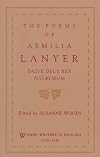
I am not a huge Aemilia Lanyer fan. I read this for a poetry class in college. As for this edition, it's excellent. Not only does it have her poetry, but includes a brief history of her and her era. As for her poetry, I did not enjoy it. However, poetry is so subject, I won't say it was bad poetry - just not my sort. But if you want to give her poetry a whirl, this is a good book to start with.
Solves the riddle of The Dark Lady in Shakespeare's Sonnets.
You May Also Like


Associated Authors
Statistics
- Works
- 6
- Also by
- 5
- Members
- 268
- Popularity
- #86,165
- Rating
- 3.9
- Reviews
- 4
- ISBNs
- 11